

About
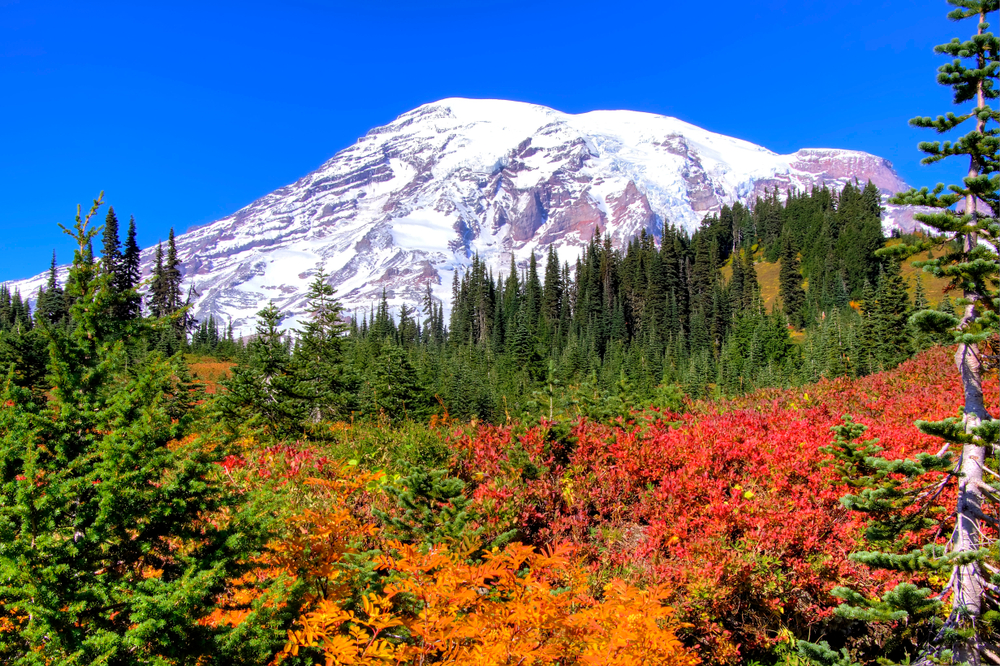
Mount Rainier National Park is located in west-central Washington State in the United States and covers approximately 369 square miles (956 sq km). Established in 1899, it was the fifth national park created in the United States and the first established primarily to protect a glaciated mountain peak.
The park surrounds the towering volcanic summit of Mount Rainier, which rises to 14,410 feet (4,392 sq km) and dominates the surrounding landscape. Located southeast of Seattle, the park lies near both Olympic National Park and North Cascades National Park. Together, these parks protect some of the most spectacular mountain and wilderness landscapes in the Pacific Northwest. Mount Rainier National Park remains one of America’s most iconic and beloved national parks.
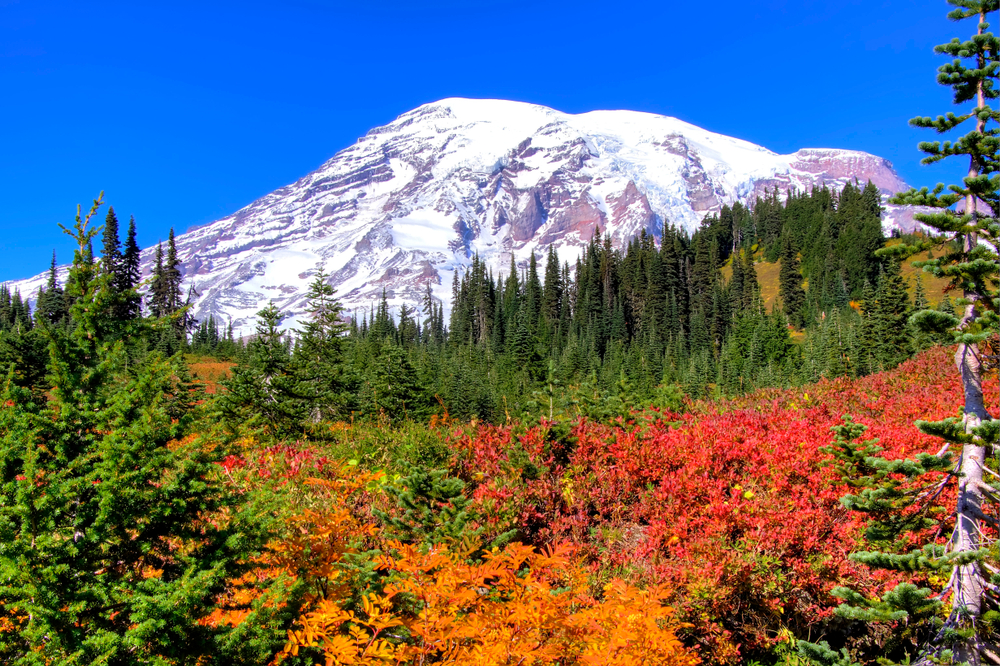
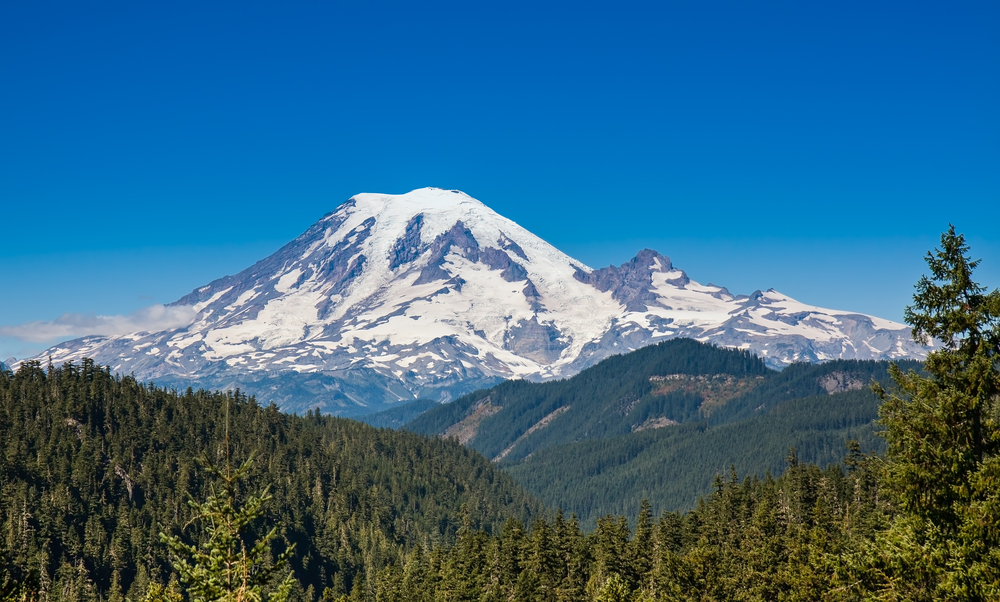
Mount Rainier National Park is best known for its massive snow-capped volcano and spectacular wildflower displays. Visible from much of western Washington, Mount Rainier is the tallest mountain in the Cascade Range and one of the most recognizable peaks in North America. Visitors are drawn to the park’s alpine meadows, waterfalls, glaciers, forests, and panoramic mountain vistas.
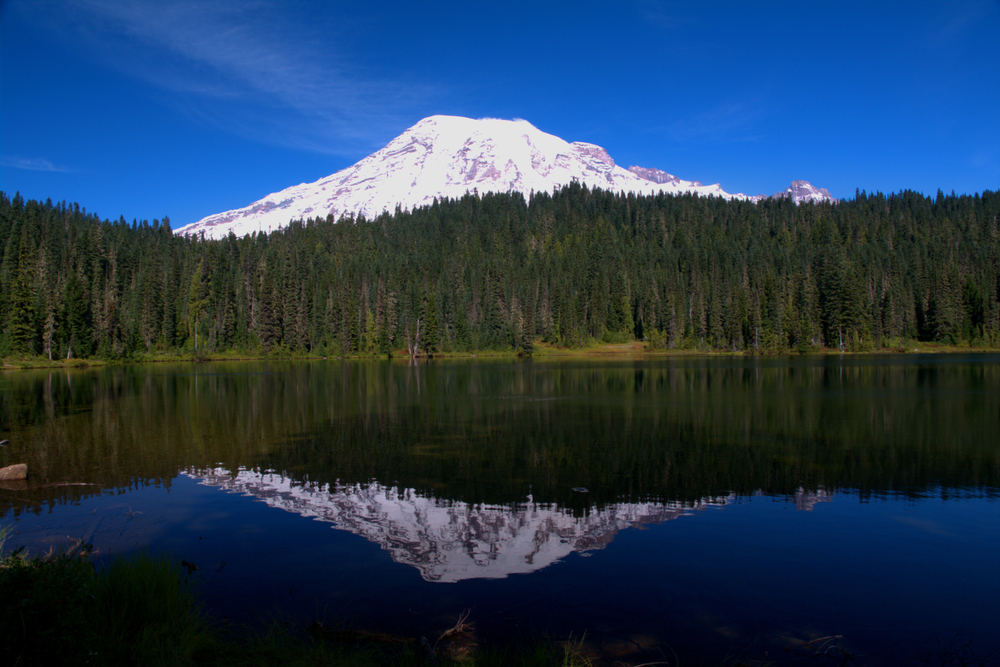
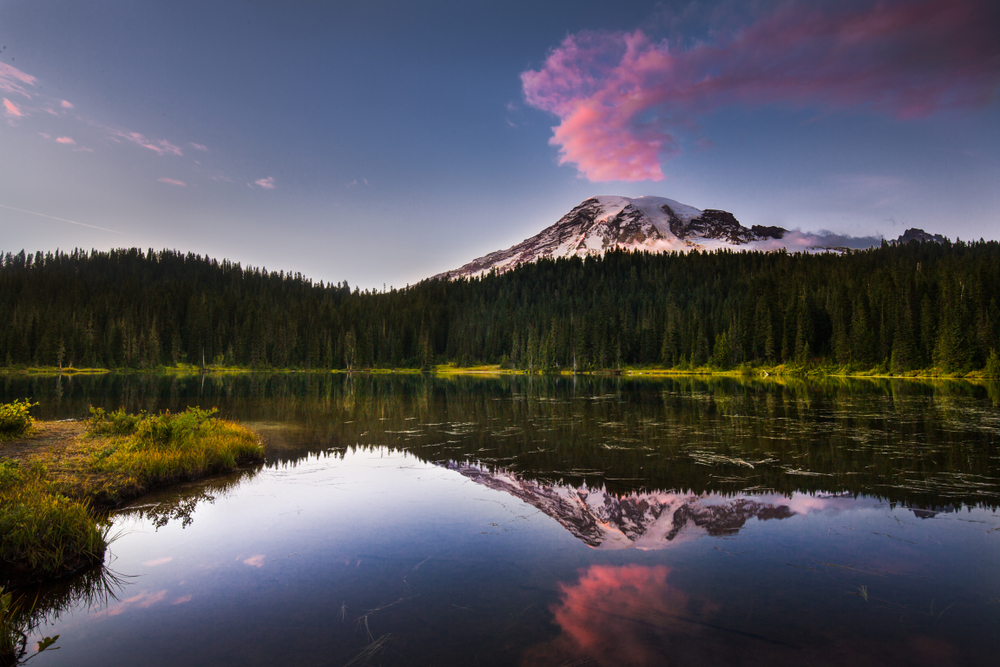
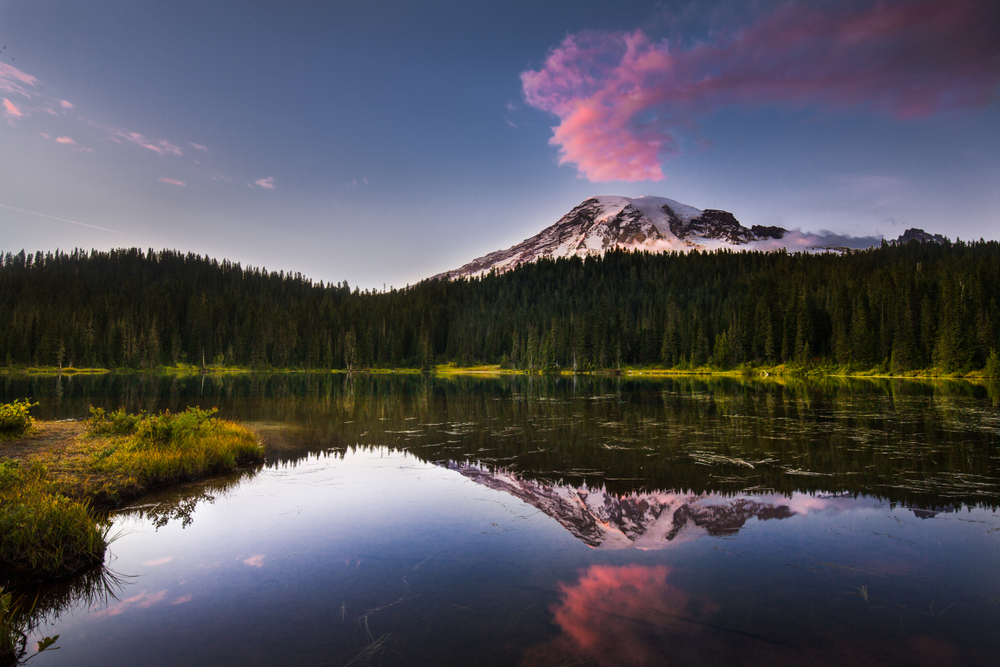
Popular destinations include Paradise, Sunrise, Reflection Lakes, and the Wonderland Trail, which circles the entire mountain. Hiking, mountaineering, camping, wildlife viewing, photography, and snow recreation attract visitors throughout the year. During summer, meadows burst with colorful wildflowers, creating some of the most beautiful alpine scenery found anywhere in the United States.
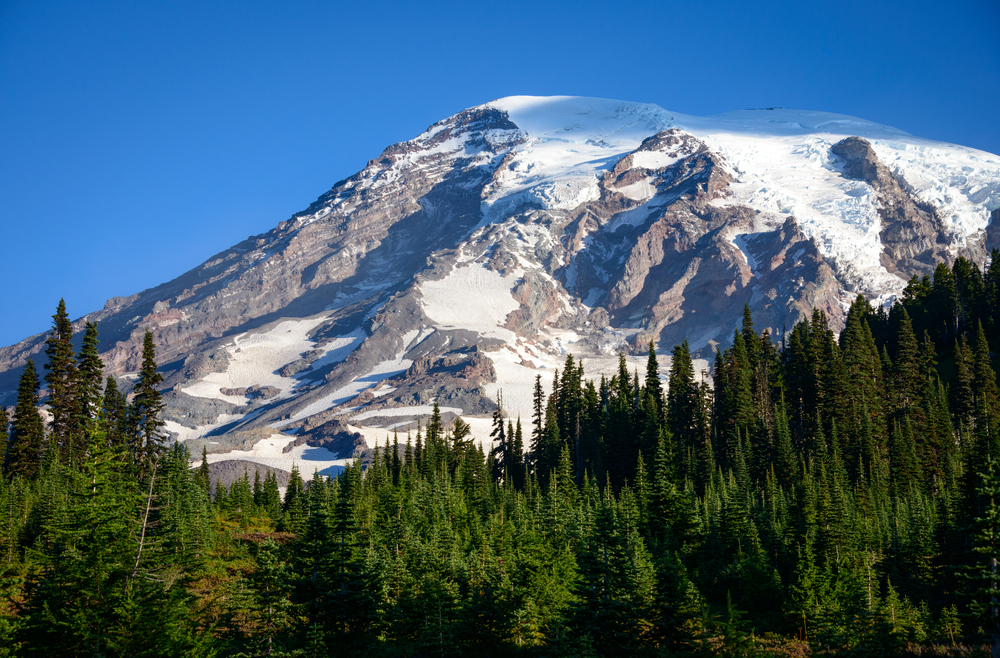
The geography of Mount Rainier National Park is shaped by volcanic activity and glaciation. Mount Rainier itself is a stratovolcano formed over hundreds of thousands of years and remains an active volcanic system. More than twenty named glaciers flow from its summit, making it the most heavily glaciated peak in the contiguous United States. Rivers originating from these glaciers carve deep valleys and support rich ecosystems throughout the region.
Elevations range from approximately 1,600 feet (488 meters) to the summit of Mount Rainier, creating dramatic ecological diversity. Dense forests of Douglas-fir, western hemlock, and silver fir cover lower elevations, while subalpine meadows, alpine tundra, and rocky volcanic terrain dominate higher elevations. This remarkable variation creates one of the most scenic mountain environments in North America.
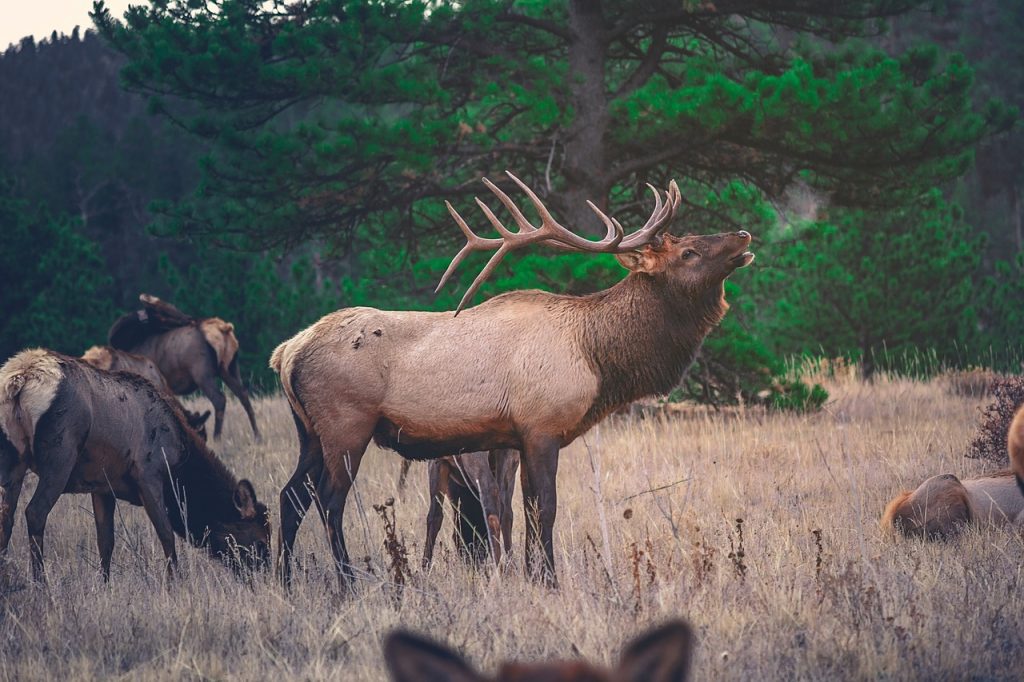
Wildlife within Mount Rainier National Park thrives across its diverse habitats. Large mammals include black bears, elk, mule deer, black-tailed deer, cougars, bobcats, and mountain goats. Smaller mammals such as marmots, pikas, and snowshoe hares are commonly found in alpine and subalpine environments.
Birdlife is abundant, with species including Clark’s nutcrackers, gray jays, Steller’s jays, northern spotted owls, peregrine falcons, and golden eagles. Streams and rivers support native fish and amphibians, while alpine meadows provide habitat for countless pollinators and wildflower species. The park’s broad range of elevations allows an impressive variety of wildlife to flourish throughout the year.
Mount Rainier National Park plays a vital role in protecting one of North America’s most significant volcanic and alpine ecosystems. The park safeguards glaciers, old-growth forests, mountain meadows, and critical watersheds that support both wildlife and human communities. Conservation efforts focus on preserving fragile alpine habitats and monitoring the effects of climate change on glaciers and ecosystems.
Mount Rainier is often compared to Mount Fuji and Aoraki / Mount Cook National Park because of its iconic mountain profile and cultural significance. Yet its combination of glaciers, wildflower meadows, and temperate forests gives it a unique identity. Today, Mount Rainier National Park stands as one of America’s greatest natural treasures, preserving a landscape where volcanic power, alpine beauty, and wilderness coexist in extraordinary harmony.
Photos


Things to See
 Mount Rainier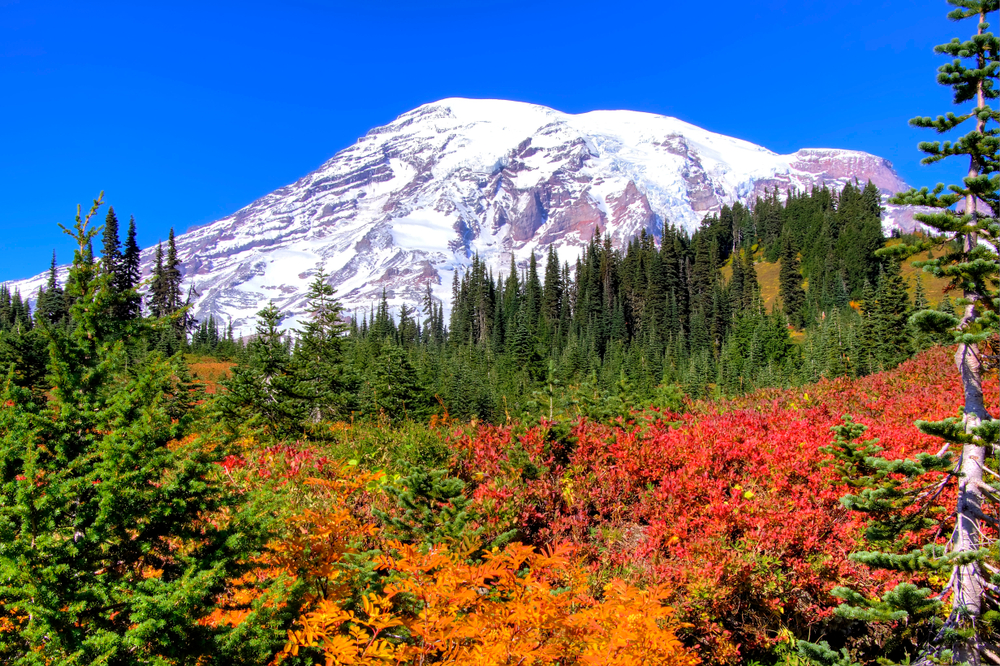
Things To Do
Engaging Mount Rainier
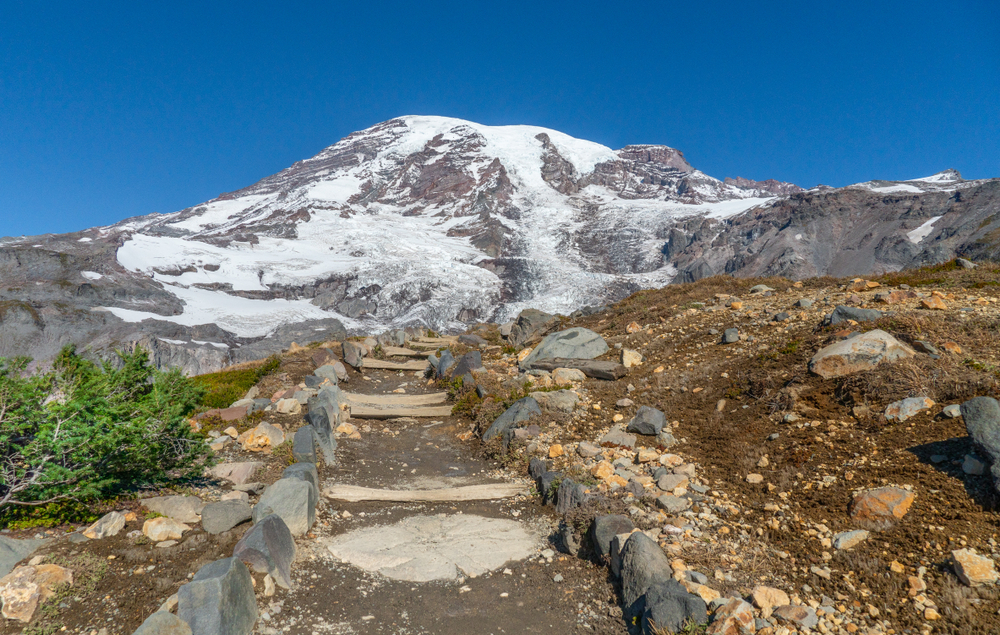
Mount Rainier National Park Trails
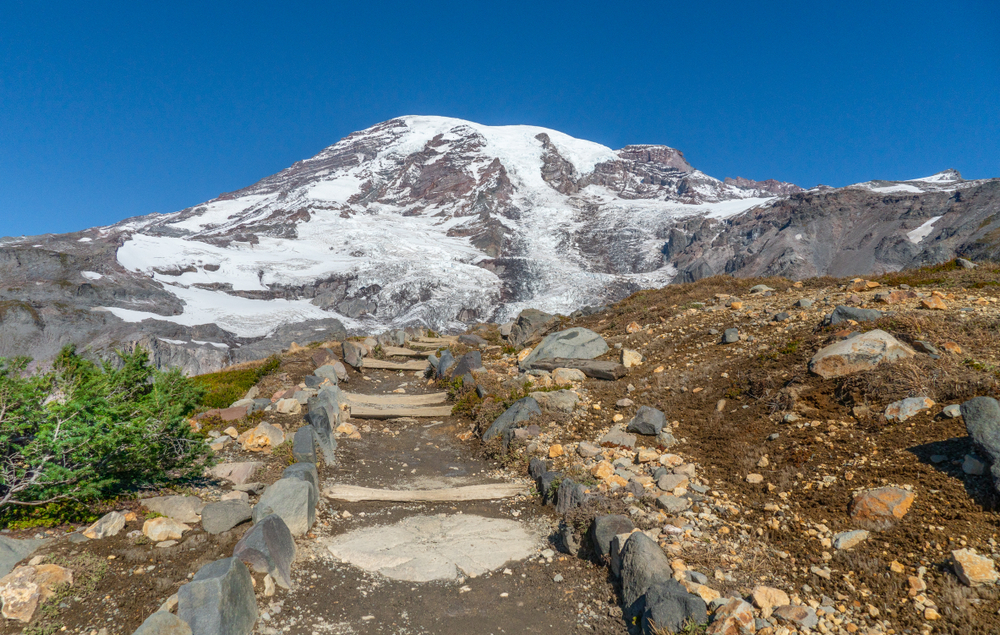
There are over 100 miles of trails around and throughout the national park. Hiking up the pinnacle summit is only attempted about 10,000 times a year, with most people engaging the shorter trails on and around the mountain.

Park Protection
 Mount Rainier National Park was created to protect the glaciers, forests, alpine meadows, and volcanic landscapes surrounding the towering stratovolcano Mount Rainier. The park provides habitat for several species of conservation concern, including the northern spotted owl, marbled murrelet, and bull trout. Its old-growth forests and mountain ecosystems also support black bears, elk, mountain goats, and a rich diversity of plant life.
The park protects the most heavily glaciated peak in the contiguous United States, with more than two dozen major glaciers feeding important river systems throughout the Pacific Northwest. Its spectacular wildflower meadows and extensive old-growth forests are among the finest examples of these ecosystems in North America. Together, Mount Rainier National Park safeguards vital watersheds, glacier-fed ecosystems, iconic wildlife habitat, and one of the nation’s most recognizable volcanic mountains.
FAQ’s
What is Mount Rainier National Park known for?
Mount Rainier National Park, located in Washington state, is known for its iconic centerpiece, Mount Rainier, an active stratovolcano towering at 14,410 feet (4,392 meters) above sea level.
The park encompasses diverse ecosystems, including old-growth forests, alpine meadows, and glaciers. Mount Rainier is the most glaciated peak in the contiguous United States, with over 25 named glaciers, including the massive Emmons Glacier.
Visitors come to Mount Rainier National Park to hike its extensive trail system, which offers stunning views of the mountain, wildflower-filled meadows, and cascading waterfalls.
The park also offers opportunities for wildlife viewing, camping, climbing, and winter recreation, making it a popular destination for outdoor enthusiasts and nature lovers.
What is the main reason people visit Mount Rainier National Park?
Mount Rainier National Park is primarily visited for its towering volcanic peak, spectacular wildflower meadows, glaciers, waterfalls, and world-class hiking opportunities. Located in western Washington, the park protects more than 236,000 acres surrounding Mount Rainier, an active stratovolcano that rises 14,410 feet (4,392 meters) above sea level.
Visitors come to see one of North America’s most glaciated mountains, hike through alpine landscapes, photograph colorful wildflower displays, view wildlife, and experience one of the most iconic mountains in the United States.
What animals can visitors hope to see in Mount Rainier National Park?
Mount Rainier National Park supports approximately 65 mammal species and more than 15 reptile and amphibian species. The park’s forests, meadows, rivers, and alpine environments provide habitat for a remarkable diversity of wildlife.
Some of the most notable animals found in Mount Rainier National Park include:
- Black Bear
- Roosevelt Elk
- Mule Deer
- Black-tailed Deer
- Mountain Goat
- Cougar
- Bobcat
- Coyote
- Red Fox
- Cascade Red Fox
- American Beaver
- River Otter
- Raccoon
- Long-tailed Weasel
- Short-tailed Weasel
- American Marten
- Fisher
- Striped Skunk
- Porcupine
- Hoary Marmot
- Olympic Marmot
- Golden-mantled Ground Squirrel
- Douglas Squirrel
- Northern Flying Squirrel
- Townsend’s Chipmunk
- Cascade Golden-mantled Ground Squirrel
- Pika
- Snowshoe Hare
- Mountain Cottontail
- Deer Mouse
- Western Red-backed Vole
- Long-tailed Vole
- Meadow Vole
- Water Shrew
- Vagrant Shrew
- Big Brown Bat
- Hoary Bat
- Silver-haired Bat
- Little Brown Bat
- Long-legged Myotis
- California Myotis
- Yuma Myotis
- Keen’s Myotis
- Fringed Myotis
- Townsend’s Big-eared Bat
- Western Red Bat
- Mountain Beaver
- Pacific Jumping Mouse
- Various Rodent Species
- Various Small Mammals
What birds can visitors hope to see in Mount Rainier National Park?
Mount Rainier National Park is home to more than 180 bird species. The park’s forests, alpine meadows, rivers, and wetlands provide excellent habitat for both resident and migratory birds.
Some of the most popular birds seen in Mount Rainier National Park include:
- Bald Eagle
- Golden Eagle
- Peregrine Falcon
- American Kestrel
- Cooper’s Hawk
- Sharp-shinned Hawk
- Northern Goshawk
- Osprey
- Great Horned Owl
- Northern Pygmy Owl
- Barred Owl
- Northern Saw-whet Owl
- Common Raven
- Gray Jay
- Steller’s Jay
- Clark’s Nutcracker
- Mountain Chickadee
- Chestnut-backed Chickadee
- Red-breasted Nuthatch
- White-breasted Nuthatch
- Brown Creeper
- American Dipper
- Pacific Wren
- Winter Wren
- Mountain Bluebird
- Western Bluebird
- Hermit Thrush
- Varied Thrush
- American Robin
- Townsend’s Solitaire
- Cedar Waxwing
- Pine Grosbeak
- Evening Grosbeak
- Pine Siskin
- Red Crossbill
- White-winged Crossbill
- Dark-eyed Junco
- Fox Sparrow
- White-crowned Sparrow
- Savannah Sparrow
- Yellow Warbler
- Wilson’s Warbler
- MacGillivray’s Warbler
- Western Tanager
- Black-headed Grosbeak
- Hairy Woodpecker
- Downy Woodpecker
- Northern Flicker
- Pileated Woodpecker
- Sooty Grouse
Is Mount Rainier National Park worth visiting?
Yes, Mount Rainier National Park is absolutely worth visiting and is widely considered one of the most beautiful national parks in the United States.
The park offers stunning mountain scenery, colorful wildflower meadows, massive glaciers, waterfalls, old-growth forests, abundant wildlife, and hundreds of miles of hiking trails. The sight of Mount Rainier rising dramatically above the surrounding landscape is one of the most iconic views in North America.
The primary hesitation is that weather conditions can obscure mountain views, and peak-season crowds can be significant during summer weekends.
What is the best time to visit Mount Rainier National Park?
The best time to visit Mount Rainier National Park is from July through September.
Typical conditions include:
- June: 40–65°F (4–18°C)
- July: 45–75°F (7–24°C)
- August: 45–75°F (7–24°C)
- September: 40–70°F (4–21°C)
During this period:
- Most roads are open.
- Wildflower displays peak.
- Hiking trails are accessible.
- Weather is generally favorable.
- Mountain visibility is often at its best.
Late July and early August are famous for spectacular alpine wildflower blooms.
How many days do you need to visit Mount Rainier National Park?
Although you can see Mount Rainier in a day, you are not really experiencing the park. Most visitors should plan for 2 to 4 days.
- 1 day: Paradise area and scenic viewpoints.
- 2 days: Paradise and Sunrise regions.
- 3–4 days: Waterfalls, hiking trails, wildlife viewing, and scenic drives.
- 5+ days: Backcountry hiking and wilderness exploration.
Because the park is large and roads can be slow, multiple days provide a much better experience.
How do you get to Mount Rainier National Park?
Mount Rainier National Park is located in western Washington between Seattle and Yakima.
The closest major airport is:
- Seattle-Tacoma International Airport – approximately 2 to 3 hours from most park entrances.
Other nearby airports include:
- Yakima Air Terminal
- Portland International Airport
Most visitors follow this route:
- Fly into Seattle-Tacoma International Airport.
- Rent a vehicle.
- Drive to one of the park’s major entrances.
- Explore the park via its scenic road network.
Paradise Area
The park’s most famous destination is:
- Paradise
Paradise is renowned for:
- Wildflower meadows.
- Glacier views.
- Visitor facilities.
- Hiking trails.
- Spectacular views of Mount Rainier.
Paradise receives some of the heaviest annual snowfall recorded anywhere on Earth.
Sunrise Area
The highest point accessible by vehicle is:
- Sunrise
At 6,400 feet (1,950 meters), Sunrise offers:
- Panoramic mountain views.
- Alpine meadows.
- Hiking opportunities.
- Excellent wildlife viewing.
Longmire Area
Visitors also frequently explore:
- Longmire
This historic district features:
- National Historic Landmark buildings.
- Visitor services.
- Forest trails.
- Access to lower-elevation hikes.
Scenic Drives
The park contains several beautiful roads connecting major destinations, including routes between Paradise, Longmire, Ohanapecosh, and Sunrise.
Popular highlights include:
- Waterfalls.
- Glacial rivers.
- Old-growth forests.
- Mountain overlooks.
- Wildflower meadows.
Travel Times
Typical travel times include:
- Seattle to Nisqually Entrance (Paradise access): approximately 2 hours.
- Seattle to Sunrise: approximately 2.5 hours.
- Tacoma to Paradise: approximately 1.5–2 hours.
- Portland to Paradise: approximately 3.5 hours.
Because traffic can be heavy during summer, visitors should arrive early and allow extra travel time.
Who is involved in protecting and supporting Mount Rainier National Park?
Several organizations help protect and support Mount Rainier National Park:
- National Park Service – manages Mount Rainier National Park.
- Mount Rainier National Park Trust – supports conservation, education, and visitor programs.
- Washington’s National Park Fund – supports Mount Rainier, Olympic, and North Cascades National Parks.
- National Park Foundation – supports projects throughout the National Park System.
- Indigenous communities including the Puyallup Tribe, Muckleshoot Indian Tribe, and Yakama Nation who maintain longstanding cultural connections to the mountain.
Is Mount Rainier an active volcano?
Yes. Mount Rainier is an active stratovolcano. Although it has not experienced a major eruption in modern times, it remains closely monitored by scientists.
How many glaciers are on Mount Rainier?
Mount Rainier contains approximately 25 named glaciers, more than any other mountain in the contiguous United States.
How tall is Mount Rainier?
Mount Rainier reaches an elevation of 14,410 feet (4,392 meters) above sea level.
Some additional perspective:
- It is the highest mountain in Washington State.
- It is the highest peak in the Cascade Range.
- It is the most topographically prominent mountain in the contiguous United States, rising approximately 13,210 feet (4,026 meters) above the surrounding landscape.
- It contains approximately 25 named glaciers, more than any other mountain in the lower 48 states.
- On clear days, it can be seen from more than 100 miles away from parts of western Washington, including Seattle and Tacoma.
Sources
- All Trails, Best Trails in Mount Rainier National Park, https://www.alltrails.com/parks/us/washington/mount-rainier-national-park retrieved June 2020.
- Britannica, Mount Rainier, https://www.britannica.com/place/Mount-Rainier, retrieved June 2020.
- Britannica, Mount Rainier National Park, https://www.britannica.com/place/Mount-Rainier-National-Park, retrieved June 2020.
- National Geographic, Complete National Parks of the United States, National Geographic Publishing, Washington DC.
- National Geographic., Everything to Know about Mount Rainier National Park, https://www.nationalgeographic.com/travel/national-parks/mount-rainier-national-park/, retrieved June 2020.
- National Geographic, Guide to the National Parks of the United States, National Geographic Society, 2003.
- National Geographic, National Parks of North America, Canada-United States-Mexico, National Geographic Society, 1995.
- National Park Service, Mount Rainier, https://www.nps.gov/mora/index.htm, retrieved June 2020.
- US News, Mount Rainier National Park, https://travel.usnews.com/Mount_Rainier_National_Park_WA/, retrieved June 2020.