

About

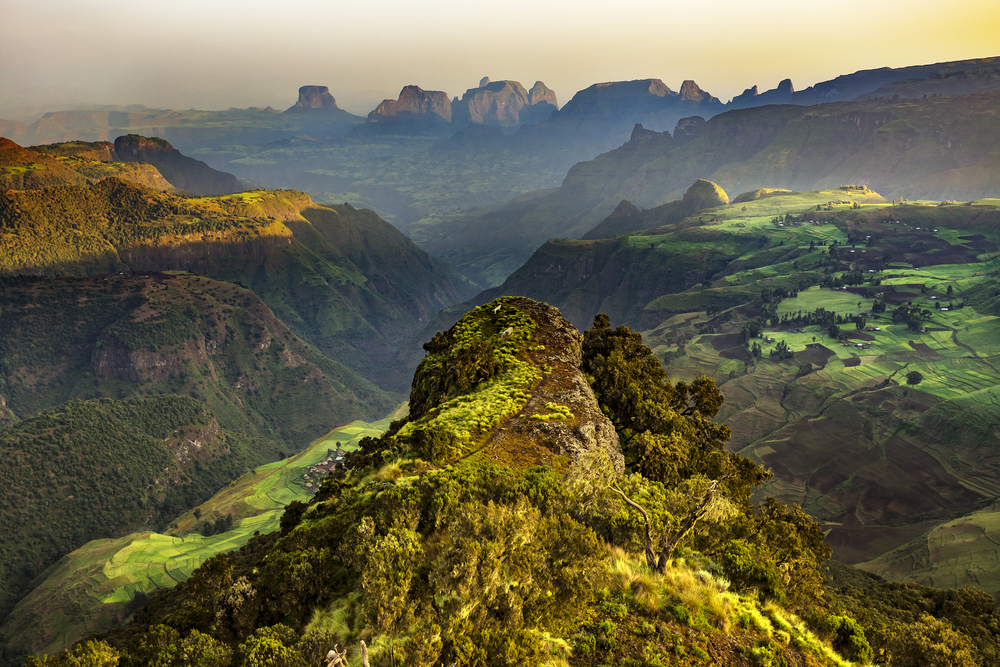
Located in the northern highlands of Ethiopia, Simien Mountains National Park protects one of Africa’s most dramatic and awe-inspiring mountain landscapes. Encompassing approximately 220 square kilometers (85 square miles), the park forms part of the vast Ethiopian Highlands, a rugged plateau system carved by deep valleys, towering pinnacles, and sheer escarpments that plunge thousands of feet below.

The park’s defining feature is Ras Dejen, Ethiopia’s highest peak, rising to 4,550 meters (14,930 feet) above sea level. Ranked as the 10th tallest mountain in Africa, Ras Dejen dominates the skyline and rewards climbers with extraordinary views. Its western summit offers a natural, enclosed observation area that functions as a 360-degree viewpoint, revealing an endless panorama of jagged ridgelines, alpine meadows, deep gorges, and distant plateaus. An unpaved road winds across sections of the park, reaching elevations near Buahit Pass at 4,430 meters (14,534 feet), providing access to some of the park’s most scenic vantage points.

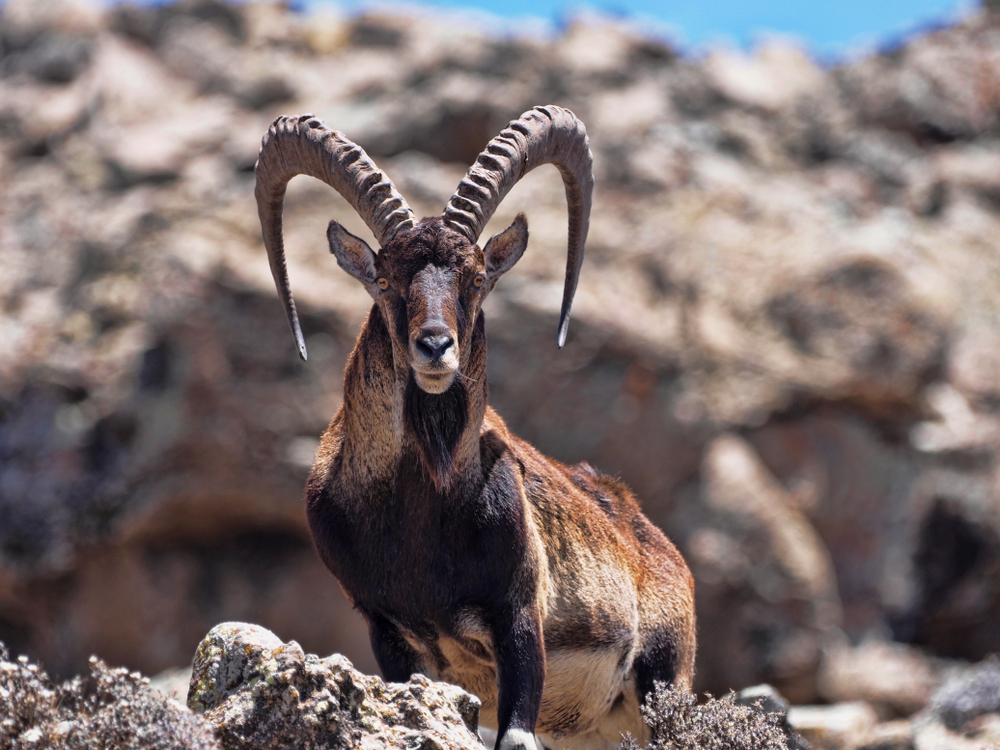
Simien Mountains National Park is internationally recognized for its exceptional biodiversity and high level of endemism. The park serves as a vital refuge for several rare and endangered species found nowhere else on Earth. Most notable is the Walia ibex, an endangered wild goat species restricted entirely to the steep cliffs of the Simien range. The park is also one of the last strongholds of the Ethiopian wolf, the world’s rarest canid, alongside predators such as leopards, caracals, hyenas, jackals, and African wildcats. Among the most iconic residents are gelada baboons, often seen in large social groups grazing across the high-altitude grasslands.

Birdlife is equally impressive, with roughly 400 recorded bird species, including 63 endemic species. Raptors such as the lanner falcon, kestrels, and Verreaux’s eagle soar above the escarpments, adding to the park’s dramatic atmosphere.

As a UNESCO-recognized landscape of global importance, Simien Mountains National Park plays a crucial role in protecting Ethiopia’s high-altitude ecosystems. Visiting and supporting the park helps preserve its rare wildlife, fragile alpine habitats, and one of Africa’s most spectacular mountain environments for generations to come.

Things to See

<p>Ras Dejen is the crown jewel of Simien Mountains National Park and the highest point in <strong data-start="290" data-end="331"><span class="hover:entity-accent entity-underline inline cursor-pointer align-baseline"><span class="whitespace-normal">Ethiopia</span></span></strong>. Rising to 4,550 meters (14,930 feet), it is the 10th tallest mountain in Africa and offers one of the continent’s most dramatic summit experiences. The western summit provides a natural, enclosed observation area that functions as a 360-degree viewing platform, revealing sweeping panoramas of jagged peaks, deep valleys, and sheer cliffs that plunge into the lowlands below. Across the surrounding plateau, visitors encounter knife-edge ridges, rolling alpine meadows, and steep precipices carved by erosion over millions of years. An unpaved mountain road leads through the park toward Buahit Pass at 4,430 meters (14,534 feet), offering access to breathtaking viewpoints even for those not attempting a full summit climb. The scale, elevation, and geological drama of this landscape make it one of Africa’s most visually striking mountain environments.</p>

Ras Dejen is the crown jewel of Simien Mountains National Park and the highest point in Ethiopia. Rising to 4,550 meters (14,930 feet), it is the 10th tallest mountain in Africa and offers one of the continent’s most dramatic summit experiences. The western summit provides a natural, enclosed observation area that functions as a 360-degree viewing platform, revealing sweeping panoramas of jagged peaks, deep valleys, and sheer cliffs that plunge into the lowlands below. Across the surrounding plateau, visitors encounter knife-edge ridges, rolling alpine meadows, and steep precipices carved by erosion over millions of years. An unpaved mountain road leads through the park toward Buahit Pass at 4,430 meters (14,534 feet), offering access to breathtaking viewpoints even for those not attempting a full summit climb. The scale, elevation, and geological drama of this landscape make it one of Africa’s most visually striking mountain environments.

<p>Simien Mountains National Park is a sanctuary for some of Africa’s rarest and most distinctive wildlife, many of which are found nowhere else on Earth. The most iconic is the <strong data-start="1464" data-end="1478">Walia ibex</strong>, an endangered wild goat species that clings effortlessly to the park’s near-vertical cliffs. The park is also one of the last remaining strongholds of the <strong data-start="1635" data-end="1653">Ethiopian wolf</strong>, the rarest canid in the world, which hunts rodents across the high-altitude grasslands. Large troops of <strong data-start="1759" data-end="1777">gelada baboons</strong> are among the park’s most memorable sights, often seen grazing like livestock across the plateaus or gathering dramatically along cliff edges. Other mammals include klipspringer, bushbuck, common duiker, and hamadryas baboon. Overhead, raptors such as Verreaux’s eagle, lanner falcon, and kestrels patrol the skies, while the park supports hundreds of bird species, including dozens that are endemic to Ethiopia’s highlands.</p>

Simien Mountains National Park is a sanctuary for some of Africa’s rarest and most distinctive wildlife, many of which are found nowhere else on Earth. The most iconic is the Walia ibex, an endangered wild goat species that clings effortlessly to the park’s near-vertical cliffs. The park is also one of the last remaining strongholds of the Ethiopian wolf, the rarest canid in the world, which hunts rodents across the high-altitude grasslands. Large troops of gelada baboons are among the park’s most memorable sights, often seen grazing like livestock across the plateaus or gathering dramatically along cliff edges. Other mammals include klipspringer, bushbuck, common duiker, and hamadryas baboon. Overhead, raptors such as Verreaux’s eagle, lanner falcon, and kestrels patrol the skies, while the park supports hundreds of bird species, including dozens that are endemic to Ethiopia’s highlands.

Things To Do

High-Altitude Trekking & Multi-Day Hiking

Wildlife & Birdwatching Walks

Sources