

About
Known locally as Nyika National Park, the park is located in northern Malawi near the border with Zambia and protects the vast majority of the Nyika Plateau, one of the largest high-altitude grassland ecosystems in Africa. The park covers approximately 1,230 square miles (3,200 sq km), making it the largest national park in Malawi.
Established in 1965, Nyika National Park occupies a remote section of the country’s Northern Region and forms part of a transboundary conservation landscape that includes Zambia’s smaller portion of the plateau. The park lies northwest of Vwaza Marsh Wildlife Reserve and represents one of Malawi’s most important protected areas. Its expansive uplands, cool climate, and distinctive scenery set it apart from the country’s lower-elevation parks and reserves.
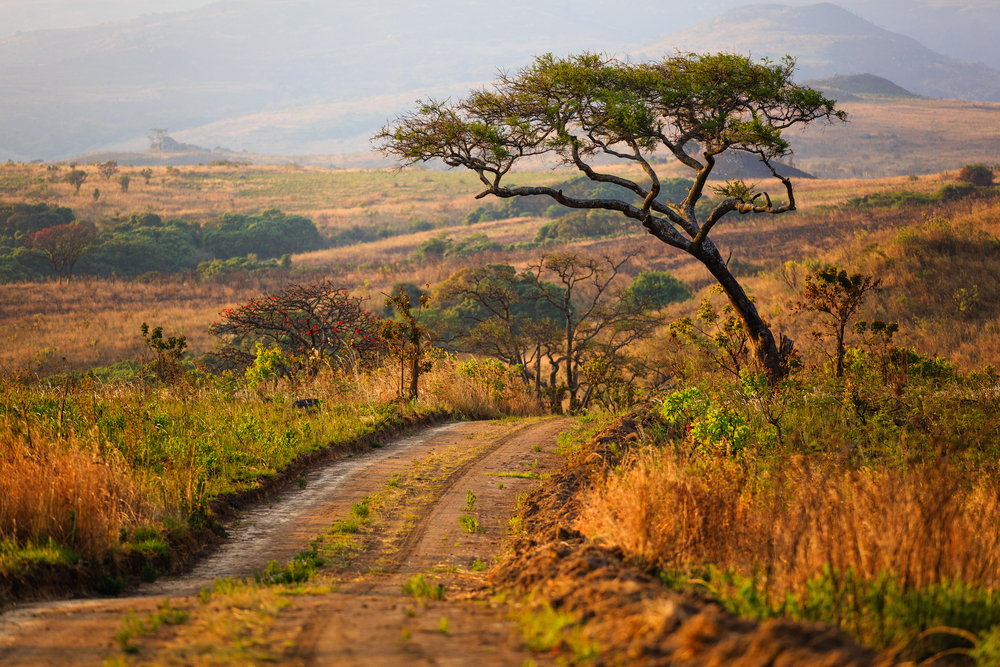
Nyika National Park is best known for its immense rolling plateau, abundant wildflowers, and some of the finest highland scenery in Africa. Visitors often compare the landscape to the Scottish Highlands because of its sweeping grass-covered hills, broad valleys, and seemingly endless horizons. Unlike many African parks that focus on large predator sightings, Nyika offers a wilderness experience centered on scenic exploration, wildlife observation, hiking, mountain biking, and birdwatching.
During the rainy season and early dry season, thousands of orchids and wildflowers bloom across the plateau, transforming the landscape into one of the continent’s most spectacular botanical displays. The park’s isolation and natural beauty provide a sense of tranquility that is increasingly rare in the modern world.
The geography of Nyika National Park is dominated by the Nyika Plateau, which rises to elevations exceeding 8,500 feet (2,600 meters) above sea level. The highest point, Nganda Peak, offers sweeping views across Malawi and neighboring Zambia. The plateau is characterized by rolling montane grasslands, forest patches, river valleys, wetlands, and rocky outcrops.
Numerous streams originate within the park and contribute to major river systems that support communities and ecosystems far beyond its boundaries. Seasonal mists, cool temperatures, and regular rainfall create conditions that support unique plant communities rarely found elsewhere in southern Africa. The diversity of habitats contributes significantly to the park’s ecological importance.
Wildlife within Nyika National Park is remarkably diverse and often differs from species typically associated with African savannas. Large mammals include roan antelope, eland, zebra, reedbuck, bushbuck, and leopard. Nyika supports one of the largest populations of roan antelope in southern Africa, making it particularly important for the conservation of this impressive species. Servals are frequently observed hunting in the grasslands, and the park is one of the best places in Africa to see these elusive cats.
Birdlife is exceptional, with more than 400 recorded species inhabiting the plateau. Cranes, buzzards, eagles, pipits, widowbirds, and numerous montane specialists thrive within the park’s grasslands and forests. The abundance of orchids, butterflies, and other invertebrates further enhances the park’s biodiversity.
Nyika National Park plays a critical role in protecting one of Africa’s most significant montane grassland ecosystems. The park safeguards important watersheds, rare plant communities, and numerous species adapted to high-elevation environments. Its conservation significance is often compared to mountain parks such as Bale Mountains National Park and Nyanga National Park, where elevation creates unique ecological conditions and supports specialized wildlife.
As Malawi’s largest national park, Nyika serves as a cornerstone of the nation’s conservation efforts and protects landscapes that are both ecologically valuable and visually stunning. Today, it remains one of Africa’s most underrated wilderness destinations, preserving a remarkable highland ecosystem for future generations.
Things to See
Things To Do
Engaging Nyika National Park
