

About
Bale Mountains National Park is located in southeastern Ethiopia, covering approximately 850 square miles (2,200 sq km). It forms part of the Bale Mountain range, one of the most significant highland systems in the Horn of Africa. The park lies southeast of Addis Ababa and does not directly border another national park, but it represents one of the largest continuous areas of Afro-alpine habitat on the continent.
Its elevation ranges dramatically from around 4,900 feet (1,500 meters) to over 14,000 feet (4,300 meters), creating a sweeping landscape of ecological contrasts and making it one of Africa’s most important centers of biodiversity and endemism.
Bale Mountains National Park is best known for its unique high-altitude ecosystems and the rare species that inhabit them. Among its most iconic residents is the Ethiopian wolf, one of the world’s rarest canids, found almost exclusively in this region. The park is also renowned for the Sanetti Plateau, a vast Afro-alpine expanse that feels almost otherworldly, where rolling grasslands stretch beneath wide, open skies.
In contrast, the Harenna Forest on the southern slopes offers a dense, lush environment filled with towering trees, bamboo, and a rich array of plant and animal life. This striking diversity—from alpine plateaus to tropical forest—sets Bale apart as one of Africa’s most ecologically varied parks.
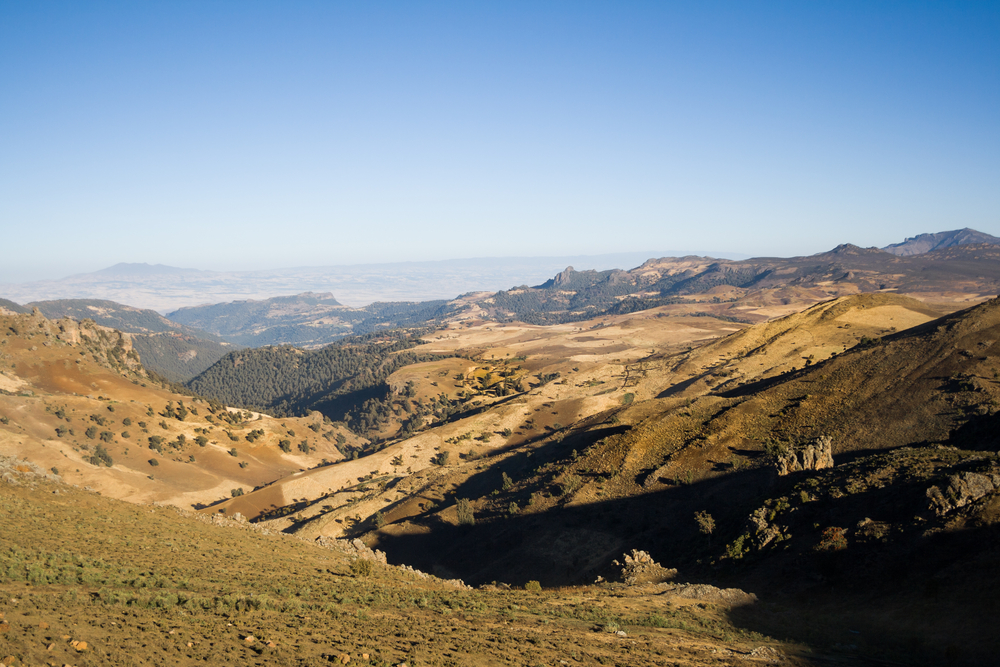
The geography of the park is defined by its dramatic elevation changes and distinct ecological zones. The northern section includes the Sanetti Plateau, characterized by cold, windswept conditions and vegetation adapted to high altitudes, such as giant lobelias and hardy grasses. Moving downward, the terrain transitions into moorlands and then into the Harenna Forest, one of the largest remaining montane forests in Ethiopia.
This forest is a stark contrast to the plateau, with its dense canopy, humid climate, and rich biodiversity. Rivers originating in the Bale Mountains flow into surrounding regions, making the park a critical water source for millions of people and wildlife beyond its boundaries.
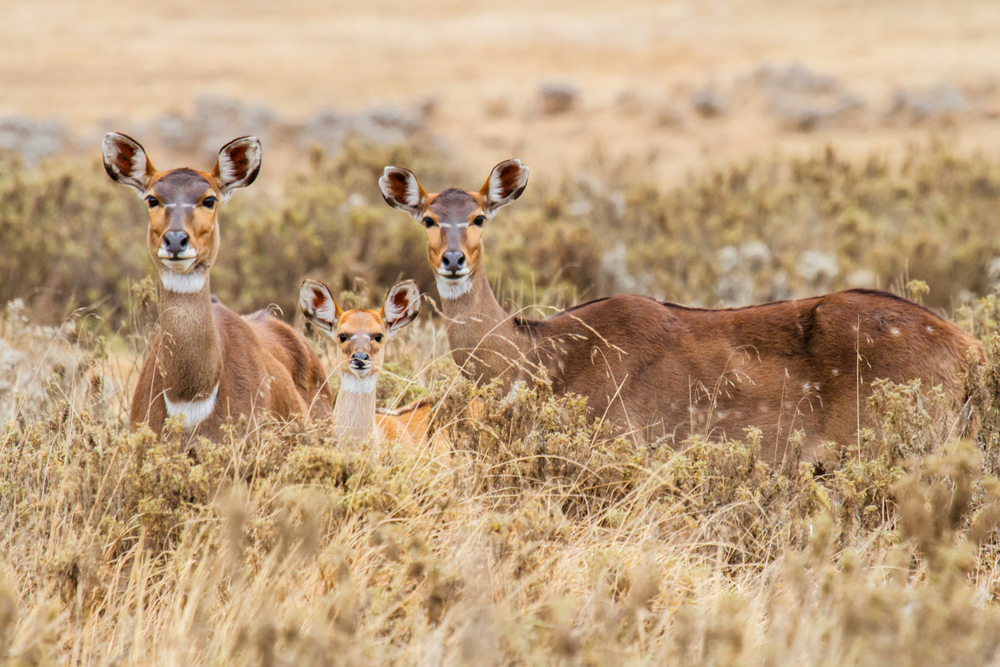
Wildlife in Bale Mountains National Park is remarkable for its high level of endemism, meaning many species are found nowhere else on Earth. In addition to the Ethiopian wolf, the park is home to the mountain nyala, a rare antelope species that is also endemic to Ethiopia. Other mammals include Menelik’s bushbuck, warthogs, and various small rodents that serve as prey for predators.
Birdlife is equally impressive, with numerous endemic and highland species, making the park a significant destination for birdwatchers. The diversity of habitats—from alpine to forest—supports a wide range of species, each adapted to the unique conditions of their environment.
Bale Mountains National Park plays a crucial role in conserving one of Africa’s most unique and fragile ecosystems. Its protection helps safeguard rare and endangered species, many of which exist only within its boundaries. The park also serves as a vital water catchment area, supporting agriculture and livelihoods for communities across southeastern Ethiopia.
On a global scale, Bale highlights the importance of preserving high-altitude ecosystems, which are particularly vulnerable to climate change and human pressures. Its extraordinary landscapes, rare wildlife, and ecological significance make it a place of both scientific importance and natural beauty, offering a powerful reminder of the richness and vulnerability of our planet’s biodiversity.
Photos


Things to See
 The Ethiopian Wolf is an endangered species and is considered the rarest canid in the world. It is estimated that only 400 individuals are currently living and about half of that population is found within the national park.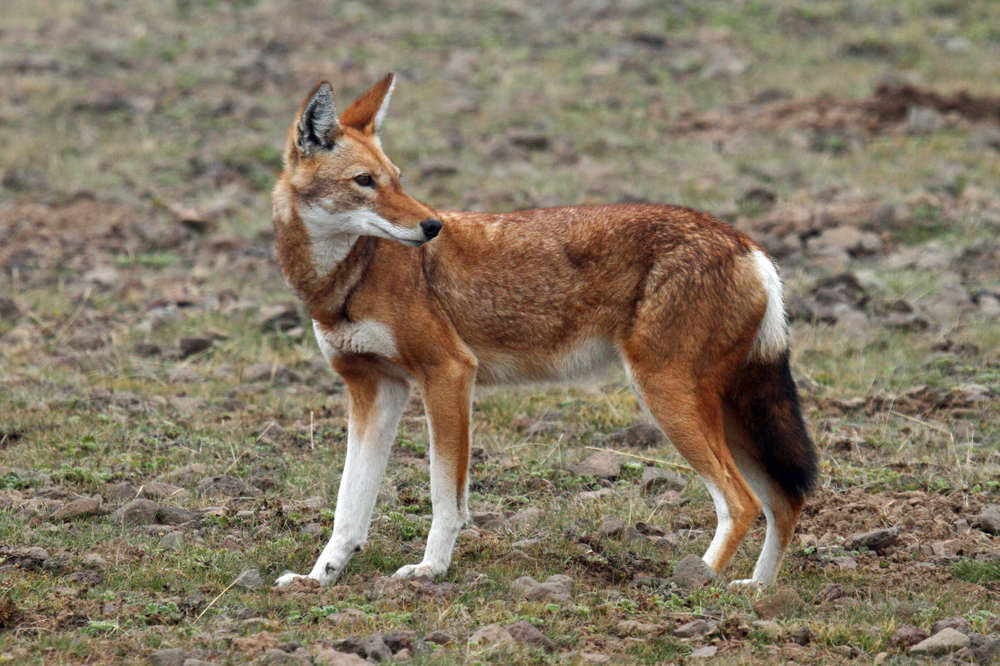
Things To Do
Engaging Bale Mountains National Park
Bale Mountains National Park Trails
The national park is well established for hiking and exploring. There are hiking opportunities that range from a single day outing up to over 10 days of hiking, camping, and exploring. These trails will meander through the thick jungle and over the mountains while giving you chances to see lakes, rivers, and waterfalls. Of course, you will also trek the journey with hopes of witnessing the abundant species of birds and wildlife.

Park Protection
Bale Mountains National Park was created to protect the extraordinary Afroalpine plateaus, montane forests, heathlands, glacial valleys, and river systems of southeastern Ethiopia. The park provides critical habitat for several endangered and endemic species, including the endangered Ethiopian wolf, the world’s rarest canid, and the endangered mountain nyala, a large antelope found only in Ethiopia.
It also supports important populations of Menelik’s bushbuck, Bale monkeys, giant mole-rats, leopards, and more than 300 bird species, including numerous Ethiopian endemics. The park’s forests and highlands also protect the headwaters of major rivers that supply water to millions of people across Ethiopia and neighboring countries, making it one of East Africa’s most important watershed conservation areas.
The park is especially significant for protecting the Sanetti Plateau, the largest continuous Afroalpine ecosystem in Africa and the principal stronghold of the Ethiopian wolf, with more than half of the global population occurring within the Bale Mountains ecosystem. Its exceptional isolation has produced remarkable levels of endemism, including the Bale monkey, which is found naturally only in the park’s bamboo forests.
Few protected areas in Africa support such a concentration of endemic mammals and high-altitude biodiversity. Together, Bale Mountains National Park safeguards endangered endemic wildlife, unique Afroalpine and montane forest ecosystems, critical regional watersheds, and one of Africa’s most important biodiversity hotspots.
FAQ’s
What is Bale Mountains National Park known for?
Bale Mountains National Park, located in southeastern Ethiopia, is renowned for its stunning alpine landscapes, diverse wildlife, and unique Afroalpine ecosystems. One of the park’s main attractions is its high-altitude plateau, which is dotted with picturesque lakes, lush meadows, and dramatic rock formations.
Bale Mountains National Park is home to a variety of endemic and rare species, including the Ethiopian wolf, the mountain nyala, and the Bale monkey. The park is also a haven for birdwatchers, with over 280 bird species recorded within its boundaries, including the elusive and endangered wattled crane.
Visitors to Bale Mountains National Park can explore its scenic hiking trails, spot wildlife in its natural habitat, and experience the beauty and biodiversity of Ethiopia’s highlands.
What is the main reason people visit Bale Mountains National Park?
Bale Mountains National Park is primarily visited for its extraordinary endemic wildlife, high-altitude landscapes, and world-class trekking opportunities. Located in southeastern Ethiopia, the park protects the largest area of Afro-alpine habitat in Africa and is considered one of the continent’s most important biodiversity hotspots.
Visitors come to see the endangered Ethiopian wolf, vast moorlands, cloud forests, dramatic mountain scenery, and a remarkable concentration of species found nowhere else on Earth.
What animals can visitors hope to see in Bale Mountains National Park?
Bale Mountains National Park supports approximately 78 mammal species and more than 20 reptile species. The park is internationally recognized as the most important stronghold for the endangered Ethiopian wolf and contains one of the highest concentrations of endemic mammals in Africa.
Some of the most notable mammals and reptiles found in Bale Mountains National Park include:
- Ethiopian Wolf
- Mountain Nyala
- Menelik’s Bushbuck
- Bale Monkey
- Gelada
- Olive Baboon
- Colobus Monkey
- Vervet Monkey
- African Golden Wolf
- Spotted Hyena
- Leopard
- Serval
- African Wildcat
- Caracal
- Honey Badger
- African Civet
- White-tailed Mongoose
- Egyptian Mongoose
- Slender Mongoose
- Giant Mole-Rat
- Ethiopian Root Rat
- Ethiopian Hare
- Abyssinian Hare
- Bohor Reedbuck
- Common Duiker
- Bushbuck
- Klipspringer
- Warthog
- Bush Pig
- Bush Hyrax
- Rock Hyrax
- Crested Porcupine
- Ethiopian White-footed Mouse
- Brush-furred Rat
- African Dormouse
- Ethiopian Grass Rat
- Highland Mole-Rat
- Forest Shrew Species
- Ethiopian Shrew
- Fruit Bat Species
- Horseshoe Bat Species
- Pipistrelle Bat Species
- Long-eared Bat Species
- Mouse-eared Bat Species
- Ground Squirrel Species
- Tree Squirrel Species
- Field Mouse Species
- Highland Rodent Species
- Afro-alpine Rodent Species
- Various Small Endemic Mammals
What birds can visitors hope to see in Bale Mountains National Park?
Bale Mountains National Park is one of Africa’s premier birdwatching destinations, with more than 280 recorded bird species. The park contains numerous Ethiopian endemics and Afro-alpine specialists that attract birders from around the world.
Some of the most popular birds seen in Bale Mountains National Park include:
- Blue-winged Goose
- Wattled Ibis
- Rouget’s Rail
- Spot-breasted Lapwing
- Abyssinian Longclaw
- Ethiopian Siskin
- Ankober Serin
- Thick-billed Raven
- White-collared Pigeon
- Abyssinian Catbird
- Moorland Chat
- White-winged Cliff Chat
- Ethiopian Cisticola
- Yellow-fronted Parrot
- Abyssinian Woodpecker
- Tacazze Sunbird
- Scarlet-chested Sunbird
- Variable Sunbird
- Lammergeier (Bearded Vulture)
- Verreaux’s Eagle
- Augur Buzzard
- Tawny Eagle
- Golden Eagle
- Steppe Eagle
- African Harrier-Hawk
- Lanner Falcon
- Peregrine Falcon
- Common Kestrel
- Black-winged Lovebird
- Alpine Chat
- Red-billed Chough
- Fan-tailed Raven
- Brown-rumped Seedeater
- Streaky Seedeater
- White-backed Black Tit
- Brown Woodland Warbler
- Cinnamon Bracken Warbler
- Mountain Yellow Warbler
- African Stonechat
- Mountain Wheatear
- Black Saw-wing
- Alpine Swift
- Nyanza Swift
- Speckled Pigeon
- Dusky Turtle Dove
- White-cheeked Turaco
- African Paradise Flycatcher
- White-browed Robin-Chat
- Yellow-rumped Seedeater
- Red-throated Pipit
Is Bale Mountains National Park worth visiting?
Yes, Bale Mountains National Park is absolutely worth visiting and is often considered one of Africa’s most underrated national parks.
The park offers an exceptional combination of endemic wildlife, dramatic landscapes, birdwatching, trekking, and ecological diversity. It is arguably the best place in the world to observe the endangered Ethiopian wolf and one of the few locations where visitors can experience extensive Afro-alpine ecosystems.
Travelers seeking classic safari experiences focused on large concentrations of elephants or lions may find other parks more suitable, but wildlife enthusiasts, hikers, photographers, and birdwatchers often regard Bale Mountains as one of Ethiopia’s greatest natural treasures.
What is the best time to visit Bale Mountains National Park?
The best time to visit Bale Mountains National Park is during the dry season from October through February.
During these months:
- Roads are generally in better condition.
- Wildlife is easier to locate.
- Trekking conditions are excellent.
- Skies are often clear for photography.
March through May can also be rewarding, although occasional rains become more common.
How many days do you need to visit Bale Mountains National Park?
Most visitors should plan for 3 to 5 days.
- 1 day: Sanetti Plateau and wildlife viewing.
- 2–3 days: Key wildlife areas and forest exploration.
- 4–5 days: Comprehensive trekking, birdwatching, and photography.
- 6+ days: Multi-day wilderness treks and remote exploration.
The park’s size and diversity reward longer visits.
How do you get to Bale Mountains National Park?
Bale Mountains National Park is located in southeastern Ethiopia.
Most visitors:
- Fly into Addis Ababa.
- Drive or take a domestic flight to the Bale region.
- Access the park through the town of Dinsho, the primary gateway to the park.
The drive from Addis Ababa typically takes 7 to 9 hours, while flights to nearby regional airports can significantly reduce travel time.
Is Bale Mountains National Park safe for tourists?
Yes, Bale Mountains National Park is generally considered safe for tourists and is one of Ethiopia’s most popular ecotourism destinations.
Visitors should:
- Use local guides for trekking.
- Prepare for high-altitude conditions.
- Carry appropriate clothing for rapidly changing weather.
- Follow park regulations.
- Check current travel advisories before departure.
Most visits occur without incident.
Who is involved in protecting and supporting Bale Mountains National Park?
Several organizations help protect Bale Mountains National Park:
- Ethiopian Wildlife Conservation Authority (EWCA) – the government agency responsible for managing the park.
- Bale Mountains National Park Management Office – oversees conservation, tourism, and wildlife management.
- Frankfurt Zoological Society – has supported conservation and ecological research in Bale Mountains for decades.
- Ethiopian Wolf Conservation Programme – works specifically to conserve the endangered Ethiopian wolf and its habitat.
Sources
Here are sources you can explore for more information:
- AllTrails. Bale Mountains National Park. https://www.alltrails.com/ethiopia/oromia/bale-mountains-national-park, retrieved July 2026.
- Encyclopaedia Britannica. Bale Mountains National Park. https://www.britannica.com/place/Bale-Mountains-National-Park, retrieved July 2026.
- EthioVisit, Bale Mountains National Park, https://www.ethiovisit.com/bale-mountains-national-park/5/, retrieved July 2020.
- Ethiopian Wildlife Conservation Authority (EWCA). Bale Mountains National Park. https://www.ewca.gov.et/, retrieved July 2026.
- Pilot Guides. Bale Mountains National Park. https://www.pilotguides.com/, retrieved July 2026.
- Protected Planet (UNEP-WCMC & IUCN). Bale Mountains National Park. https://www.protectedplanet.net/, retrieved July 2026.
- UNESCO World Heritage Centre. Bale Mountains National Park (Tentative List). https://whc.unesco.org/en/tentativelists/5317/, retrieved July 2026.
- Wikipedia. Bale Mountains National Park. https://en.wikipedia.org/wiki/Bale_Mountains_National_Park, retrieved July 2026.
- World Wildlife Fund (WWF). Ethiopian Montane Moorlands. https://www.worldwildlife.org/ecoregions/at1007, retrieved July 2026.