

About
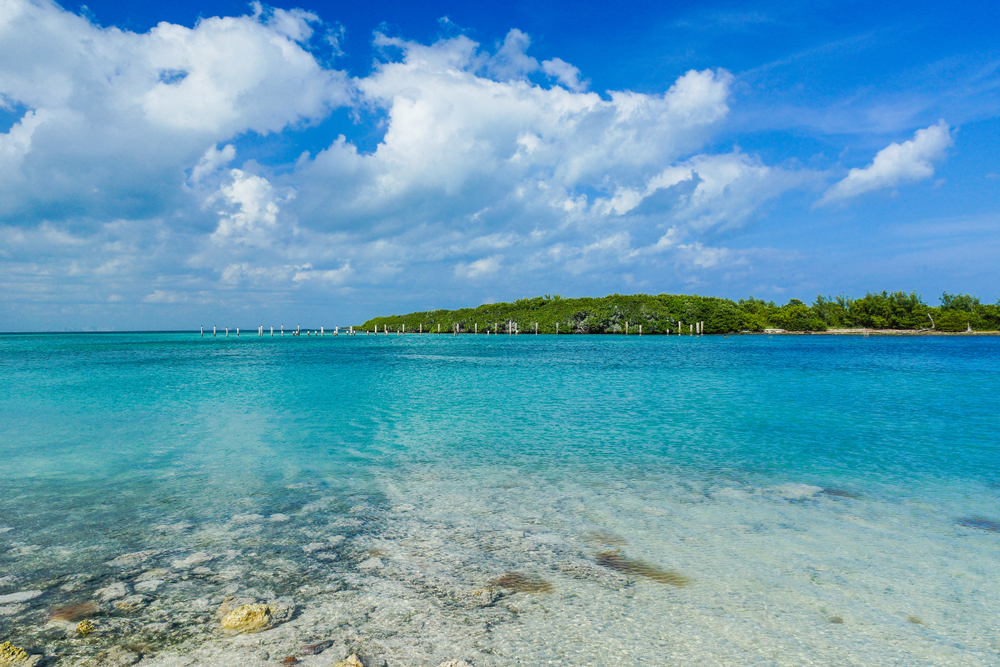
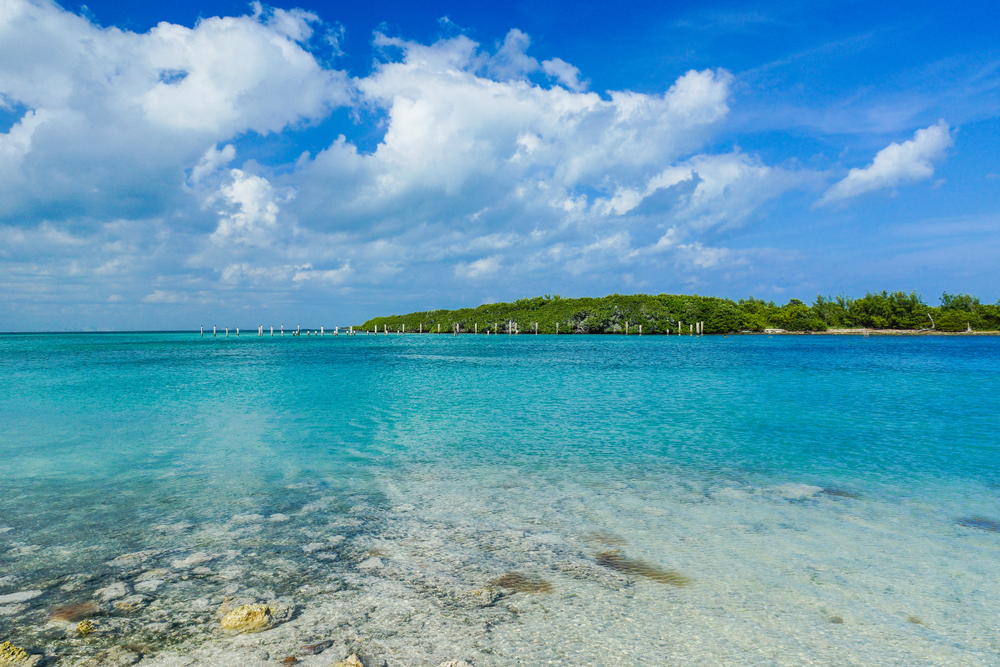
Biscayne National Park is located in southeastern Florida just south of Miami. Established as a national park in 1980, it covers approximately 270 square miles (700 sq km), making it one of the largest marine parks in the United States. R
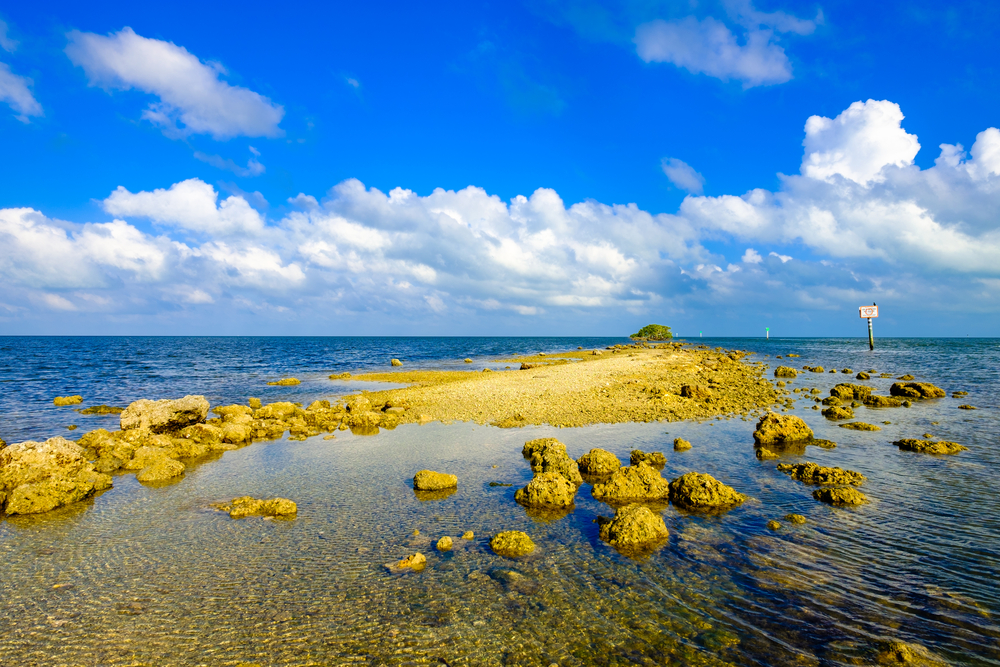
emarkably, about 95 percent of the park consists of water, protecting a vast expanse of Biscayne Bay, coral reefs, mangrove shorelines, and islands. The park borders the northern portion of the Florida Keys and lies near other renowned protected areas including Everglades National Park and Dry Tortugas National Park. Together, these parks preserve some of the most important marine and coastal ecosystems in North America.
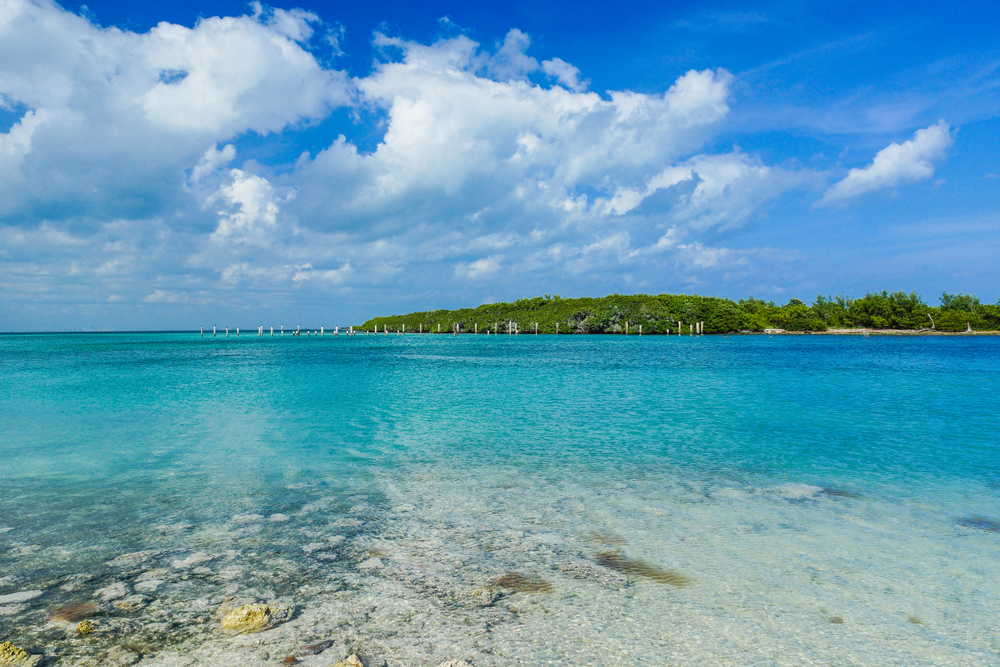
The park is best known for its crystal-clear waters, vibrant coral reefs, and exceptional opportunities for boating, snorkeling, diving, and wildlife viewing. Unlike many national parks where visitors primarily explore on foot, Biscayne is experienced largely by water. The park protects the northernmost section of the Florida Reef Tract, the only living coral barrier reef in the continental United States.
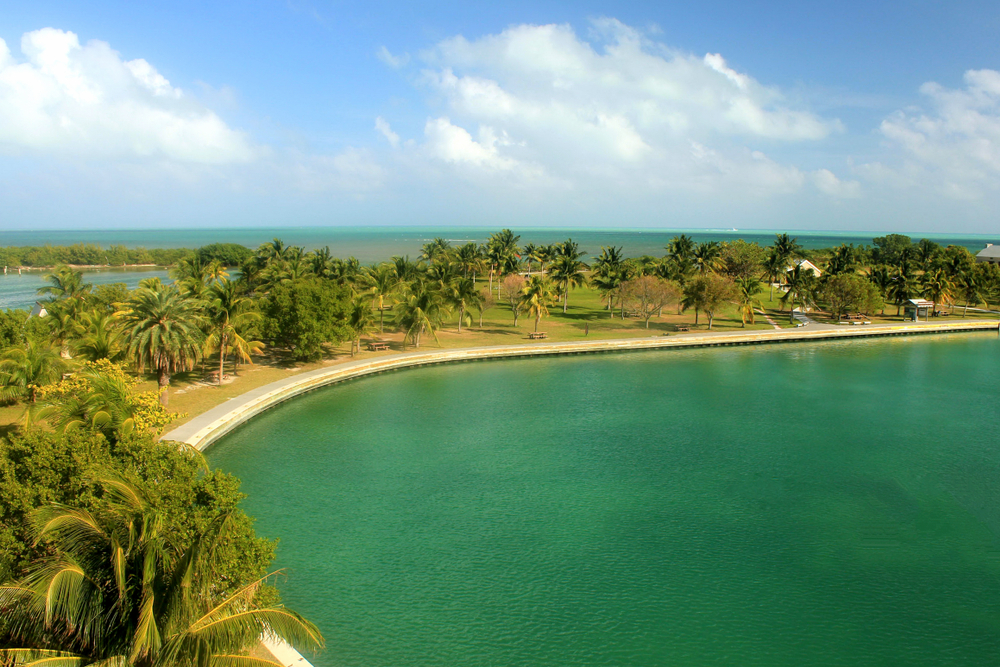
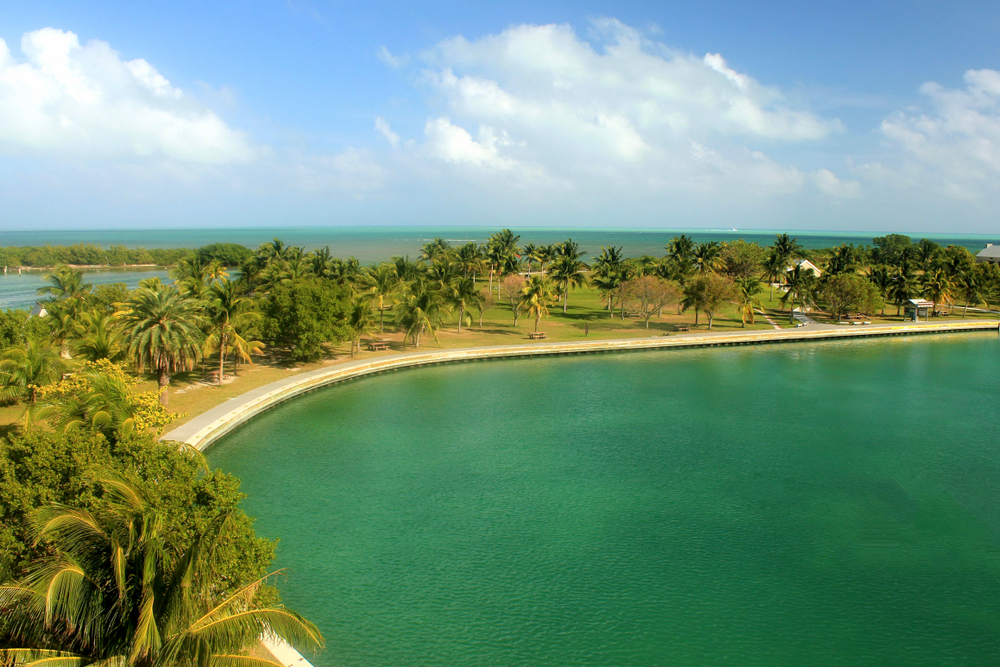
Popular activities include snorkeling among colorful fish, kayaking through mangrove channels, exploring historic shipwrecks, and visiting Boca Chita Key, home to the park’s iconic lighthouse. The Maritime Heritage Trail, which features several shipwrecks accessible to divers, highlights the park’s rich maritime history.
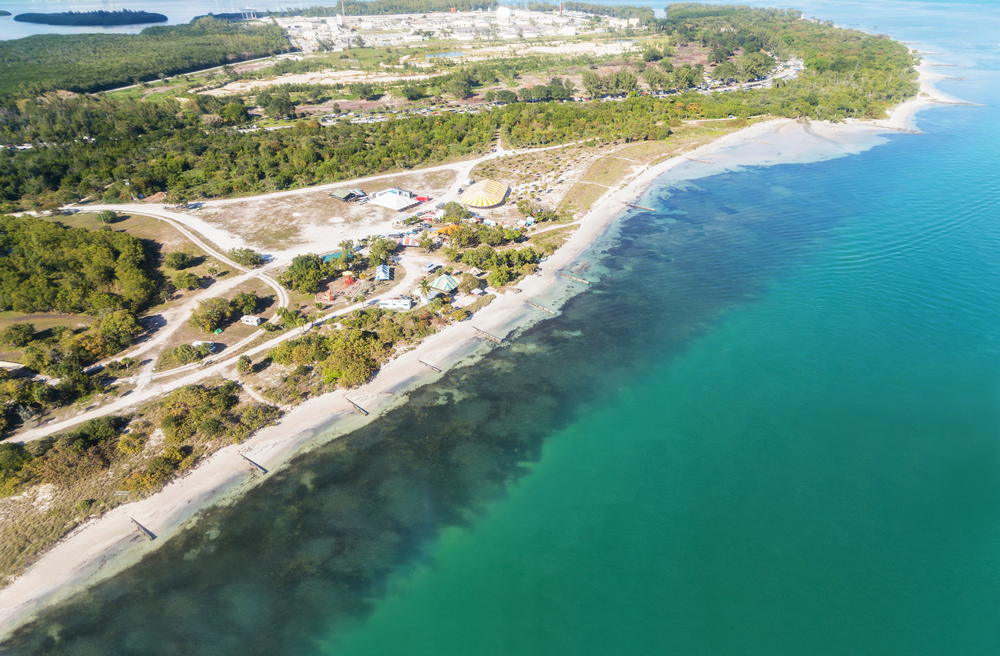
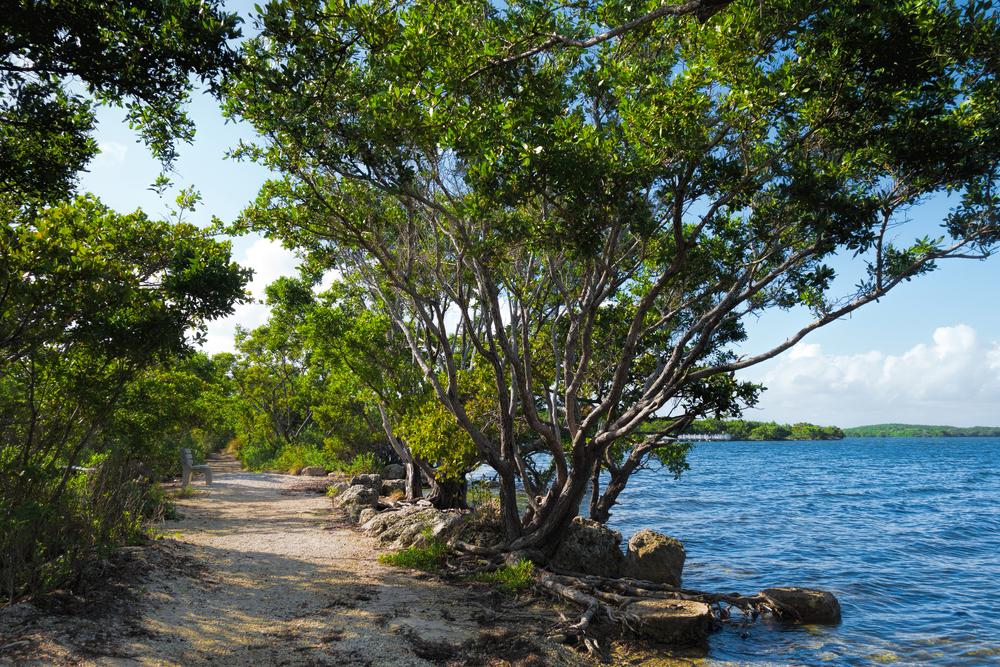
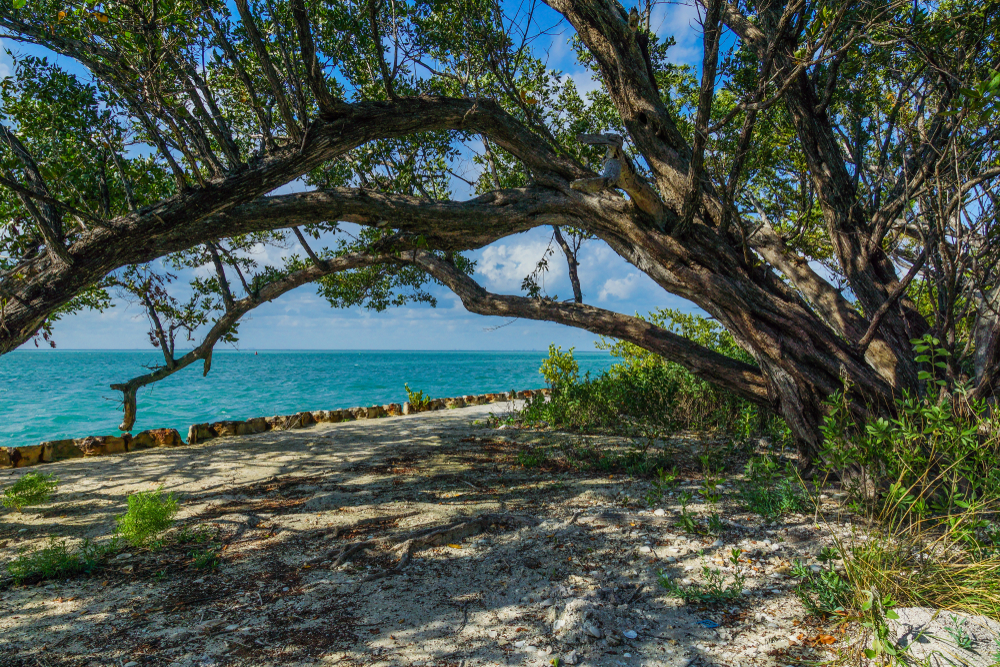
Geographically, Biscayne National Park encompasses four interconnected ecosystems: mangrove forests, Biscayne Bay, the Florida Keys islands, and offshore coral reefs. The shallow waters of Biscayne Bay provide critical nursery habitat for marine life, while extensive mangrove shorelines help stabilize coastlines and protect against storm impacts.
Small islands and keys rise above the surrounding waters, creating nesting habitat for birds and refuge for other wildlife. Offshore coral reefs support one of the most biologically diverse marine environments in the United States. This combination of habitats creates an ecological continuum stretching from the mainland coast to the open Atlantic Ocean.
Wildlife is abundant throughout the park’s marine and coastal environments. More than 600 species of fish inhabit the park’s waters, including parrotfish, angelfish, snapper, grouper, and tarpon. Bottlenose dolphins and West Indian manatees are among the park’s most beloved marine mammals. Green sea turtles, loggerhead turtles, and hawksbill turtles utilize the park’s waters and nearby nesting beaches.
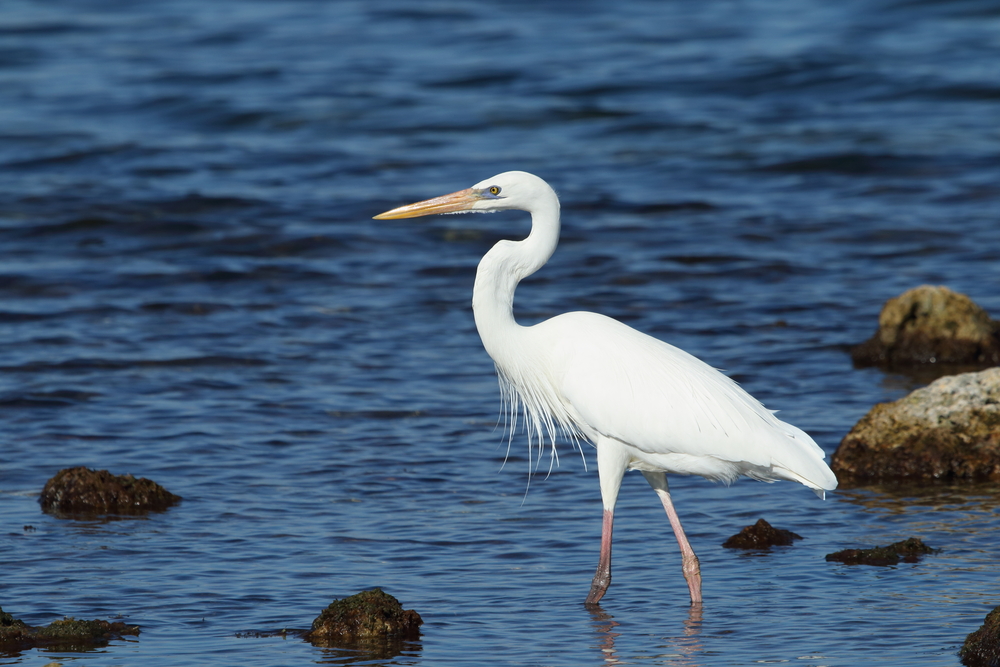
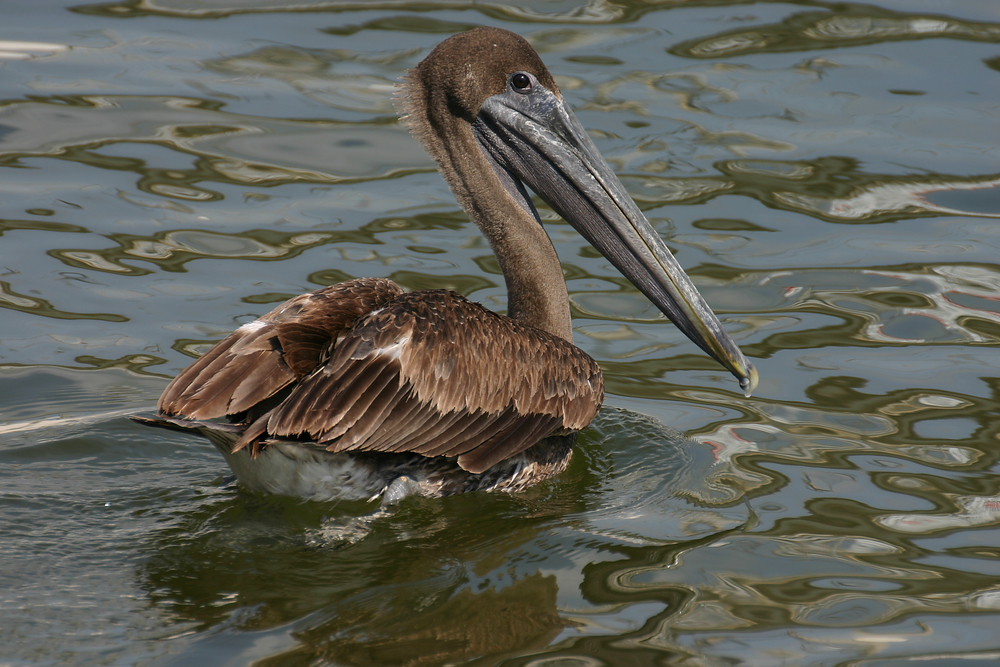
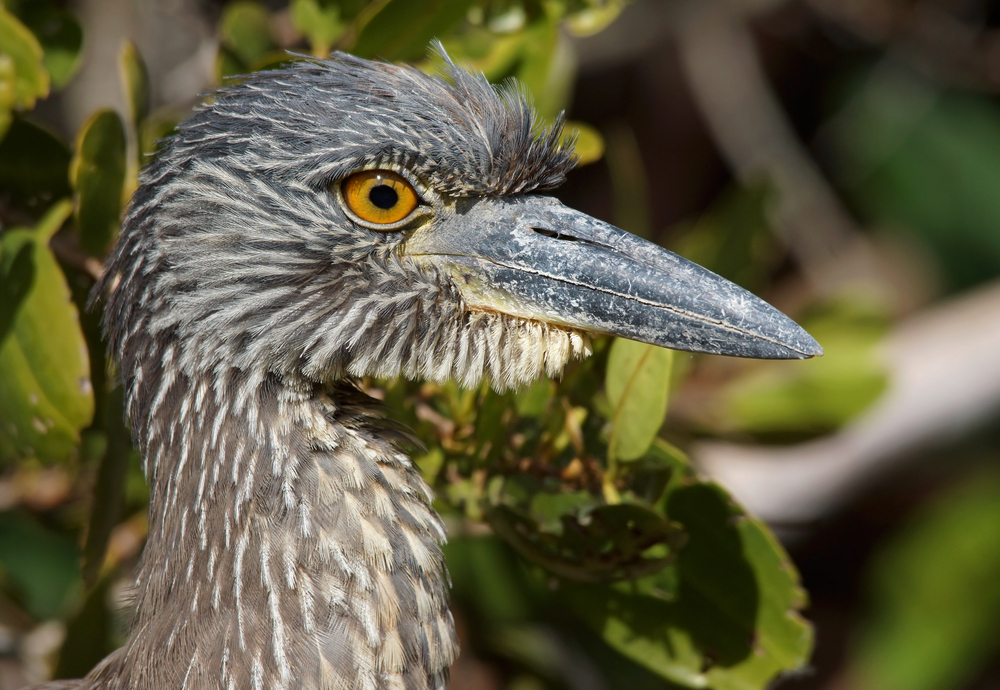
Birdlife is equally impressive, with pelicans, ospreys, herons, egrets, roseate spoonbills, and numerous migratory species commonly observed. The coral reefs themselves support countless invertebrates, sponges, and other organisms that form the foundation of this complex ecosystem.
Biscayne National Park plays a vital role in protecting one of the most significant marine ecosystems in the United States. The park safeguards coral reefs that face increasing threats from climate change, coral disease, pollution, and ocean warming. It also preserves essential habitat for endangered species and supports fisheries that benefit the broader region.
Ecologically, Biscayne is often compared to marine treasures such as Great Barrier Reef Marine Park and Bonaire National Marine Park because of its coral reef biodiversity and conservation importance. Through its turquoise waters, thriving marine life, historic shipwrecks, and interconnected coastal ecosystems, Biscayne National Park stands as one of America’s most extraordinary marine protected areas and a vital sanctuary for the natural heritage of South Florida.
Photos





Things to See
Things To Do
Engaging Biscayne
Biscayne National Park Trails
The majority of the national park is accounted for by water which makes trail possibilities for hiking rather limited. However, there are 5 walking or hiking trails. These make for nice escapes from the traditional swimming, snorkeling, and other water-related activities.


Park Protection
 Biscayne National Park was created to protect a vast subtropical marine ecosystem that includes coral reefs, seagrass beds, mangrove forests, and the northernmost Florida Keys. Nearly all of the park lies underwater, providing critical habitat for endangered species such as the West Indian manatee, hawksbill sea turtle, green sea turtle, and smalltooth sawfish. Its waters support hundreds of fish species, while extensive mangrove shorelines serve as important nurseries for marine life throughout southern Florida.
The park also protects portions of the Florida Reef, the only living coral reef system in the continental United States, along with numerous historic shipwrecks associated with centuries of maritime history. Its interconnected marine habitats sustain exceptional biodiversity and help maintain the health of nearby coastal ecosystems. Together, Biscayne National Park preserves one of North America’s most important subtropical marine environments, safeguarding coral reefs, mangroves, seagrass ecosystems, and the wildlife that depends upon them.
FAQ’s
What is the main reason people visit Biscayne National Park?
You visit Biscayne National Park to get out on the water and experience a side of South Florida that feels surprisingly far removed from nearby Miami. Instead of mountains, highways, or long hiking trails, you will find turquoise water, mangrove shorelines, coral reefs, small tropical islands, shipwrecks, seagrass beds, and an extraordinary variety of marine life.
The park is approximately 95% water, so the most rewarding experiences usually involve a boat, kayak, paddleboard, snorkeling gear, or scuba equipment. You can cruise to Boca Chita Key, snorkel over coral reefs, dive historic shipwrecks, paddle through mangroves, watch dolphins and manatees, fish in Biscayne Bay, or camp on a remote island accessible only by boat.
If you remain only at the mainland visitor center, you will see a peaceful section of shoreline, but you will not experience most of what makes Biscayne special. To truly understand the park, you should plan at least one guided boat, snorkeling, paddling, or diving excursion. The National Park Service describes Biscayne as a rare combination of aquamarine waters, emerald islands, coral reefs, and thousands of years of human history.
What animals can visitors hope to see in Biscayne National Park?
Biscayne National Park has documented roughly 28 mammal species and more than 40 reptile species, although the park’s published lists are not considered exhaustive. It also protects more than 600 native fish species, numerous crustaceans, mollusks, corals, sponges, and other marine animals.
Because Biscayne is primarily marine, your wildlife experience will be very different from one in a traditional land-based park. You may see bottlenose dolphins surfacing beside a boat, manatees near the visitor center, sea turtles while snorkeling, rays gliding over sandy bottoms, or schools of tropical fish moving through the reef.
Some animals are much easier to find than others. Dolphins, fish, rays, lizards, crabs, and occasional manatees are realistic possibilities. Bobcats, whales, endangered rodents, crocodiles, and rare sea turtles are much less predictable.
Some of the most notable mammals and reptiles found in Biscayne National Park include:
- West Indian Manatee
- Bottlenose Dolphin
- Atlantic Spotted Dolphin
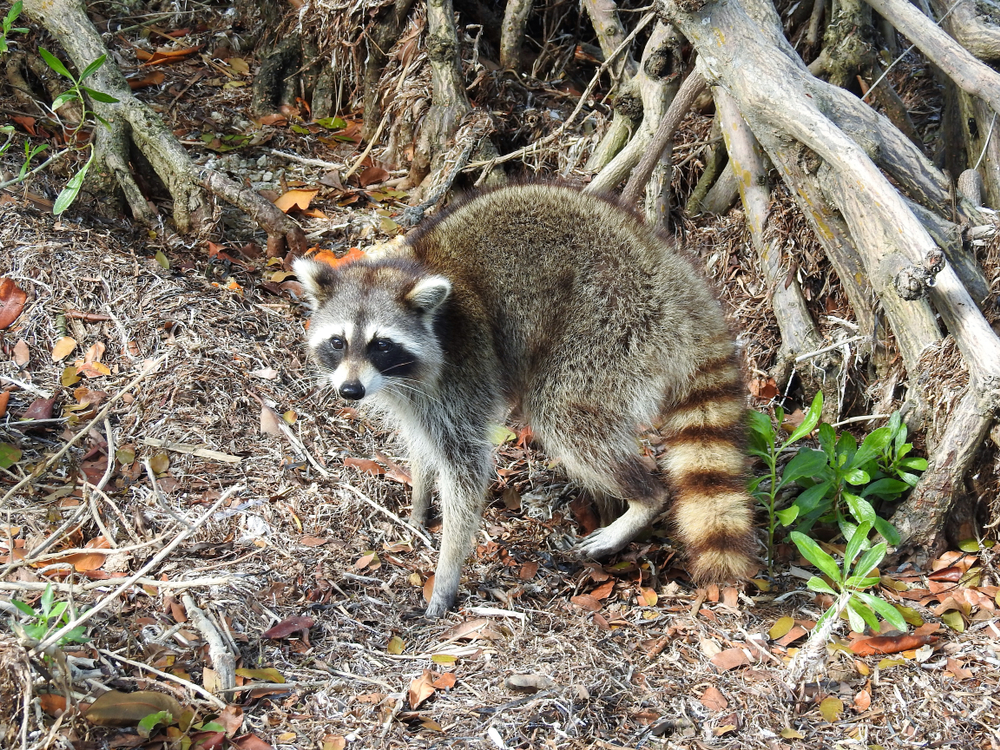
- Raccoon
- Marsh Rabbit
- Key Deer (occasionally nearby)
- Bobcat
- River Otter
- Gray Fox
- Eastern Cottontail
- Cotton Mouse
- Rice Rat
- Florida Mouse
- Big Brown Bat
- Evening Bat
- Seminole Bat
- Red Bat
- Hoary Bat
- Brazilian Free-tailed Bat
- Silver-haired Bat
- Northern Yellow Bat
- Eastern Pipistrelle
- Green Sea Turtle
- Hawksbill Sea Turtle
- Loggerhead Sea Turtle
- Leatherback Sea Turtle
- American Crocodile
- American Alligator
- Eastern Diamondback Rattlesnake
- Cottonmouth
- Mangrove Salt Marsh Snake
- Eastern Indigo Snake
- Southern Black Racer
- Corn Snake
- Florida Kingsnake
- Brown Anole
- Green Anole
- Six-lined Racerunner
- Mangrove Tree Crab
- Blue Crab
- Spiny Lobster
- Queen Conch
- Nurse Shark
- Lemon Shark
- Blacktip Shark
- Southern Stingray
- Spotted Eagle Ray
- Goliath Grouper
- Tarpon
- Numerous Coral Reef Fish Species
What birds can visitors hope to see in Biscayne National Park?
Biscayne National Park supports well over 200 resident, wintering, and migratory bird species. The park’s official bird list includes seabirds, shorebirds, waterfowl, wading birds, raptors, woodland birds, and neotropical migrants. The park’s birding program has recognized expert birders who document as many as 120 native species within Biscayne.
You are most likely to notice brown pelicans, cormorants, herons, egrets, ospreys, gulls, terns, and vultures around the bay and visitor center. If you explore the islands, mangroves, or quieter shorelines, you may find mangrove cuckoos, white-crowned pigeons, shorebirds, warblers, and seasonal migrants.
Some of the most popular birds seen in Biscayne National Park include:
- Brown Pelican
- American White Pelican
- Double-crested Cormorant
- Magnificent Frigatebird
- Brown Booby
- Masked Booby
- Northern Gannet
- Osprey
- Bald Eagle
- Peregrine Falcon
- Red-shouldered Hawk
- Great Blue Heron
- Great Egret
- Snowy Egret
- Little Blue Heron
- Tricolored Heron
- Green Heron
- Black-crowned Night Heron
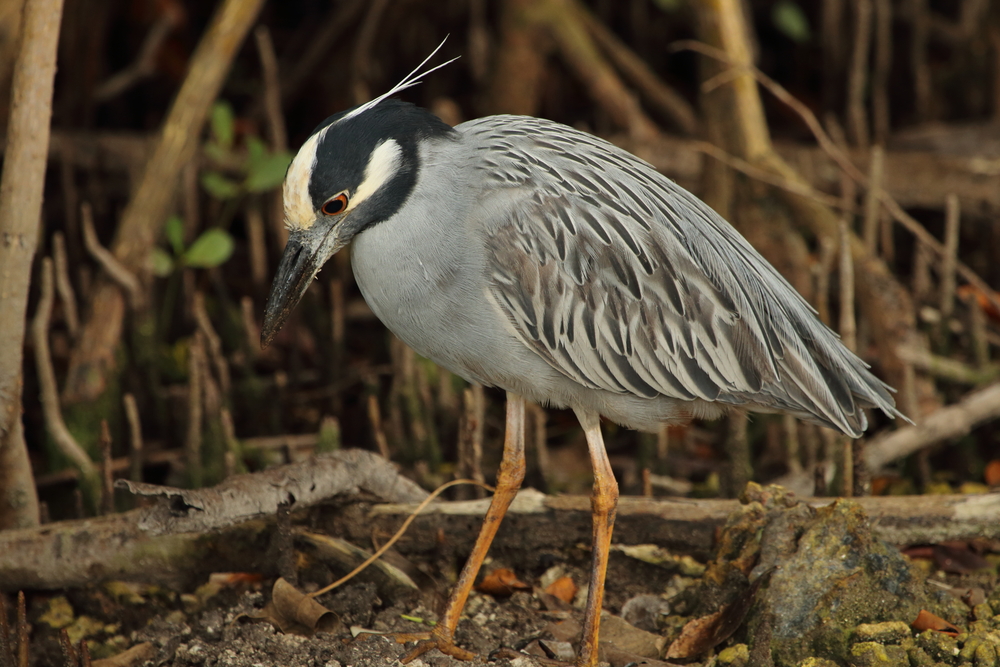
- Yellow-crowned Night Heron
- Reddish Egret
- Roseate Spoonbill
- Wood Stork
- White Ibis
- Glossy Ibis
- American Flamingo (occasional visitor)
- Black Skimmer
- Royal Tern
- Sandwich Tern
- Forster’s Tern
- Least Tern
- Caspian Tern
- Laughing Gull
- Ring-billed Gull
- Herring Gull
- Black-bellied Plover
- Willet
- Ruddy Turnstone
- Sanderling
- Short-billed Dowitcher
- Semipalmated Plover
- Belted Kingfisher
- Mangrove Cuckoo
- White-crowned Pigeon
- Gray Kingbird
- Loggerhead Shrike
- Northern Mockingbird
- Palm Warbler
- Yellow Warbler
- Black-whiskered Vireo
- Common Yellowthroat
Is Biscayne National Park worth visiting?
Yes—Biscayne National Park is worth visiting, especially if you enjoy boating, snorkeling, diving, fishing, kayaking, marine wildlife, or tropical island scenery.
The park’s greatest strength is also the source of its most common disappointment: nearly everything that makes Biscayne exceptional lies beyond the mainland shore. If you arrive expecting a conventional driving park with scenic roads and numerous land-based attractions, you may leave feeling that there was not much to see.
If you arrange a boat tour or water activity, however, Biscayne becomes one of the most distinctive national parks in the country. You can travel from a mangrove-fringed bay to coral reefs, shipwrecks, and tropical islands within the same outing.
The park is particularly worthwhile when:
- You book a snorkeling, diving, paddling, or island tour.
- You have access to your own boat.
- You enjoy marine wildlife and underwater scenery.
- You are combining it with Everglades National Park or the Florida Keys.
- You want a quieter natural experience close to Miami.
You should postpone or modify your plans when strong wind, thunderstorms, rough seas, or tropical weather make water activities unsafe.
What is the best time to visit Biscayne National Park?
Winter
December through April is generally the best time for you to visit Biscayne National Park.
Winter is usually dry and mild, with an average January high around 77°F (25°C). Humidity is lower than in summer, mosquitoes may be less intense, and conditions are often more comfortable for boating, snorkeling, paddling, camping, and walking along the shoreline.
This is also an excellent time to look for manatees. They can appear throughout the year, but the National Park Service notes that colder months generally provide the best viewing opportunities.
Cold fronts can still bring strong wind and choppy water. A sunny forecast does not automatically mean the sea will be calm, so check both wind and marine conditions before your trip.
Spring
March through May can be beautiful, with warm water, long days, and excellent opportunities for snorkeling and boating.
Temperatures and humidity begin rising as summer approaches. Afternoon storms become more likely later in the season, and mosquitoes may become more noticeable around mangroves and island campsites.
Summer
June through September is hot, humid, wet, and stormy. The average August high is approximately 90°F (32°C), and August averages more than nine inches of rain. Afternoon thunderstorms are common, and heat indices can become uncomfortable.
Summer can still be enjoyable if you begin early, remain flexible, and watch the weather closely. Water temperatures are warm, but visibility, waves, thunderstorms, and rain can change quickly.
Hurricane season officially runs from June 1 through November 30. Tropical storms and hurricanes can cancel boat tours, close facilities, damage docks, and make island access unsafe.
Autumn
October and November are transitional months. Temperatures gradually become more comfortable, but hurricane risk continues through November.
Late November can be an excellent time to visit as humidity declines and the dry season begins.
Overall, December through April offers the most dependable combination of mild temperatures, lower rainfall, comfortable humidity, and favorable outdoor conditions.
How many days do you need to visit Biscayne National Park?
You should plan on spending one to two days in Biscayne National Park, depending on whether you want a quick introduction or a complete water-based experience.
With half a day, you can visit the Dante Fascell Visitor Center, walk the waterfront Jetty Trail, watch for manatees, explore the museum exhibits, and picnic beside Biscayne Bay. This gives you a pleasant introduction, but you will see only the small mainland portion of the park.
With one full day, you can add a guided boat excursion, snorkeling trip, paddling tour, or island visit. For most first-time visitors, this is the minimum amount of time needed to understand what makes Biscayne a national park.
A good one-day plan might include:
- Visiting the Dante Fascell Visitor Center in the morning.
- Joining a guided boat or snorkeling excursion.
- Exploring Boca Chita Key, Jones Lagoon, or a reef area.
- Returning in time for a walk along the shoreline.
With two days, you can experience more than one side of the park. You might spend your first day on a boat tour to Boca Chita Key or the Maritime Heritage Trail, then use your second day for kayaking, snorkeling, fishing, or another reef excursion.
Two days also gives you flexibility if wind or rain disrupts one of your scheduled activities. Because Biscayne is so dependent on marine conditions, that extra time can be valuable.
With three or more days, you can camp on Elliott Key or Boca Chita Key, explore with your own boat, dive several wrecks, or combine the park with Everglades National Park and nearby Key Largo.
For most visitors, one full day with a reserved water excursion is ideal. Two days is better when snorkeling, diving, boating, birdwatching, or island camping is a major reason for your trip.
How do you get to Biscayne National Park?
Flying into South Florida
If you are flying to Biscayne National Park, Miami International Airport will usually be your most convenient major airport.
From Miami International Airport, you should allow approximately one to one-and-a-half hours to reach the Dante Fascell Visitor Center, depending heavily on traffic. South Florida congestion can add significant time, particularly during weekday commuting hours.
Fort Lauderdale-Hollywood International Airport is another option, but your drive will generally take one-and-a-half to two hours. Palm Beach International Airport is much farther north and is usually less convenient unless it offers a significantly better flight.
Once you leave the airport, you will need a rental car or private transportation. There is no regular park shuttle that carries visitors from Miami directly into Biscayne National Park.
Driving from Miami
From Miami, you will travel south toward Homestead using either the Florida Turnpike or US Highway 1.
The park’s mainland address is:
9700 SW 328th Street
Sir Lancelot Jones Way
Homestead, Florida 33033
If you use the Florida Turnpike, take Exit 6 at Speedway Boulevard. Drive south to SW 328th Street, turn left, and follow the road approximately four miles east until it ends near Homestead Bayfront Marina. The park entrance will be on your left.
You should not simply enter “Biscayne National Park” into your navigation app without checking the destination. The park covers a huge section of water and islands, and some mapping programs may direct you toward a marina or inaccessible shoreline rather than the Dante Fascell Visitor Center.
Driving from Homestead
If you are staying in Homestead, reaching the park is easy. You should allow approximately 20 minutes, although local traffic can add time.
Homestead is the most practical base when you want to combine Biscayne with Everglades National Park. It offers hotels, restaurants, grocery stores, fuel, and access to both parks without requiring you to stay in central Miami.
Driving from Key Largo
From Key Largo, you should allow approximately 40 minutes to one hour to reach the Dante Fascell Visitor Center, depending on traffic.
This makes Biscayne easy to combine with a Florida Keys trip. You can stay in Key Largo, visit Biscayne for the day, and then continue exploring reefs and marine attractions farther south.
The National Park Service’s published estimates place Key Largo about 40 minutes away under normal conditions.
Driving from Everglades National Park
If you are visiting the Ernest F. Coe Visitor Center or Royal Palm area of Everglades National Park, Biscayne’s mainland visitor center is generally about 35 to 50 minutes away.
That proximity makes the two parks a natural combination. You can explore Everglades wetlands and wildlife one day, then experience Biscayne Bay and the coral reef environment the next.
Trying to visit both thoroughly in one day is usually too rushed, especially when you have a scheduled boat tour.
What You Can Reach by Car
Your car will take you only to Convoy Point and the Dante Fascell Visitor Center. The park has approximately one mile of roadway, and there are no bridges connecting the mainland to the park’s islands or campgrounds.
At the mainland area, you can:
- Visit the visitor center.
- Walk the shoreline and Jetty Trail.
- Picnic.
- Launch a canoe or kayak.
- Watch for birds, fish, dolphins, crocodiles, and manatees.
- Join a scheduled guided excursion.
You cannot drive to Boca Chita Key, Elliott Key, Adams Key, coral reefs, or the park’s shipwrecks.
How You Reach the Islands and Reefs
To reach most of Biscayne National Park, you need one of the following:
- Your own boat.
- A private charter.
- A guided park-partner boat tour.
- A snorkeling or diving excursion.
- A guided kayaking or paddleboarding trip.
There is no regular public ferry service connecting the mainland with the islands. Elliott Key, Boca Chita Key, and island campgrounds are accessible only by boat.
Guided eco-adventures depart from the Dante Fascell Visitor Center, but schedules, destinations, and availability depend on weather and demand. You should reserve ahead rather than arriving and assuming space will be available.
Arriving with Your Own Boat
If you bring your own boat, use an appropriate public marina or launch facility outside or adjacent to the park. Homestead Bayfront Marina is located next to the mainland park entrance, while other South Florida and Upper Keys marinas may also provide access.
Navigation within Biscayne Bay requires care. Water can be extremely shallow, channels may be difficult to read, and coral reefs or seagrass beds can be damaged by grounding.
Before launching, you should:
- Carry current nautical charts.
- Review tide and weather information.
- Use GPS without relying on it exclusively.
- Wear polarized sunglasses to help read shallow water.
- Reduce speed in unfamiliar areas.
- know where coral reefs, shoals, and restricted zones are located.
The National Park Service advises boaters to check tides, use navigational tools, monitor weather, and slow down when visibility is poor.
Who is involved in protecting and supporting Biscayne National Park?
Several organizations help protect Biscayne National Park:
- National Park Service – manages Biscayne National Park.
- Biscayne National Park Institute – provides education, tours, and conservation support.
- National Park Foundation – supports projects throughout the National Park System.
- Florida Fish and Wildlife Conservation Commission – assists with wildlife management and marine conservation.
- Scientists, volunteers, and conservation organizations working to protect coral reefs, seagrass beds, and marine wildlife.
What is unique about Biscayne National Park?
Biscayne National Park is unique because most of the protected landscape lies underwater. Approximately 95% of the park is water, which means its roads are boat channels, its trails include coral reefs, and many of its most important landmarks are islands or shipwrecks.
The park protects four connected ecosystems:
- Mangrove shoreline.
- Shallow Biscayne Bay.
- The northern Florida Keys.
- The offshore coral reef.
You can move through all four during a single boat trip, beginning near mainland mangroves and ending above a reef filled with tropical fish.
Biscayne is also unusual because it protects an extraordinary combination of nature and history. Beneath the water are shipwrecks representing centuries of maritime travel. On the islands are traces of Indigenous people, farmers, pineapple growers, wealthy private estates, fishermen, and early Florida Keys communities.
Its location makes the park even more remarkable. You can sometimes see the Miami skyline while floating above coral reefs, watching dolphins, or exploring an island that feels isolated from the city.
Do you need a boat to visit Biscayne National Park?
You do not need a boat to enter the park, but you need one to experience most of it.
By car, you can reach the Dante Fascell Visitor Center, shoreline, picnic area, kayak launch, and Jetty Trail at Convoy Point. That is a worthwhile stop, especially when you have only a few hours.
However, the islands, coral reefs, shipwrecks, and most of the park’s open water are accessible only by boat. There are no roads or bridges to the keys and no regular public ferry service.
For your first visit, a guided boat excursion is usually the easiest and most rewarding choice.
Can you snorkel in Biscayne National Park?
Yes. Snorkeling is one of the best ways for you to experience Biscayne National Park.
Depending on weather and water conditions, guided excursions may take you to coral reefs, seagrass beds, mangrove areas, shipwrecks, or shallow coastal habitats. You may see parrotfish, angelfish, snapper, barracuda, rays, turtles, sponges, and coral formations.
You should understand that snorkeling locations are not generally accessible by walking from the mainland visitor center. Most quality snorkeling areas require a boat ride.
Book in advance, confirm what equipment is included, and ask whether the trip is appropriate for your swimming ability. Weather can force operators to change destinations or cancel trips.
What is the Maritime Heritage Trail in Biscayne National Park?
The Maritime Heritage Trail is a collection of historic shipwrecks and maritime sites preserved within the park.
Some sites are suitable for snorkeling, while others require scuba diving because of their depth. The trail allows you to explore both marine life and the remains of ships associated with trade, migration, navigation, storms, and reef hazards.
You should visit through an experienced operator unless you have the boat-handling, navigation, and diving skills required to reach the sites safely.
Never remove artifacts, coral, or pieces of a wreck. These sites are protected cultural resources as well as marine habitats.
Sources
- Britannica, Biscayne National Park, https://www.britannica.com/place/Biscayne-National-Park, retrieved March 2020.
- National Geographic, Dive into the World’s Third Longest Coral Reef, https://www.nationalgeographic.com/travel/national-parks/biscayne-national-…, retrieved March 2020.
- National Park Foundation, An Aquamarine Paradise, https://www.nationalparks.org/explore-parks/biscayne-national-park, retrieved March 2020.
- National Park Service, Biscayne National Park, https://www.nps.gov/bisc/planyourvisit/index.htm, retrieved March 2020.
- Travel & Leisure, Biscayne National Park is 95% Underwater – That’s Exactly Why You Need to See It, https://www.travelandleisure.com/trip-ideas/national-parks/biscayne-nationa…, retrieved March 2020.