

About
Semuliki National Park, the park is located in western Uganda along the border with the Democratic Republic of the Congo within the Albertine Rift Valley. The park covers approximately 85 square miles (220 sq km) and lies between the eastern slopes of the Rwenzori Mountains National Park and the Semuliki River, which forms part of Uganda’s western boundary.
Established as a national park in 1993, Semuliki protects the easternmost extension of the vast Congo Basin rainforest. Nearby protected areas include Rwenzori Mountains National Park and Queen Elizabeth National Park, creating an important conservation landscape that supports exceptional biodiversity. Despite its relatively small size, Semuliki is one of Uganda’s most biologically significant protected areas.
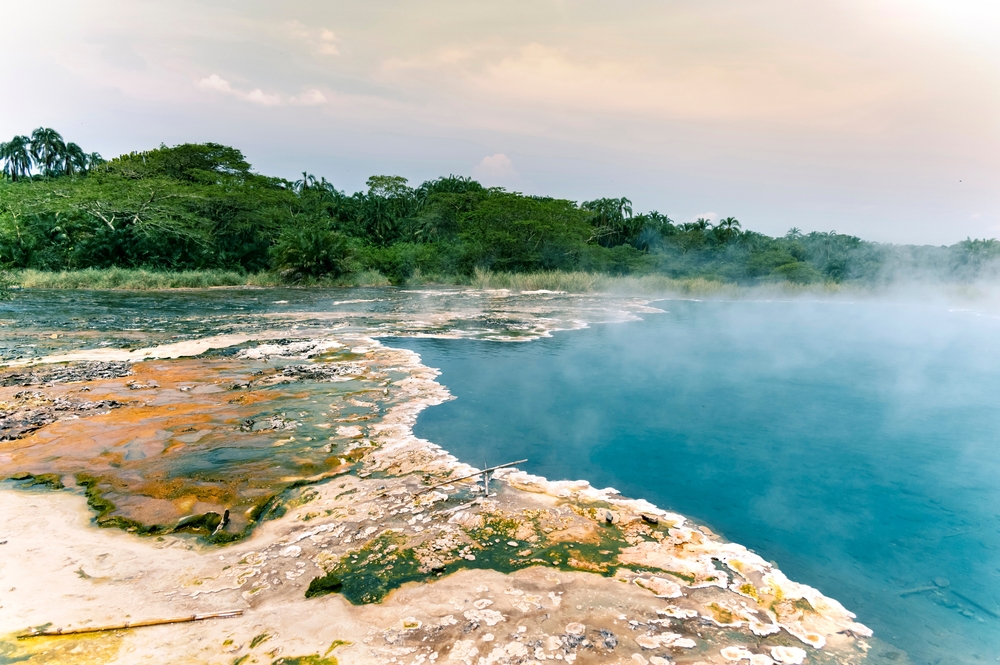
Semuliki National Park is best known for its lowland tropical rainforest, rich birdlife, and the famous Sempaya Hot Springs. Unlike many East African parks dominated by savannas, Semuliki offers visitors the opportunity to experience a true equatorial rainforest ecosystem. The park’s dense forests, winding trails, and unique wildlife create an atmosphere more reminiscent of Central Africa than East Africa.
Visitors are particularly drawn to the Sempaya Hot Springs, where boiling water emerges from the earth in dramatic displays of geothermal activity. Nature walks, birdwatching, primate viewing, and cultural experiences with local communities provide opportunities to explore one of Uganda’s most distinctive national parks.
The geography of Semuliki National Park is defined by lowland rainforest, river systems, wetlands, and alluvial plains within the Albertine Rift. The Semuliki River meanders along the park’s western boundary, helping shape the surrounding ecosystem. The warm, humid climate supports lush vegetation year-round and contributes to the park’s remarkable biodiversity.
Towering tropical trees, dense undergrowth, lianas, and palms dominate much of the landscape. Numerous streams and wetlands provide important habitats for wildlife and help sustain the forest ecosystem. The park’s location between the Congo Basin and East Africa creates a unique transition zone where species from both regions occur together.
Wildlife within Semuliki National Park is exceptionally diverse. The park supports more than 50 mammal species, including forest elephants, buffalo, leopards, bushbabies, and several species of monkeys. Primates such as black-and-white colobus monkeys, red-tailed monkeys, vervet monkeys, and chimpanzees can be found within the forest.
Semuliki is internationally renowned for birdwatching, with more than 440 recorded bird species. Many of these species are characteristic of the Congo Basin and occur nowhere else in East Africa. Notable birds include hornbills, turacos, kingfishers, forest flycatchers, and the elusive shoebill in nearby wetland habitats. The park’s abundance of birds makes it one of the finest birding destinations on the continent.
Semuliki National Park plays a critical role in conserving the eastern extension of the Congo Basin rainforest and protecting species found at the edge of their geographic ranges. The park safeguards unique lowland forest ecosystems that are rare in Uganda and provides important habitat for numerous endemic and threatened species.
Its conservation significance is often compared to tropical rainforest reserves such as Odzala-Kokoua National Park and Kibale National Park, where extraordinary biodiversity thrives within dense forest environments. Today, Semuliki National Park remains one of Uganda’s most remarkable natural treasures, preserving a vital link between East African and Central African ecosystems while offering visitors an unforgettable rainforest experience.
Things to See
Things To Do
Engaging Semuliki National Park
