About

Mikumi National Park is located in south-central Tanzania at the northern edge of the Selous ecosystem. The park covers approximately 1,247 square miles (3,230 sq km) and is bordered by the rugged Uluguru Mountains to the northeast and the Lumango Mountains to the southeast.

Mikumi is closely connected to the neighboring Nyerere National Park and lies near the biologically rich Udzungwa Mountains National Park. Established in 1964, Mikumi is one of Tanzania’s most accessible national parks, located along the main highway connecting Dar es Salaam with the country’s southern and western regions. Its accessibility, abundant wildlife, and scenic landscapes have made it one of Tanzania’s most popular safari destinations.

Mikumi National Park is best known for its expansive Mkata Floodplain, a broad grassland ecosystem often compared to the famous plains of the Serengeti. Visitors are attracted by the park’s excellent wildlife viewing opportunities and the chance to observe a wide variety of animals within a relatively compact area. Large herds of grazing animals roam the open plains, creating classic African safari scenes against a backdrop of distant mountains.

The park offers game drives, birdwatching, photography, and opportunities to experience Tanzania’s southern safari circuit without the crowds often found in northern parks. Its combination of accessibility and abundant wildlife makes it an ideal destination for both first-time and experienced safari travelers.

The geography of Mikumi National Park is dominated by open floodplains, rolling grasslands, acacia woodlands, and scattered rocky hills. The Mkata River and its seasonal tributaries help shape much of the park’s landscape. During the rainy season, sections of the floodplain become lush and green, supporting abundant grazing wildlife.

In the dry season, animals congregate around remaining water sources, creating excellent viewing opportunities. Vegetation varies from open savanna grasslands to woodland habitats containing acacia, baobab, and other drought-tolerant tree species. This diversity of habitats supports a rich variety of wildlife and contributes to the park’s ecological significance.

Wildlife is one of Mikumi’s greatest attractions. The park supports healthy populations of elephant, buffalo, giraffe, zebra, wildebeest, impala, eland, and several other antelope species. Predators such as lion, leopard, spotted hyena, and African wild dog are also present, although some are more elusive than others. Hippos are commonly observed in pools throughout the park, while crocodiles inhabit river systems and wetlands.

Mikumi is also a premier birdwatching destination, with more than 400 recorded bird species. Lilac-breasted rollers, secretary birds, bateleurs, hornbills, storks, and numerous waterbirds can be seen across the park’s diverse habitats. The abundance of wildlife makes Mikumi one of the most rewarding parks in Tanzania for game viewing.

Mikumi National Park plays an important conservation role by protecting critical habitats within the greater Selous ecosystem. The park helps maintain wildlife corridors that connect southern Tanzania’s protected areas and supports populations of large mammals that require extensive landscapes for survival.

Its floodplains, woodlands, and wetlands provide refuge for numerous species and contribute to regional biodiversity conservation. In many respects, Mikumi can be compared to iconic savanna parks such as Serengeti National Park and Kruger National Park, though it offers a quieter and more accessible experience. Today, Mikumi remains one of Tanzania’s most important national parks, providing visitors with exceptional wildlife encounters while safeguarding a vital part of East Africa’s natural heritage.

Things to See

Predators

Mikumi National Park’s expansive savannahs and woodland areas are home to an impressive range of predators, making it a thrilling destination for wildlife enthusiasts seeking to observe these apex hunters in action.

African Lion
The iconic African lion roams Mikumi’s plains in prides, often seen resting during the day or actively hunting large herbivores at dusk.

Leopard
Elusive and solitary, the leopard stalks silently through woodlands and rocky outcrops, waiting for the perfect moment to ambush its prey.

Cheetah
With its unmatched speed, the cheetah sprints across the open plains, targeting smaller antelope like impalas and gazelles.

Spotted Hyena
Both hunters and scavengers, spotted hyenas use teamwork to overpower prey or steal kills from other predators on Mikumi’s vast grasslands.

Side-striped Jackal
This adaptable predator hunts rodents, reptiles, and insects while scavenging leftovers from larger carnivores.

African Wild Dog
These highly endangered predators hunt in coordinated packs, relentlessly pursuing prey over long distances with impressive endurance.

Honey Badger
Fearless and relentless, the honey badger preys on small mammals, birds, and snakes, often challenging much larger animals.

Serval
Using its long legs and acute senses, the serval hunts rodents and small birds in Mikumi’s tall grasses.

Crocodile
Nile crocodiles dominate the park’s waterways, lying in wait to ambush animals that venture near rivers or waterholes.

African Rock Python
This massive constrictor hides near water sources and in dense vegetation, waiting to strike at unsuspecting prey like small antelope.

Popular

Mikumi National Park, located in southern Tanzania, boasts an extraordinary array of wildlife, where open plains and woodland savannah create the perfect haven for iconic African species.

African Elephant
Massive herds of African elephants roam Mikumi’s plains and woodlands, grazing on grass and using their trunks to forage for bark and leaves.

Cape Buffalo
One of the park’s most formidable herbivores, the Cape buffalo grazes in large groups, its sheer size deterring most predators.

Masai Giraffe
Recognizable by its distinct blotchy spots, the Masai giraffe browses the treetops, feeding on tender leaves and shoots.

Zebra
Zebras, with their bold black-and-white stripes, form large herds on Mikumi’s plains, grazing alongside wildebeests.

Greater Kudu
This striking antelope, known for its spiraled horns and graceful appearance, thrives in Mikumi’s woodland edges and dry riverbeds.

Wildebeest
Wildebeests migrate across Mikumi’s vast grasslands in large numbers, their movements attracting predators in search of prey.

Eland
Africa’s largest antelope, the eland roams Mikumi’s open plains, its strength and size making it a symbol of resilience.

Warthog
Warthogs are often seen darting across the savannah, using their snouts to root for grasses, tubers, and roots.

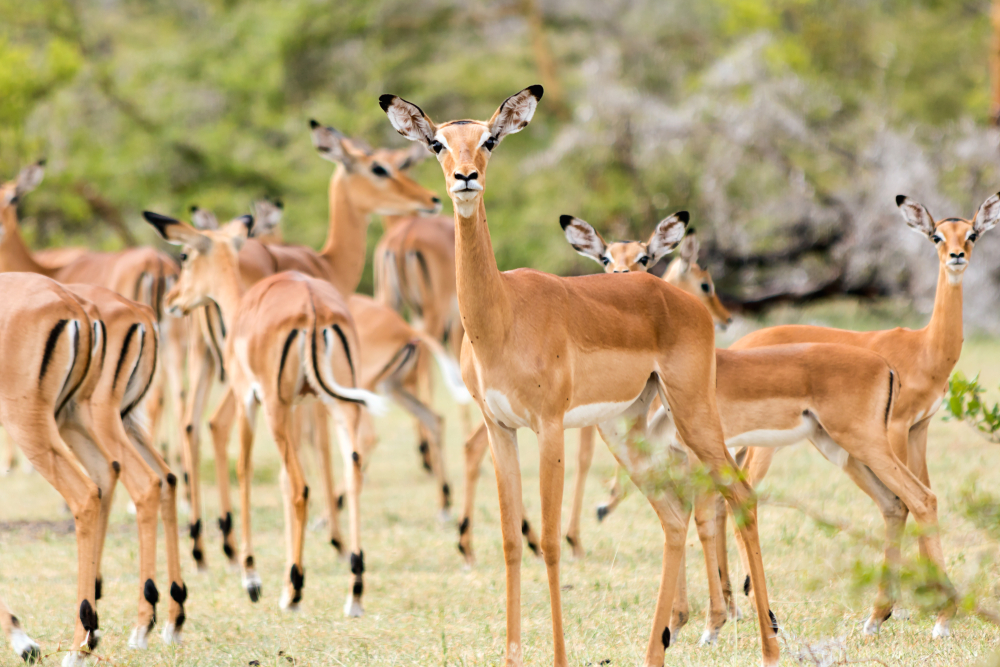
Impala
This agile and elegant antelope forms large herds, leaping gracefully through the grasslands to avoid predators.

Bushbuck
Preferring denser cover, the bushbuck browses quietly on shrubs, blending perfectly with its woodland surroundings.

Birds

With its diverse habitats, Mikumi National Park is a birdwatcher’s paradise, hosting both resident and migratory bird species that thrive across its wetlands, savannahs, and woodlands.

Lilac-breasted Roller
This vibrant bird dazzles with its brilliant blue and lilac plumage as it perches on branches to hunt for insects.

Yellow-billed Stork
Wading through wetlands, the yellow-billed stork sweeps its bill through shallow water to catch fish and aquatic prey.

African Fish Eagle
The iconic African fish eagle, with its piercing call, soars over rivers and lakes, diving dramatically to snatch fish.

Grey Crowned Crane
This elegant bird, with its golden crest and regal movements, is often seen striding through grassy wetlands.

Marabou Stork
A master scavenger, the marabou stork patrols open plains and carcasses, soaring high with its impressive wingspan.

Secretary Bird
With long legs and sharp talons, the secretary bird hunts snakes and small mammals by stalking the savannah floor.

Helmeted Guineafowl
Foraging in flocks, helmeted guineafowl scratch the ground for seeds and insects, their spotted plumage offering camouflage.

White-backed Vulture
These large scavengers circle high above the plains, descending quickly to feed on animal carcasses left by predators.

Malachite Kingfisher
Perched near wetlands, this small and brilliantly colored kingfisher dives swiftly to catch small fish and insects.

Open-billed Stork
This distinctive stork uses its specialized bill to crack open snails and mollusks, thriving near water bodies.

Things To Do

Engaging Mikumi National Park

placeholder

Game Drives

placeholder

Walking Safaris

placeholder

Birdwatching