

About
Nyerere National Park is located in southeastern Tanzania and covers approximately 11,583 square miles (30,893 sq km), making it the largest national park in Africa. The park was established in 2019 from a portion of the former Selous Game Reserve and is named in honor of Tanzania’s first president, Julius Nyerere.
Nyerere National Park forms part of a vast protected landscape that includes the neighboring Mikumi National Park, Udzungwa Mountains National Park, and the remaining Selous conservation areas. Its immense size, remote character, and exceptional biodiversity make it one of Africa’s most important wilderness destinations.
Nyerere National Park is best known for its enormous wildlife populations, the mighty Rufiji River system, and its authentic safari experiences. Unlike many parks where tourism is concentrated in small areas, Nyerere offers visitors the opportunity to explore vast stretches of wilderness with relatively few other travelers.
The Rufiji River and its network of channels, oxbow lakes, and wetlands create one of East Africa’s most spectacular wildlife viewing environments. Boat safaris are among the park’s signature experiences, allowing visitors to observe animals from a unique perspective as elephants, buffalo, and antelope gather along the water’s edge. Game drives, walking safaris, and birdwatching opportunities further showcase the park’s remarkable natural diversity.
The geography of Nyerere National Park is shaped by the Rufiji River, Tanzania’s largest river system, which flows across the park before emptying into the Indian Ocean. The landscape includes broad floodplains, wetlands, lakes, riverine forests, woodlands, and open savannas.
Seasonal flooding enriches the soil and sustains a wide variety of habitats that support abundant wildlife. Miombo woodlands dominate many areas, while dense forests line rivers and permanent water sources. The combination of water, vegetation, and diverse terrain creates a rich mosaic of ecosystems that supports one of the most productive wildlife regions in Africa.
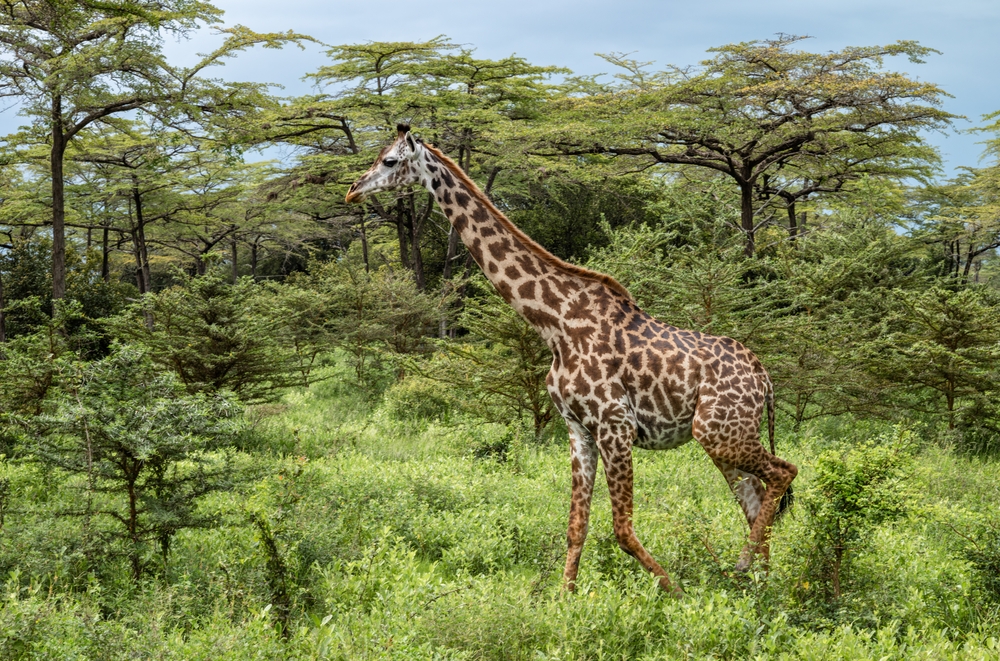
Wildlife thrives throughout Nyerere National Park. The park supports large populations of elephants, African buffalo, giraffes, zebras, hippos, crocodiles, and numerous antelope species. Predators include lions, leopards, cheetahs, and spotted hyenas. Nyerere is particularly renowned for harboring one of Africa’s largest remaining populations of African wild dogs, a species that has disappeared from much of its historical range.
The wetlands and river systems also support exceptional birdlife, with more than 400 recorded species including fish eagles, kingfishers, bee-eaters, storks, and herons. The abundance of wildlife and the park’s relatively low visitor numbers often create an experience that feels both intimate and truly wild.
Nyerere National Park plays a critical role in protecting one of the largest intact ecosystems remaining in Africa. The park safeguards extensive migration routes, watersheds, and habitats essential for elephants, wild dogs, and countless other species.
Its conservation value is comparable to some of the world’s greatest wilderness areas, including Kruger National Park and Kafue National Park, though Nyerere remains significantly less developed and more remote. By preserving vast landscapes where natural ecological processes continue largely uninterrupted, Nyerere National Park serves as a cornerstone of African conservation and a remarkable refuge for wildlife in the twenty-first century.
Things to See
Things To Do
Engaging Nyerere National Park
