About

Known locally as Garden Route National Park, the park is located along South Africa’s southern coast in the Western Cape Province. The park covers approximately 470 square miles (1,220 sq km) and stretches across one of the country’s most scenic and biologically diverse regions.

Established in 2009 through the consolidation of the former Tsitsikamma National Park, Wilderness National Park, and the Knysna forest complex, the park protects a remarkable combination of coastline, indigenous forests, lakes, rivers, mountains, and wetlands. Situated between the towns of Mossel Bay and Storms River, Garden Route National Park preserves the natural landscapes that have made South Africa’s Garden Route one of the most celebrated travel destinations in Africa.

Garden Route National Park is best known for its spectacular coastal scenery, ancient forests, and wide range of outdoor recreation opportunities. Visitors are drawn to dramatic ocean cliffs, sandy beaches, estuaries, lagoons, and dense indigenous forests that create a landscape unlike any other in South Africa.

The park offers world-class hiking, kayaking, mountain biking, birdwatching, whale watching, and adventure activities. One of its most famous attractions is the Otter Trail, widely regarded as one of the finest multi-day hiking routes in the world. The combination of marine environments, forest ecosystems, and mountain landscapes provides endless opportunities for exploration and discovery.

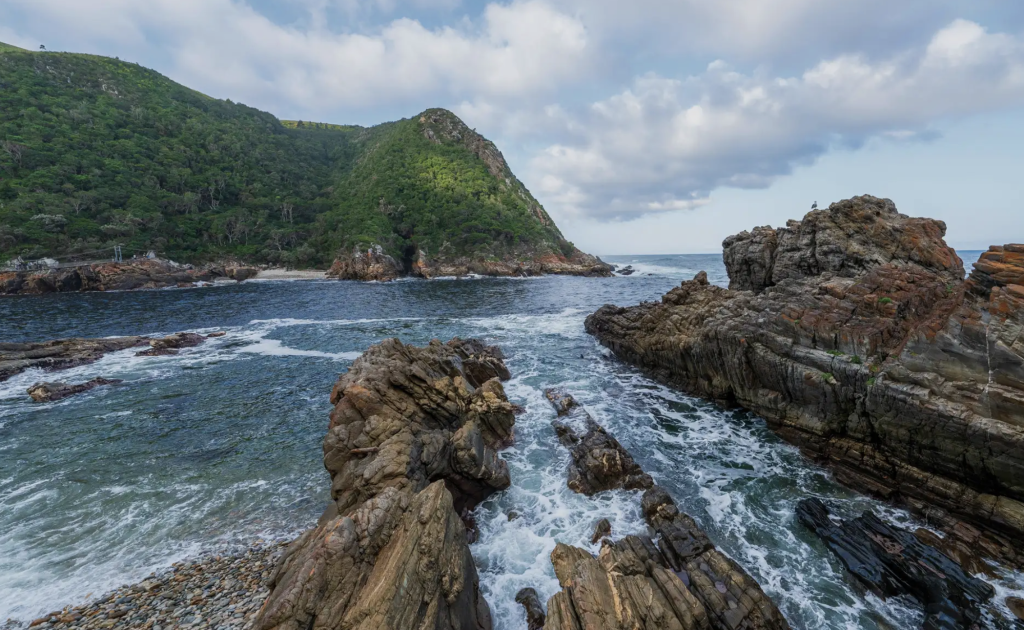
The geography of Garden Route National Park is exceptionally diverse. Along the coast, rugged cliffs plunge into the Indian Ocean while sheltered bays, estuaries, and beaches create important coastal habitats. Inland, the park protects portions of the Outeniqua and Tsitsikamma mountain ranges, which support lush forests and numerous river systems.

The Knysna forests contain some of the largest remaining indigenous forests in South Africa and are characterized by towering yellowwood trees, ferns, and dense undergrowth. Wetlands, lakes, and lagoons further enrich the landscape and provide critical habitat for wildlife. This remarkable variety of ecosystems contributes to the park’s extraordinary biodiversity and scenic appeal.

Wildlife within Garden Route National Park is equally diverse. Mammals include bushbuck, Cape grysbok, vervet monkeys, baboons, caracals, and several smaller forest species. Historically, the region was home to the famous Knysna elephants, though only a tiny remnant population may remain. Marine wildlife is a major attraction, with southern right whales, humpback whales, dolphins, seals, and numerous fish species inhabiting coastal waters.

Birdlife is especially rich, with more than 300 recorded species. Visitors may encounter the iconic Knysna turaco, African fish eagle, Narina trogon, kingfishers, sunbirds, and a wide variety of waterbirds. The diversity of habitats allows both terrestrial and marine species to thrive within the park’s boundaries.

Garden Route National Park plays a vital role in conserving one of South Africa’s most ecologically significant regions. The park protects indigenous forests, freshwater systems, coastal ecosystems, and marine habitats that support a remarkable concentration of biodiversity. Its conservation importance is often compared to protected landscapes such as Table Mountain National Park and West Coast National Park because of its ecological diversity and recreational value.

However, the combination of forests, mountains, wetlands, and coastline found within Garden Route National Park is uniquely distinctive. Today, the park remains one of South Africa’s premier conservation areas, preserving an extraordinary natural heritage while providing unforgettable experiences for visitors from around the world.

Things to See

Popular

Garden Route National Park, spanning a spectacular stretch of South Africa’s southern coastline, is a diverse landscape of forests, fynbos, rivers, and marine ecosystems that support a wide variety of unique wildlife species.

Cape Clawless Otter (Aonyx capensis)
This semi-aquatic mammal thrives in the park’s rivers and estuaries. Agile and playful, it feeds on crabs, fish, and other aquatic prey and is often seen along rocky shores.

Bushbuck (Tragelaphus scriptus)
This shy and graceful antelope inhabits the park’s dense forests. It feeds on leaves, fruits, and grasses and is most active during dawn and dusk.

Caracal (Caracal caracal)
A stealthy predator, the caracal roams the park’s forests and fynbos, hunting small mammals and birds. Its characteristic tufted ears and agility make it a fascinating but elusive resident.

Vervet Monkey (Chlorocebus pygerythrus)
These sociable primates are commonly seen in the park’s wooded areas, feeding on fruits, seeds, and insects. Their curious nature often brings them near picnic sites and campgrounds.

Honey Badger (Mellivora capensis)
Known for its fearless demeanor, the honey badger forages for insects, small mammals, and honey in the park’s forests and grasslands.

Rock Hyrax (Procavia capensis)
Found among rocky outcrops, rock hyraxes feed on grasses, leaves, and fruits. Despite their small size, they share a close evolutionary link with elephants.

Blue Duiker (Philantomba monticola)
The smallest antelope species in the park, the blue duiker is rarely seen due to its preference for dense vegetation. It feeds on forest undergrowth and fallen fruits.

Leopard Tortoise (Stigmochelys pardalis)
This large tortoise inhabits the park’s grasslands and fynbos, feeding on grasses, succulents, and fruits. It plays an important role in seed dispersal.

Cape Fur Seal (Arctocephalus pusillus)
Often spotted along the park’s coastline, these marine mammals feed on fish and squid and are skilled divers and swimmers.

Southern Right Whale (Eubalaena australis)
During migration season, these gentle giants frequent the park’s coastal waters. Known for their acrobatics and blowhole spray, they are a highlight for visitors.

Birds

Garden Route National Park is a birdwatcher’s paradise, with its diverse ecosystems supporting a wide array of birdlife, from forest dwellers to coastal species and wetland inhabitants.

Knysna Turaco (Tauraco corythaix)
This vibrant green bird is a signature species of the park’s forests, often seen gliding between trees while feeding on fruits.

Malachite Kingfisher (Corythornis cristatus)
A small, brilliantly colored bird, the malachite kingfisher is often seen along rivers and estuaries, hunting for fish and aquatic insects.

African Fish Eagle (Haliaeetus vocifer)
This iconic raptor is a frequent sight near the park’s lakes and rivers, known for its piercing call and fishing prowess.

Pied Kingfisher (Ceryle rudis)
Commonly seen hovering over water before diving for fish, this bird is a staple of the park’s wetland ecosystems.

Cape Robin-Chat (Cossypha caffra)
A common forest resident, this bird is known for its melodic songs and bright orange breast.

Greater Flamingo (Phoenicopterus roseus)
Occasionally seen in the park’s estuaries, these elegant birds feed on algae and small invertebrates using their specialized beaks.

Yellow-billed Duck (Anas undulata)
This waterfowl frequents the park’s wetlands, feeding on aquatic plants and insects.

Cape Eagle-Owl (Bubo capensis)
A large owl that roosts in the park’s rocky areas, it hunts small mammals, reptiles, and birds at night.

African Black Oystercatcher (Haematopus moquini)
This striking coastal bird feeds on shellfish along rocky shores and sandy beaches.

Orange-breasted Sunbird (Anthobaphes violacea)
An endemic bird of the fynbos, it feeds on nectar and plays a vital role in pollinating the park’s flowering plants.

Things To Do

Engaging Garden Route National Park

placeholder

Hiking

The Knysna Forests are a crown jewel of Garden Route National Park, offering visitors a chance to immerse themselves in South Africa’s largest indigenous forest. These ancient woodlands are filled with towering yellowwoods, lush undergrowth, and a tranquil ambiance that feels otherworldly.

Visitors can explore the forest on well-maintained hiking trails, such as the Circles in the Forest and Jubilee Creek trails. These paths take hikers through pristine vegetation and along streams, offering opportunities to spot wildlife like bushbuck, vervet monkeys, and the elusive Knysna elephant.

Guided walks provide added insights into the forest’s rich biodiversity and history, including its connection to local legends. Whether walking beneath the forest canopy or stopping at picturesque picnic sites, exploring the Knysna Forests is a serene and enriching way to connect with nature.

placeholder

Kayaking

The Wilderness section of Garden Route National Park offers pristine waterways perfect for canoeing and kayaking. The Touw River and Serpentine River wind through wetlands and lush vegetation, providing a peaceful setting for paddling.

These activities allow visitors to access areas teeming with life, from Cape clawless otters swimming alongside to vibrant kingfishers darting above.

Canoeing offers a unique perspective on the park’s aquatic ecosystems, where still waters mirror the surrounding natural beauty. Visitors can stop at designated picnic spots or explore trails that lead deeper into the park. This activity is suitable for all experience levels, making it a family-friendly way to experience the tranquil side of the Garden Route.

placeholder

Aquatic Adventures

The Tsitsikamma section of the park is a hub for marine exploration, offering thrilling activities along South Africa’s dramatic coastline. Snorkeling in the protected waters reveals a vibrant underwater world, teeming with colorful fish, sea urchins, and soft corals.

For more adventurous visitors, kayaking and lilo tours along Storms River Gorge combine paddling with serene floating amidst towering cliffs. On land, visitors can walk the iconic suspension bridge at Storms River Mouth, enjoying panoramic views of the rugged coast and the crashing waves below.

During whale season, boat tours offer opportunities to spot Southern Right whales and dolphins. These marine adventures highlight the unique blend of land and sea that defines Garden Route National Park, making them a must-do for thrill-seekers and nature enthusiasts alike.