

About
Known locally as Agulhas National Park, the park is located at the southern tip of South Africa in the Western Cape Province. The park covers approximately 270 square miles (700 sq km) and protects a diverse coastal landscape surrounding Cape Agulhas, the southernmost point of the African continent.
Established in 1999, Agulhas National Park preserves an ecologically significant region where the Atlantic and Indian Oceans are traditionally said to meet. The park lies southeast of Table Mountain National Park and forms part of the globally important Cape Floristic Region, a UNESCO World Heritage Site recognized for its extraordinary biodiversity. Today, Agulhas National Park stands as one of South Africa’s most important coastal conservation areas.
Agulhas National Park is best known for protecting the southernmost tip of Africa, a landmark visited by travelers from around the world. Visitors are drawn to the iconic Cape Agulhas Lighthouse, dramatic coastlines, historic shipwreck sites, and expansive fynbos-covered landscapes.
The park offers opportunities for hiking, birdwatching, whale watching, photography, and exploring South Africa’s rich maritime history. Unlike many national parks focused primarily on large mammals, Agulhas highlights coastal ecosystems, unique plant diversity, and scenic natural beauty. Its combination of historical significance and ecological importance makes it one of the country’s most distinctive protected areas.
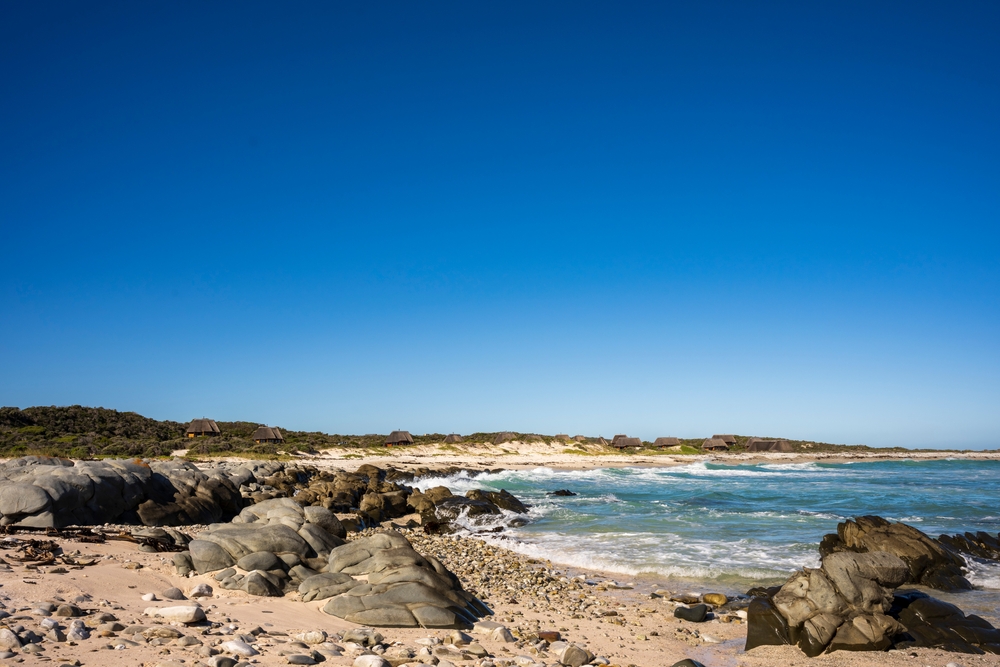
The geography of Agulhas National Park is characterized by windswept coastlines, limestone plains, wetlands, dunes, rocky shores, and extensive fynbos vegetation. The landscape is relatively flat compared to many South African parks, but it contains remarkable ecological diversity.
Coastal wetlands and estuaries provide important habitat for aquatic species, while inland areas support one of the richest concentrations of plant life on Earth. The meeting of ocean currents influences local weather patterns and contributes to the region’s biological productivity. Numerous freshwater wetlands, seasonal pans, and coastal lagoons further enhance the park’s ecological complexity and conservation value.
Wildlife within Agulhas National Park reflects its coastal and botanical character. Mammals include bontebok, Cape mountain zebra, eland, red hartebeest, and smaller antelope species. The coastline supports marine wildlife such as southern right whales, dolphins, seals, and a variety of fish species. Birdlife is particularly impressive, with more than 250 recorded species inhabiting the park’s wetlands, grasslands, and coastal habitats.
African oystercatchers, flamingos, cranes, plovers, and numerous migratory shorebirds are regularly observed throughout the region. However, the park’s greatest biological treasure may be its plant diversity. Thousands of plant species occur within the Cape Floristic Region, many of which are endemic and found nowhere else in the world.
Agulhas National Park plays a critical role in conserving the unique ecosystems of the Cape Floristic Region, one of the world’s most important biodiversity hotspots. The park protects threatened fynbos habitats, coastal wetlands, and numerous endemic plant species while preserving important breeding and feeding grounds for birds and marine life.
Its conservation significance is often compared to protected areas such as Table Mountain National Park and West Coast National Park, which also safeguard portions of the Cape Floral Kingdom. Today, Agulhas National Park remains a vital sanctuary for biodiversity and a place of global geographic significance, preserving the landscapes where two great oceans converge at the southern edge of Africa.
Things to See
Things To Do
Engaging Agulhas National Park
