

About
Royal Natal National Park is located in the northern section of South Africa’s KwaZulu-Natal Province within the renowned Drakensberg Mountains. The park covers approximately 31 square miles (80 sq km) and forms part of the larger uKhahlamba-Drakensberg Park UNESCO World Heritage Site.
Established in 1916, Royal Natal National Park protects some of the most spectacular mountain scenery in southern Africa. Situated near the border with Lesotho, the park is famous for its towering cliffs, dramatic valleys, and pristine mountain landscapes. Despite its relatively modest size, it contains some of the most iconic natural features in South Africa and attracts visitors from around the world seeking outdoor adventure and breathtaking scenery.
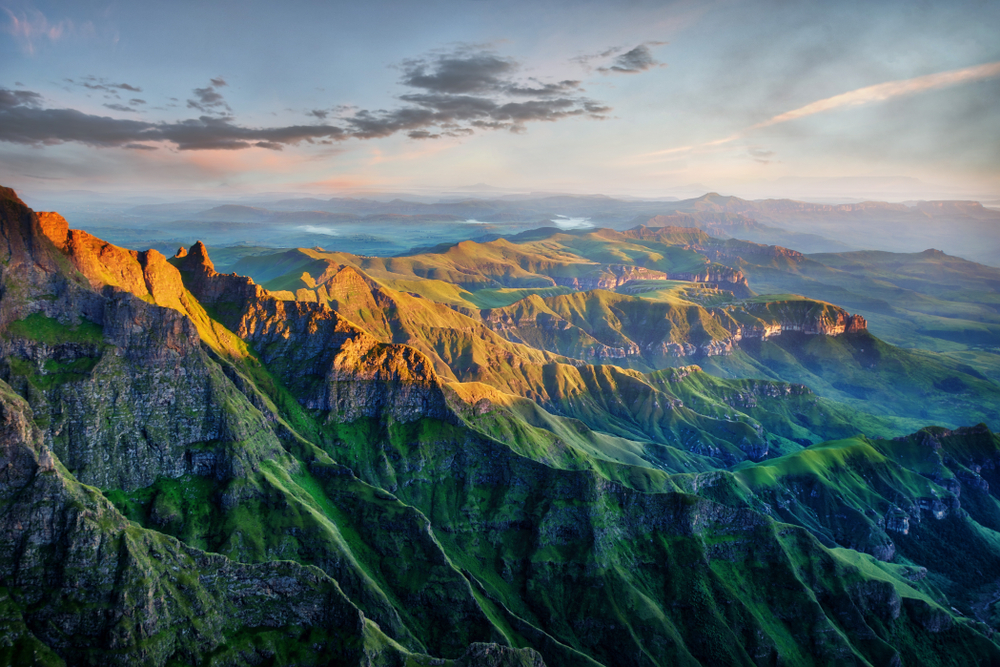
Royal Natal National Park is best known for the Amphitheatre, a massive rock wall regarded as one of the most impressive cliff formations on Earth. Stretching approximately three miles (5 km) in length and rising more than 4,000 feet (1,220 meters) above the surrounding landscape, the Amphitheatre dominates the park and serves as its most recognizable landmark.
Visitors are drawn to the park’s extensive network of hiking trails, mountain vistas, waterfalls, and opportunities for photography. One of the park’s most popular destinations is Tugela Falls, among the tallest waterfalls in the world, where water plunges dramatically from the summit of the Drakensberg escarpment. The combination of geological grandeur and outdoor recreation makes Royal Natal one of South Africa’s premier mountain destinations.
The geography of Royal Natal National Park is defined by rugged mountain terrain, deep valleys, fast-flowing rivers, and towering sandstone cliffs. The park lies at the base of the Drakensberg Escarpment, where elevations rise dramatically from rolling foothills to high-altitude plateaus. The Tugela River originates in the surrounding mountains and carves its way through the landscape, creating scenic gorges and waterfalls.
Vegetation varies with elevation and includes montane grasslands, indigenous forests, shrublands, and alpine habitats. Frequent mist, seasonal snowfall on higher peaks, and abundant rainfall contribute to the park’s lush appearance and ecological diversity. The dramatic topography creates a landscape of exceptional beauty and environmental significance.
Wildlife within Royal Natal National Park is adapted to mountainous environments. Mammals include eland, mountain reedbuck, grey rhebok, bushbuck, baboon, and smaller antelope species. Leopards inhabit the surrounding mountains, although sightings are uncommon.
Birdlife is especially notable, with species such as the bearded vulture, Cape vulture, Verreaux’s eagle, and numerous endemic grassland birds found throughout the park. The high-altitude habitats support a variety of specialized species that are rarely encountered elsewhere in South Africa. The combination of mountain ecosystems and relatively undisturbed habitats contributes to the park’s rich biodiversity.
Royal Natal National Park plays a critical role in protecting the northern Drakensberg ecosystem and preserving one of Africa’s most spectacular mountain landscapes. The park safeguards important watersheds, endemic plant communities, and habitats for numerous threatened species.
Its conservation significance is closely linked to the broader uKhahlamba-Drakensberg Park, which protects an extensive mountain ecosystem recognized for both its natural and cultural heritage. Comparable to mountain parks such as Rwenzori Mountains National Park and Nyanga National Park, Royal Natal preserves landscapes of exceptional ecological and scenic value. Today, it remains one of South Africa’s most treasured protected areas, offering visitors an unforgettable experience amid the towering peaks and dramatic cliffs of the Drakensberg Mountains.
Things to See
Things To Do
Engaging Royal Natal National Park
