About

Mountain Zebra National Park is located in South Africa’s Eastern Cape Province near the town of Cradock. The park covers approximately 110 square miles (285 sq km) and protects a rugged landscape of mountains, valleys, grasslands, and semi-arid Karoo ecosystems.

Established in 1937, Mountain Zebra National Park was created specifically to save the endangered Cape mountain zebra from extinction. At the time, fewer than fifty individuals remained in the wild. Today, the park has expanded significantly and serves as one of South Africa’s most important conservation success stories. It lies northwest of Addo Elephant National Park and contributes to the protection of the unique biodiversity of the Great Karoo region.

Mountain Zebra National Park is best known for its successful recovery of the Cape mountain zebra, one of Africa’s rarest large mammals. Visitors are drawn to the opportunity to observe these distinctive zebras in the mountainous landscapes where they naturally occur. Beyond its famous namesake, the park offers exceptional wildlife viewing, scenic drives, hiking trails, and opportunities to explore a less-crowded safari destination.

The combination of dramatic mountain scenery and diverse wildlife creates a rewarding experience for nature enthusiasts and photographers. The park’s conservation history also provides a powerful example of how dedicated protection can rescue species from the brink of extinction.

The geography of Mountain Zebra National Park is characterized by rugged mountain ranges, rolling plateaus, rocky cliffs, and open grasslands. Elevations range from broad valleys to high ridges that provide panoramic views across the surrounding Karoo landscape. The park lies within a transition zone where grassland and semi-arid ecosystems meet, creating a rich variety of habitats.

Seasonal rivers and wetlands support wildlife and contribute to habitat diversity. Vegetation consists primarily of Karoo shrublands, grasslands, acacia woodlands, and mountain vegetation adapted to fluctuating temperatures and limited rainfall. This varied terrain supports a remarkable diversity of plant and animal life.

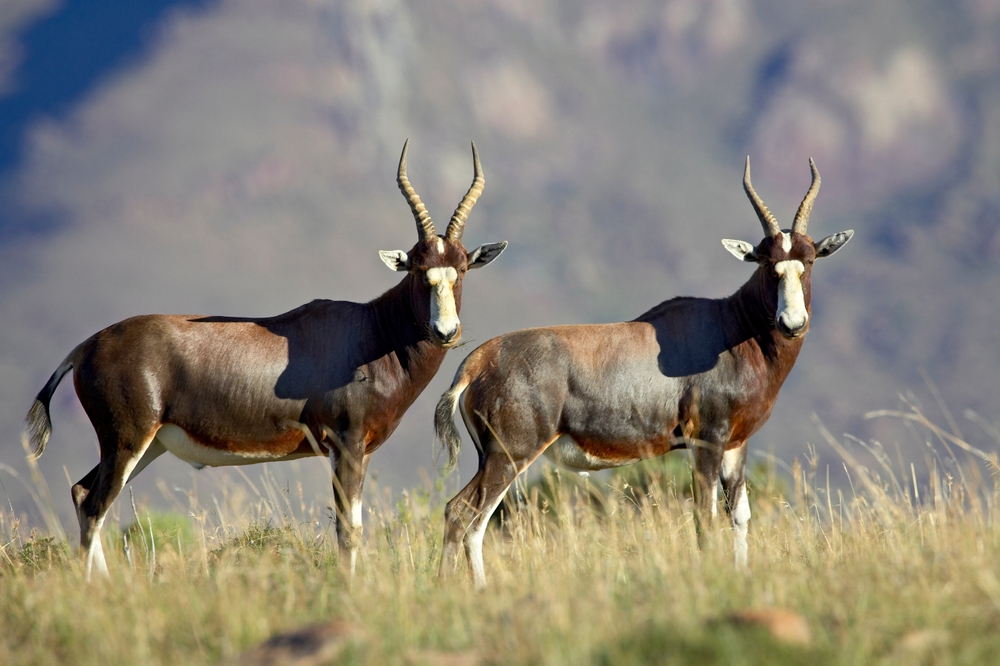
Wildlife within Mountain Zebra National Park has expanded considerably since its establishment. The Cape mountain zebra remains the park’s most iconic species and can be observed throughout the protected area. Other large mammals include black rhinoceros, buffalo, cheetah, lion, brown hyena, red hartebeest, eland, kudu, springbok, and gemsbok. The park is also one of the few places in South Africa where visitors may encounter the elusive black wildebeest in a natural setting.

Birdlife is impressive, with more than 260 recorded species. Raptors such as Verreaux’s eagle, martial eagle, and jackal buzzard soar above the mountains, while numerous grassland and woodland birds inhabit the lower elevations. The diversity of wildlife reflects the success of long-term conservation efforts.

Mountain Zebra National Park plays a vital role in conserving South Africa’s Karoo ecosystems and protecting species that depend on mountain grassland habitats. The park’s recovery of the Cape mountain zebra is widely regarded as one of the country’s greatest conservation achievements.

Its ecological significance is often compared to protected areas such as Karoo National Park and Mokala National Park, where threatened species and unique semi-arid ecosystems receive focused protection. Today, Mountain Zebra National Park serves as both a sanctuary for wildlife and a testament to the effectiveness of conservation management, preserving an important part of South Africa’s natural heritage for future generations.

Things to See

Popular

Mountain Zebra National Park, situated in South Africa’s Eastern Cape, is celebrated for its rugged beauty and the conservation of unique species. The park’s diverse landscapes, from grassy plains to rocky ridges, provide habitats for a variety of wildlife.

Cape Mountain Zebra (Equus zebra zebra)
This endangered zebra subspecies is the park’s flagship species, easily recognized by its narrow stripes and absence of shadow stripes. It roams the park’s open grasslands and rocky slopes, feeding on grasses and herbs.

Black Wildebeest (Connochaetes gnou)
A striking antelope with a distinctive curved horn structure, the black wildebeest is well-adapted to the park’s plains. It grazes on grasses and often forms herds that provide protection from predators.

Eland (Taurotragus oryx)
The largest antelope in Africa, the eland thrives in the park’s grasslands and woodlands. It is a browser and grazer, feeding on leaves, grasses, and shrubs.

Red Hartebeest (Alcelaphus buselaphus)
This antelope is known for its reddish coat and long, curved horns. It grazes on grasses and is commonly seen in the park’s open areas.

Cheetah (Acinonyx jubatus)
Reintroduced as part of conservation efforts, cheetahs are occasionally seen in the park. They rely on speed to hunt antelope such as springbok and blesbok.

Springbok (Antidorcas marsupialis)
Springbok are abundant in the park’s open plains. Known for their “pronking” behavior, they graze on grasses and shrubs, thriving in semi-arid conditions.

Black-backed Jackal (Canis mesomelas)
An opportunistic predator, the black-backed jackal hunts small mammals and scavenges carrion. It plays a vital role in maintaining ecological balance in the park.

Mountain Reedbuck (Redunca fulvorufula)
This small antelope prefers the park’s rocky slopes and ridges. It feeds on grasses and is often seen in small groups.

Rock Hyrax (Procavia capensis)
Inhabiting the park’s rocky areas, rock hyraxes bask in the sun during the day and feed on grasses, leaves, and fruits. Despite their small size, they share an evolutionary link with elephants.

Warthog (Phacochoerus africanus)
Warthogs are common in the park’s grasslands and woodlands. They forage for roots, tubers, and grasses and are often seen near waterholes.

Birds

Mountain Zebra National Park is a haven for bird enthusiasts, with its mix of grasslands, rocky ridges, and riverine areas providing habitats for a wide variety of avian species, including many endemics.

Blue Crane (Anthropoides paradiseus)
South Africa’s national bird, the blue crane, is often seen in the park’s open grasslands, feeding on seeds, insects, and small vertebrates.

Cape Vulture (Gyps coprotheres)
This endangered vulture is frequently seen soaring above the park’s cliffs, scavenging on carrion and playing a critical role in the ecosystem.

Secretarybird (Sagittarius serpentarius)
Known for its long legs and striking appearance, the secretarybird hunts snakes and other small animals in the park’s open areas.

Verreaux’s Eagle (Aquila verreauxii)
This majestic bird of prey inhabits the park’s rocky ridges, hunting rock hyraxes and other small mammals.

Kori Bustard (Ardeotis kori)
The largest flying bird in Africa, the kori bustard is a ground-dwelling species that feeds on seeds, insects, and small vertebrates.

Southern Pale Chanting Goshawk (Melierax canorus)
This medium-sized raptor is often seen perched on trees or hunting in the park’s open areas.

Karoo Korhaan (Eupodotis vigorsii)
This endemic bird of the Karoo region thrives in the park’s grasslands, feeding on insects and seeds.

Black Eagle (Aquila verreauxii)
A common sight in the park’s rocky areas, the black eagle preys on small mammals and reptiles.

Malachite Sunbird (Nectarinia famosa)
This vibrantly colored bird is often seen feeding on nectar from the park’s flowering plants, contributing to pollination.

Namaqua Dove (Oena capensis)
This small, elegant dove is frequently found near water sources, feeding on seeds and small insects.

Things To Do

Engaging Mountain Zebra National Park

placeholder

Game Drives

Scenic game drives are one of the most popular ways to explore Mountain Zebra National Park. The park’s well-maintained network of roads allows visitors to traverse its diverse landscapes, from rolling grasslands to rocky ridges and wooded valleys. Self-drive safaris offer the flexibility to explore at your own pace, while guided drives provide deeper insights into the park’s ecology and wildlife.

Along these routes, visitors can spot iconic species such as Cape mountain zebras, black wildebeest, and red hartebeest. Early morning and late afternoon drives are particularly rewarding, as these are peak times for animal activity.

The Rooiplaat Loop and Kranskop Loop are standout routes, offering stunning views and high chances of wildlife sightings. With the backdrop of the park’s dramatic landscapes, game drives combine the excitement of wildlife spotting with the serenity of the Karoo environment.

placeholder

Hiking

Hiking and walking trails in Mountain Zebra National Park provide an immersive way to connect with its natural beauty. Several trails cater to varying fitness levels, allowing visitors to explore the park on foot. The Black Eagle Hiking Trail is particularly popular, offering breathtaking views of the rugged terrain and a chance to spot eagles and other wildlife.

Guided walks, led by knowledgeable rangers, add an educational element, highlighting the park’s flora, animal tracks, and conservation efforts. Walking trails allow visitors to experience the park’s tranquility and the intricate details of its ecosystem, making it a favorite activity for those seeking a deeper connection to nature.

placeholder

Cheetah Tracking

The cheetah tracking experience is a unique and thrilling way to engage with Mountain Zebra National Park. This guided activity allows visitors to follow and observe cheetahs in their natural habitat, using radio telemetry equipment to locate these magnificent predators.

Rangers provide fascinating insights into cheetah behavior, their role in the ecosystem, and ongoing conservation efforts. Tracking involves both vehicle-based and on-foot exploration, giving participants a sense of adventure and a closer connection to the wildlife.

The activity also offers opportunities to learn about the park’s broader predator-prey dynamics. For wildlife enthusiasts and photographers, the cheetah tracking experience is a highlight that combines excitement, education, and unforgettable encounters.