About

Semuliki National Park, the park is located in western Uganda along the border with the Democratic Republic of the Congo within the Albertine Rift Valley. The park covers approximately 85 square miles (220 sq km) and lies between the eastern slopes of the Rwenzori Mountains National Park and the Semuliki River, which forms part of Uganda’s western boundary.

Established as a national park in 1993, Semuliki protects the easternmost extension of the vast Congo Basin rainforest. Nearby protected areas include Rwenzori Mountains National Park and Queen Elizabeth National Park, creating an important conservation landscape that supports exceptional biodiversity. Despite its relatively small size, Semuliki is one of Uganda’s most biologically significant protected areas.

Semuliki National Park is best known for its lowland tropical rainforest, rich birdlife, and the famous Sempaya Hot Springs. Unlike many East African parks dominated by savannas, Semuliki offers visitors the opportunity to experience a true equatorial rainforest ecosystem. The park’s dense forests, winding trails, and unique wildlife create an atmosphere more reminiscent of Central Africa than East Africa.

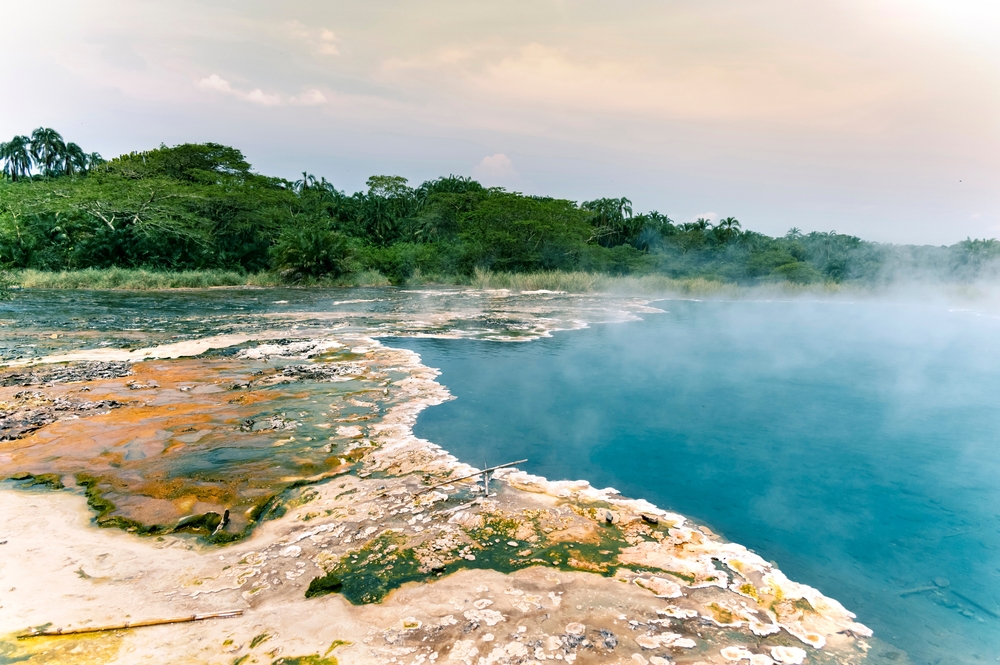
Visitors are particularly drawn to the Sempaya Hot Springs, where boiling water emerges from the earth in dramatic displays of geothermal activity. Nature walks, birdwatching, primate viewing, and cultural experiences with local communities provide opportunities to explore one of Uganda’s most distinctive national parks.

The geography of Semuliki National Park is defined by lowland rainforest, river systems, wetlands, and alluvial plains within the Albertine Rift. The Semuliki River meanders along the park’s western boundary, helping shape the surrounding ecosystem. The warm, humid climate supports lush vegetation year-round and contributes to the park’s remarkable biodiversity.

Towering tropical trees, dense undergrowth, lianas, and palms dominate much of the landscape. Numerous streams and wetlands provide important habitats for wildlife and help sustain the forest ecosystem. The park’s location between the Congo Basin and East Africa creates a unique transition zone where species from both regions occur together.

Wildlife within Semuliki National Park is exceptionally diverse. The park supports more than 50 mammal species, including forest elephants, buffalo, leopards, bushbabies, and several species of monkeys. Primates such as black-and-white colobus monkeys, red-tailed monkeys, vervet monkeys, and chimpanzees can be found within the forest.

Semuliki is internationally renowned for birdwatching, with more than 440 recorded bird species. Many of these species are characteristic of the Congo Basin and occur nowhere else in East Africa. Notable birds include hornbills, turacos, kingfishers, forest flycatchers, and the elusive shoebill in nearby wetland habitats. The park’s abundance of birds makes it one of the finest birding destinations on the continent.

Semuliki National Park plays a critical role in conserving the eastern extension of the Congo Basin rainforest and protecting species found at the edge of their geographic ranges. The park safeguards unique lowland forest ecosystems that are rare in Uganda and provides important habitat for numerous endemic and threatened species.

Its conservation significance is often compared to tropical rainforest reserves such as Odzala-Kokoua National Park and Kibale National Park, where extraordinary biodiversity thrives within dense forest environments. Today, Semuliki National Park remains one of Uganda’s most remarkable natural treasures, preserving a vital link between East African and Central African ecosystems while offering visitors an unforgettable rainforest experience.

Things to See

Popular

Semuliki National Park, a lush and ancient lowland forest in Uganda’s western frontier, is a treasure trove of biodiversity, where unique species thrive amidst its equatorial forests and swampy habitats.

Forest Elephant
Smaller and more elusive than their savannah relatives, forest elephants wander Semuliki’s dense foliage, leaving clear pathways in their wake.

Pygmy Hippo
This rare and nocturnal species inhabits the park’s swamps and rivers, foraging under cover of darkness and adding to the park’s mystique.

Chimpanzee
The intelligent and social chimpanzees move energetically through the forest canopy, their calls resonating throughout the jungle.

De Brazza’s Monkey
Easily identified by its white beard, this secretive primate thrives in the park’s riverine forests and swampy clearings.

Leopard
Stealthy and powerful, leopards inhabit Semuliki’s dense undergrowth, where they hunt small mammals and antelope.

African Civet
This nocturnal mammal is often seen foraging at night, its distinctive coat and black mask making it easily recognizable.

Waterbuck
These sturdy antelopes prefer the park’s wetlands, where their shaggy coats and strong presence are common near water sources.

Bushbaby
A tiny and nocturnal primate, bushbabies are often spotted clinging to trees, their large eyes reflecting light in the darkness.

Red Forest Duiker
Small and agile, red forest duikers are adept at navigating the underbrush, feeding on fruits and leaves.

Banded Mongoose
These social mammals are often seen scurrying across the forest floor in coordinated groups, foraging for insects and small prey.

Birds

Semuliki National Park is a paradise for birdwatchers, with its diverse habitats hosting over 400 bird species, many of which are endemic to the Congo Basin forests.

Shoebill
This iconic and elusive bird thrives in the park’s wetlands, where it patiently hunts for fish and amphibians.

Nkulengu Rail
A rare ground-dwelling bird, the Nkulengu rail prefers swampy areas, often heard before it is seen.

African Piculet
This tiny, unique woodpecker inhabits Semuliki’s forests, tapping tree bark in search of insects.

White-crested Hornbill
With its distinct white crest and large bill, this bird moves noisily through the park’s dense canopy.

Yellow-throated Cuckoo
A prized sight for birdwatchers, the yellow-throated cuckoo sings melodious calls while perched in the forest’s middle layers.

Black Dwarf Hornbill
This rare and shy species thrives in Semuliki’s remote forest sections, often foraging in pairs.

Long-tailed Hawk
A skilled predator, the long-tailed hawk silently hunts smaller birds and mammals under the forest canopy.

Piping Hornbill
A vibrant addition to the park’s birdlife, this hornbill darts between trees, calling out with its distinctive piping notes.

Red-billed Dwarf Hornbill
This small and striking hornbill inhabits the lower forest levels, foraging for fruits and insects.

Great Blue Turaco
One of the forest’s most colorful residents, the great blue turaco moves gracefully through the canopy, feeding on fruits.

Things To Do

Engaging Semuliki National Park

placeholder

Boat Safaris

Boat safaris along the shores of Lake Albert, which borders Semuliki National Park, offer visitors a tranquil yet thrilling way to explore the park’s wetlands.

As the boat drifts across the lake, visitors can observe hippos wallowing in the shallows and Nile crocodiles basking on the banks. The activity is also perfect for bird enthusiasts, as the wetlands are home to the famous shoebill, African fish eagle, and various kingfishers.

The peaceful boat journey allows visitors to witness wildlife at close range while enjoying stunning views of the lake and surrounding landscape. The calm waters, combined with the unique opportunities for wildlife photography and relaxation, make this an essential part of the Semuliki experience.

placeholder

Nature Walks

Nature walks in Semuliki offer an immersive opportunity to explore one of Africa’s oldest forests, brimming with exceptional biodiversity. Guided by experienced local rangers, visitors traverse trails that wind through dense equatorial jungles, swampy areas, and pristine riverside habitats.

Along the way, visitors may encounter primates such as De Brazza’s monkeys, red colobus, and chimpanzees swinging through the trees. Smaller species like the forest duiker, African civet, and bushbabies add to the excitement.

The walks also provide excellent opportunities for birdwatching, with sightings of hornbills, cuckoos, and turacos being highlights. The serenity of the forest, coupled with the sounds of wildlife and the insight provided by guides, makes this an enriching and unforgettable experience.

placeholder

Hot Springs

The Sempaya Hot Springs are among Semuliki National Park’s most iconic attractions, offering visitors a glimpse into the area’s geothermal activity. Guided nature walks lead visitors through lush forest trails to both the “Male” and “Female” springs, which are surrounded by bubbling pools and steam vents.

The Female spring, known for its boiling water temperatures, is a breathtaking sight where water jets over two meters high. Visitors often cook eggs or plantains in the natural hot pools as a fun and unique activity. Along the trail, hikers encounter diverse wildlife, including primates like red-tailed monkeys and colorful bird species.

The hot springs’ cultural significance to the local Bamaga people adds a fascinating layer of storytelling to the experience, making it both visually striking and culturally enriching.