

About
Kibira National Park, known locally as Parc National de la Kibira in French, is located in northwestern Burundi along the crest of the Congo-Nile Divide near the border with Rwanda. The park covers approximately 155 square miles (400 sq km) and protects one of the largest remaining montane rainforest ecosystems in the country.
Established as a national park in 1980, Kibira forms a continuous forest landscape with Rwanda’s Nyungwe Forest National Park, creating one of the most important biodiversity corridors in the Albertine Rift region. The park stretches across several mountain ranges west of Burundi’s capital, Gitega, and serves as a critical refuge for wildlife, watersheds, and native forests.
Kibira National Park is best known for its dense rainforest, rich primate populations, and ecological importance as one of Central Africa’s most significant mountain forests. Visitors are attracted by opportunities to explore lush forest trails, observe primates in their natural habitat, and experience one of Burundi’s most scenic natural landscapes.
The park offers hiking, birdwatching, nature photography, and wildlife observation in a setting characterized by towering trees, mist-covered ridges, and abundant biodiversity. Because the park receives relatively few visitors compared to neighboring destinations, it provides a peaceful and immersive rainforest experience that highlights the natural beauty of Burundi.
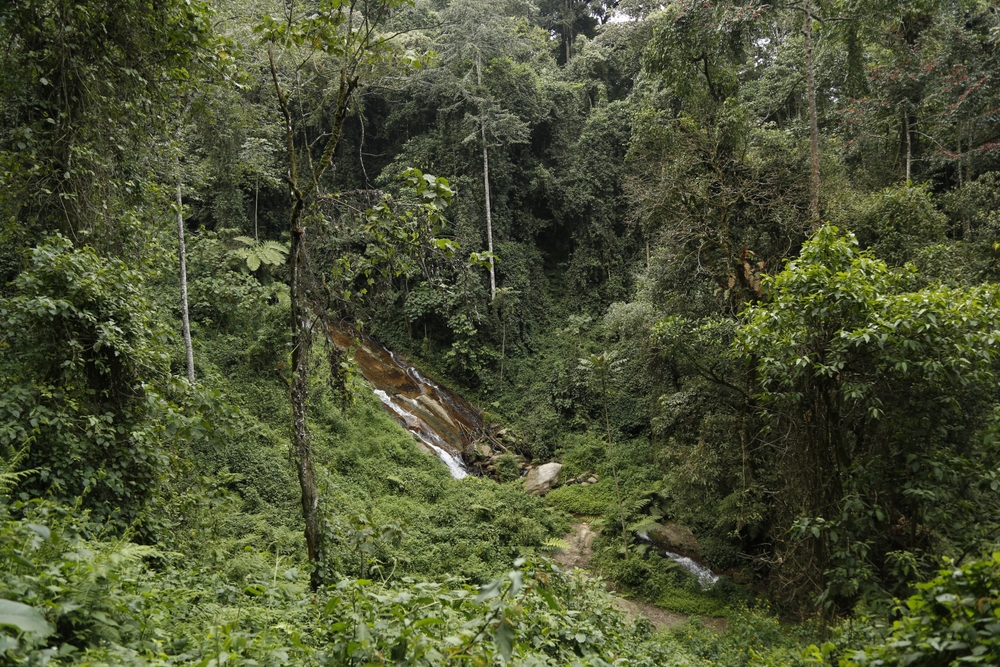
The geography of Kibira National Park is dominated by rugged mountain ridges, steep valleys, and high-elevation rainforest. Elevations range from approximately 5,000 to over 8,700 feet (1,500 to 2,670 meters), creating a cool and humid climate that supports year-round forest growth. The park lies along the Congo-Nile Divide, making it one of the most important watershed regions in East Africa.
Numerous rivers originate within the forest and contribute to both the Congo and Nile river systems. Vegetation consists primarily of montane rainforest, bamboo stands, heathlands, and patches of high-altitude grassland. Frequent rainfall and cloud cover support lush plant communities that stabilize soils and provide habitat for a remarkable diversity of species.
Wildlife within Kibira National Park is exceptionally diverse. The park supports several species of primates, including chimpanzees, black-and-white colobus monkeys, blue monkeys, and olive baboons. Chimpanzees are among the park’s most celebrated residents and represent an important conservation population within the Albertine Rift. Other mammals include bushbuck, serval, civets, and numerous smaller forest species.
Birdlife is particularly impressive, with more than 200 recorded species inhabiting the forest. Many of these birds are Albertine Rift endemics, including colorful turacos, sunbirds, flycatchers, and forest warblers. The park’s combination of dense rainforest and high-altitude habitats creates ideal conditions for both resident and migratory species, making it one of Burundi’s premier birdwatching destinations.
Kibira National Park plays a critical role in conserving one of the last extensive montane rainforests in Burundi. The park protects vital watersheds, endangered primates, rare birds, and countless plant species that depend on intact forest ecosystems. Its conservation significance is often compared to neighboring Nyungwe Forest National Park and Kibale National Park, both of which are renowned for their biodiversity and primate populations.
Together, these forests form part of one of Africa’s most important centers of endemism. Today, Kibira National Park remains a cornerstone of Burundi’s conservation efforts, preserving an irreplaceable natural heritage while providing ecological services that benefit both wildlife and human communities throughout the region.
Things to See
Things To Do
Engaging Kibira National Park

FAQ’s
What is the main reason people visit Kibira National Park?
Kibira National Park is primarily visited for its pristine montane rainforest, chimpanzee trekking opportunities, and exceptional birdwatching. The park protects Burundi’s largest remaining montane forest and forms part of the larger Albertine Rift ecosystem, connecting with Rwanda’s Nyungwe Forest.
Visitors come to experience dense rainforest, observe primates in their natural habitat, hike through scenic mountain trails, and enjoy one of the best birding destinations in Burundi. The park is also significant for its role in protecting the Congo-Nile Divide and serving as a major water catchment area for the country.
What animals can visitors hope to see in Kibira National Park?
Kibira National Park contains approximately 98 mammal species and a small but diverse reptile population typical of Central African montane forests. The park is especially famous for its primates, including Burundi’s largest population of chimpanzees.
Some of the most sought-after animals include:
- Chimpanzee
- Ruwenzori Black-and-White Colobus
- L’Hoest’s Monkey
- Blue Monkey
- Red-tailed Monkey
- Olive Baboon
- Vervet Monkey
- Dent’s Mona Monkey
- Hamlyn’s Monkey
- Grey-cheeked Mangabey
- Potto
- Tree Hyrax
- African Civet
- Serval
- African Golden Cat
- Leopard
- Side-striped Jackal
- Spotted Hyena
- Large-spotted Genet
- Small-spotted Genet
- Marsh Mongoose
- Egyptian Mongoose
- Slender Mongoose
- White-tailed Mongoose
- Bushy-tailed Mongoose
- African Clawless Otter
- Congo Clawless Otter
- Bushbuck
- Common Duiker
- Blue Duiker
- Red Duiker
- Bush Pig
- Giant Forest Hog
- Warthog
- Sitatunga
- Reedbuck
- Oribi
- African Buffalo (occasionally near forest edges)
- African Hare
- Cane Rat
- Gambian Giant Pouched Rat
- Brush-tailed Porcupine
- African Brush-tailed Porcupine
- African Dormouse
- Sun Squirrel
- Red-legged Sun Squirrel
- Fire-footed Rope Squirrel
- African Giant Shrew
- Forest Elephant (historically present, now extremely rare)
- Various forest bats
What birds can visitors hope to see in Kibira National Park?
Kibira National Park is Burundi’s premier birdwatching destination. More than 200 bird species have been recorded in the park, including resident Albertine Rift endemics and seasonal migratory species. The park is considered Burundi’s most important site for the conservation of montane forest birds.
Some of the most popular birds seen in Kibira National Park include:
- Great Blue Turaco
- Black-and-White-Casqued Hornbill
- Bar-tailed Trogon
- Mountain Buzzard
- White-spotted Flufftail
- Grey Parrot
- African Green Pigeon
- Crowned Eagle
- African Goshawk
- Augur Buzzard
- Rwenzori Turaco
- Yellow-whiskered Greenbul
- Mountain Greenbul
- Stripe-breasted Tit
- White-headed Wood Hoopoe
- African Emerald Cuckoo
- Narina Trogon
- African Harrier-Hawk
- White-starred Robin
- Archer’s Robin-Chat
- White-bellied Robin-Chat
- Rwenzori Batis
- Black-faced Rufous Warbler
- Grauer’s Warbler
- Mountain Masked Apalis
- Collared Apalis
- Chestnut-throated Apalis
- Doherty’s Bushshrike
- Purple-breasted Sunbird
- Regal Sunbird
- Blue-headed Sunbird
- Variable Sunbird
- Dusky Crimsonwing
- Yellow-eyed Black Flycatcher
- African Paradise Flycatcher
- Chinspot Batis
- Grey Cuckooshrike
- African Stonechat
- Olive Thrush
- African Thrush
- White-tailed Crested Flycatcher
- Black Saw-wing
- Scarce Swift
- African Black Duck
- Mountain Wagtail
- Black-headed Waxbill
- Bronze Mannikin
- African Firefinch
- Red-faced Woodland Warbler
- Yellow-rumped Tinkerbird
Is Kibira National Park worth visiting?
Yes, Kibira National Park is worth visiting, especially for travelers interested in rainforest ecosystems, primates, birdwatching, hiking, and off-the-beaten-path destinations. It offers one of the most authentic rainforest experiences in East Africa and provides opportunities to see chimpanzees in a less-crowded setting than many neighboring countries.
The primary hesitation is that tourism infrastructure remains limited compared to better-known parks in Rwanda, Uganda, or Kenya. Visitors seeking luxury lodges, extensive safari facilities, or easy wildlife viewing may find Kibira less developed. However, nature enthusiasts often consider this untouched character part of its appeal.
What is the best time to visit Kibira National Park?
The best time to visit Kibira National Park is during Burundi’s dry seasons:
- June to August
- December to January
These months provide the best trail conditions for hiking, chimpanzee tracking, and birdwatching. Wildlife is easier to locate, and rainfall is generally lower. Birdwatchers may also enjoy the wetter months when migratory species are present and breeding activity is high.
How many days do you need to visit Kibira National Park?
Most visitors need 2 to 3 days to fully experience Kibira National Park.
- 1 day: Scenic drive, forest walk, and birdwatching.
- 2 days: Chimpanzee tracking plus hiking and birdwatching.
- 3 days: A comprehensive rainforest experience including multiple trails, primate observation, and cultural visits nearby.
How do you get to Kibira National Park?
Kibira National Park is located in northwestern Burundi, approximately 48 kilometers from Bujumbura.
Most visitors:
- Fly into Melchior Ndadaye International Airport.
- Travel by road from Bujumbura to one of the park entrances.
The drive typically takes between 1.5 and 2.5 hours depending on road conditions and entry point. The Teza and Rwegura sectors are among the most commonly accessed areas
Is Kibira National Park safe for tourists?
Kibira National Park is generally considered safe for visitors traveling with reputable guides and tour operators. Most visits occur without incident.
Visitors should:
- Travel with local guides.
- Check current travel advisories before departure.
- Stay on designated trails.
- Follow park regulations regarding wildlife encounters.
- Arrange transportation through established operators.
As with travel anywhere in Burundi, monitoring current security conditions is recommended before visiting.
Who is involved in protecting and supporting Kibira National Park?
Several organizations play important roles in protecting Kibira National Park:
- Institut National pour l’Environnement et la Conservation de la Nature (INECN) – the government agency responsible for managing Burundi’s national parks and protected areas.
- Association Burundaise pour la Protection de la Nature (ABN) – supports conservation initiatives and environmental awareness within Burundi.
- Burundi Biodiversity Conservation Program – supports biodiversity monitoring and habitat conservation projects.
- Local communities surrounding the park, including Batwa and other neighboring populations, play an important role in forest stewardship and sustainable resource management.
Can you see chimpanzees in Kibira National Park?
Yes. Chimpanzee trekking is one of the park’s main attractions. Kibira contains Burundi’s largest population of chimpanzees and offers guided tracking excursions through the rainforest. Sightings are not guaranteed, but success rates are generally good when accompanied by experienced trackers.