

About
Gishwati-Mukura National Park , known locally as Parc National de Gishwati-Mukura in French and Pariki y’Igihugu ya Gishwati-Mukura in Kinyarwanda, is located in western Rwanda along the crest of the Congo-Nile Divide. The park covers approximately 14 square miles (36 sq km) and consists of two separate forest blocks: Gishwati Forest and Mukura Forest.
Established in 2015, it is Rwanda’s newest national park and lies between Volcanoes National Park to the north and Nyungwe Forest National Park to the south. Although small in size, the park protects an important remnant of the once-extensive montane forests that historically covered much of western Rwanda. Today, it serves as a vital refuge for wildlife and a symbol of the country’s commitment to ecological restoration.
Gishwati-Mukura National Park is best known for its successful forest restoration efforts and its growing populations of primates and birds. Much of the original forest was lost during the twentieth century due to agricultural expansion, logging, and human settlement. Conservation initiatives have helped restore large portions of the landscape, transforming the area into a thriving protected ecosystem.
Visitors are attracted by opportunities to observe chimpanzees, golden monkeys, and other primates while exploring scenic forest trails. The park offers guided nature walks, birdwatching excursions, and immersive rainforest experiences in a setting that remains relatively uncrowded compared to some of East Africa’s more famous protected areas.
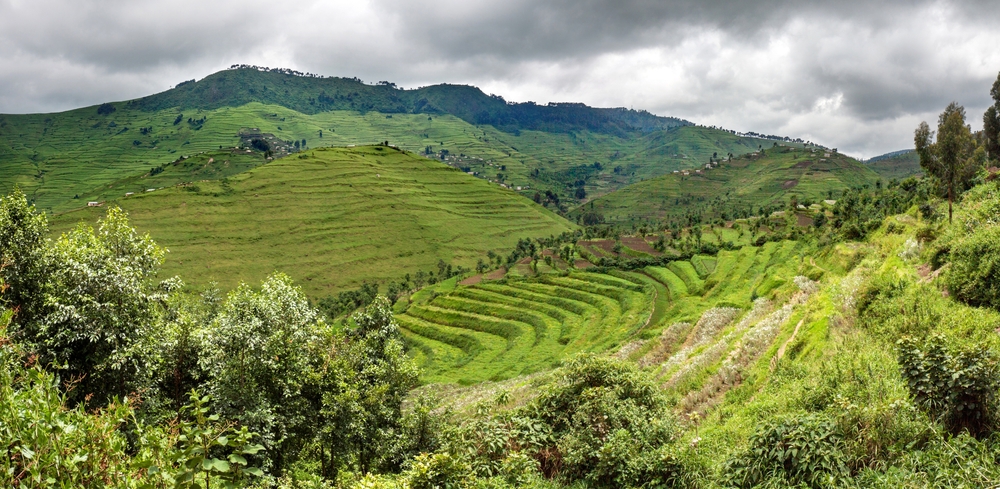
The geography of Gishwati-Mukura National Park is characterized by steep hills, mountain ridges, valleys, and dense montane rainforest. Elevations range from approximately 6,000 to over 8,000 feet (1,800 to 2,500 meters), creating a cool and moist climate favorable for forest growth. The park forms part of the Congo-Nile watershed, an important hydrological divide that influences water systems flowing toward both the Atlantic and Mediterranean basins.
Vegetation consists primarily of montane rainforest interspersed with bamboo, shrubs, and regenerating forest habitats. Frequent rainfall supports lush plant communities that stabilize soils, protect watersheds, and provide habitat for a diverse array of wildlife.
Wildlife within Gishwati-Mukura National Park continues to recover as restoration efforts expand. Chimpanzees are among the park’s most celebrated residents, while other primates include golden monkeys, L’Hoest’s monkeys, blue monkeys, and black-and-white colobus monkeys. Small mammals, servals, and numerous forest-dwelling species also inhabit the park.
Birdlife is particularly impressive, with more than 230 recorded species, including several Albertine Rift endemics that are highly sought after by birdwatchers. Turacos, sunbirds, forest warblers, and colorful woodland species thrive within the park’s varied habitats. The combination of recovering forests and rich biodiversity makes the park an increasingly important destination for wildlife enthusiasts.
Gishwati-Mukura National Park plays a critical role in conserving one of Rwanda’s most threatened forest ecosystems. The park protects important habitat for primates, birds, and countless plant species while helping reconnect fragmented forest landscapes across western Rwanda. Its restoration success demonstrates how degraded habitats can recover when given long-term protection and management.
The park’s conservation significance is often compared to other rainforest reserves such as Nyungwe Forest National Park and Kibale National Park, though its story of ecological recovery makes it uniquely inspiring. Today, Gishwati-Mukura National Park stands as a model of conservation and restoration, preserving biodiversity while offering visitors the opportunity to experience one of Rwanda’s newest and most promising natural treasures.
Things to See
Things To Do
Engaging Gishwati-Mukura National Park
