About

Saloum Delta National Park (French: Parc National du Delta du Saloum) is located along the Atlantic coast of western Senegal approximately 95 miles (150 km) southeast of Dakar. Established in 1976, the park covers approximately 695 square miles (1,800 sq km) and protects one of the largest estuarine ecosystems in West Africa.

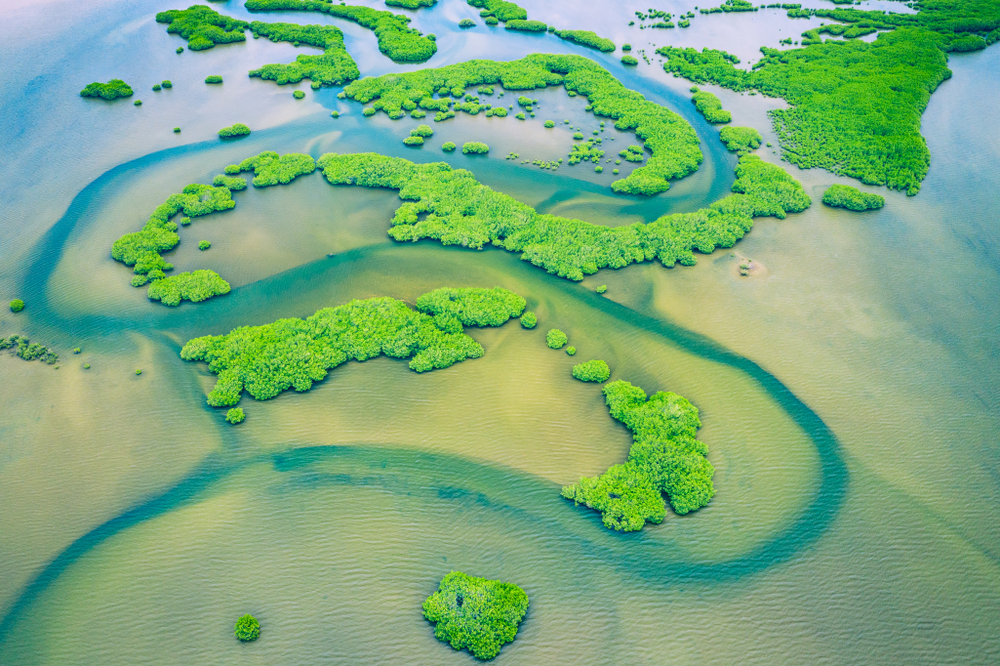
The park encompasses a complex network of tidal channels, mangrove forests, islands, mudflats, lagoons, and coastal waters where the Saloum River meets the Atlantic Ocean. Recognized as both a UNESCO World Heritage Site and a Ramsar Wetland of International Importance, Saloum Delta National Park is among Senegal’s most significant natural and cultural treasures.

The park is best known for its vast mangrove ecosystems, extraordinary birdlife, and intricate maze of waterways. Visitors are drawn to the delta’s tranquil beauty, where winding channels pass through mangrove forests and small islands rich in wildlife. Boat excursions provide opportunities to explore remote sections of the park, observe birds, and experience traditional fishing communities that have coexisted with the delta’s ecosystems for generations.

The region is also renowned for its shell islands, some of which contain ancient archaeological sites and cultural landscapes that reflect centuries of human interaction with the environment.

Geographically, Saloum Delta National Park consists of a dynamic coastal environment shaped by the mixing of freshwater and seawater. The landscape includes mangrove forests, mudflats, salt marshes, sandbanks, coastal lagoons, and more than 200 islands and islets.

Mangroves dominate much of the delta and play a crucial role in stabilizing shorelines, filtering water, and providing nursery habitat for fish and other aquatic species. The combination of tidal influences, seasonal flooding, and nutrient-rich waters creates one of the most productive ecosystems in West Africa. This diversity of habitats supports a remarkable variety of plant and animal life.

Wildlife is abundant throughout the park. Saloum Delta National Park is internationally recognized as one of Africa’s most important bird sanctuaries, supporting more than 300 bird species. Flamingos, pelicans, herons, egrets, ospreys, kingfishers, terns, and numerous migratory shorebirds gather within the wetlands.

Mammals found in and around the park include patas monkeys, jackals, hyenas, bushbuck, and various small mammals. The marine and estuarine environments support dolphins, manatees, sea turtles, and a wide variety of fish species. The mangrove forests serve as essential breeding and feeding grounds for countless aquatic organisms that sustain both wildlife and local communities.

Saloum Delta National Park plays a critical role in conserving one of West Africa’s most important coastal ecosystems. The park protects vital habitats for migratory birds traveling between Europe and Africa, safeguards marine biodiversity, and preserves extensive mangrove forests that help mitigate coastal erosion and climate impacts.

Its ecological importance is often compared to renowned wetland reserves such as Doñana National Park and Everglades National Park because of its rich biodiversity and essential role in supporting wildlife. Through its mangrove forests, thriving bird populations, cultural heritage, and productive waterways, Saloum Delta National Park stands as one of Africa’s most valuable coastal protected areas and a cornerstone of conservation in Senegal.

Things to See

Predator Species

Saloum Delta National Park hosts a variety of predator species that thrive in its diverse ecosystems, from mangroves to savannahs.

Spotted hyenas are social scavengers and skilled hunters, living in clans and using their strong jaws to consume carcasses and sometimes hunt for prey.

Jackals are opportunistic hunters and scavengers, preying on small mammals, birds, and reptiles while also scavenging from larger predators.

Crocodiles inhabit the park’s rivers and mangroves, ambushing fish, birds, and mammals at the water’s edge, using their powerful jaws to drag prey underwater.

African wildcats are small nocturnal predators that hunt rodents, birds, and reptiles, relying on stealth and agility in the park’s more forested areas.

Monitor lizards are large reptiles found near water sources, hunting small mammals, birds, fish, and eggs, using their sharp teeth and claws.

Pythons are non-venomous constrictors, ambushing small mammals and birds before using their muscular bodies to suffocate their prey.

Servals are medium-sized cats that use their long legs to hunt small mammals and birds in grassy areas and wetlands, often during the night.

Honey badgers are tough and tenacious predators, hunting small mammals, birds, and insects, while also known for raiding beehives for honey.

African civets are nocturnal predators that hunt small mammals, birds, and insects, using their sharp claws and agility to capture prey.

Genets are small, agile predators that hunt birds, insects, and small mammals, often seen darting through the park’s woodlands at night.

Popular Species

Saloum Delta National Park is known for its wide variety of herbivores and aquatic species, many of which rely on the park’s unique coastal and wetland habitats.

Manatees are large, gentle aquatic mammals that graze on seagrasses and other aquatic plants, often seen in the park’s mangrove-lined rivers and coastal waters.

Dolphins are playful and social marine mammals, frequently seen in the park’s waters, where they hunt fish and communicate with each other through clicks and whistles.

Hippopotamuses are massive semi-aquatic mammals, spending most of their day submerged in rivers and wetlands, emerging at night to graze on grasses.

Warthogs are stout, tough animals often seen foraging in open savannahs and grasslands, using their snouts to dig up roots, tubers, and other plant matter.

Red colobus monkeys are highly social primates that live in the park’s forests, feeding on leaves and fruits while traveling through the canopy in groups.

Baboons are intelligent, social primates often seen foraging on the ground for fruits, seeds, and small animals, forming large troops near the park’s water sources.

Bushbucks are shy, solitary antelopes that browse on leaves and fruits, inhabiting dense forest areas where they rely on camouflage to avoid predators.

Manatees are large aquatic mammals that graze on seagrasses in the park’s waters, offering a rare and gentle spectacle for visitors to the delta.

Western sitatunga are semi-aquatic antelopes that live in swampy regions of the park, using their long legs to navigate through marshes and thick vegetation.

Vervet monkeys are small, adaptable primates that forage for fruits, insects, and leaves, often seen in the park’s forested and savannah areas.

Bird Species

Saloum Delta National Park is a haven for birdwatchers, with a rich diversity of species that thrive in its wetlands, mangroves, and savannahs.

Flamingos are iconic wading birds often seen in the park’s shallow waters, feeding on algae and small crustaceans, their vibrant pink color a striking sight.

Pelicans are large water birds frequently spotted gliding over the park’s coastal areas and rivers, using their long beaks to scoop up fish and other aquatic creatures.

African fish eagles are majestic raptors seen near rivers and coastal waters, hunting fish with their sharp talons and known for their distinct calls.

Herons are elegant wading birds often found in the park’s wetlands, using their long legs to wade through shallow waters in search of fish and amphibians.

Goliath herons are the largest heron species, standing tall as they hunt for fish in the park’s rivers and coastal areas, their size making them a distinctive sight.

Sacred ibis are striking white birds with black heads and long, curved beaks, often seen foraging in the park’s wetlands for fish, insects, and small invertebrates.

Cormorants are aquatic birds that dive for fish in the park’s rivers and coastal areas, often seen perched on trees or rocks drying their wings in the sun.

Pink-backed pelicans are smaller than their more famous relatives, often seen in the park’s coastal and wetland areas, hunting fish in groups.

Egrets are elegant white birds found along the park’s wetlands and rivers, hunting for fish, insects, and small animals in shallow water.

Kingfishers are brightly colored birds frequently seen near the park’s rivers and wetlands, known for their ability to dive into water to catch fish and small aquatic creatures.

Things To Do

Engaging Saloum Delta

placeholder

Birdwatching

placeholder

Mangrove Boat Tours

placeholder

Kayaking the Delta

placeholder

Fishing Expeditions

Sources

Britannica, Kaolack, https://www.britannica.com/place/Kaolack, retrieved August 2024.

Lonely Planet, Parc National du Delta du Saloum, https://www.lonelyplanet.com/senegal/petite-cote-sine-saloum-delta/attractions/parc-national-du-delta-du-saloum/a/poi-sig/1354318/1328700, retrieved August 2024.

National Parks Africa, Saloum Delta National Park, https://www.nationalparks.africa/listing/saloum-delta-national-park/, retrieved August 2024.

UNESCO, Saloum Delta, https://whc.unesco.org/en/list/1359/, retrieved August 2024.

Wikipedia, Saloum Delta National Park, https://en.wikipedia.org/wiki/Saloum_Delta_National_Park, retrieved August 2024.