

About
Known locally as Mangetti National Park, the park is located in north-central Namibia within the Kavango East Region, southeast of Khaudum National Park and west of the border with Botswana. The park covers approximately 162 square miles (420 sq km) and is one of Namibia’s newer national parks.
Originally established as a wildlife management area in the 1980s and later upgraded to national park status, Mangetti was created to promote both biodiversity conservation and community-based economic development. The park occupies an important position within the broader Kavango-Zambezi conservation landscape, helping connect wildlife habitats across northern Namibia and neighboring countries.
Mangetti National Park is best known for its role as a conservation and community development success story. Unlike many of Namibia’s more famous parks that attract large numbers of tourists, Mangetti remains relatively undiscovered and offers visitors a quiet and authentic wilderness experience. The park was designed not only to protect wildlife but also to create opportunities for neighboring communities through tourism and sustainable resource management.
Visitors are attracted by the park’s open landscapes, growing wildlife populations, birdwatching opportunities, and the chance to explore one of Namibia’s lesser-known protected areas. Its uncrowded nature allows for a more intimate connection with the landscape and wildlife.
The geography of Mangetti National Park is characterized by gently rolling terrain, Kalahari sands, woodlands, grasslands, and seasonal drainage systems. The park lies within a transition zone between the wetter woodlands of the Kavango region and the drier savannas farther south.
Vegetation consists primarily of broadleaf woodlands, acacia stands, shrublands, and open grass-covered areas that provide important grazing habitat for herbivores. Seasonal rainfall patterns strongly influence the ecosystem, with lush vegetation emerging during the wet season and wildlife concentrating around available water sources during drier months. The varied habitats support a diverse array of plant and animal species and contribute to the park’s ecological value.
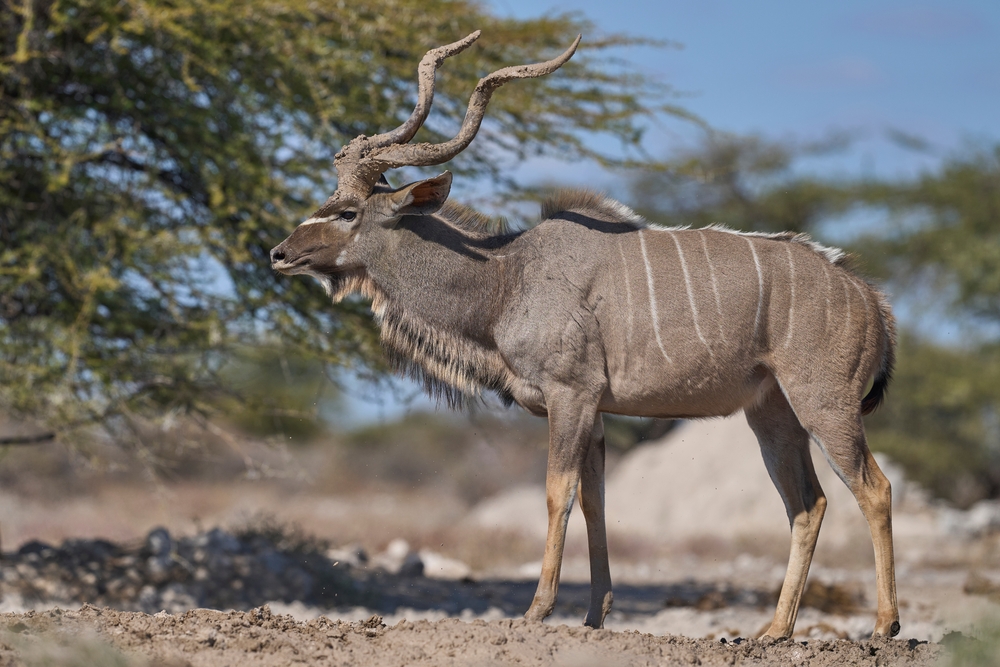
Wildlife populations within Mangetti National Park have increased steadily due to conservation efforts and habitat protection. Large mammals include elephant, giraffe, blue wildebeest, zebra, kudu, eland, roan antelope, sable antelope, and impala. Predators such as leopard, spotted hyena, and smaller carnivores also inhabit the park, though sightings can be less frequent due to dense woodland cover.
The park is particularly important for several antelope species that thrive within northern Namibia’s woodland ecosystems. Birdlife is diverse, with numerous raptors, hornbills, rollers, bee-eaters, and woodland specialists recorded throughout the park. Seasonal wetlands and drainage systems further enhance habitat diversity and support a variety of bird species.
Mangetti National Park plays an important role in conserving northern Namibia’s woodland ecosystems while supporting regional wildlife connectivity and community-based conservation initiatives. The park helps maintain habitat for large mammals moving between protected areas and contributes to broader efforts within the Kavango-Zambezi Transfrontier Conservation Area, one of the largest conservation landscapes in the world.
Its conservation significance is closely linked to neighboring protected areas such as Bwabwata National Park and Khaudum National Park, which together protect vital wildlife corridors across southern Africa. Today, Mangetti National Park remains a growing conservation success, preserving important habitats while demonstrating how protected areas can benefit both wildlife and local communities.
Things to See
Things To Do
Engaging Mangetti National Park
