

About
Banhine National Park is located in southern Mozambique within Gaza Province and covers approximately 2,776 square miles (7,250 sq km). Established in 1973, the park protects one of the largest and least disturbed savanna ecosystems in southern Africa.
Banhine lies east of Limpopo National Park and north of Maputo National Park, forming part of a broader network of conservation areas across the region. The park is situated within a semi-arid landscape characterized by seasonal wetlands, grasslands, and open savannas. Although it remains one of Mozambique’s lesser-known national parks, Banhine offers visitors an opportunity to experience a vast and largely untouched wilderness where natural ecological processes continue to shape the landscape.
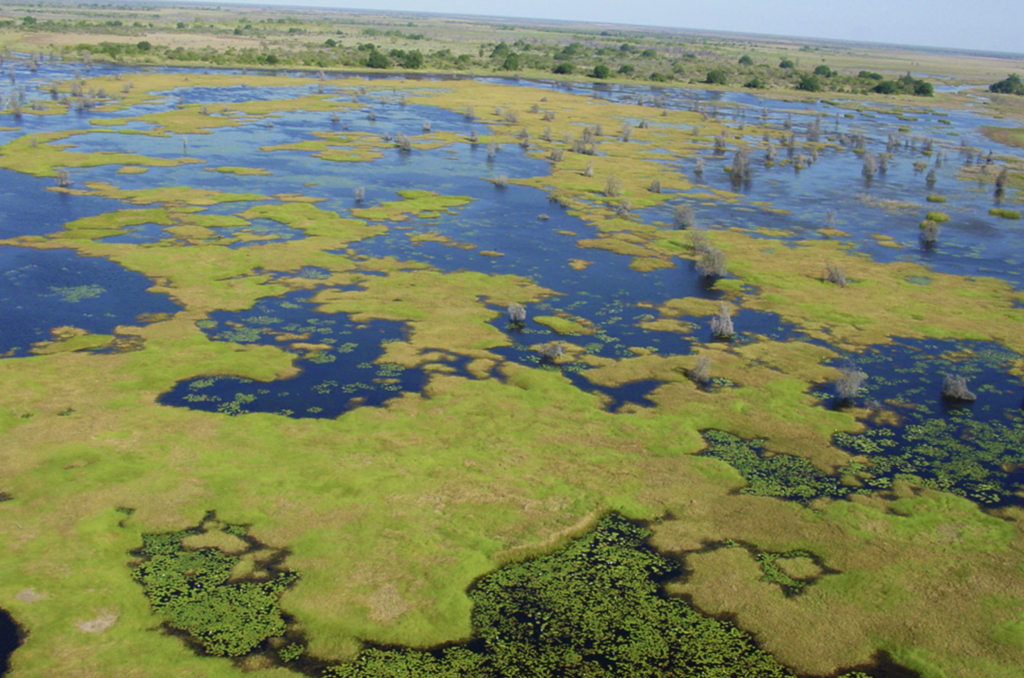
Banhine National Park is best known for its extensive seasonally flooded grasslands and wetlands, which create an environment very different from the woodlands and forests found in many other African parks. During the rainy season, shallow pans and wetlands spread across the landscape, attracting large numbers of birds and wildlife. In drier periods, the park transforms into a vast expanse of open grassland dotted with scattered trees and shrubs.
Visitors are drawn to the park’s remote character, outstanding birdwatching opportunities, wildlife viewing, photography, and sense of solitude. Unlike more heavily visited parks in Africa, Banhine offers an authentic wilderness experience where visitors can appreciate the rhythms of nature without large crowds or extensive tourism infrastructure.
The geography of Banhine National Park is dominated by broad plains, seasonal wetlands, shallow lakes, and open savanna. The park forms part of the greater Limpopo River Basin and contains numerous natural depressions that fill with water during seasonal rains. These wetlands provide critical habitat for wildlife and help sustain biodiversity across the region.
Vegetation consists primarily of grasslands interspersed with acacia woodlands, mopane trees, shrubs, and seasonal marsh vegetation. The relatively flat terrain creates expansive vistas that stretch to the horizon, allowing visitors to appreciate the scale and openness of the African landscape. The park’s dynamic cycle of flooding and drying is central to its ecological character.
Wildlife within Banhine National Park has gradually recovered following decades of regional challenges and conservation efforts. Mammals found within the park include sable antelope, kudu, impala, reedbuck, warthogs, zebras, wildebeest, and smaller carnivores. Larger species such as elephants have increasingly returned to portions of the region through conservation initiatives and improved ecological connectivity.
Birdlife is one of the park’s greatest attractions. The seasonal wetlands support large populations of waterbirds, including herons, storks, egrets, pelicans, ducks, and migratory species. Raptors such as martial eagles, fish eagles, and vultures are also regularly observed. The diversity of habitats supports an impressive range of wildlife adapted to both wet and dry conditions.
Banhine National Park plays a vital role in protecting one of southern Africa’s most important wetland-savanna ecosystems. The park safeguards critical habitat for migratory birds, antelope populations, and numerous other species that depend upon seasonal flooding cycles. Conservation efforts focus on habitat restoration, wildlife recovery, and strengthening ecological connections with surrounding protected areas.
Banhine is often compared to Liuwa Plain National Park and Kafue National Park because of its expansive grasslands and seasonal wetlands. Yet its unique combination of floodplain ecology, remote wilderness, and recovering wildlife populations gives it a distinctive identity. Today, Banhine National Park remains one of Mozambique’s hidden conservation treasures, preserving a landscape where wetlands, grasslands, wildlife, and natural cycles continue to flourish across a vast and beautiful African wilderness.
Things to See
Things To Do
Engaging Banhine National Park
