

About
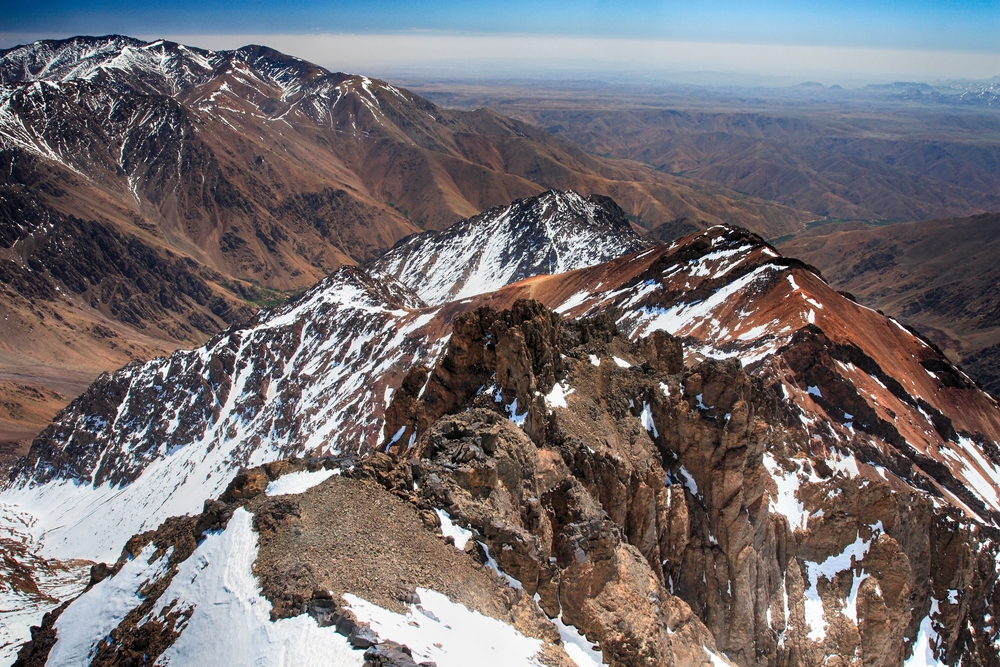
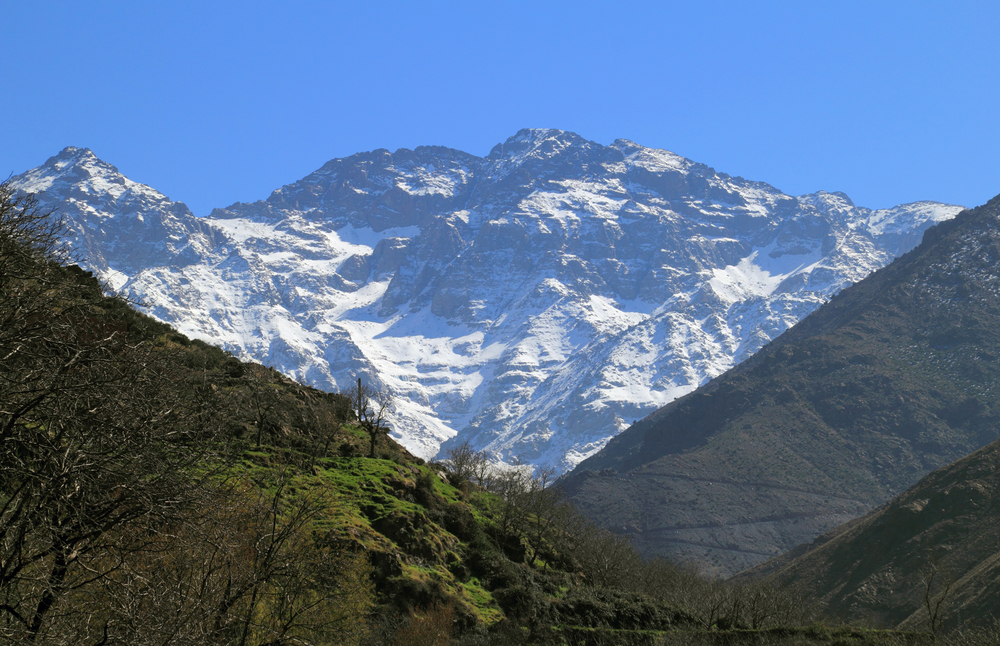
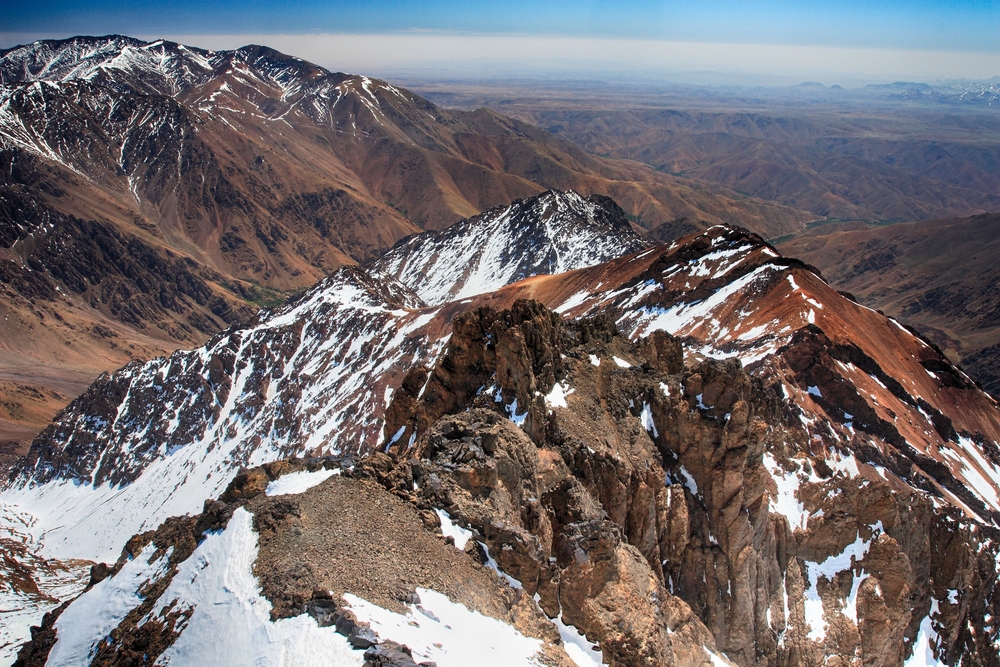
Located in the High Atlas Mountains of central Morocco, Toubkal National Park protects some of the most dramatic mountain landscapes in North Africa. The park covers approximately 147 square miles (380 sq km) and surrounds Mount Toubkal, the highest peak in North Africa at 13,671 feet (4,167 meters).
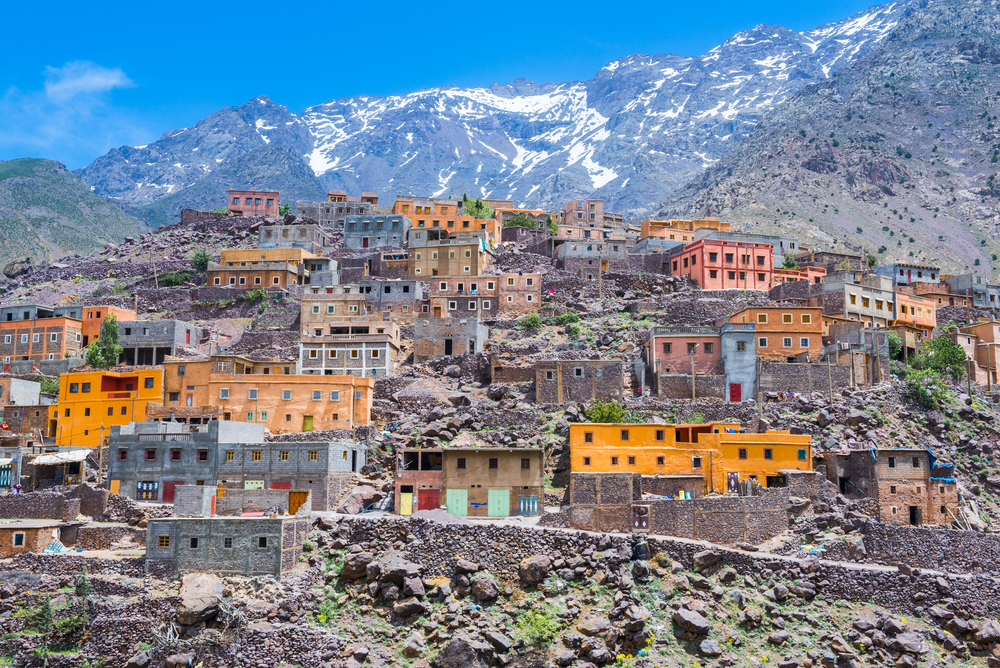
Situated south of Marrakesh, the park lies within the rugged High Atlas range where traditional Berber villages remain closely connected to the surrounding mountains. Toubkal National Park was established in 1942 and remains one of Morocco’s most important destinations for trekking, mountaineering, and mountain conservation.
Toubkal National Park is best known for Mount Toubkal and the challenging trekking routes that attract hikers from around the world. Climbing Mount Toubkal is considered one of the most accessible major mountain ascents globally because technical climbing equipment is usually unnecessary during favorable seasons.
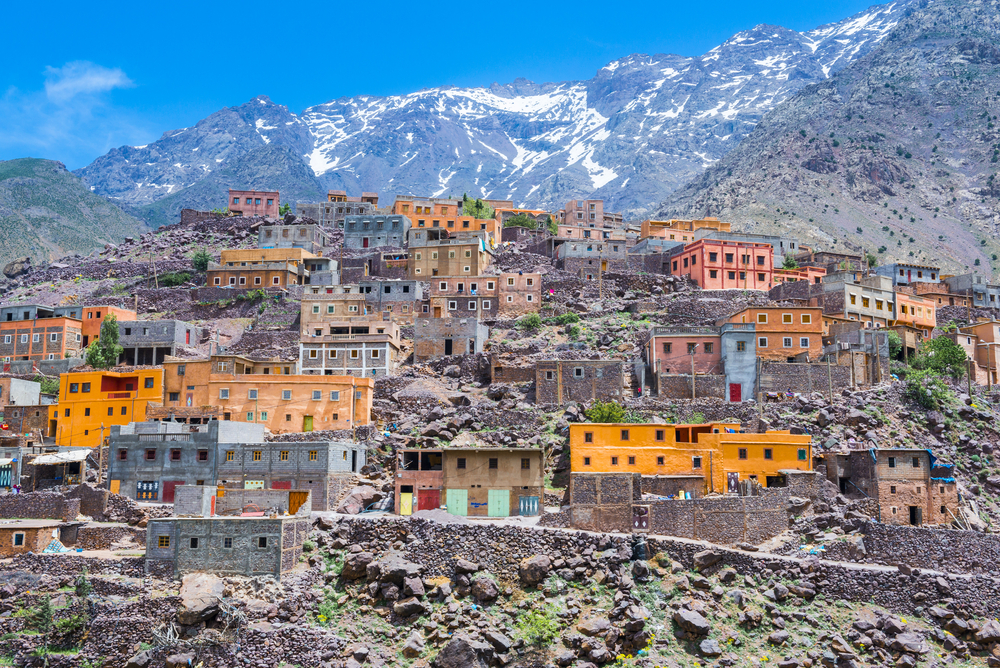
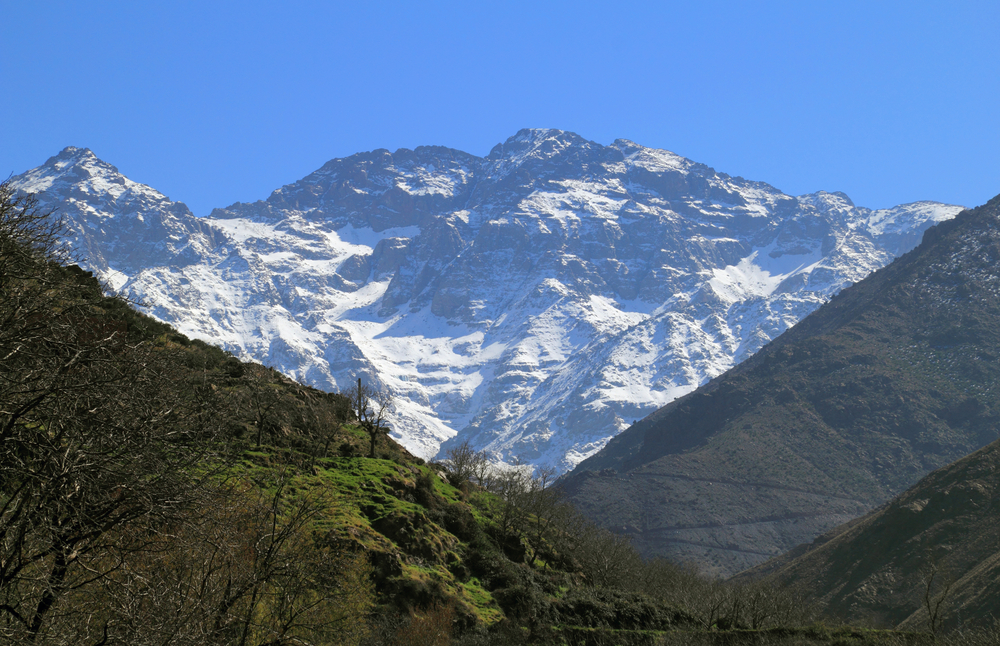
Visitors are drawn to the park for its panoramic mountain scenery, dramatic valleys, and opportunities to experience traditional Amazigh, or Berber, culture. Trekking routes pass through remote villages, terraced farmland, and rocky mountain passes before reaching snow-covered peaks. In winter, the higher elevations transform into a snowy alpine environment that contrasts sharply with Morocco’s desert landscapes and coastal cities.
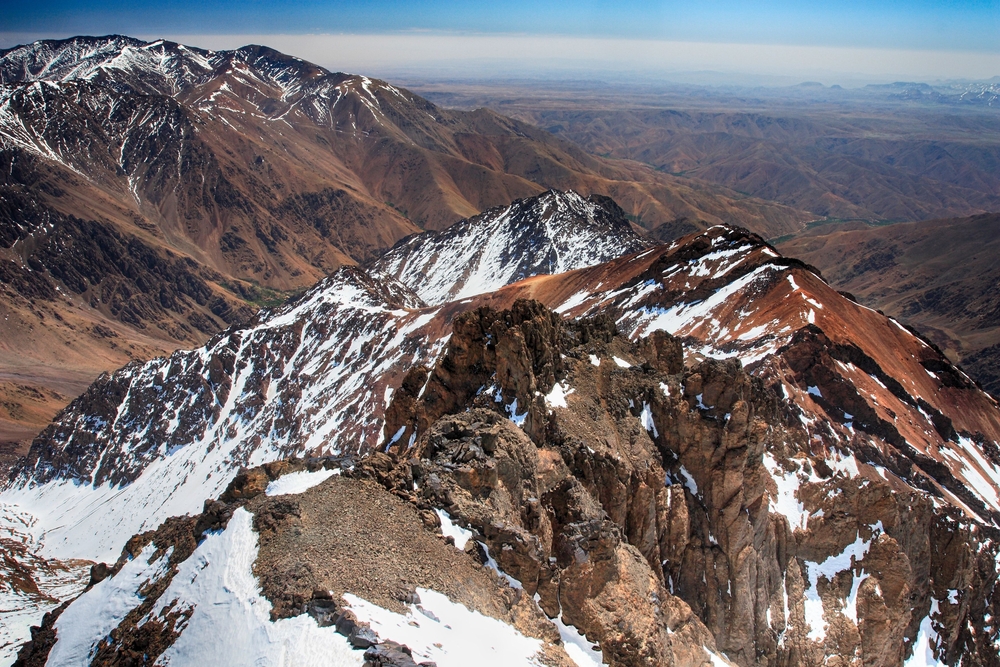
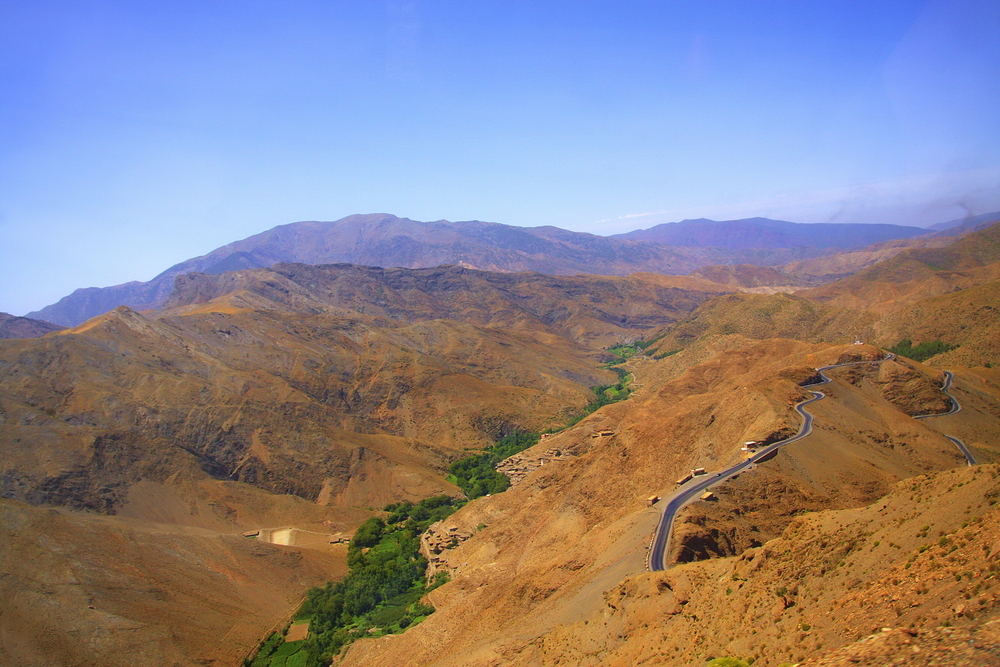
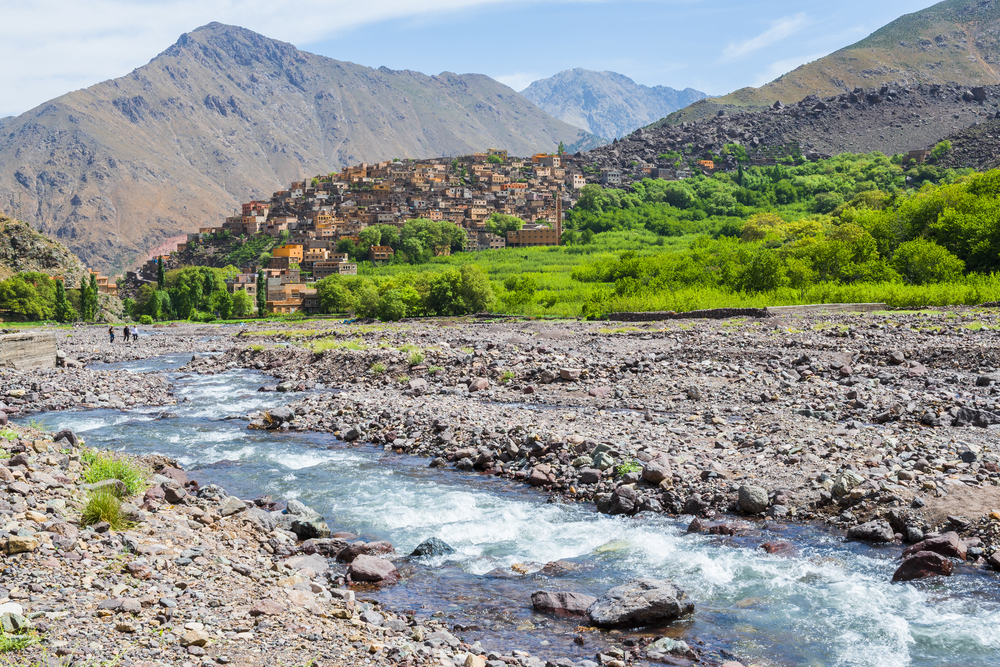
The geography of Toubkal National Park is dominated by steep mountain ridges, rocky valleys, high plateaus, and glacially shaped terrain. Deep river valleys cut through the mountains and support small villages and agricultural terraces that have existed for centuries. Vegetation changes significantly with elevation.
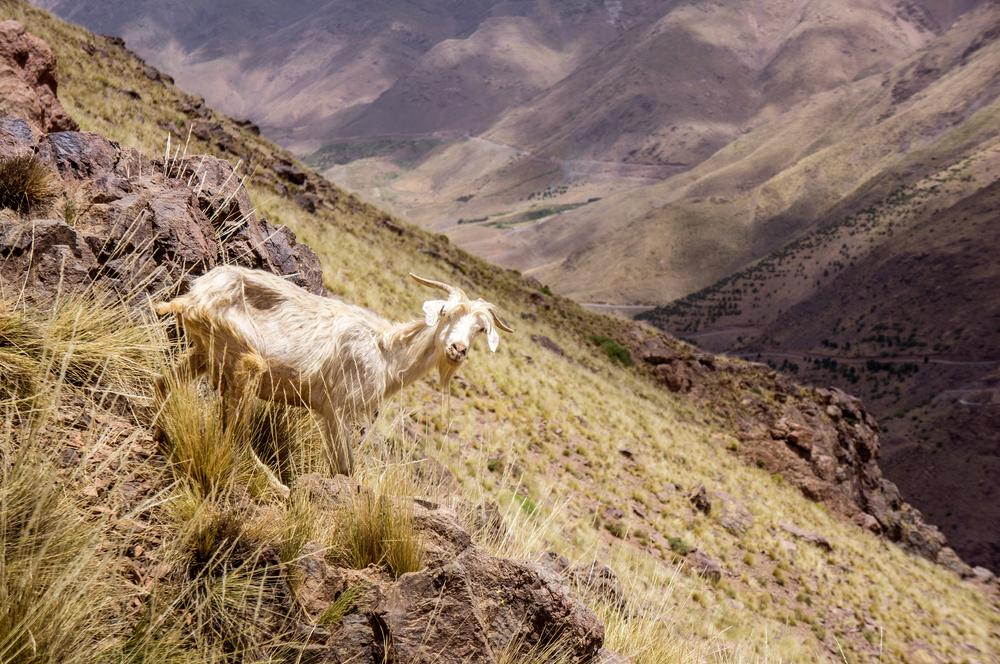
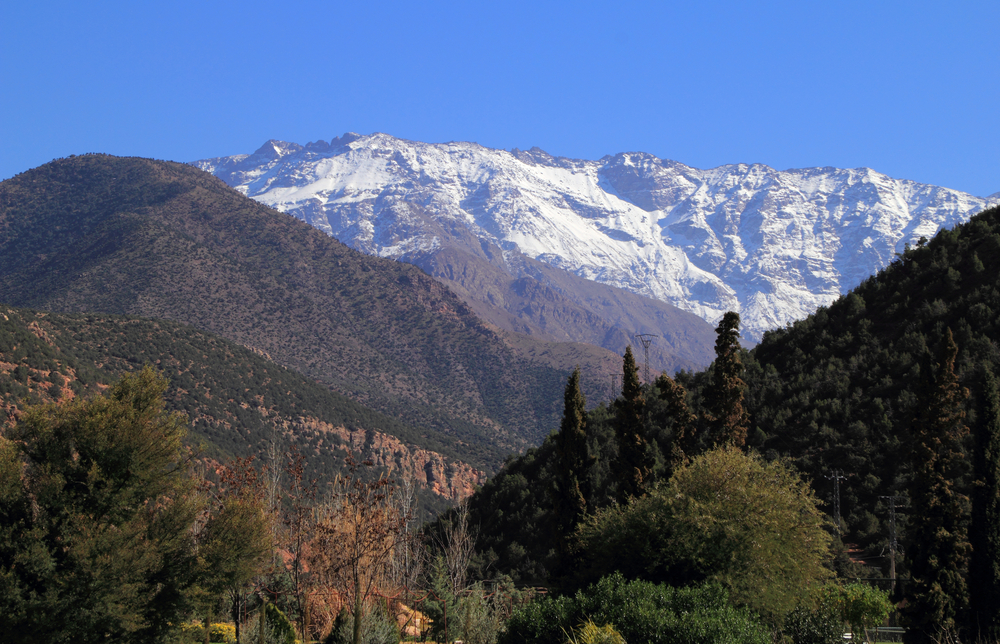
Lower slopes contain juniper forests, walnut trees, shrubs, and cultivated farmland, while higher elevations become increasingly barren and alpine in character. Seasonal snow covers many of the upper peaks during winter and spring, feeding rivers that flow toward surrounding communities. The dramatic changes in elevation create spectacular viewpoints across the Atlas Mountains and distant desert plains.
Wildlife in Toubkal National Park is adapted to mountain environments and semi-arid conditions. Barbary macaques inhabit some forested areas while foxes, wild boars, and small mammals move through valleys and rocky slopes. Birdlife includes golden eagles, Bonelli’s eagles, ravens, and numerous mountain songbirds that thrive in high-altitude habitats. Reptiles and amphibians are also found near streams and wetter valleys.
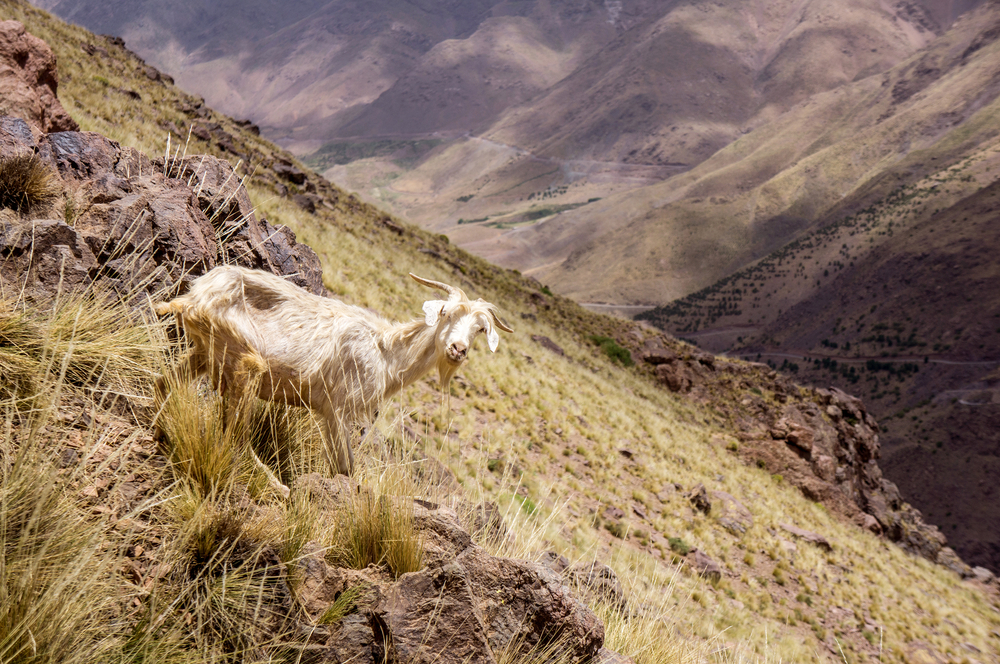
Although the park is more famous for scenery and trekking than large mammals, its ecosystems remain important for preserving biodiversity within the Atlas Mountains. Traditional farming practices in surrounding villages have also shaped the landscape while maintaining relatively sustainable relationships with the natural environment.
Toubkal National Park plays a vital role in protecting fragile mountain ecosystems and preserving water resources for nearby communities. The Atlas Mountains act as important watersheds for central Morocco, and the park helps safeguard forests, rivers, and alpine habitats threatened by erosion, overgrazing, and climate change.
Compared to mountain parks such as Mont Blanc Massif or Rocky Mountain National Park, Toubkal National Park offers a unique blend of North African culture, rugged mountain scenery, and accessible trekking adventures. Its combination of towering peaks, traditional villages, and dramatic landscapes makes it one of Morocco’s most treasured natural areas. Toubkal National Park continues to inspire climbers, hikers, and conservationists while preserving the beauty and ecological importance of the High Atlas Mountains.
Photos
Things to See
Things To Do
Engaging Toubkal
Toubkal National Park Trails
The majority of hiking trails begin in the town of Imlil. Imenane, Mizane, and Azzadene are valleys that all offer nice hikes which also help with acclimatization before trekking up Toubkal.

Park Protection
Toubkal National Park was created to protect the rugged High Atlas Mountains, alpine meadows, cedar and juniper forests, deep valleys, and river headwaters of central Morocco. The park provides important habitat for several threatened and endangered species, including the endangered Barbary sheep (aoudad) and the endangered Barbary macaque in parts of the broader High Atlas ecosystem.
It also supports populations of golden eagles, Bonelli’s eagles, Barbary partridges, foxes, wild boar, and numerous reptiles and endemic mountain plants. The park’s forests and high-altitude watersheds play a vital role in supplying freshwater to surrounding communities and sustaining biodiversity across Morocco’s highest mountain range.
The park is especially significant for protecting Jebel Toubkal, the highest peak in North Africa at 4,167 meters (13,671 feet). Its exceptional elevational range supports a remarkable transition from Mediterranean woodlands to alpine ecosystems, creating habitats for numerous endemic plants found only in the High Atlas.
The park also preserves traditional Berber mountain landscapes where centuries-old cultural practices coexist with important natural ecosystems. Together, Toubkal National Park safeguards endangered mountain wildlife, critical watershed forests, unique alpine ecosystems, and North Africa’s most iconic mountain landscape.
FAQ’s
What is Toubkal National Park known for?
Toubkal National Park, situated in the High Atlas Mountains of Morocco, is renowned for its rugged mountain landscapes, including North Africa’s highest peak, Mount Toubkal. The park is named after this towering summit, which rises to an elevation of 4,167 meters (13,671 feet) above sea level.
Visitors flock to Toubkal National Park for its exceptional hiking and trekking opportunities, with trails ranging from leisurely strolls through picturesque valleys to challenging ascents of Mount Toubkal itself. Along the way, trekkers are treated to stunning vistas of snow-capped peaks, alpine meadows, and traditional Berber villages nestled among the mountains.
The park is also home to a rich diversity of flora and fauna, including endemic plant species adapted to the harsh mountain environment, as well as Barbary macaques and various bird species.
In addition to hiking, Toubkal National Park offers opportunities for mountaineering, rock climbing, and cultural experiences, allowing visitors to immerse themselves in the natural beauty and cultural heritage of the High Atlas Mountains.
What is the main reason people visit Toubkal National Park?
Toubkal National Park is primarily visited for its spectacular High Atlas Mountain scenery, challenging trekking opportunities, traditional Berber culture, and the opportunity to summit the highest mountain in North Africa. Located in central Morocco approximately 40 miles (65 kilometers) south of Marrakesh, the park protects approximately 147 square miles (380 square kilometers) of rugged mountains, deep valleys, alpine landscapes, and traditional villages. Visitors come to climb Mount Toubkal, hike scenic mountain trails, experience Berber hospitality, and enjoy some of the most dramatic mountain scenery in Africa.
What animals can visitors hope to see in Toubkal National Park?
Toubkal National Park supports approximately 40 mammal species along with numerous reptiles, amphibians, and mountain-adapted wildlife.
Some of the most notable animals found in Toubkal National Park include:
- Barbary Sheep (Aoudad)
- Barbary Macaque
- Red Fox
- African Golden Wolf
- African Wildcat
- Caracal
- Common Genet
- Egyptian Mongoose
- Striped Hyena
- Eurasian Otter
- Wild Boar
- Cape Hare
- Porcupine
- Atlas Gundi
- Atlas Mountain Vole
- Algerian Hedgehog
- North African Hedgehog
- Greater White-toothed Shrew
- Garden Dormouse
- Wood Mouse
- North African Ground Squirrel
- Fat Sand Rat
- Lesser Egyptian Jerboa
- Atlas Dormouse
- Atlas Mole
- Long-eared Bat Species
- Horseshoe Bat Species
- Schreiber’s Bat
- Common Pipistrelle
- Savi’s Pipistrelle
- Serotine Bat
- Mountain Weasel
- Stone Marten
- Least Weasel
- European Rabbit
- Atlas Gecko Species
- Moorish Gecko
- Ocellated Skink
- Atlas Lizard Species
- Montpellier Snake
- Horseshoe Whip Snake
- Viperine Snake
- North African Cobra (rare)
- Spur-thighed Tortoise
- Atlas Frog
- Green Frog Species
- North African Toad
- Salamander Species
- Newt Species
- Various Endemic Mountain Reptiles
What birds can visitors hope to see in Toubkal National Park?
Toubkal National Park is home to more than 120 bird species. Its alpine habitats, cliffs, forests, and valleys support many mountain and migratory birds.
Some of the most popular birds seen in Toubkal National Park include:
- Golden Eagle
- Bonelli’s Eagle
- Short-toed Snake Eagle
- Booted Eagle
- Peregrine Falcon
- Barbary Falcon
- Common Kestrel
- Eurasian Sparrowhawk
- Northern Goshawk
- Griffon Vulture
- Egyptian Vulture
- Bearded Vulture (rare)
- Eurasian Eagle-Owl
- Little Owl
- Tawny Owl
- Alpine Chough
- Red-billed Chough
- Common Raven
- Eurasian Magpie
- Rock Sparrow
- House Sparrow
- Black Wheatear
- Mourning Wheatear
- White-crowned Wheatear
- Northern Wheatear
- Blue Rock Thrush
- Rock Thrush
- European Robin
- Black Redstart
- Common Redstart
- Mistle Thrush
- Song Thrush
- Common Blackbird
- Crag Martin
- Barn Swallow
- Red-rumped Swallow
- Alpine Swift
- Common Swift
- House Martin
- Eurasian Hoopoe
- Great Tit
- Coal Tit
- Crested Tit
- Firecrest
- Common Chaffinch
- European Serin
- European Goldfinch
- Rock Bunting
- Corn Bunting
- Cirl Bunting
Is Toubkal National Park worth visiting?
Yes, Toubkal National Park is absolutely worth visiting and is one of the premier mountain destinations in Africa.
The park offers spectacular mountain scenery, authentic Berber villages, excellent trekking opportunities, diverse wildlife, and the chance to climb North Africa’s highest mountain. It provides a completely different experience from Morocco’s cities, deserts, and coastal regions.
The primary hesitation is that some of the park’s best attractions require strenuous hiking. However, even visitors who do not summit Mount Toubkal can enjoy beautiful scenery and cultural experiences.
What is the best time to visit Toubkal National Park?
Weather and Climate
The best time to visit Toubkal National Park is from April through June and September through November.
Typical conditions include:
- Spring: 45–75°F (7–24°C)
- Summer: 55–85°F (13–29°C)
- Fall: 45–75°F (7–24°C)
- Winter: 20–50°F (-7–10°C)
During these periods:
- Hiking conditions are excellent.
- Mountain visibility is often outstanding.
- Temperatures are comfortable.
- Wildflowers may be blooming in spring.
- Trails are generally accessible.
Winter attracts mountaineers seeking snow-covered conditions.
How many days do you need to visit Toubkal National Park?
Recommended Length of Stay
Most visitors should plan for 2 to 4 days.
- 1 day: Imlil Valley exploration.
- 2 days: Mount Toubkal ascent.
- 3 days: Extended trekking and village visits.
- 4+ days: Multi-day mountain expeditions.
Three days is ideal for most visitors seeking a complete experience.
How do you get to Toubkal National Park?
International Access
Toubkal National Park is located south of:
- Marrakesh
The primary international gateway is:
- Marrakesh Menara Airport
Most visitors:
- Fly into Marrakesh.
- Travel by vehicle to Imlil.
- Begin hiking from the park gateway communities.
Imlil Village
The primary gateway to the park is:
- Imlil
Imlil serves as:
- The main trekking hub.
- Base for guides and accommodations.
- Starting point for Mount Toubkal climbs.
Mount Toubkal
The park’s most famous attraction is:
- Mount Toubkal
Highlights include:
- Highest mountain in North Africa.
- Elevation of 13,671 feet (4,167 meters).
- Panoramic views across the Atlas Mountains.
- Popular multi-day trekking routes.
Toubkal Refuge
Most summit climbers stay at:
- Toubkal Refuge
This mountain refuge serves as the primary overnight stop before summit attempts.
Berber Villages
Visitors frequently pass through traditional villages such as:
- Aroumd
- Aremd
- Sidi Chamharouch
These communities offer insight into traditional High Atlas culture.
Travel Times
Typical travel times include:
- Marrakesh Airport to Imlil: approximately 1.5–2 hours.
- Imlil to Toubkal Refuge: approximately 5–6 hours hiking.
- Refuge to Mount Toubkal summit: approximately 3–4 hours hiking.
- Summit to Imlil return: typically completed over 2 days.
Who is involved in protecting and supporting Toubkal National Park?
Conservation and Park Management
Several organizations help protect and support Toubkal National Park:
- National Agency for Water and Forests – manages Toubkal National Park.
- High Atlas Foundation – supports conservation and sustainable development initiatives.
- Moroccan Association for Nature and Environment Protection – supports environmental conservation.
- Various mountain guide associations and local conservation initiatives.
- Local Berber People communities, who have lived in the High Atlas Mountains for centuries.
How tall is Mount Toubkal?
Mount Toubkal rises to approximately 13,671 feet (4,167 meters) above sea level.
Can beginners climb Mount Toubkal?
Many reasonably fit hikers can summit Mount Toubkal with a guide. However, the climb is physically demanding and involves high altitude, making preparation important.
Do you need a guide to climb Mount Toubkal?
Moroccan regulations generally require visitors to use authorized guides when ascending Mount Toubkal.
What makes Toubkal National Park unique?
Toubkal National Park is unique because it protects the highest peaks in North Africa while preserving traditional Berber mountain communities, alpine ecosystems, and dramatic Atlas Mountain landscapes.
Visitors can trek through remote valleys, experience authentic mountain culture, and stand atop the highest point in North Africa, all within a relatively short distance of Marrakesh. This combination of adventure, culture, and scenery makes Toubkal one of Africa’s most distinctive national parks.
Sources
Here are sources you can explore for more information:
- AllTrails. Toubkal National Park. https://www.alltrails.com/morocco/marrakesh-safi/toubkal-national-park, retrieved July 2026.
- Encyclopaedia Britannica. Toubkal. https://www.britannica.com/place/Mount-Toubkal, retrieved July 2026.
- High Atlas Foundation. Toubkal National Park. https://www.highatlasfoundation.org/, retrieved July 2026.
- Moroccan National Agency for Water and Forests (ANEF). Toubkal National Park. https://www.eauxetforets.gov.ma/, retrieved July 2026.
- Pilot Guides. Toubkal National Park. https://www.pilotguides.com/, retrieved July 2026.
- Protected Planet (UNEP-WCMC & IUCN). Toubkal National Park. https://www.protectedplanet.net/, retrieved July 2026.
- Wikipedia. Toubkal National Park. https://en.wikipedia.org/wiki/Toubkal_National_Park, retrieved July 2026.
- World Wildlife Fund (WWF). Mediterranean Acacia-Argania Dry Woodlands and Succulent Thickets. https://www.worldwildlife.org/ecoregions/pa1212, retrieved July 2026.