

About
Tazekka National Park (French: Parc National de Tazekka; Arabic: الحديقة الوطنية تازكة) is located in the Middle Atlas region of northern Morocco near the city of Taza. Established in 1950, the park covers approximately 53 square miles (137 sq km) and protects a diverse landscape of mountains, forests, caves, and river valleys.
Centered around Jebel Tazekka, which rises to approximately 6,490 feet (1,980 m), the park occupies a unique ecological position between the Rif Mountains and the Middle Atlas. Although smaller than many of Morocco’s national parks, Tazekka is recognized for its exceptional biodiversity and geological significance.
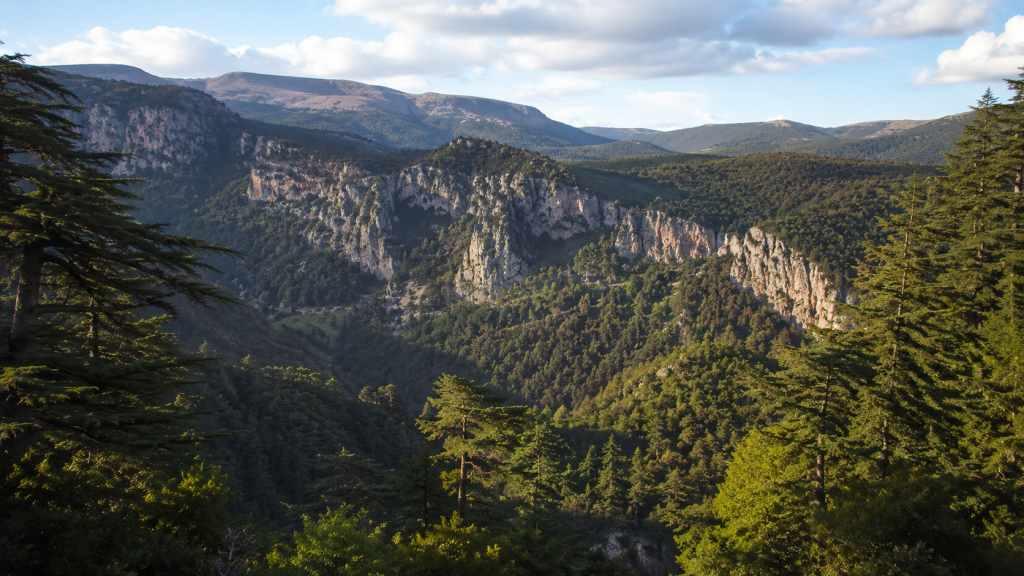
The park is best known for its magnificent cedar forests and extensive cave systems. Visitors are attracted by scenic mountain trails, lush woodlands, and dramatic limestone formations. One of the park’s most famous natural features is the Friouato Cave, considered one of the deepest and most impressive cave systems in North Africa.
Adventurous visitors can descend into its vast chambers and explore underground passages shaped by thousands of years of erosion. Above ground, panoramic viewpoints provide sweeping vistas across forested mountains and surrounding valleys. The combination of caves, forests, and mountain scenery makes Tazekka one of Morocco’s most distinctive protected areas.
Geographically, Tazekka National Park is characterized by rugged mountains, limestone plateaus, deep gorges, and fertile valleys. The park’s varied elevations create a range of microclimates that support diverse ecosystems. Cedar forests dominate higher elevations, while oak woodlands, juniper stands, and Mediterranean shrublands occupy lower slopes.
Seasonal streams and springs flow through valleys and help sustain rich vegetation throughout much of the year. The park’s limestone geology has produced numerous caves, sinkholes, and karst formations, contributing to its scientific and ecological importance.
Wildlife within Tazekka National Park reflects the diversity of its habitats. Mammals include wild boar, foxes, jackals, genets, hedgehogs, and several species of bats that inhabit the park’s caves. The endangered Barbary macaque, one of North Africa’s most iconic mammals, can occasionally be found in suitable forest habitats within the broader region.
Birdlife is particularly rich, with eagles, hawks, owls, woodpeckers, and numerous songbirds inhabiting the forests and mountains. Reptiles and amphibians thrive near streams and moist habitats, while countless invertebrates contribute to the park’s ecological complexity.
Tazekka National Park plays a critical role in conserving Morocco’s remaining mountain forests and protecting important watersheds that support surrounding communities. The park safeguards rare cedar ecosystems, geological formations, and habitats for a variety of wildlife species. Its cave systems also provide valuable scientific insights into the geological history of the region.
In terms of ecological importance, Tazekka is often compared to Talassemtane National Park and Cévennes National Park, where mountain forests and karst landscapes support diverse biodiversity. Through its cedar woodlands, remarkable caves, mountain wildlife, and scenic beauty, Tazekka National Park stands as one of Morocco’s most valuable natural treasures and an important refuge for the unique ecosystems of the Middle Atlas region.
Things to See
Things To Do
Engaging Tazekka National Park

Park Protection
Tazekka National Park was created to protect the cedar forests, oak woodlands, limestone mountains, caves, and river valleys of the Middle Atlas region in northeastern Morocco. The park provides important habitat for several threatened and endangered species, including the endangered Barbary macaque, one of the world’s most threatened primates.
It also supports populations of Barbary sheep, wild boar, red foxes, golden jackals, genets, and numerous birds of prey, including golden eagles and Bonelli’s eagles. The park’s forests are dominated by Atlas cedar, evergreen oak, and cork oak, providing essential habitat for a rich diversity of native plants and animals while protecting important watersheds that supply water to surrounding communities.
The park is especially significant for protecting one of Morocco’s finest remaining Atlas cedar forests and the spectacular karst landscapes of the Middle Atlas. Its limestone geology has created an extensive network of caves, sinkholes, natural bridges, and underground rivers, including the renowned Friouato Cave, one of the deepest cave systems in North Africa.
The park also preserves a remarkable transition between Mediterranean forests and mountain ecosystems, supporting numerous endemic plant species unique to the Atlas Mountains. Together, Tazekka National Park safeguards endangered Barbary macaques, rare cedar forest ecosystems, unique karst landscapes, and one of Morocco’s most important mountain conservation areas.
FAQ’s
What is the main reason people visit Tazekka National Park?
Tazekka National Park is primarily visited for its cedar forests, mountain scenery, caves, waterfalls, hiking opportunities, and rich biodiversity. Located in northeastern Morocco near the city of Taza, the park protects approximately 53 square miles (137 square kilometers) of forests, limestone mountains, caves, rivers, and diverse wildlife habitats. Visitors come to hike through Atlas cedar forests, explore spectacular cave systems, observe wildlife, enjoy panoramic mountain views, and experience one of Morocco’s lesser-known natural treasures.
What animals can visitors hope to see in Tazekka National Park?
Tazekka National Park supports approximately 40 mammal species along with numerous reptiles, amphibians, and mountain forest wildlife.
Some of the most notable animals found in Tazekka National Park include:
- Barbary Macaque
- Barbary Sheep (Aoudad)
- Wild Boar
- Red Fox
- African Golden Wolf
- African Wildcat
- Caracal
- Common Genet
- Egyptian Mongoose
- Eurasian Otter
- Striped Hyena
- Least Weasel
- Stone Marten
- Porcupine
- Cape Hare
- European Rabbit
- North African Hedgehog
- Algerian Hedgehog
- Atlas Gundi
- Atlas Mountain Vole
- Garden Dormouse
- Wood Mouse
- North African Ground Squirrel
- Fat Sand Rat
- Greater White-toothed Shrew
- Atlas Dormouse
- Atlas Mole
- Horseshoe Bat Species
- Common Pipistrelle
- Savi’s Pipistrelle
- Schreiber’s Bat
- Serotine Bat
- Long-eared Bat Species
- Mountain Weasel
- Forest Rodent Species
- Moorish Gecko
- Atlas Gecko Species
- Ocellated Skink
- Atlas Lizard Species
- Montpellier Snake
- Horseshoe Whip Snake
- Viperine Snake
- Spur-thighed Tortoise
- Atlas Frog
- Green Frog Species
- North African Toad
- Salamander Species
- Newt Species
- Cave-dwelling Bat Species
- Various Endemic Forest Reptiles
What birds can visitors hope to see in Tazekka National Park?
Tazekka National Park is home to more than 110 bird species. Its forests, mountains, cliffs, and river valleys provide excellent habitat for both resident and migratory birds.
Some of the most popular birds seen in Tazekka National Park include:
- Golden Eagle
- Bonelli’s Eagle
- Short-toed Snake Eagle
- Booted Eagle
- Peregrine Falcon
- Barbary Falcon
- Common Kestrel
- Eurasian Sparrowhawk
- Northern Goshawk
- Griffon Vulture
- Egyptian Vulture
- Eurasian Eagle-Owl
- Little Owl
- Tawny Owl
- Alpine Chough
- Red-billed Chough
- Common Raven
- Eurasian Magpie
- Eurasian Jay
- Coal Tit
- Great Tit
- Crested Tit
- Blue Tit
- Firecrest
- Common Chaffinch
- European Serin
- European Goldfinch
- Hawfinch
- Rock Sparrow
- House Sparrow
- Black Wheatear
- Northern Wheatear
- White-crowned Wheatear
- Blue Rock Thrush
- Rock Thrush
- Common Blackbird
- Song Thrush
- Mistle Thrush
- European Robin
- Black Redstart
- Common Redstart
- Crag Martin
- Barn Swallow
- Red-rumped Swallow
- Alpine Swift
- Common Swift
- House Martin
- Eurasian Hoopoe
- Rock Bunting
- Cirl Bunting
Is Tazekka National Park worth visiting?
Yes, Tazekka National Park is absolutely worth visiting, particularly for travelers seeking mountain scenery, hiking, forests, caves, and a less-crowded nature experience in Morocco.
The park offers beautiful cedar forests, impressive limestone landscapes, waterfalls, caves, wildlife, and excellent hiking opportunities. It provides a refreshing contrast to Morocco’s deserts, cities, and coastal regions.
The primary hesitation is that it lacks the international fame of destinations such as Toubkal or the Sahara Desert. However, visitors seeking authentic natural experiences often find Tazekka especially rewarding.
What is the best time to visit Tazekka National Park?
Weather and Climate
The best time to visit Tazekka National Park is from April through June and September through November.
Typical conditions include:
- Spring: 45–75°F (7–24°C)
- Summer: 55–90°F (13–32°C)
- Fall: 45–75°F (7–24°C)
- Winter: 30–60°F (-1–16°C)
During these periods:
- Hiking conditions are excellent.
- Forests are lush and green.
- Waterfalls are often flowing.
- Wildlife is active.
- Temperatures are comfortable.
Spring is particularly beautiful due to wildflowers and greenery.
How many days do you need to visit Tazekka National Park?
Recommended Length of Stay
Most visitors should plan for 1 to 2 days.
- Half day: Scenic viewpoints and short hikes.
- 1 day: Forests, caves, and hiking trails.
- 2 days: Comprehensive exploration of the park.
- 3+ days: Extended hiking, birdwatching, and photography.
A full day is sufficient for most visitors, though nature enthusiasts may prefer two days.
How do you get to Tazekka National Park?
International Access
Tazekka National Park is located near:
- Taza
The closest major airports include:
- Fès–Saïss Airport
- Nador International Airport
Most visitors:
- Fly into Fès.
- Travel east toward Taza.
- Continue by vehicle to the park entrance.
Travel from Fès
The most common route is:
- Fès to Tazekka National Park.
Travel time:
- Approximately 2 hours by road.
Jbel Tazekka
The park’s most prominent feature is:
- Jbel Tazekka
Highlights include:
- Elevation of approximately 6,493 feet (1,979 meters).
- Panoramic views of the Middle Atlas Mountains.
- Popular hiking routes.
- Exceptional photography opportunities.
Friouato Cave
One of the park’s most famous attractions is:
- Friouato Cave
Known for:
- Massive underground chambers.
- Limestone formations.
- Deep vertical entrance.
- Guided exploration opportunities.
It is widely considered one of Morocco’s most impressive caves.
Forest Trails
Visitors can explore:
- Cedar forests.
- Holm oak forests.
- Mountain valleys.
- Scenic viewpoints.
Several trails range from short walks to full-day hikes.
Ras El Ma Waterfalls
Another popular attraction is:
- Ras El Ma Waterfalls
These waterfalls attract hikers and photographers throughout the year.
Travel Times
Typical travel times include:
- Fès to Taza: approximately 1.5 hours.
- Taza to park entrance: approximately 30 minutes.
- Park entrance to Jbel Tazekka trailheads: approximately 15–30 minutes.
- Friouato Cave to central park areas: approximately 20 minutes.
Who is involved in protecting and supporting Tazekka National Park?
Conservation and Park Management
Several organizations help protect and support Tazekka National Park:
- National Agency for Water and Forests – manages Tazekka National Park.
- High Commission for Water, Forests and the Fight Against Desertification – supports conservation and natural resource management.
- Moroccan Association for Nature and Environment Protection – supports environmental stewardship.
- Local conservation groups and ecotourism organizations.
- Local communities in the Taza region who maintain longstanding cultural and economic ties to the park.
What makes Tazekka National Park unique?
Tazekka National Park is unique because it combines cedar forests, limestone mountains, cave systems, waterfalls, and rich biodiversity within a relatively compact protected area.
Unlike Morocco’s more famous desert or alpine destinations, Tazekka offers visitors an opportunity to experience lush forests, underground geological wonders, and scenic mountain landscapes with relatively few crowds, making it one of the country’s hidden natural gems.
Sources
Here are sources you can explore for more information:
- AllTrails. Tazekka National Park. https://www.alltrails.com/morocco/fez-meknes/tazekka-national-park, retrieved July 2026.
- Encyclopaedia Britannica. Middle Atlas. https://www.britannica.com/place/Middle-Atlas, retrieved July 2026.
- Moroccan National Agency for Water and Forests (ANEF). Tazekka National Park. https://www.eauxetforets.gov.ma/, retrieved July 2026.
- Pilot Guides. Tazekka National Park. https://www.pilotguides.com/, retrieved July 2026.
- Protected Planet (UNEP-WCMC & IUCN). Tazekka National Park. https://www.protectedplanet.net/, retrieved July 2026.
- SafariBookings. Tazekka National Park. https://www.safaribookings.com/tazekka, retrieved July 2026.
- Wikipedia. Tazekka National Park. https://en.wikipedia.org/wiki/Tazekka_National_Park, retrieved July 2026.
- World Wildlife Fund (WWF). Mediterranean Conifer and Mixed Forests. https://www.worldwildlife.org/ecoregions/pa1206, retrieved July 2026.