

About
Isalo National Park (Malagasy: Parc National de l’Isalo) is located in southwestern Madagascar near the town of Ranohira in the Ihorombe Region. Established in 1962, the park covers approximately 315 square miles (815 sq km) and protects one of Madagascar’s most iconic and visually striking landscapes.
Isalo lies within a transition zone between the island’s humid eastern forests and arid southern regions, creating a unique blend of ecosystems and scenery. The park is often considered Madagascar’s premier destination for dramatic desert-like landscapes, deep canyons, and unusual rock formations.
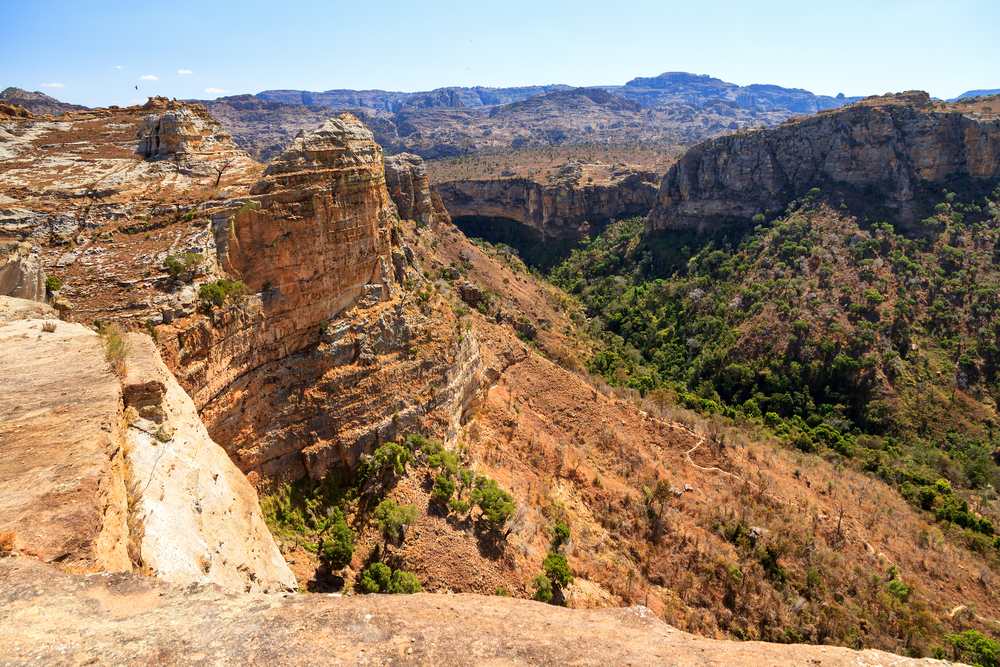
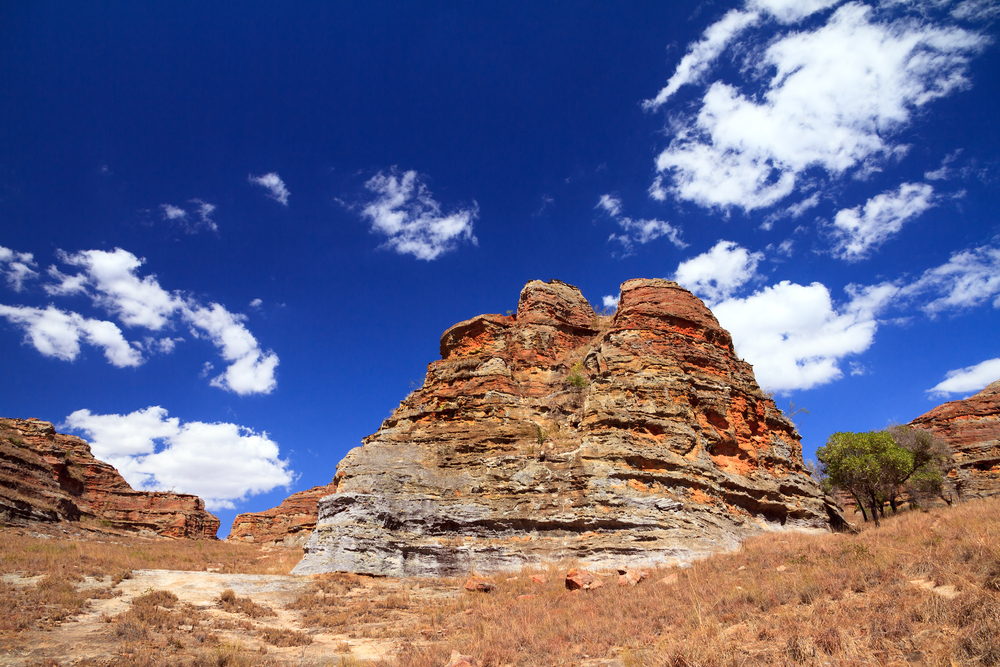
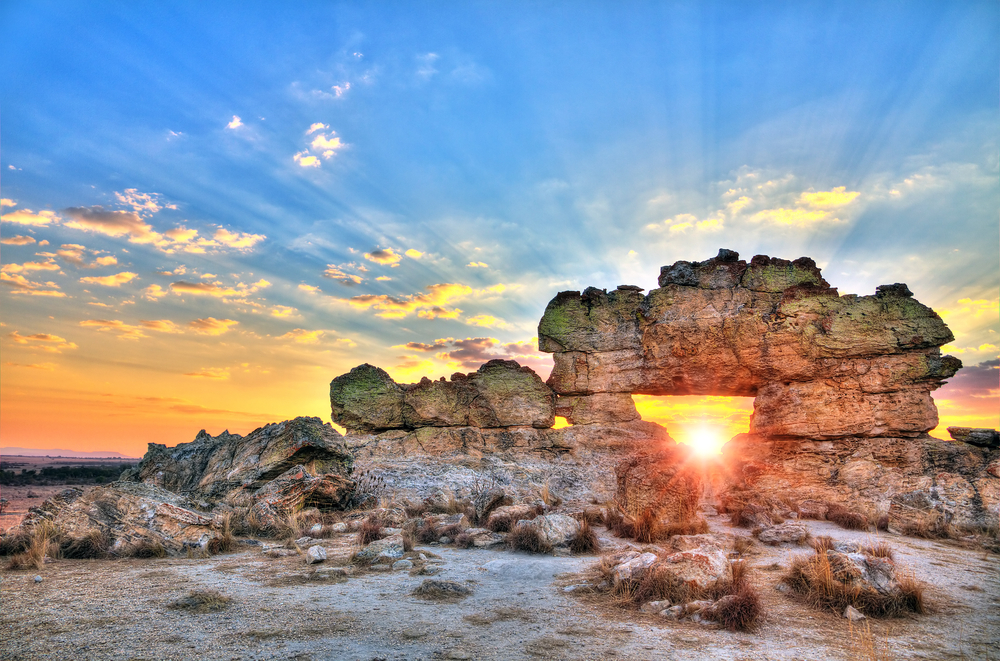
The park is best known for its spectacular sandstone formations that have been sculpted over thousand of years by wind and water erosion. Towering cliffs, narrow canyons, natural arches, rocky pinnacles, and vast plateaus create landscapes often compared to the American Southwest.
Visitors are drawn to Isalo for its scenic hiking trails that lead through hidden oases, palm-lined pools, waterfalls, and panoramic overlooks. Popular attractions include the Canyon des Singes, Piscine Naturelle, and the breathtaking sunset viewpoints where the sandstone glows in shades of gold, orange, and red. The park’s striking scenery makes it one of the most photographed locations in Madagascar.
Geographically, Isalo National Park is dominated by a massive sandstone massif that rises above surrounding grasslands and savannas. Over time, erosion carved intricate canyons and valleys into the plateau, producing a maze-like landscape filled with hidden streams and sheltered habitats.
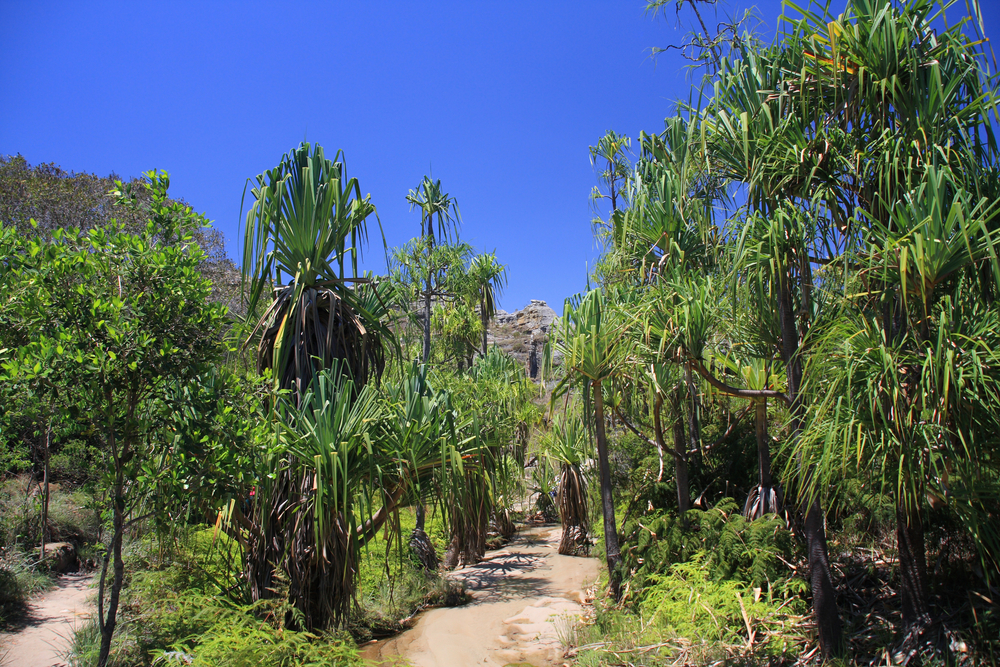
The vegetation reflects the region’s dry climate but varies significantly depending on elevation and water availability. Grasslands cover open areas, while canyon bottoms support lush gallery forests with pandanus, palms, ferns, and endemic plants nourished by permanent water sources. These isolated green refuges provide essential habitat for wildlife in an otherwise harsh environment.
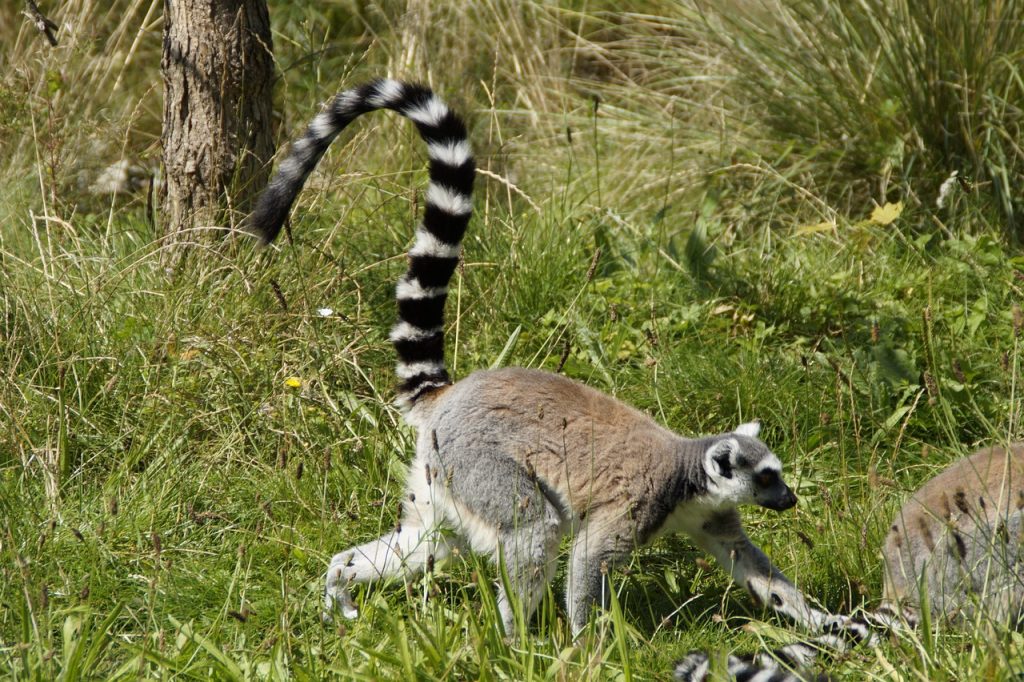
Wildlife within the park is uniquely adapted to the dry and rugged conditions. Several species of lemurs inhabit Isalo, including ring-tailed lemurs, Verreaux’s sifakas, and red-fronted brown lemurs. Birdlife is diverse, with species such as Benson’s rock thrush, Madagascar kestrels, couas, and numerous endemic birds commonly observed.
Reptiles thrive in the warm climate and include colorful chameleons, geckos, and lizards. The park also supports rare plants specially adapted to drought and rocky terrain, many of which are found nowhere else on Earth. This high level of endemism reflects Madagascar’s long isolation and extraordinary evolutionary history.
Isalo National Park plays an important role in protecting Madagascar’s unique dry ecosystems and endemic wildlife. The park preserves fragile habitats increasingly threatened by deforestation, fire, and overgrazing in surrounding areas. It also safeguards important cultural sites, including sacred burial grounds used by the local Bara people for generations.
Ecologically and visually, Isalo is often compared to famous desert and canyon parks such as Zion National Park and Wadi Rum Protected Area because of its towering rock formations and dramatic landscapes. Yet Isalo stands apart through its combination of endemic wildlife, tropical canyon oases, and Malagasy cultural heritage. Through its rugged beauty, rare biodiversity, and geological wonder, Isalo National Park remains one of Madagascar’s most extraordinary protected areas and one of Africa’s most unforgettable natural destinations.
Things to See

Things To Do
Engaging Isalo
Park Protection
Isalo National Park was created to protect the dramatic sandstone massif, deep canyons, grasslands, dry forests, palm-lined oases, and unique desert ecosystems of south-central Madagascar. The park provides critical habitat for several threatened and endemic species, including the endangered Verreaux’s sifaka and the vulnerable ring-tailed lemur.
It also supports red-fronted brown lemurs, Madagascar boas, numerous endemic reptiles, and more than 80 bird species, including Benson’s rock thrush and the Madagascar kestrel. The park’s diverse habitats preserve an exceptional variety of endemic plants, including pachypodiums, aloes, and several species adapted to Madagascar’s arid environments. As with much of Madagascar, many of the park’s plants and animals occur nowhere else on Earth.
The park is especially significant for protecting one of Madagascar’s most spectacular sandstone landscapes, where millions of years of erosion have created towering cliffs, natural arches, narrow gorges, and hidden pools. Its isolated canyons and rocky plateaus have allowed many endemic species to evolve in relative isolation, contributing to the island’s extraordinary biodiversity.
Isalo also preserves rare dry forest ecosystems that have become increasingly fragmented elsewhere in Madagascar. Together, Isalo National Park safeguards endangered lemurs, remarkable endemic wildlife, unique sandstone formations, and one of Madagascar’s most iconic and biologically important natural landscapes.
FAQ’s
What is the main reason people visit Isalo National Park?
Isalo National Park is primarily visited for its spectacular sandstone formations, deep canyons, natural swimming pools, unique wildlife, and dramatic desert-like scenery. Located in southern Madagascar, Isalo protects approximately 315 square miles (815 square kilometers) of rugged landscapes featuring eroded sandstone massifs, palm-lined oases, waterfalls, and rare endemic species.
Visitors come to hike through breathtaking canyons, swim in natural pools, observe lemurs, discover unique plant life, and experience one of Madagascar’s most visually stunning national parks.
What animals can visitors hope to see in Isalo National Park?
Isalo National Park supports approximately 40 mammal species and more than 20 reptile species, many of which are endemic to Madagascar. The park is particularly famous for its lemurs, reptiles, and unique dry-forest wildlife.
Some of the most notable animals found in Isalo National Park include:
- Ring-tailed Lemur
- Verreaux’s Sifaka
- Red-fronted Brown Lemur
- Red-tailed Sportive Lemur
- Greater Dwarf Lemur
- Fat-tailed Dwarf Lemur
- Goodman’s Mouse Lemur
- Gray Mouse Lemur
- Western Tuft-tailed Rat
- Malagasy Giant Rat
- Tenrec Species
- Lesser Hedgehog Tenrec
- Greater Hedgehog Tenrec
- Fossa
- Malagasy Civet
- Ring-tailed Mongoose
- Narrow-striped Mongoose
- Small-toothed Civet
- Madagascar Flying Fox
- Madagascar Fruit Bat
- Malagasy Free-tailed Bat
- Trident Bat
- Leaf-nosed Bat Species
- Malagasy Pipistrelle
- Giant Jumping Rat
- Shrew Tenrec
- Streaked Tenrec
- Malagasy Mole Rat
- Forest Shrew
- Various Native Rodents
- Oustalet’s Chameleon
- Panther Chameleon
- Carpet Chameleon
- Malagasy Ground Gecko
- Day Gecko Species
- Leaf-tailed Gecko Species
- Madagascar Swift
- Madagascar Tree Boa
- Madagascar Ground Boa
- Malagasy Blind Snake
- Giant Hognose Snake
- Malagasy Cat-eyed Snake
- Madagascar Girdled Lizard
- Three-eyed Lizard
- Madagascar Iguana
- Skink Species
- Malagasy Freshwater Turtle
- Malagasy Frog Species
- Mantella Frog Species
- Various Endemic Reptiles and Amphibians
What birds can visitors hope to see in Isalo National Park?
Isalo National Park is home to approximately 80 bird species, including many endemic birds found only in Madagascar. The park’s canyons, dry forests, and rocky habitats provide excellent birdwatching opportunities.
Some of the most popular birds seen in Isalo National Park include:
- Benson’s Rock Thrush
- Madagascar Paradise Flycatcher
- Madagascar Kestrel
- Madagascar Buzzard
- Madagascar Harrier-Hawk
- Madagascar Cuckoo
- Madagascar Hoopoe
- Madagascar Wagtail
- Madagascar Bee-eater
- Madagascar Coucal
- Crested Drongo
- Madagascar Magpie-Robin
- Common Jery
- Green Jery
- Thamnornis
- Madagascar Bulbul
- Sakalava Weaver
- Nelicourvi Weaver
- Madagascar Mannikin
- Forest Rock Thrush
- Madagascar Lark
- Madagascar Nightjar
- Malagasy Kingfisher
- White-throated Rail
- Madagascar Buttonquail
- Running Coua
- Crested Coua
- Red-capped Coua
- Giant Coua
- Verreaux’s Coua
- Madagascar Cisticola
- Madagascar White-eye
- Souimanga Sunbird
- Long-billed Bernieria
- Common Newtonia
- Archbold’s Newtonia
- Stripe-throated Jery
- Madagascar Green Pigeon
- Namaqua Dove
- Madagascar Turtle Dove
- Peregrine Falcon
- Yellow-billed Kite
- Black Kite
- Frances’s Sparrowhawk
- Barn Owl
- Madagascar Scops Owl
- Malagasy Brush Warbler
- Madagascar Swamp Warbler
- Madagascar Red Fody
- Forest Fody
Is Isalo National Park worth visiting?
Yes, Isalo National Park is absolutely worth visiting and is often considered one of Madagascar’s most spectacular national parks.
The park offers dramatic sandstone landscapes, deep canyons, natural swimming pools, endemic wildlife, outstanding hiking, and some of the most photogenic scenery in Madagascar. Many visitors consider Isalo a highlight of their trip to the island.
The primary hesitation is that wildlife densities are lower than in some rainforest parks, and the park’s remote location requires significant travel. However, the unique landscapes more than compensate for these factors.
What is the best time to visit Isalo National Park?
The best time to visit Isalo National Park is from April through November.
Typical conditions include:
- April–May: 60–85°F (16–29°C)
- June–August: 50–80°F (10–27°C)
- September–November: 60–90°F (16–32°C)
- December–March: Rainy season, 70–95°F (21–35°C)
During the dry season:
- Hiking conditions are excellent.
- Trails remain accessible.
- Wildlife viewing is favorable.
- Temperatures are comfortable.
- Photography conditions are ideal.
July through September is often considered the best period for hiking and sightseeing.
How many days do you need to visit Isalo National Park?
Most visitors should plan for 2 to 3 days.
- 1 day: Main canyon hikes and Natural Pool.
- 2 days: Multiple hiking routes and wildlife viewing.
- 3 days: Full exploration of major canyons and viewpoints.
Two days generally provides enough time to experience the park’s highlights.
How do you get to Isalo National Park?
Isalo National Park is located near the town of:
- Ranohira
The primary international gateway to Madagascar is:
- Ivato International Airport
Visitors typically reach Isalo through one of the following methods:
By Domestic Flight
The closest regional airport is:
- Toliara Airport
From Toliara:
- Drive approximately 150 miles (240 km).
- Travel time is approximately 4–5 hours.
By Road from Antananarivo
Many visitors travel overland from:
- Antananarivo
Distance:
- Approximately 435 miles (700 km).
Travel time:
- Approximately 10–12 hours by vehicle.
- Often divided into multi-day itineraries.
Main Attractions
Visitors frequently explore:
- Piscine Naturelle
- Canyon des Singes
- Canyon des Rats
- La Fenêtre d’Isalo
Travel Times
Typical travel times include:
- Antananarivo to Isalo: 10–12 hours by road.
- Toliara to Isalo: 4–5 hours by road.
- Ranohira to park entrance: approximately 10 minutes.
Most visitors stay in Ranohira, which serves as the primary gateway to the park.
Who is involved in protecting and supporting Isalo National Park?
Several organizations help protect and support Isalo National Park:
- Madagascar National Parks – manages Isalo National Park.
- Association Nationale pour la Gestion des Aires Protégées – supports protected area management.
- Fanamby – supports biodiversity conservation and community engagement.
- Missouri Botanical Garden Madagascar Program – supports botanical research and conservation.
- Local Bara People communities, who maintain longstanding cultural ties to the region.
Can you see lemurs in Isalo National Park?
Yes. Visitors frequently observe Ring-tailed Lemur, Verreaux’s Sifaka, and several other lemur species throughout the park.
What makes Isalo National Park unique?
Isalo National Park is unique because it combines dramatic sandstone landscapes, deep canyons, natural swimming pools, endemic wildlife, and cultural significance within a single protected area. Often called the “Grand Canyon of Madagascar,” the park offers visitors a striking contrast to the island’s famous rainforests and provides some of the most breathtaking scenery in the entire country.
Sources
Here are sources you can explore for more information:
- AllTrails. Isalo National Park. https://www.alltrails.com/madagascar/ihorombe/isalo-national-park, retrieved July 2026.
- Encyclopaedia Britannica. Isalo National Park. https://www.britannica.com/place/Isalo-National-Park, retrieved July 2026.
- Madagascar National Parks. Isalo National Park. https://www.parcs-madagascar.com/parcs/isalo.php, retrieved July 2026.
- Pilot Guides. Isalo National Park. https://www.pilotguides.com/, retrieved July 2026.
- Protected Planet (UNEP-WCMC & IUCN). Isalo National Park. https://www.protectedplanet.net/, retrieved July 2026.
- SafariBookings. Isalo National Park. https://www.safaribookings.com/isalo, retrieved July 2026.
- Wikipedia. Isalo National Park. https://en.wikipedia.org/wiki/Isalo_National_Park, retrieved July 2026.
- World Wildlife Fund (WWF). Madagascar Succulent Woodlands. https://www.worldwildlife.org/ecoregions/at1311, retrieved July 2026.