

About
Andringitra National Park (Malagasy: Parc National d’Andringitra) is located in southeastern Madagascar between the regions of Haute Matsiatra and Ihorombe. Established in 1999, the park covers approximately 120 square miles (311 sq km) and protects a dramatic section of the Andringitra Massif, one of Madagascar’s most spectacular mountain ranges.
The park is part of the Rainforests of the Atsinanana, a UNESCO World Heritage Site recognized for its exceptional biodiversity and high levels of endemism. It lies south of Ranomafana National Park and forms an important ecological link between Madagascar’s eastern rainforests and southern dry regions.
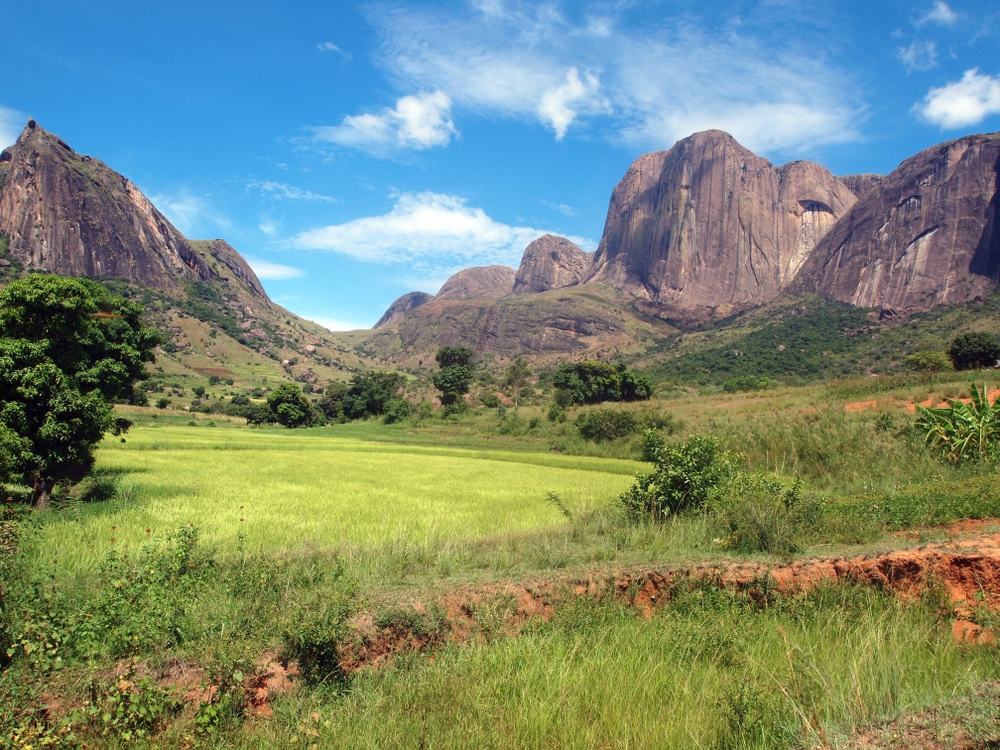
The park is best known for its rugged mountain scenery and for containing Pic Boby (Imarivolanitra), the second-highest peak in Madagascar at 8,720 feet (2,658 m). Visitors are drawn by some of the island’s finest hiking opportunities, including multi-day treks through mountains, valleys, waterfalls, and remote wilderness areas.
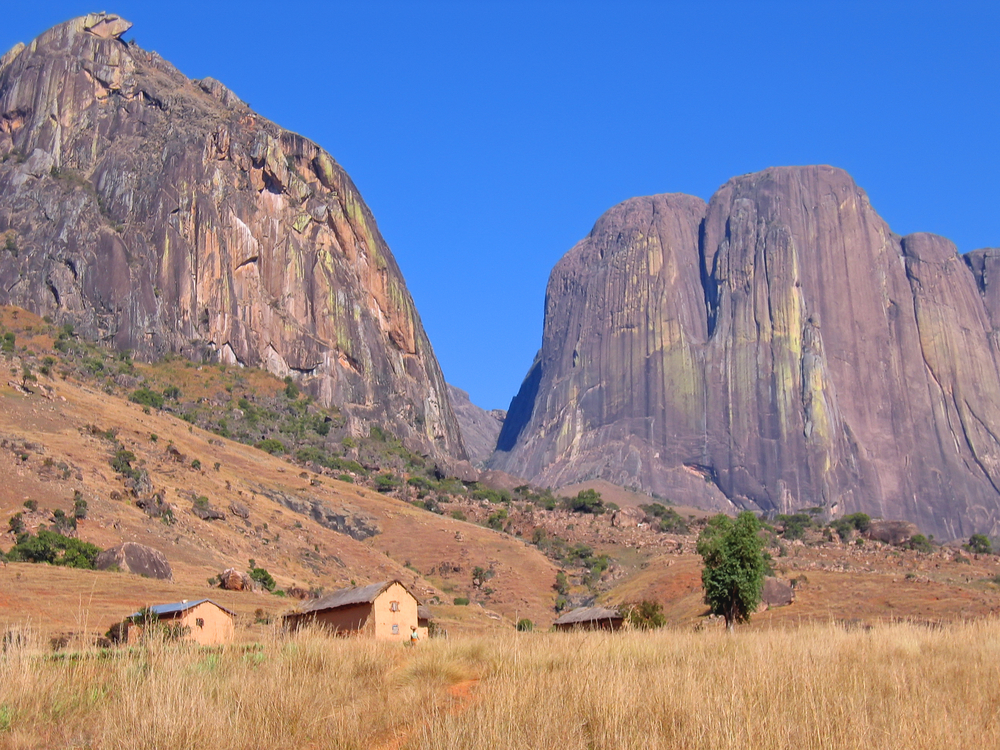
The ascent to Pic Boby offers breathtaking views across vast landscapes that appear almost untouched by time. Another notable attraction is the Tsaranoro Valley, famous for its towering granite cliffs, which attract climbers and photographers from around the world. The park’s combination of dramatic terrain and unique wildlife makes it one of Madagascar’s premier ecotourism destinations.
Andringitra National Park features extraordinary geographic diversity. Elevations range from lowland forests to alpine environments rarely found elsewhere in the tropics. Deep valleys, granite peaks, rolling grasslands, rocky plateaus, and fast-flowing streams create a remarkable variety of habitats within a relatively small area.
The vegetation changes dramatically with altitude. Lower elevations contain humid forests rich in ferns, orchids, palms, and hardwood trees. Higher elevations transition into mountain shrublands and grasslands that resemble landscapes more commonly associated with temperate regions. This diversity of ecosystems contributes significantly to the park’s biological richness.
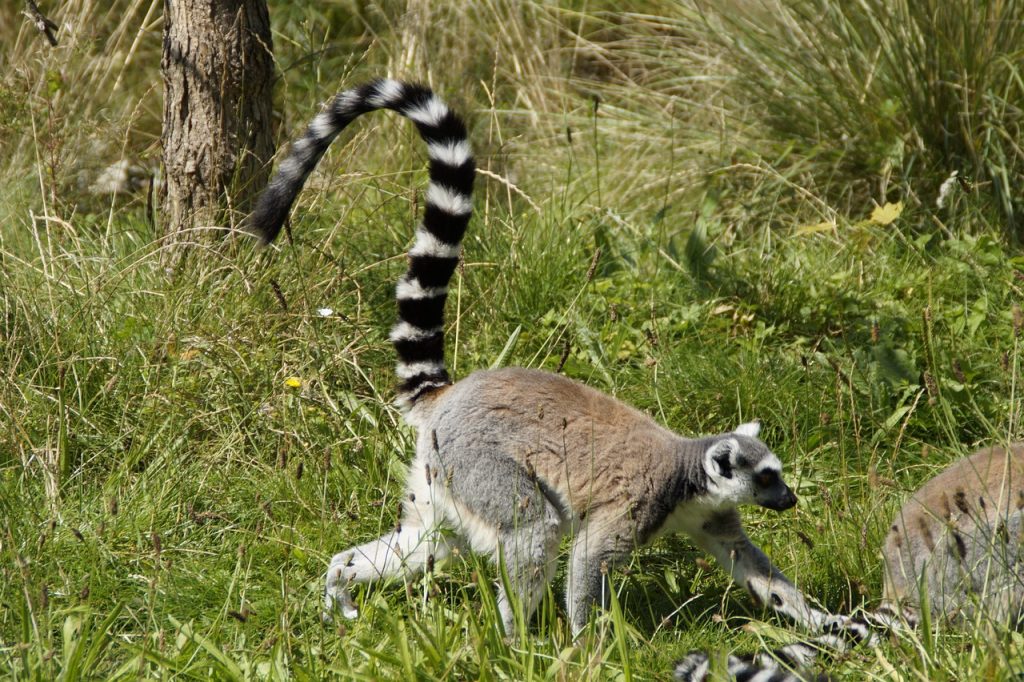
The wildlife of Andringitra reflects Madagascar’s reputation as one of the world’s most unique biodiversity hotspots. Several species of lemurs inhabit the park, including the ring-tailed lemur, brown lemur, and bamboo lemur. More than 100 bird species have been recorded, many of them endemic to Madagascar.
Visitors may encounter colorful sunbirds, ground rollers, and the striking Madagascar blue pigeon. Reptiles and amphibians are particularly abundant, including numerous chameleons, geckos, frogs, and other species found nowhere else on Earth. The park’s varied habitats support an exceptional concentration of endemic plants and animals that have evolved in isolation over thousands of years.
The conservation importance of Andringitra National Park extends far beyond its scenic beauty. It protects rare mountain ecosystems and countless endemic species that are vulnerable to habitat loss and climate change. Many plants found within the park occur nowhere else on the planet. Its altitudinal diversity also provides important refuge for species adapting to environmental changes.
Ecologically, Andringitra is often compared to mountain biodiversity hotspots such as Rwenzori Mountains National Park and Kinabalu Park because of its combination of high elevations, endemic wildlife, and varied ecosystems. Through its towering peaks, unique species, and extraordinary landscapes, Andringitra National Park stands as one of Madagascar’s most remarkable natural treasures and a globally important center of biodiversity conservation.
Things to See




Things To Do
Engaging Andringitra

Park Protection
Andringitra National Park was created to protect the rugged granite mountains, montane rainforests, high-altitude grasslands, deep valleys, and river systems of southeastern Madagascar. The park provides critical habitat for several endangered and endemic species, including the critically endangered black-and-white ruffed lemur, the endangered ring-tailed lemur, and the endangered Milne-Edwards’ sifaka.
It also supports numerous endemic reptiles, amphibians, birds, and plants, including many orchids and succulents found only in Madagascar. The park’s varied elevations, ranging from tropical forests to alpine-like summits, create an exceptional diversity of habitats that sustain wildlife found nowhere else on Earth. As part of Madagascar’s globally important biodiversity hotspot, the park preserves one of the island’s richest concentrations of endemic species.
The park is especially significant for protecting Pic Boby, the second-highest peak in Madagascar, along with some of the island’s most dramatic mountain scenery. Its isolated highlands have allowed many plants and animals to evolve independently, resulting in exceptional levels of endemism.
The park also protects a remarkable transition from humid eastern rainforests to the drier ecosystems of southern Madagascar, making it one of the country’s most ecologically diverse protected areas. Together, Andringitra National Park safeguards endangered lemurs, unique mountain ecosystems, exceptional endemic biodiversity, and one of Madagascar’s most spectacular natural landscapes.
FAQ’s
What is the main reason people visit Andringitra National Park?
Andringitra National Park is primarily visited for its dramatic mountain scenery, challenging hiking opportunities, exceptional biodiversity, and the opportunity to climb Madagascar’s second-highest peak. Located in southeastern Madagascar, the park protects approximately 120 square miles (311 square kilometers) of rugged mountains, granite cliffs, valleys, grasslands, and cloud forests. Visitors come to trek through spectacular landscapes, summit Pic Boby, observe endemic wildlife, explore remote wilderness, and experience one of Madagascar’s premier adventure destinations.
What animals can visitors hope to see in Andringitra National Park?
Andringitra National Park supports approximately 50 mammal species and numerous endemic reptiles and amphibians. The park’s varied elevations create habitats that support a remarkable diversity of wildlife.
Some of the most notable animals found in Andringitra National Park include:
- Ring-tailed Lemur
- Red-fronted Brown Lemur
- Greater Bamboo Lemur
- Gray Bamboo Lemur
- Eastern Woolly Lemur
- Greater Dwarf Lemur
- Fat-tailed Dwarf Lemur
- Goodman’s Mouse Lemur
- Gray Mouse Lemur
- Sportive Lemur Species
- Avahi Species
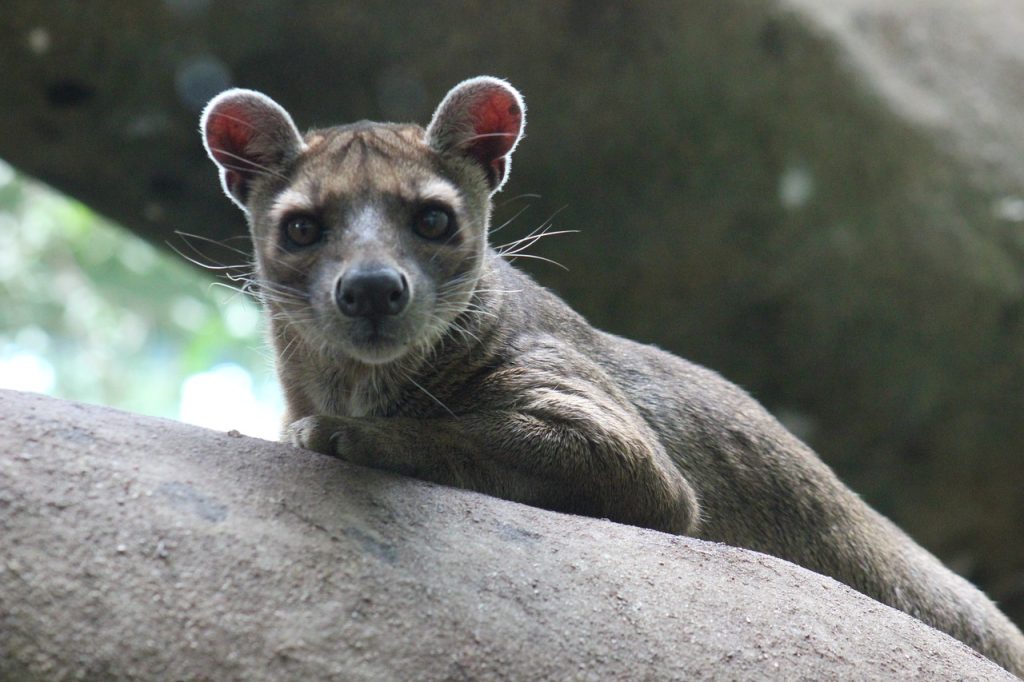
- Fossa
- Malagasy Civet
- Ring-tailed Mongoose
- Narrow-striped Mongoose
- Small-toothed Civet
- Madagascar Flying Fox
- Madagascar Fruit Bat
- Malagasy Free-tailed Bat
- Trident Bat
- Leaf-nosed Bat Species
- Tenrec Species
- Greater Hedgehog Tenrec
- Lesser Hedgehog Tenrec
- Shrew Tenrec
- Streaked Tenrec
- Mole-like Tenrec
- Native Rodent Species
- Malagasy Giant Rat
- Western Tuft-tailed Rat
- Oustalet’s Chameleon
- Panther Chameleon
- Short-horned Chameleon
- Leaf-tailed Gecko Species
- Day Gecko Species
- Ground Gecko Species
- Madagascar Tree Boa
- Madagascar Ground Boa
- Malagasy Cat-eyed Snake
- Malagasy Blind Snake
- Giant Hognose Snake
- Madagascar Girdled Lizard
- Skink Species
- Mantella Frog Species
- Tree Frog Species
- Rain Frog Species
- Malagasy Frog Species
- Mountain-endemic Amphibians
- Various Endemic Reptiles
- Various Endemic Mammals
What birds can visitors hope to see in Andringitra National Park?
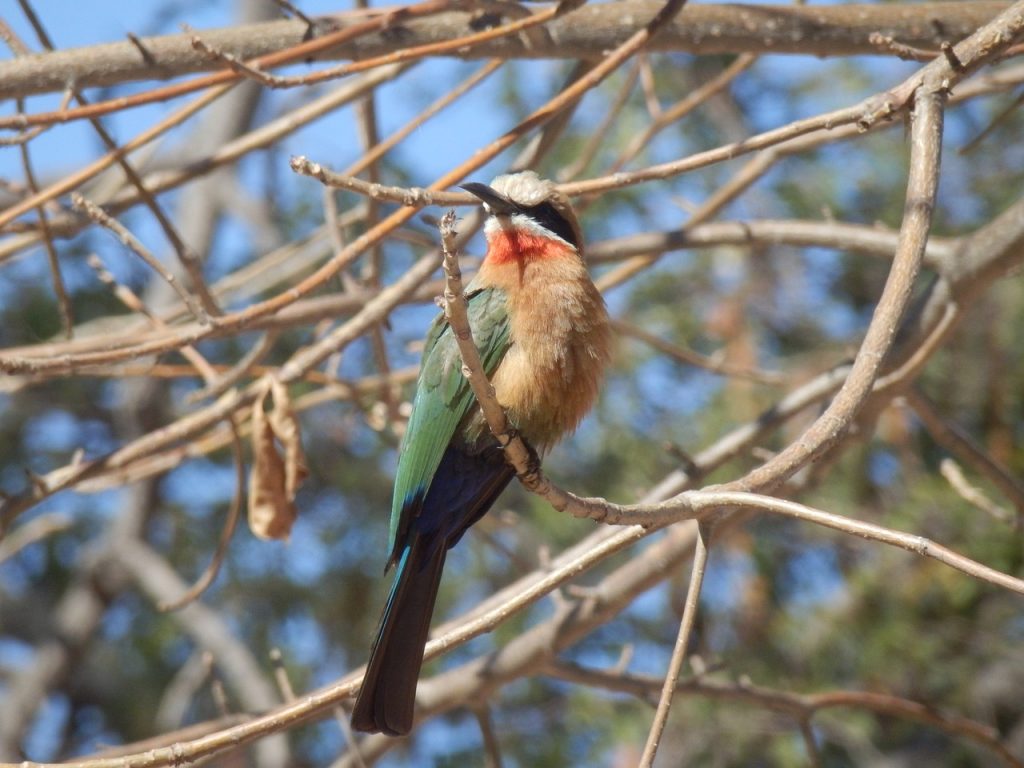
Andringitra National Park is home to more than 100 bird species, including many endemics that inhabit Madagascar’s highland forests and mountain habitats.
Some of the most popular birds seen in Andringitra National Park include:
- Yellow-bellied Sunbird-Asity
- Velvet Asity
- Madagascar Blue Pigeon
- Madagascar Cuckoo
- Madagascar Coucal
- Madagascar Buzzard
- Madagascar Harrier-Hawk
- Madagascar Kestrel
- Henst’s Goshawk
- Madagascar Pygmy Kingfisher
- Madagascar Kingfisher
- Madagascar Paradise Flycatcher
- Nuthatch Vanga
- Blue Vanga
- Hook-billed Vanga
- Tylas Vanga
- Chabert Vanga
- Red-tailed Vanga
- Crossley’s Vanga
- Crested Drongo
- Madagascar Magpie-Robin
- Forest Rock Thrush
- Benson’s Rock Thrush
- Madagascar Bulbul
- Long-billed Bernieria
- Spectacled Tetraka
- Gray-crowned Tetraka
- Dusky Tetraka
- Cryptic Warbler
- Wedge-tailed Jery
- Green Jery
- Common Jery
- Madagascar White-eye
- Souimanga Sunbird
- Nelicourvi Weaver
- Madagascar Red Fody
- Forest Fody
- Madagascar Mannikin
- Brown Mesite
- Madagascar Wood Rail
- Red-fronted Coua
- Crested Coua
- Running Coua
- Verreaux’s Coua
- Giant Coua
- Madagascar Scops Owl
- Madagascar Long-eared Owl
- Collared Nightjar
- Pitta-like Ground Roller
- Scaly Ground Roller
Is Andringitra National Park worth visiting?
Yes, Andringitra National Park is absolutely worth visiting and is considered one of Madagascar’s top destinations for hiking and mountain scenery.
The park offers spectacular granite peaks, high-altitude grasslands, waterfalls, deep valleys, endemic wildlife, and some of Madagascar’s most rewarding trekking experiences. It is particularly popular among adventure travelers and nature enthusiasts.
The primary hesitation is that many of the park’s highlights require strenuous hiking. However, the scenery and biodiversity make the effort worthwhile.
What is the best time to visit Andringitra National Park?
Weather and Climate
The best time to visit Andringitra National Park is from April through November.
Typical conditions include:
- April–May: 55–80°F (13–27°C)
- June–August: 40–70°F (4–21°C)
- September–November: 55–82°F (13–28°C)
- December–March: Rainy season, 65–90°F (18–32°C)
During the dry season:
- Hiking trails are more accessible.
- Mountain views are clearer.
- Wildlife viewing is excellent.
- Temperatures are comfortable.
- River crossings are easier.
July through October is often considered the ideal trekking season.
How many days do you need to visit Andringitra National Park?
Recommended Length of Stay
Most visitors should plan for 2 to 4 days.
- 1 day: Short hikes and scenic viewpoints.
- 2 days: Major trails and wildlife viewing.
- 3 days: Summit attempts and extended trekking.
- 4+ days: Comprehensive exploration of the park.
A three-day visit allows most visitors to experience the park’s premier attractions.
How do you get to Andringitra National Park?
International Access
Andringitra National Park is located near the town of:
- Ambalavao
The primary international gateway is:
- Ivato International Airport
Travel from Antananarivo
Most visitors:
- Fly into Antananarivo.
- Travel south via road.
- Continue through Fianarantsoa.
- Reach Ambalavao and the park entrance.
Travel time:
- Approximately 10–12 hours by vehicle.
- Often incorporated into longer Madagascar itineraries.
Main Access Area
Most visitors enter through:
- Namoly Valley
This area serves as the primary gateway for trekking routes.
Pic Boby
The park’s most famous destination is:
- Pic Boby
Highlights include:
- Elevation of approximately 8,720 feet (2,658 meters).
- Madagascar’s second-highest peak.
- Spectacular summit views.
- Multi-day trekking opportunities.
Riandahy and Riambavy Waterfalls
Popular attractions include:
- Riandahy Waterfall
- Riambavy Waterfall
These scenic waterfalls are accessible via hiking trails.
Tsaranoro Valley
Many visitors combine their trip with:
- Tsaranoro Valley
Known for:
- Massive granite cliffs.
- Rock climbing.
- Hiking.
- Scenic photography.
Travel Times
Typical travel times include:
- Antananarivo to Ambalavao: 9–10 hours.
- Ambalavao to park access points: 1–2 hours.
- Namoly Valley to Pic Boby summit: typically 2 days round-trip.
- Fianarantsoa to park region: approximately 2 hours.
Who is involved in protecting and supporting Andringitra National Park?
Conservation and Park Management
Several organizations help protect and support Andringitra National Park:
- Madagascar National Parks – manages the park.
- World Wide Fund for Nature – supports regional conservation initiatives.
- Missouri Botanical Garden Madagascar Program – supports research and conservation.
- Fanamby – supports biodiversity conservation efforts.
- Local communities including the Betsileo People and Bara People who maintain longstanding cultural ties to the region.
What is the highest mountain in Madagascar?
The highest mountain in Madagascar is Maromokotro at approximately 9,436 feet (2,876 meters). Pic Boby is the second-highest peak.
Can you climb Pic Boby?
Yes. Visitors can climb Pic Boby through guided multi-day trekking routes. It is one of Madagascar’s most popular mountain adventures.
What makes Andringitra National Park unique?
Andringitra National Park is unique because it combines Madagascar’s most spectacular mountain scenery with remarkable biodiversity, endemic wildlife, and world-class trekking opportunities.
Visitors can hike through cloud forests, alpine grasslands, granite peaks, waterfalls, and remote valleys while observing species found nowhere else on Earth. This combination of adventure, scenery, and biodiversity makes Andringitra one of Madagascar’s most extraordinary national parks.
Sources
Here are sources you can explore for more information:
- AllTrails. Andringitra National Park. https://www.alltrails.com/madagascar/haute-matsiatra/andringitra-national-park, retrieved July 2026.
- Encyclopaedia Britannica. Andringitra National Park. https://www.britannica.com/place/Andringitra-National-Park, retrieved July 2026.
- Madagascar National Parks. Andringitra National Park. https://www.parcs-madagascar.com/parcs/andringitra.php, retrieved July 2026.
- Pilot Guides. Andringitra National Park. https://www.pilotguides.com/, retrieved July 2026.
- Protected Planet (UNEP-WCMC & IUCN). Andringitra National Park. https://www.protectedplanet.net/, retrieved July 2026.
- SafariBookings. Andringitra National Park. https://www.safaribookings.com/andringitra, retrieved July 2026.
- Wikipedia. Andringitra National Park. https://en.wikipedia.org/wiki/Andringitra_National_Park, retrieved July 2026.
- World Wildlife Fund (WWF). Madagascar Subhumid Forests. https://www.worldwildlife.org/ecoregions/at0118, retrieved July 2026.