

About
Mount Kenya National Park is located in central Kenya approximately 110 miles (175 km) northeast of Nairobi. The park covers approximately 277 square miles (715 sq km) and is surrounded by the larger Mount Kenya Forest Reserve, which together form a UNESCO World Heritage Site.
Established in 1949, the park protects Kenya’s highest mountain and Africa’s second-highest peak after Kilimanjaro. Nearby protected areas include the Aberdare National Park to the southwest, creating an important conservation corridor within Kenya’s central highlands.
Mount Kenya National Park is best known for its spectacular mountain scenery, glacial peaks, and world-class trekking opportunities. The park attracts climbers and hikers from around the globe who come to experience its dramatic landscapes and challenging routes. The mountain’s highest peaks, Batian and Nelion, rise to over 17,000 feet (5,199 meters), while Point Lenana is a popular destination for non-technical climbers seeking breathtaking summit views.
Visitors can explore alpine valleys, crystal-clear mountain lakes, waterfalls, and rugged ridges shaped by ancient glaciers. The park’s scenery is often regarded as some of the most beautiful in Africa, combining dramatic geology with exceptional biodiversity.
The geography of Mount Kenya National Park is defined by the extinct volcanic massif that dominates the surrounding landscape. Formed thousands of years ago, the mountain was once significantly higher before erosion and glaciation sculpted its present appearance. Elevations within the park range from dense montane forests at lower levels to alpine moorlands, rocky cliffs, glaciers, and snow-covered peaks at higher elevations.
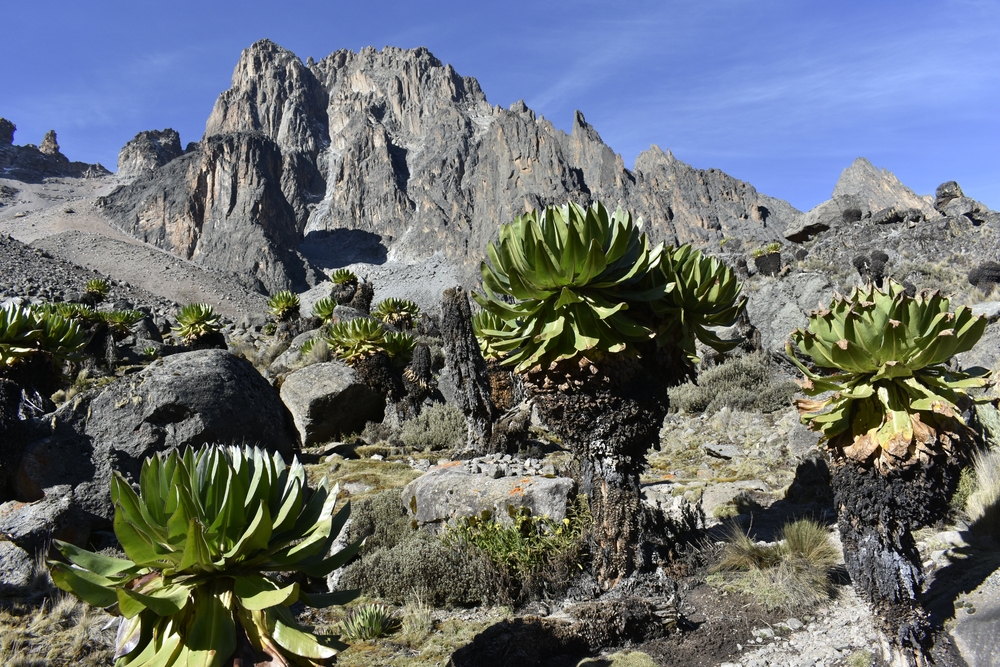
Vegetation changes dramatically with altitude. Lower slopes support bamboo forests, cedar forests, and montane woodlands. Higher elevations contain giant lobelias, giant groundsels, heathlands, and alpine meadows. These distinct ecological zones create one of Africa’s most fascinating mountain environments.
Wildlife thrives throughout the park’s varied habitats. Large mammals include elephant, African buffalo, black-and-white colobus monkey, bushbuck, giant forest hog, and the elusive leopard. The forests also provide refuge for endangered species such as the mountain bongo, one of Africa’s rarest antelope.
Birdlife is abundant, with more than 130 recorded species including sunbirds, eagles, turacos, and scarlet-tufted malachite sunbirds that are specially adapted to high-altitude environments. The park’s rivers and forests also support numerous amphibians, insects, and plant species found only within Kenya’s highlands. This rich biodiversity makes the park as valuable for wildlife enthusiasts as it is for mountaineers.
Mount Kenya National Park plays a critical role in protecting one of Africa’s most important mountain ecosystems. The park safeguards vital watersheds that supply water to millions of people across Kenya and supports numerous endemic and threatened species. Its ecological significance is often compared to iconic mountain parks such as Rwenzori Mountains National Park and Kilimanjaro National Park.
However, Mount Kenya’s combination of glaciated peaks, unique alpine vegetation, and rich forest ecosystems gives it a distinctive character found nowhere else in the world. Today, Mount Kenya National Park remains one of Kenya’s greatest natural treasures, preserving a landscape of extraordinary beauty and global conservation importance.
Things to See
Things To Do
Engaging Mount Kenya National Park
