

About
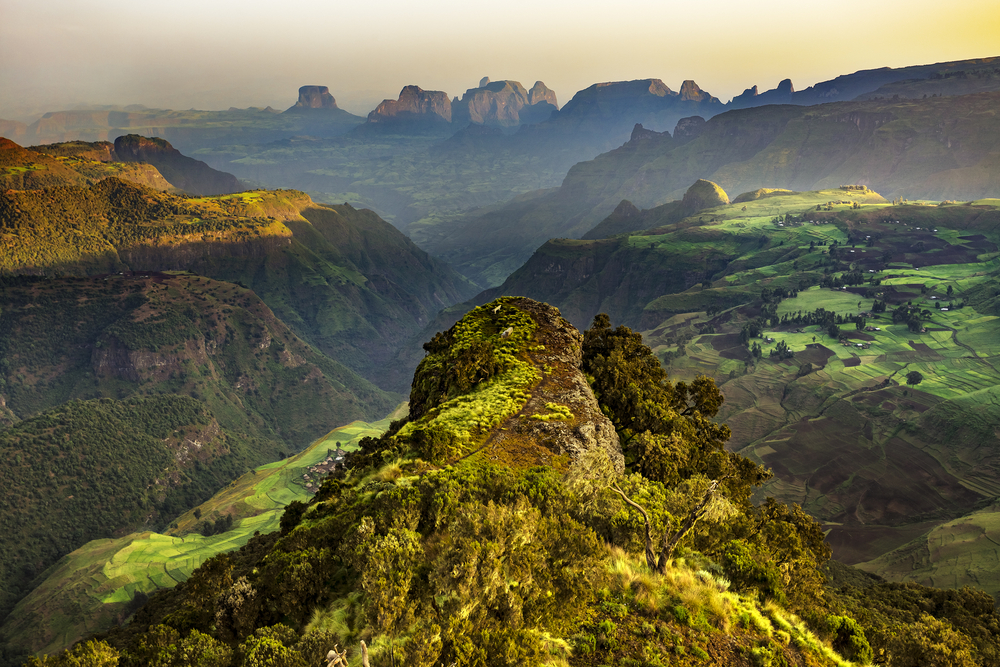
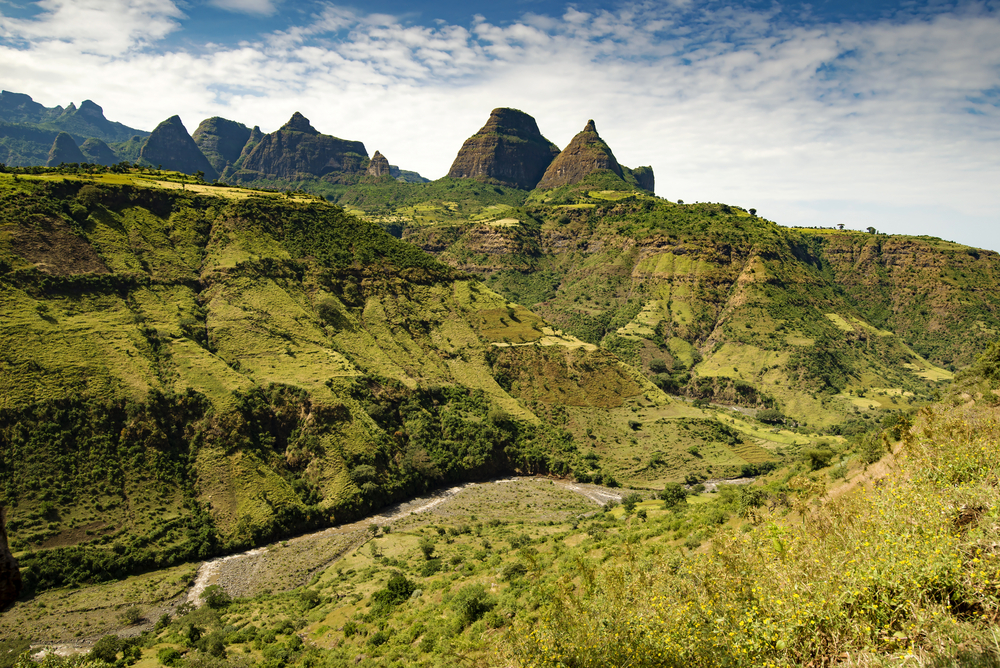
Located in northern Ethiopia, Simien Mountains National Park protects one of Africa’s most dramatic mountain landscapes. The park covers approximately 85 square miles (220 sq km) within the rugged Simien Mountain range northeast of Gondar.
Established in 1969, it became one of Africa’s first UNESCO World Heritage Sites due to its exceptional scenery and rare wildlife. Towering cliffs, deep valleys, and jagged peaks dominate the landscape, creating an environment often compared to some of the world’s greatest mountain regions. The park also serves as a critical refuge for several species found nowhere else on Earth.
Simien Mountains National Park is best known for its breathtaking highland scenery, dramatic escarpments, and unique wildlife encounters. The park contains some of Africa’s highest peaks, including Ras Dashen, which rises to 14,928 feet (4,550 meters) and stands as Ethiopia’s highest mountain.
Trekkers and climbers from around the world visit the park for its spectacular hiking routes that follow narrow ridges overlooking massive valleys below. The scenery is often described as both beautiful and intimidating due to the sheer scale of the cliffs and drop-offs. Visitors also come to observe endemic wildlife species that can often be seen surprisingly close along hiking trails and open grasslands.
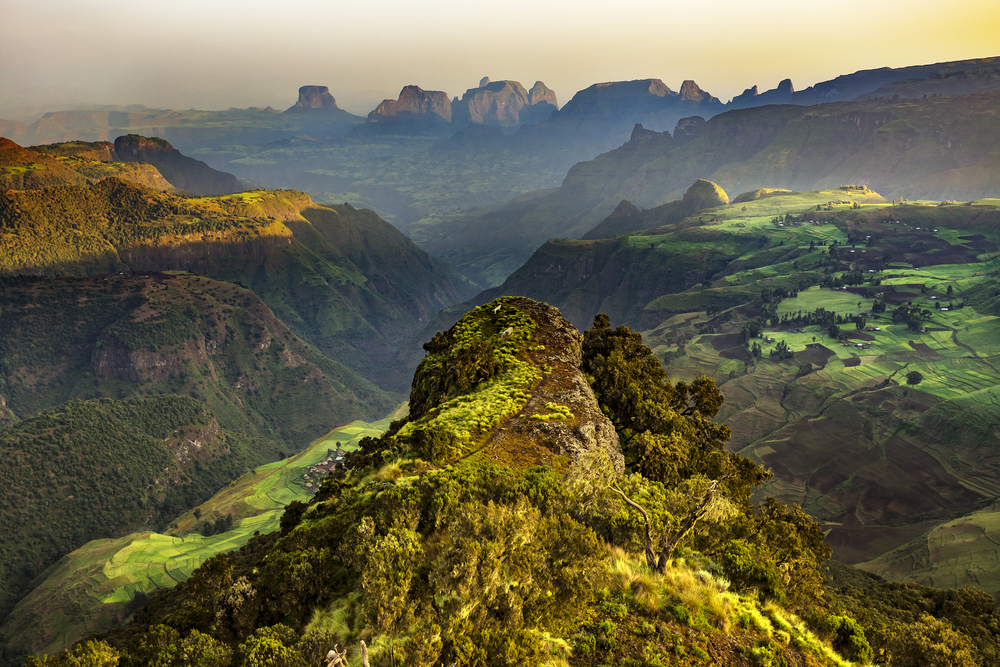
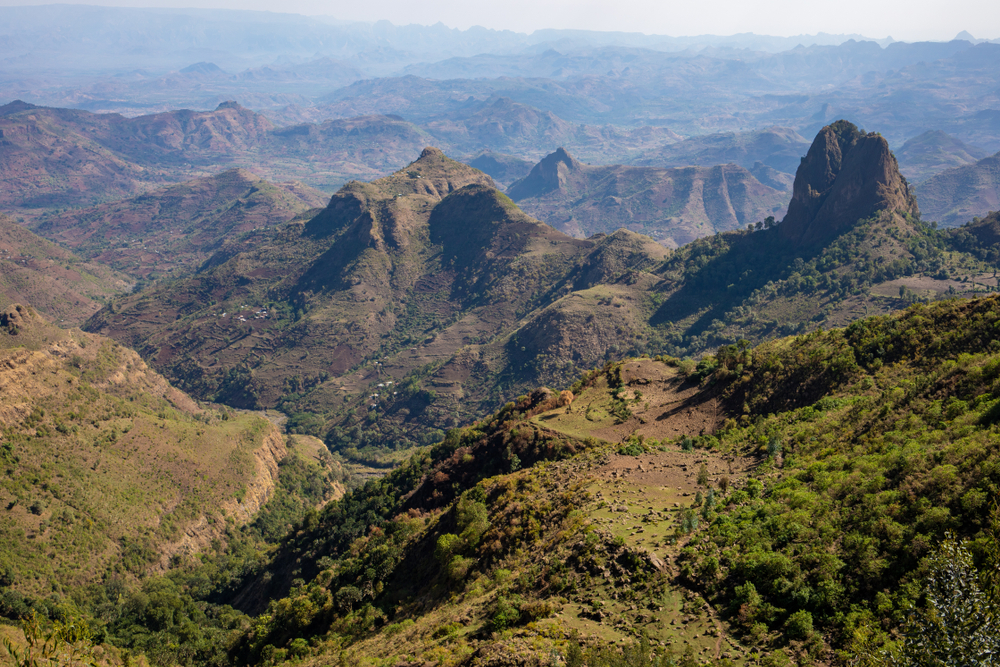
The geography of the park was shaped by volcanic activity and erosion over thousands of years. Massive plateaus were carved into steep cliffs, deep gorges, and isolated pinnacles that create one of Africa’s most striking mountain environments. Rolling highland meadows contrast sharply with vertical rock faces dropping thousands of feet into valleys below.
Vegetation varies with elevation and includes montane grasslands, heathlands, giant lobelias, shrubs, and scattered forests in lower elevations. The cooler climate and high altitude create conditions very different from much of surrounding Ethiopia. Seasonal clouds and shifting sunlight often add a dramatic atmosphere to the mountain scenery.
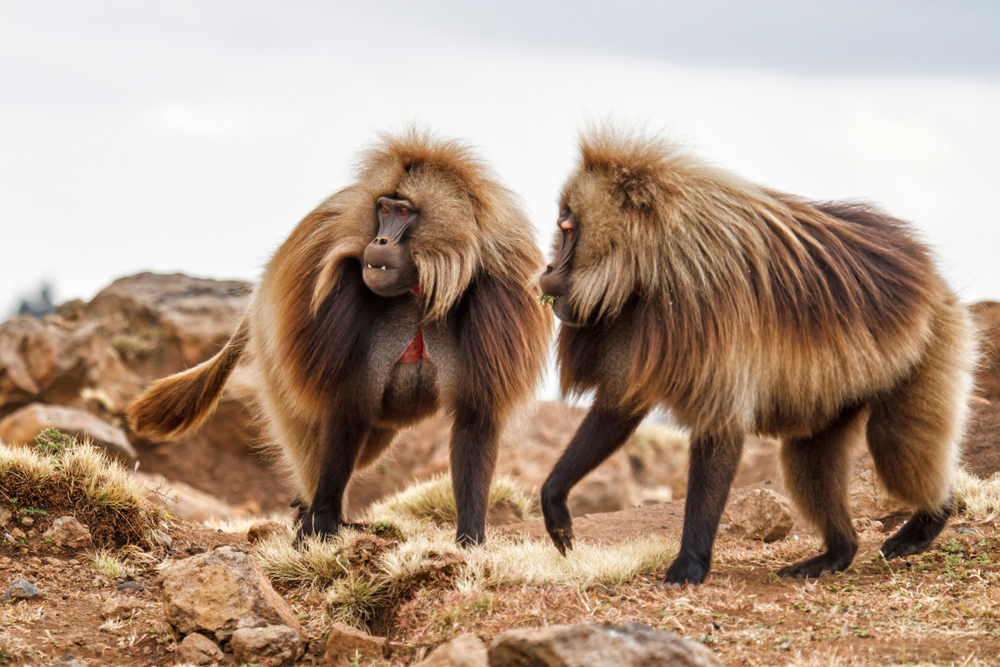
Simien Mountains National Park is internationally important for wildlife conservation because it protects several rare and endemic species. The park is most famous for the gelada monkey, sometimes called the bleeding-heart monkey because of the red patch on its chest. Large groups of geladas graze peacefully across mountain meadows and are among the park’s most memorable wildlife experiences.
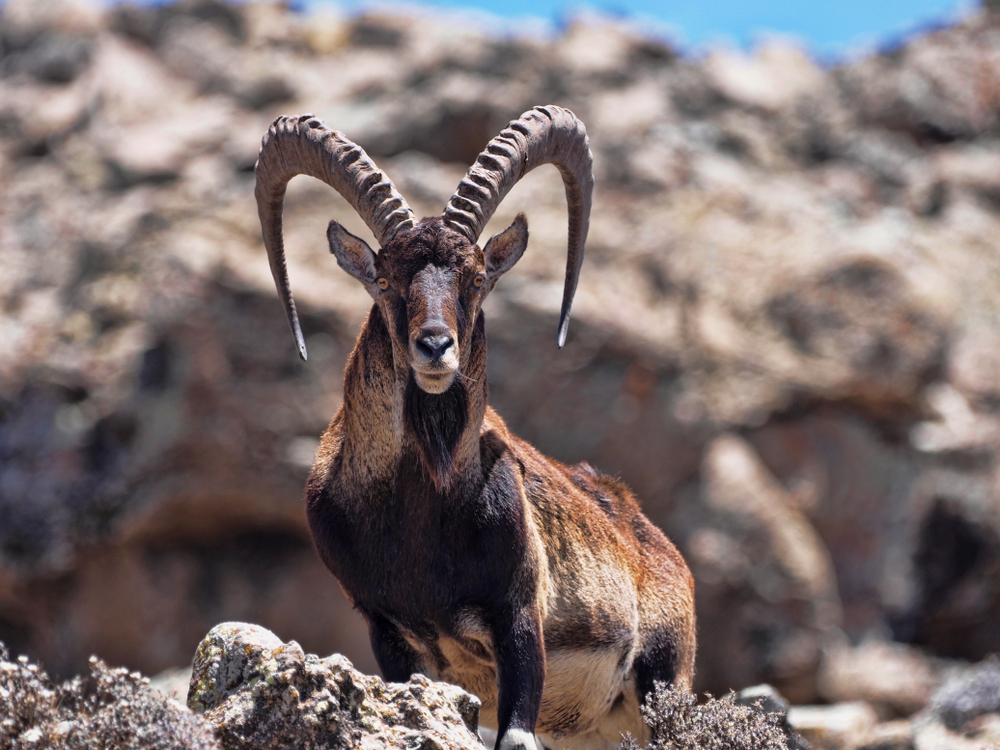
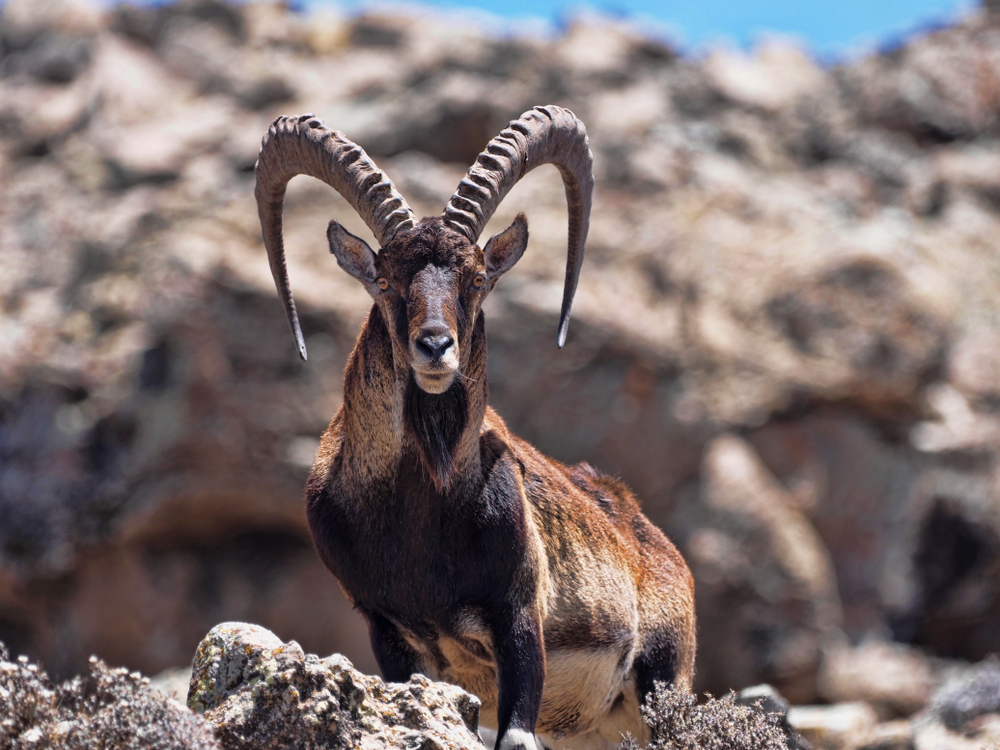
The endangered Ethiopian wolf, one of the world’s rarest canids, also inhabits parts of the park. Walia ibex, a wild mountain goat found only in Ethiopia, cling to steep cliffs and rocky slopes throughout the region. Birdlife is equally impressive and includes lammergeiers, thick-billed ravens, and numerous highland raptors soaring above the valleys.
Simien Mountains National Park plays a vital role in protecting Ethiopia’s fragile highland ecosystems and the endemic species that depend on them. Habitat loss, grazing pressure, and climate change continue to challenge conservation efforts, making the park increasingly important for biodiversity protection.
Compared to mountain parks such as Rwenzori Mountains National Park or Torres del Paine National Park, the Simien Mountains offer a uniquely African combination of towering escarpments, endemic wildlife, and ancient cultural landscapes. The park’s dramatic scenery and rare species make it one of the continent’s most extraordinary natural treasures. Simien Mountains National Park remains a symbol of Ethiopia’s natural heritage and a globally important sanctuary for mountain conservation.
Photos



Things to See
Things To Do
Engaging the Simien Mountains
Simien Mountains National Park Trails
Each and all hikes must be secured and confirmed by the national park office. A scout is required for each trek and an additional guide is optional. The summit of Ras Dejen is the objective of hiking in the national park.
You can drive close to the summit which leaves only a short trek to the peak. That journey begins in Debark and meanders across the park and up the mountain. In total, it is a 41-mile (66 km) journey.

Park Protection
Simien Mountains National Park was created to protect the dramatic escarpments, high plateaus, deep valleys, and Afroalpine ecosystems of the Simien Mountains in northern Ethiopia. The park provides critical habitat for several endangered and endemic species, including the endangered Ethiopian wolf, the endangered Walia ibex, and the vulnerable gelada.
It also supports populations of leopards, klipspringers, golden jackals, and more than 180 bird species, including the endangered hooded vulture and the bearded vulture (lammergeier). The park’s high-altitude grasslands, heathlands, and montane forests preserve one of Africa’s most distinctive mountain ecosystems and provide an important refuge for wildlife found nowhere else on Earth.
The park is especially significant for protecting the only natural habitat of the Walia ibex, an endangered mountain goat found exclusively in Ethiopia’s Simien Mountains. It also contains some of Africa’s most spectacular mountain scenery, including towering cliffs, deep gorges, and Ras Dashen, the highest peak in Ethiopia.
As part of the Ethiopian Highlands, the park preserves exceptional levels of endemism that have evolved through long geographic isolation. Together, Simien Mountains National Park safeguards endangered endemic wildlife, rare Afroalpine ecosystems, extraordinary geological landscapes, and one of Africa’s most remarkable mountain conservation areas.
FAQ’s
What is Simien Mountains National Park known for?
Simien Mountains National Park is known for its dramatic landscapes, towering peaks, and unique biodiversity. It is a UNESCO World Heritage Site and one of Ethiopia’s most iconic natural attractions. The park is renowned for its jagged mountain ranges, deep valleys, and precipitous cliffs, including Ras Dashen, the highest peak in Ethiopia at 4,550 meters (14,928 feet) above sea level.
Simien Mountains National Park is also home to several endemic species, including the walia ibex, a wild goat found nowhere else in the world, and the gelada baboon, known for its distinctive red chest patch. Visitors to the park can enjoy breathtaking trekking opportunities, encountering stunning scenery and diverse wildlife along the way. The park’s rugged beauty and unique biodiversity make it a must-visit destination for nature enthusiasts and adventure seekers alike.
What is the main reason people visit Simien Mountains National Park?
Simien Mountains National Park is primarily visited for its dramatic mountain scenery, endemic wildlife, and world-class hiking opportunities. Located in northern Ethiopia, the park protects one of Africa’s most spectacular mountain landscapes, featuring deep valleys, jagged peaks, sheer cliffs, and high-altitude plateaus.
Visitors come to trek through breathtaking scenery, observe rare Ethiopian wildlife, summit some of the country’s highest mountains, and experience a UNESCO World Heritage Site often referred to as the “Roof of Africa.”
What animals can visitors hope to see in Simien Mountains National Park?
Simien Mountains National Park supports approximately 50 mammal species and more than 20 reptile species. The park is internationally renowned for its concentration of endemic Ethiopian wildlife, including several species found nowhere else on Earth.
Some of the most notable mammals and reptiles found in Simien Mountains National Park include:
- Gelada
- Ethiopian Wolf
- Walia Ibex
- Hamadryas Baboon
- Anubis Baboon
- Klipspringer
- Menelik’s Bushbuck
- Common Duiker
- Bushbuck
- Bohor Reedbuck
- Spotted Hyena
- Golden Jackal
- Side-striped Jackal
- Leopard
- Serval
- African Wildcat
- Caracal
- Honey Badger
- Striped Polecat
- African Civet
- White-tailed Mongoose
- Slender Mongoose
- Egyptian Mongoose
- Rock Hyrax
- Tree Hyrax
- Ethiopian Hare
- Abyssinian Hare
- Crested Porcupine
- Giant Mole-Rat
- Ethiopian Grass Rat
- Brush-furred Rat
- Ethiopian White-footed Mouse
- African Dormouse
- Ethiopian Shrew
- Fruit Bat Species
- Horseshoe Bat Species
- Long-eared Bat Species
- Pipistrelle Bat Species
- Vervet Monkey
- Colobus Monkey (localized areas)
- Bush Squirrel Species
- Ground Squirrel Species
- Field Mouse Species
- Mole-Rat Species
- Highland Rodent Species
- Ethiopian Forest Mouse
- Rock Mouse Species
- Highland Shrew Species
- Various Bat Species
- Various Small Alpine Mammals
What birds can visitors hope to see in Simien Mountains National Park?
Simien Mountains National Park is one of Africa’s finest high-altitude birdwatching destinations, with more than 180 recorded bird species. The park is especially important for Ethiopian endemic birds and raptors that thrive in its mountainous environment.
Some of the most popular birds seen in Simien Mountains National Park include:
- Thick-billed Raven
- Lammergeier (Bearded Vulture)
- Verreaux’s Eagle
- Augur Buzzard
- Tawny Eagle
- Golden Eagle
- Steppe Eagle
- African Harrier-Hawk
- Lanner Falcon
- Peregrine Falcon
- Common Kestrel
- Wattled Ibis
- Blue-winged Goose
- Spot-breasted Lapwing
- Rouget’s Rail
- Abyssinian Catbird
- White-collared Pigeon
- Ethiopian Siskin
- Ankober Serin
- Abyssinian Longclaw
- Moorland Chat
- White-winged Cliff Chat
- Brown-rumped Seedeater
- Streaky Seedeater
- Red-billed Chough
- Alpine Chat
- Thekla’s Lark
- Ethiopian Cisticola
- African Stonechat
- Mountain Wheatear
- Mocking Cliff Chat
- Scarlet-chested Sunbird
- Tacazze Sunbird
- Variable Sunbird
- Dusky Turtle Dove
- Speckled Pigeon
- Alpine Swift
- Nyanza Swift
- Black Saw-wing
- White-backed Black Tit
- Abyssinian Woodpecker
- African Paradise Flycatcher
- White-browed Robin-Chat
- Brown Woodland Warbler
- Cinnamon Bracken Warbler
- Black-headed Siskin
- Yellow-rumped Seedeater
- Red-throated Pipit
- Fan-tailed Raven
- Yellow-bellied Waxbill
Is Simien Mountains National Park worth visiting?
Yes, Simien Mountains National Park is absolutely worth visiting and is widely regarded as one of Africa’s most spectacular national parks.
The combination of dramatic mountain scenery, endemic wildlife, challenging trekking routes, and UNESCO World Heritage status makes it one of the continent’s premier nature destinations. Visitors who enjoy hiking, wildlife photography, birdwatching, and mountain landscapes often rank it among the best parks in Africa.
The primary consideration is that many of the park’s highlights require hiking at high elevations, often above 3,000 meters (9,800 feet), which can be physically demanding.
What is the best time to visit Simien Mountains National Park?
The best time to visit Simien Mountains National Park is during the dry season from October through March.
During these months:
- Skies are generally clear.
- Hiking conditions are excellent.
- Wildlife is easier to observe.
- Mountain views are at their best.
The rainy season from June through September can bring heavy rainfall, muddy trails, and reduced visibility.
How many days do you need to visit Simien Mountains National Park?
Most visitors should plan for 2 to 5 days.
- 1 day: Scenic viewpoints and wildlife viewing.
- 2–3 days: Short trekking routes and key highlights.
- 4–5 days: Multi-day treks and summit experiences.
- 6+ days: Complete traverses of the park and remote wilderness areas.
Many serious trekkers spend a week or longer exploring the park.
How do you get to Simien Mountains National Park?
Simien Mountains National Park is located in northern Ethiopia near Gondar.
Most visitors:
- Fly into Addis Ababa.
- Take a domestic flight or drive to Gondar.
- Travel approximately 1.5 to 2 hours by road to the park headquarters at Debark.
Debark serves as the primary gateway town for park visitors.
Is Simien Mountains National Park safe for tourists?
Simien Mountains National Park has historically been one of Ethiopia’s most popular tourist destinations and is generally considered safe when open to tourism.
Visitors should:
- Check current travel advisories before visiting.
- Hire licensed guides and scouts.
- Prepare for high-altitude conditions.
- Carry appropriate trekking gear.
- Follow park regulations.
As regional conditions can change, checking current security and access information before travel is strongly recommended.
Who is involved in protecting and supporting Simien Mountains National Park?
Several organizations help protect Simien Mountains National Park:
- Ethiopian Wildlife Conservation Authority (EWCA) – the government agency responsible for managing the park.
- Simien Mountains National Park Management Office – oversees conservation, tourism, and park operations.
- Frankfurt Zoological Society – has supported long-term conservation and wildlife management projects in the park.
- Simien Mountains Mobile Conservation Project – supports conservation and community engagement initiatives.
- Local communities who participate in sustainable tourism and wildlife conservation efforts.
Sources
-
Here are sources you can explore for more information:
- AllTrails. Simien Mountains National Park. https://www.alltrails.com/ethiopia/amhara/simien-mountains-national-park, retrieved July 2026.
- Encyclopaedia Britannica. Simien Mountains National Park. https://www.britannica.com/place/Simien-Mountains-National-Park, retrieved July 2026.
- Ethiopian Wildlife Conservation Authority (EWCA). Simien Mountains National Park. https://www.ewca.gov.et/, retrieved July 2026.
- Pilot Guides. Simien Mountains National Park. https://www.pilotguides.com/, retrieved July 2026.
- Protected Planet (UNEP-WCMC & IUCN). Simien Mountains National Park. https://www.protectedplanet.net/, retrieved July 2026.
- UNESCO World Heritage Centre. Simien National Park. https://whc.unesco.org/en/list/9/, retrieved July 2026.
- Wikipedia. Simien Mountains National Park. https://en.wikipedia.org/wiki/Simien_Mountains_National_Park, retrieved July 2026.
- World Wildlife Fund (WWF). Ethiopian Montane Moorlands. https://www.worldwildlife.org/ecoregions/at1007, retrieved July 2026.