


About
Yellowstone National Park is located primarily in northwestern Wyoming, with portions extending into Montana and Idaho in the United States. Covering approximately 3,472 square miles (8,991 sq km), Yellowstone is the first national park in the world and one of the most influential protected areas in conservation history.
Established in 1872, the park protects a vast landscape of geothermal features, mountains, forests, rivers, lakes, and wildlife-rich valleys. It lies south of Gallatin National Forest and adjoins Grand Teton National Park to the south. Together, these protected lands form the core of the Greater Yellowstone Ecosystem, one of the largest intact temperate ecosystems on Earth.
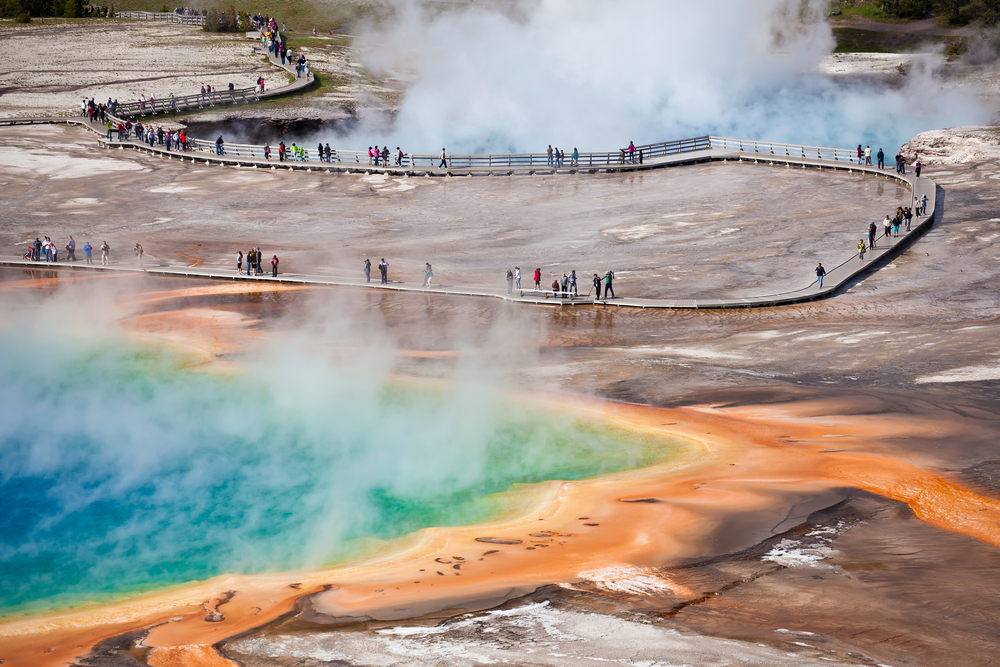
Yellowstone National Park is best known for its extraordinary geothermal features. The park contains more than half of the world’s active geysers and hydrothermal systems. Visitors from around the globe come to witness the eruption of Old Faithful, explore colorful hot springs such as Grand Prismatic Spring, and observe bubbling mud pots and steaming fumaroles.
Beyond its geothermal wonders, Yellowstone offers exceptional opportunities for hiking, wildlife viewing, camping, fishing, boating, photography, and scenic driving. Its combination of geological marvels and abundant wildlife creates one of the most memorable visitor experiences in the world.
The geography of Yellowstone National Park is shaped by powerful volcanic forces. The park sits atop the Yellowstone Caldera, one of the largest active volcanic systems on Earth. Massive eruptions over millions of years helped create the landscape seen today. Elevations range from approximately 5,300 feet (1,615 meters) to over 11,300 feet (3,445 meters), producing a wide variety of ecosystems. The park contains mountain ranges, alpine meadows, forests, waterfalls, deep canyons, and expansive lakes.
Yellowstone Lake is the largest high-elevation lake in North America. Dense forests of lodgepole pine dominate much of the landscape, while sagebrush plains, wetlands, and grasslands provide important habitat for wildlife. Rivers such as the Yellowstone and Snake originate within the region and support critical ecological processes throughout the American West.
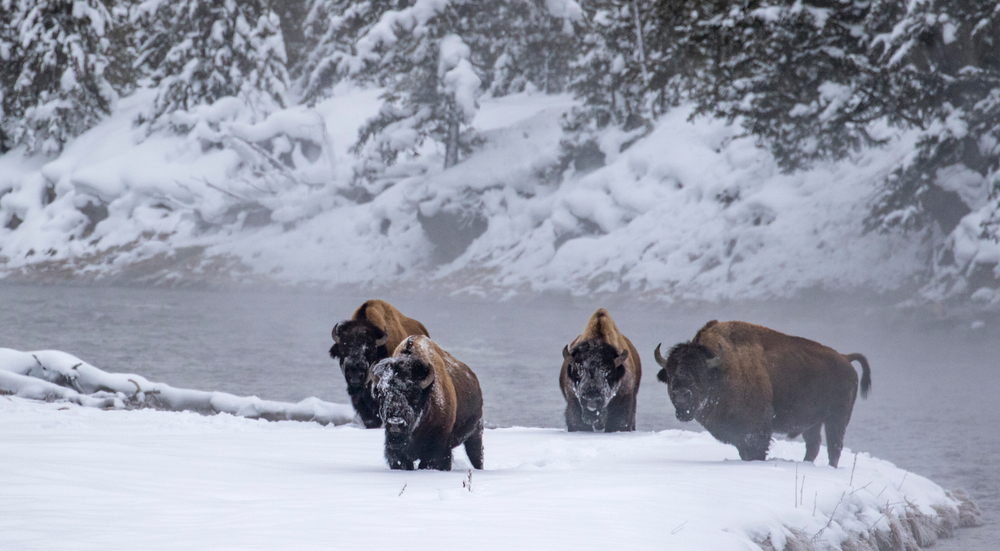
Wildlife within Yellowstone National Park is among the most impressive in North America. The park is home to the continent’s largest concentration of free-ranging mammals in the lower forty-eight states. Visitors frequently encounter American bison, elk, pronghorn, mule deer, and bighorn sheep. Predators include gray wolves, grizzly bears, black bears, coyotes, cougars, and wolverines. The successful restoration of wolves has become one of the world’s most celebrated conservation achievements.
Birdlife is equally diverse, with bald eagles, golden eagles, trumpeter swans, sandhill cranes, osprey, and numerous migratory species inhabiting the park. Native fish, amphibians, reptiles, and countless smaller organisms contribute to the park’s remarkable biodiversity.
Yellowstone National Park protects one of the most significant natural landscapes on Earth. It safeguards globally important geothermal systems, vast wildlife habitats, critical migration corridors, and ecosystems that function largely as they did centuries ago. Conservation efforts focus on preserving ecological integrity while protecting threatened species and maintaining natural processes across the Greater Yellowstone Ecosystem.
The park is often compared to Serengeti National Park and Kruger National Park because of its scale, wildlife abundance, and global significance. Yet Yellowstone’s combination of geothermal wonders, large mammals, and wilderness landscapes remains unmatched anywhere in the world. Today, it stands as a symbol of conservation and a reminder of the importance of protecting nature for future generations.
Photos




Things to See
Yellowstone National Park Trails
Yellowstone National Park is one of those places where so much of it can be experienced from the road with short stops and easy short hikes to experience the abundant natural wonders that are experienced across the park boundaries. However, hiking is one of the best ways to experience the splendor of Yellowstone in a more intimate and personal manner.

Sources
- All Trails, Best Trails in Yellowstone National Park, https://www.alltrails.com/parks/us/wyoming/yellowstone-national-park, retrieved July 2020.
- Britannica, Yellowstone National Park, https://www.britannica.com/place/Yellowstone-National-Park, retrieved September 2019.
- Lonely Planet, Yellowstone National Park, https://www.lonelyplanet.com/usa/rocky-mountains/yellowstone-national-park, retrieved September 2019.
- National Geographic, Everything to know about Yellowstone National park,https://www.nationalgeographic.com/travel/national-parks/yellowstone-national-park/, retrieved September 2019.
- National Geographic, Complete National Parks of the United States, National Geographic Publishing, Washington DC.
- National Geographic, Guide to the National Parks of the United States, National Geographic Society, 2003.
- National Geographic, National Parks of North America, Canada-United States-Mexico, National Geographic Society, 1995.
- Travel Wyoming, Yellowstone National Park, https://www.travelwyoming.com/national-parks-and-monuments/yellowstone, retrieved September 2019.
- UNESCO, Yellowstone National Park, https://whc.unesco.org/en/list/28/, retrieved September 2019.