

About
Augrabies Falls National Park, the park is located in South Africa’s Northern Cape Province along the Orange River near the border with Namibia. The park covers approximately 317 square miles (820 sq km) and protects one of the country’s most dramatic riverine landscapes.
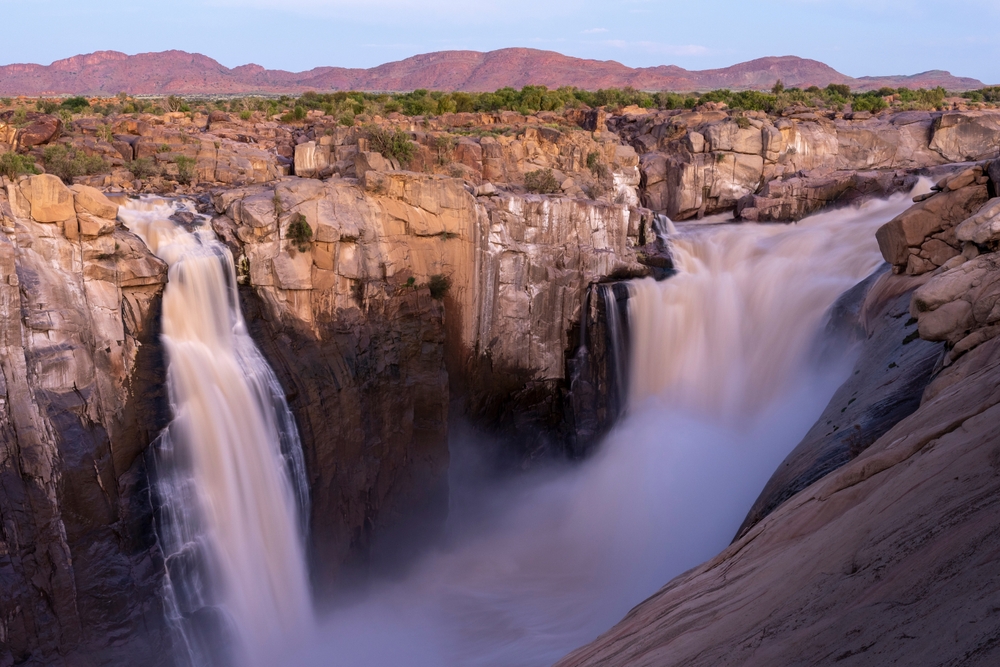
Established in 1966, the park surrounds the spectacular Augrabies Falls, where the Orange River plunges nearly 184 feet (56 meters) into a narrow granite gorge. The name “Augrabies” is derived from a Khoi word meaning “place of great noise,” a fitting description for the thunderous sound produced by the falls during periods of high water flow. Situated west of Kgalagadi Transfrontier Park, the park preserves a unique desert ecosystem shaped by the power of South Africa’s longest river.
Augrabies Falls National Park is best known for its magnificent waterfall and rugged gorge system. Visitors are drawn to the park’s dramatic viewpoints, where powerful torrents of water carve through ancient rock formations before entering a labyrinth of canyons and rapids. The falls are particularly impressive following seasonal rains when water volumes increase dramatically.
Beyond the falls themselves, the park offers scenic drives, hiking trails, wildlife viewing, photography, and stargazing opportunities. The contrast between the arid surrounding landscape and the life-giving waters of the Orange River creates a striking environment that makes Augrabies one of South Africa’s most distinctive national parks.
The geography of Augrabies Falls National Park is dominated by the Orange River and the granite formations through which it flows. Over millions of years, the river has carved deep gorges, rocky channels, and dramatic cliffs into the ancient landscape. The park lies within a semi-desert region characterized by sparse rainfall, rugged terrain, and extreme temperatures.
Granite outcrops, rocky hills, dry plains, and riverine habitats define much of the scenery. Despite the harsh environment, the Orange River provides a permanent source of water that supports a rich diversity of plant and animal life. Succulents, acacias, quiver trees, and drought-resistant shrubs thrive throughout the park and contribute to its unique character.
Wildlife within Augrabies Falls National Park is well adapted to arid conditions. Mammals include klipspringer, springbok, gemsbok, kudu, giraffe, steenbok, and several smaller antelope species. Predators such as leopard, black-backed jackal, caracal, and bat-eared fox inhabit the park’s rugged terrain. The rocky hillsides provide ideal habitat for species such as rock hyrax and klipspringer. Birdlife is especially rewarding, with more than 200 recorded species.
Visitors may observe Verreaux’s eagles soaring above the cliffs, as well as kingfishers, herons, hornbills, and a variety of raptors and desert-adapted birds. The river corridor also supports aquatic species and provides critical habitat within an otherwise dry environment.
Augrabies Falls National Park plays a vital role in conserving one of South Africa’s most unique desert-river ecosystems. The park protects important habitats along the Orange River while preserving geological features that illustrate millions of years of natural history. Its conservation significance is often compared to dramatic river landscapes such as Fish River Canyon and Grand Canyon National Park, where water has sculpted extraordinary geological formations over vast periods of time.
Today, Augrabies Falls National Park remains one of South Africa’s most impressive natural attractions, safeguarding a landscape where the power of water and the resilience of desert life combine to create an unforgettable wilderness experience.
Things to See
Things To Do
Engaging Augrabies Falls National Park
