

About
Wadi El Rayan National Park (Arabic: محمية وادي الريان) is located in the Faiyum Governorate of western Egypt, approximately 95 miles (150 km) southwest of Cairo. Established as a protected area in 1989, the park covers approximately 675 square miles (1,759 sq km) and protects one of Egypt’s most distinctive desert landscapes.
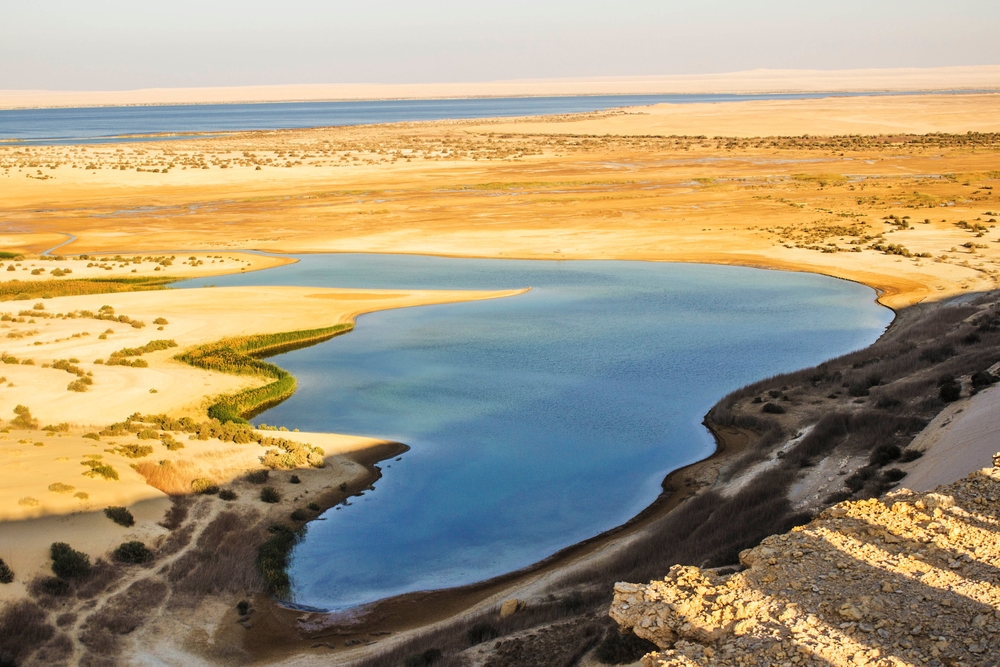
The park is centered around the Wadi El Rayan depression, a natural basin that contains Egypt’s largest waterfalls and a series of interconnected lakes. Situated near Wadi El Hitan, also known as the Valley of the Whales, the park forms part of one of the country’s most important natural and geological regions.
The park is best known for its remarkable waterfalls, a rare sight in a nation dominated by desert environments. These cascades connect the Upper and Lower Wadi El Rayan Lakes, creating the only significant waterfalls in Egypt. Visitors are drawn to the park’s striking contrast between expansive desert dunes and sparkling blue lakes. Popular activities include wildlife viewing, hiking, sandboarding, boating, and photography.
The combination of desert scenery, freshwater habitats, and abundant birdlife makes Wadi El Rayan one of Egypt’s premier ecotourism destinations. Nearby Wadi El Hitan adds another dimension to the visitor experience with its internationally significant fossil deposits documenting the evolution of whales.
Geographically, Wadi El Rayan National Park consists of two large lakes connected by waterfalls, surrounded by vast desert landscapes, sand dunes, cliffs, and rocky escarpments. The lakes were formed through agricultural drainage projects that filled the natural depression with water over several decades.
Despite their relatively recent origin, the lakes have become important ecological habitats. The surrounding desert features dramatic dune systems that shift with the wind, creating constantly changing landscapes. Sparse vegetation, including desert shrubs, reeds, and grasses, occurs around water sources and provides shelter for wildlife.
Wildlife has adapted remarkably well to the park’s diverse habitats. Mammals found within the protected area include fennec foxes, sand foxes, Egyptian gazelles, and small desert rodents. The park is particularly important for birdlife, serving as a stopover and wintering site for migratory birds traveling between Europe, Asia, and Africa.
Flamingos, herons, egrets, ducks, and numerous raptors can be observed around the lakes and wetlands. Reptiles, including lizards and desert snakes, thrive in the arid landscape. The aquatic habitats also support fish populations and other species that contribute to the ecological diversity of the region.
Wadi El Rayan National Park plays a vital role in conserving desert, wetland, and freshwater ecosystems within one of the driest countries on Earth. The park protects important habitats for migratory birds and serves as a refuge for wildlife adapted to harsh desert conditions. Its proximity to the fossil-rich landscapes of Wadi El Hitan further enhances its global conservation significance.
Ecologically, the park is often compared to protected desert wetland systems such as Namib-Naukluft National Park and Death Valley National Park, where water creates islands of life within arid environments. Through its waterfalls, desert lakes, migratory birds, and unique geological features, Wadi El Rayan National Park stands as one of Egypt’s most fascinating natural treasures and an outstanding example of life flourishing in the desert.
Things to See
Things To Do
Engaging Wadi El Rayan National Park

FAQ’s
What is the main reason people visit Wadi El Rayan National Park?
Wadi El Rayan National Park is primarily visited for its waterfalls, desert landscapes, lakes, and unique combination of wetland and desert ecosystems. Located in Egypt’s Fayoum Governorate about 150 kilometers southwest of Cairo, the park is best known for containing Egypt’s largest waterfalls—the only permanent waterfalls in the country.
Visitors come to enjoy scenic lakes, sand dunes, birdwatching, desert safaris, fossil sites, and opportunities to see rare desert wildlife in one of Egypt’s most distinctive protected areas.
What animals can visitors hope to see in Wadi El Rayan National Park?
Wadi El Rayan National Park supports approximately 40 mammal species and more than 30 reptile species. The park’s desert habitats, wetlands, and lakes provide important refuge for wildlife adapted to arid conditions.
Some of the most notable mammals and reptiles found in Wadi El Rayan National Park include:
- Slender-horned Gazelle
- Dorcas Gazelle
- Sand Fox
- Rüppell’s Fox
- Red Fox
- Fennec Fox
- Egyptian Wolf
- Striped Hyena
- Wild Cat
- Caracal
- Egyptian Mongoose
- Cape Hare
- Desert Hedgehog
- Ethiopian Hedgehog
- Lesser Egyptian Jerboa
- Greater Egyptian Jerboa
- Fat Sand Rat
- Sundevall’s Jird
- Wagner’s Gerbil
- Desert Dormouse
- Egyptian Fruit Bat
- Pipistrelle Bat Species
- Long-eared Bat Species
- Trident Bat Species
- Mouse-tailed Bat Species
- House Mouse
- Black Rat
- Desert Shrew Species
- Four-toed Jerboa
- African Gerbil Species
- Sand Cat (rare)
- Honey Badger (rare)
- Rock Hyrax
- Spiny Mouse Species
- Desert Rodent Species
- Various Bat Species
- Various Gerbil Species
- Various Mouse Species
- Various Shrew Species
- Small Desert Mammals
- Egyptian Cobra
- Horned Desert Viper
- Saw-scaled Viper
- Desert Monitor
- Egyptian Spiny-tailed Lizard
- Sinai Agama
- Fan-fingered Gecko
- Moorish Gecko
- Sand Boa
- Diadem Snake
One of the park’s most important conservation species is the endangered Slender-horned Gazelle, which survives in only a few locations across North Africa.
What birds can visitors hope to see in Wadi El Rayan National Park?
Wadi El Rayan National Park is one of Egypt’s premier birdwatching destinations, with more than 200 recorded bird species. The lakes serve as an important stopover site for migratory birds traveling between Europe, Asia, and Africa.
Some of the most popular birds seen in Wadi El Rayan National Park include:
- Greater Flamingo
- Little Grebe
- Great Crested Grebe
- Black-necked Grebe
- Great Cormorant
- Pygmy Cormorant
- Grey Heron
- Purple Heron
- Great Egret
- Little Egret
- Cattle Egret
- Squacco Heron
- Eurasian Spoonbill
- Glossy Ibis
- Sacred Ibis
- White Stork
- Black Stork
- Greater White-fronted Goose
- Greylag Goose
- Egyptian Goose
- Northern Pintail
- Northern Shoveler
- Garganey
- Eurasian Wigeon
- Common Teal
- Ferruginous Duck
- Red-crested Pochard
- Common Pochard
- White-headed Duck
- Eurasian Coot
- Common Moorhen
- Purple Swamphen
- Black-winged Stilt
- Pied Avocet
- Kentish Plover
- Ruff
- Common Redshank
- Black-tailed Godwit
- Eurasian Curlew
- Osprey
- Western Marsh Harrier
- Steppe Eagle
- Greater Spotted Eagle
- Lesser Spotted Eagle
- Peregrine Falcon
- Common Kestrel
- Caspian Tern
- Gull-billed Tern
- Whiskered Tern
- Common Kingfisher
What is the best time to visit Wadi El Rayan National Park?
The best time to visit Wadi El Rayan National Park is from October through April.
During these months:
- Temperatures are pleasant.
- Bird migration is at its peak.
- Wildlife is more active.
- Desert exploration is more comfortable.
Summer temperatures can exceed 40°C (104°F), making outdoor activities significantly more challenging.
How many days do you need to visit Wadi El Rayan National Park?
Most visitors should plan for 1 to 2 days.
- Half-day visit: Waterfalls and lake viewpoints.
- Full day: Waterfalls, birdwatching, dunes, and wildlife viewing.
- 2 days: Comprehensive exploration including nearby fossil sites and desert landscapes.
Many visitors combine Wadi El Rayan with nearby attractions in the Fayoum region.
How do you get to Wadi El Rayan National Park?
Wadi El Rayan National Park is located approximately 150 kilometers southwest of Cairo in the Fayoum region.
Most visitors:
- Fly into Cairo.
- Travel by car or organized tour to Fayoum.
- Continue to the park via paved roads.
The journey from Cairo typically takes about 2 to 3 hours depending on traffic conditions.
Is Wadi El Rayan National Park safe for tourists?
Yes, Wadi El Rayan National Park is generally considered safe for tourists and is one of Egypt’s most popular protected areas.
Visitors should:
- Carry adequate drinking water.
- Protect themselves from sun exposure.
- Use caution around steep dunes and cliff edges.
- Follow park regulations.
- Consider local guides for remote desert areas.
Most visits are completed without incident.
Who is involved in protecting and supporting Wadi El Rayan National Park?
Several organizations help protect Wadi El Rayan National Park:
- Egyptian Environmental Affairs Agency (EEAA) – manages Egypt’s protected areas and conservation programs.
- Nature Conservation Sector of Egypt – oversees biodiversity conservation and park management.
- Fayoum Protected Areas Management – responsible for local management and visitor services.
- Egyptian universities and research institutions conducting ecological and geological studies.
- Local communities and ecotourism operators supporting sustainable tourism and conservation initiatives.