

About
Monte Alén National Park (Spanish: Parque Nacional de Monte Alén) is located in central Equatorial Guinea within the mainland region of Río Muni. Established in 1990, the park covers approximately 770 square miles (2,000 sq km) and protects one of the largest remaining tracts of tropical rainforest in the country.
Monte Alén lies within the biologically rich Congo Basin ecosystem and forms part of the larger Monte Alén-Monts de Cristal Transboundary Conservation Landscape, which extends into neighboring Gabon. Along with nearby protected areas such as Altos de Nsork National Park, the park serves as a cornerstone of biodiversity conservation in Equatorial Guinea.
The park is best known for its pristine rainforests, abundant wildlife, and exceptional biodiversity. Visitors are drawn by opportunities to experience one of Central Africa’s least disturbed tropical wilderness areas. Dense forests, scenic rivers, waterfalls, and remote trails provide a sense of adventure rarely found in more developed ecotourism destinations.
Wildlife viewing is one of the park’s primary attractions, with the possibility of encountering gorillas, chimpanzees, forest elephants, and a variety of monkey species. The park’s relatively untouched character offers visitors an authentic rainforest experience while highlighting the ecological importance of the Congo Basin.
Geographically, Monte Alén National Park is characterized by rolling hills, forested mountains, river valleys, and dense tropical rainforest. Numerous rivers and streams flow through the park, including tributaries that support both wildlife and local communities. Elevations vary across the landscape, creating a range of habitats and ecological niches.
The rainforest canopy is dominated by towering hardwood trees, while the understory contains palms, lianas, ferns, orchids, and countless other plant species. Frequent rainfall and warm temperatures sustain one of the most productive ecosystems on Earth, supporting extraordinary levels of biodiversity.
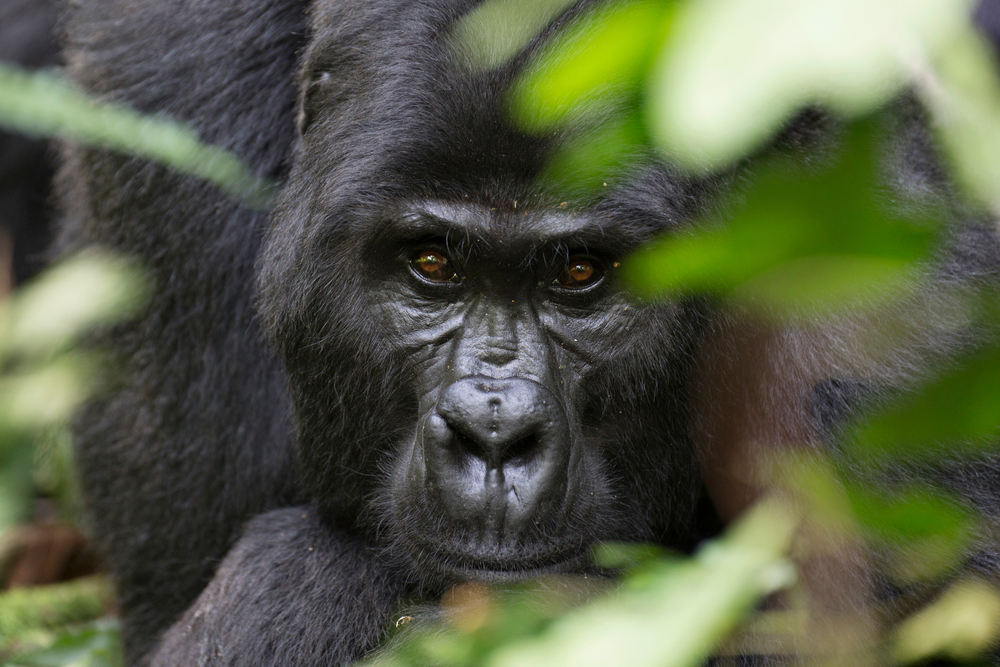
Wildlife is the defining feature of Monte Alén National Park. The park supports important populations of western lowland gorillas, central chimpanzees, forest elephants, and several species of duikers. Other mammals include red river hogs, pangolins, leopards, and numerous primates such as mandrills, colobus monkeys, and guenons.
Birdlife is equally impressive, with hornbills, turacos, kingfishers, African grey parrots, and many forest specialists inhabiting the canopy and understory. Reptiles, amphibians, and insects further contribute to the park’s remarkable biological richness, making it one of the most important wildlife refuges in Central Africa.
Monte Alén National Park plays a critical role in protecting the rainforests and wildlife of Equatorial Guinea. The park safeguards habitat for endangered species threatened by poaching, habitat fragmentation, and deforestation elsewhere in the Congo Basin. It also helps preserve ecological corridors that allow wildlife populations to remain connected across international borders.
Ecologically, Monte Alén is often compared to renowned rainforest reserves such as Odzala-Kokoua National Park and Dzanga-Ndoki National Park because of its intact forests, gorilla populations, and extraordinary biodiversity. Through its vast rainforests, iconic wildlife, and conservation significance, Monte Alén National Park stands as one of Central Africa’s most important protected areas and a vital sanctuary for the natural heritage of Equatorial Guinea.
Things to See
Things To Do
Engaging Monte Alén National Park
