

About
Gunung Mulu National Park is located in northern Sarawak on the island of Borneo in Malaysia near the border with Brunei. Established as a national park in 1974 and designated a UNESCO World Heritage Site in 2000, the park covers approximately 204 square miles (528 sq km).
Named after Mount Mulu, which rises to 7,795 feet (2,376 m), the park protects one of the most spectacular karst landscapes and cave systems on Earth. Its combination of ancient rainforest, towering limestone pinnacles, underground rivers, and world-renowned caves makes it one of Southeast Asia’s most extraordinary natural destinations.
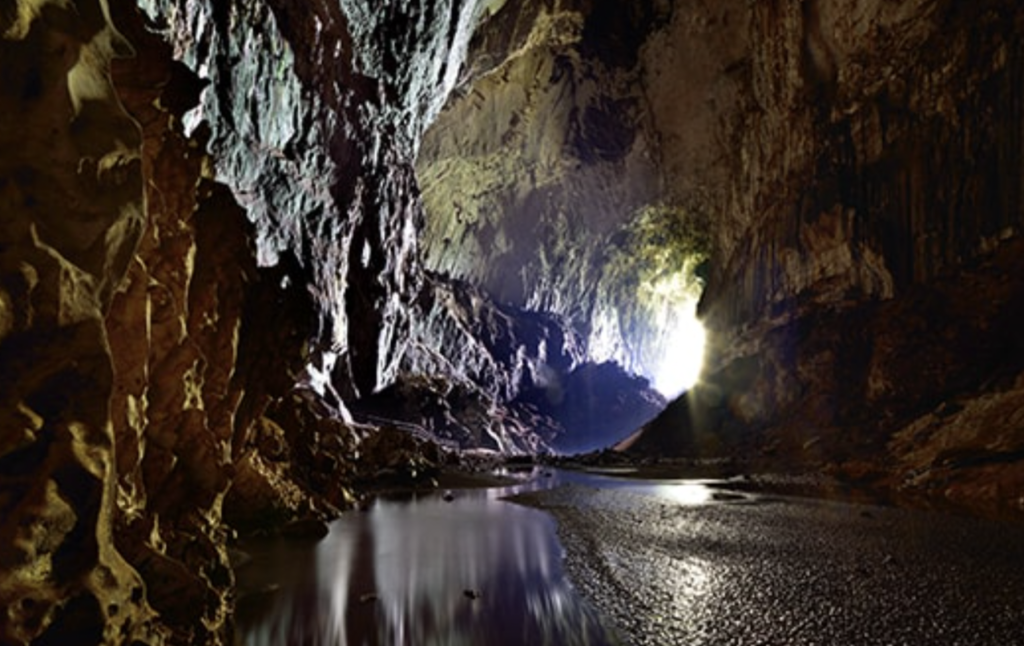
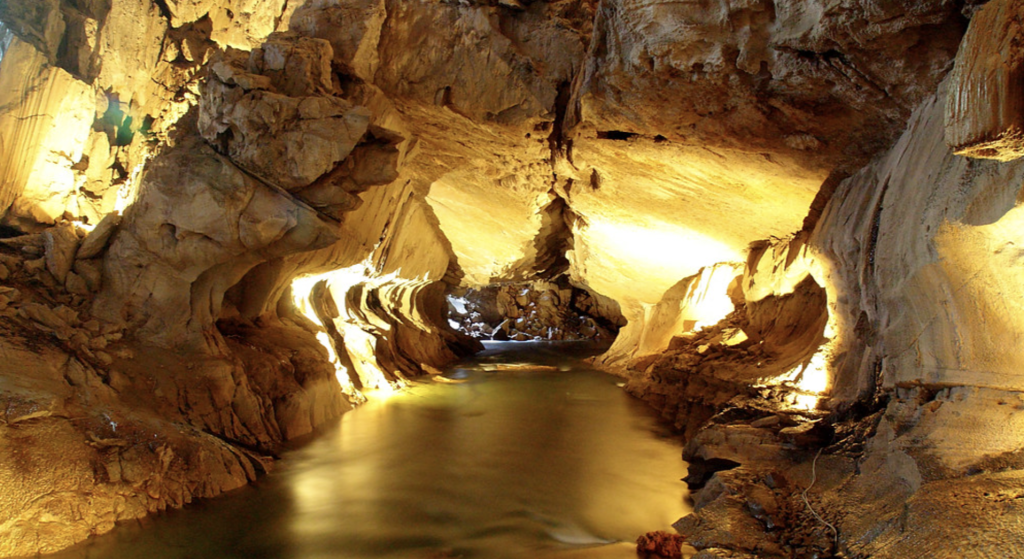
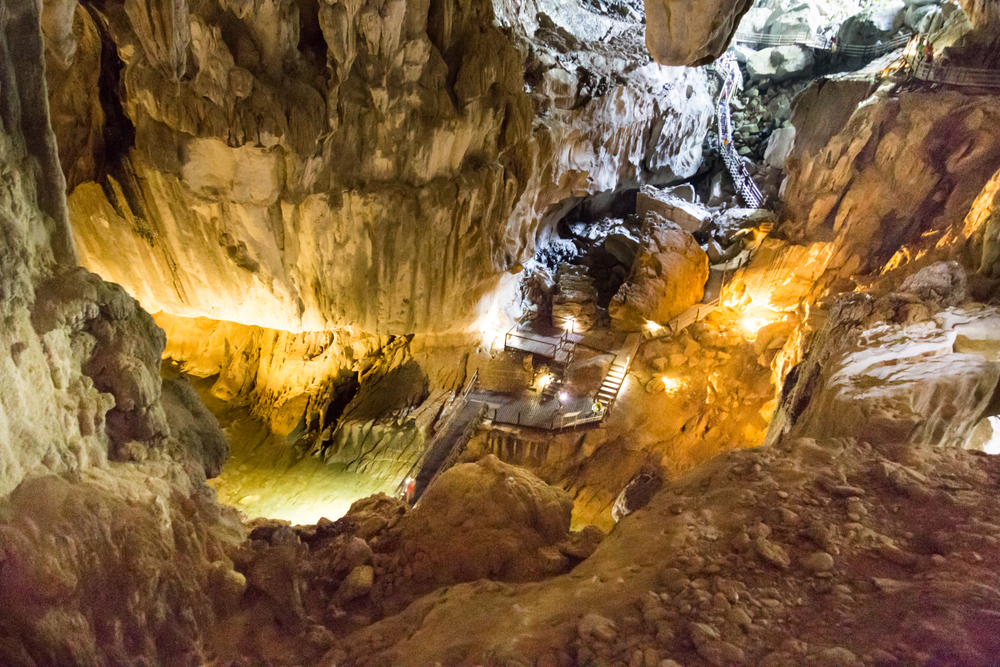
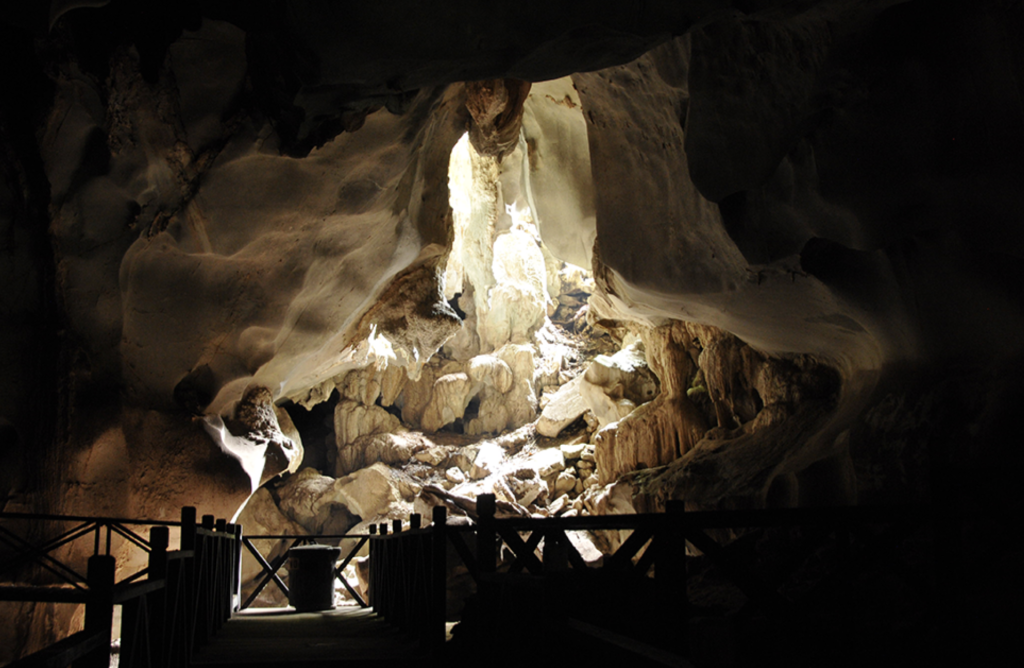
The park is best known for its immense cave systems, many of which rank among the largest and most impressive in the world. Visitors travel from around the globe to explore iconic caves such as Deer Cave, home to one of the largest cave passages on Earth, and Sarawak Chamber, the largest known underground chamber in the world by volume.
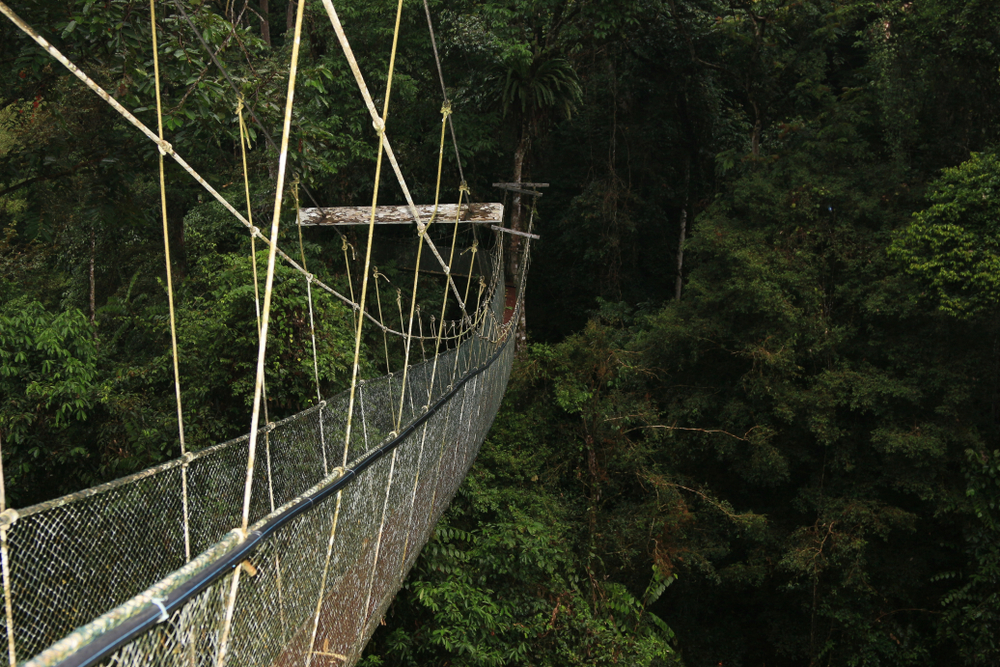
Each evening, millions of bats emerge from Deer Cave in a swirling spectacle that is one of the park’s most famous attractions. Beyond its caves, Gunung Mulu offers rainforest trekking, canopy walks, river excursions, and opportunities to explore remote wilderness rarely found elsewhere.
Geographically, Gunung Mulu National Park is dominated by rugged limestone mountains, sandstone peaks, dense tropical rainforest, and an extensive network of caves and underground rivers. The park contains more than 180 miles (290 km) of mapped cave passages, with new sections still being discovered.
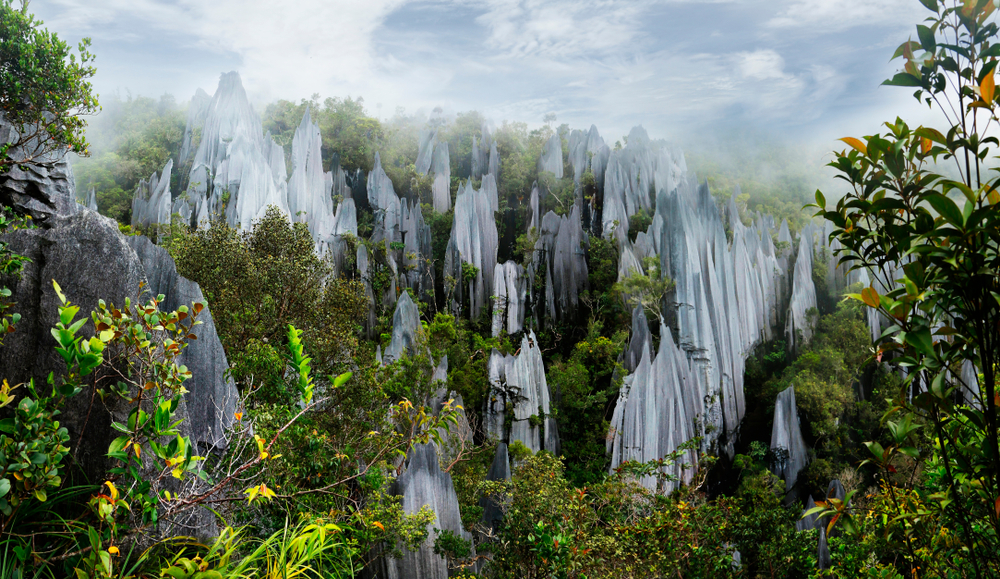
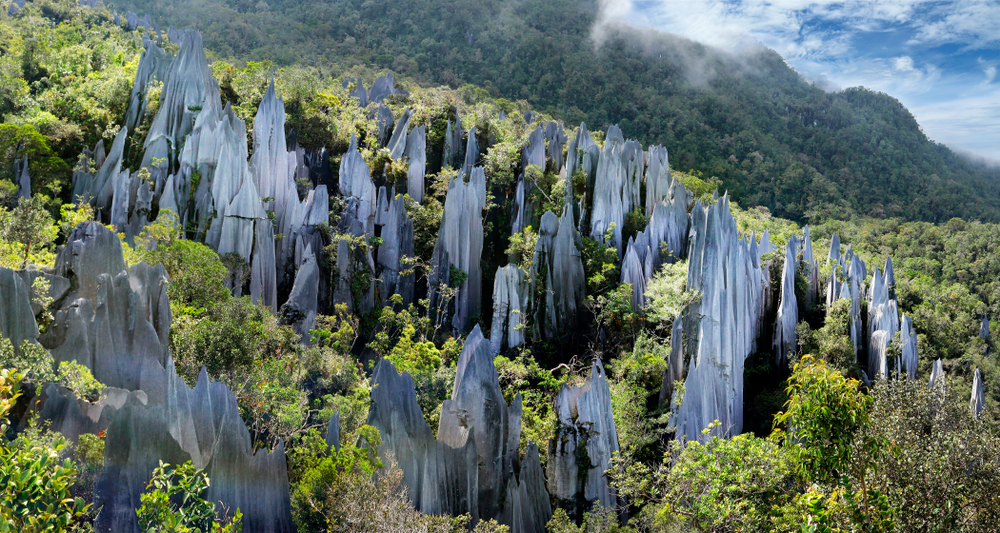
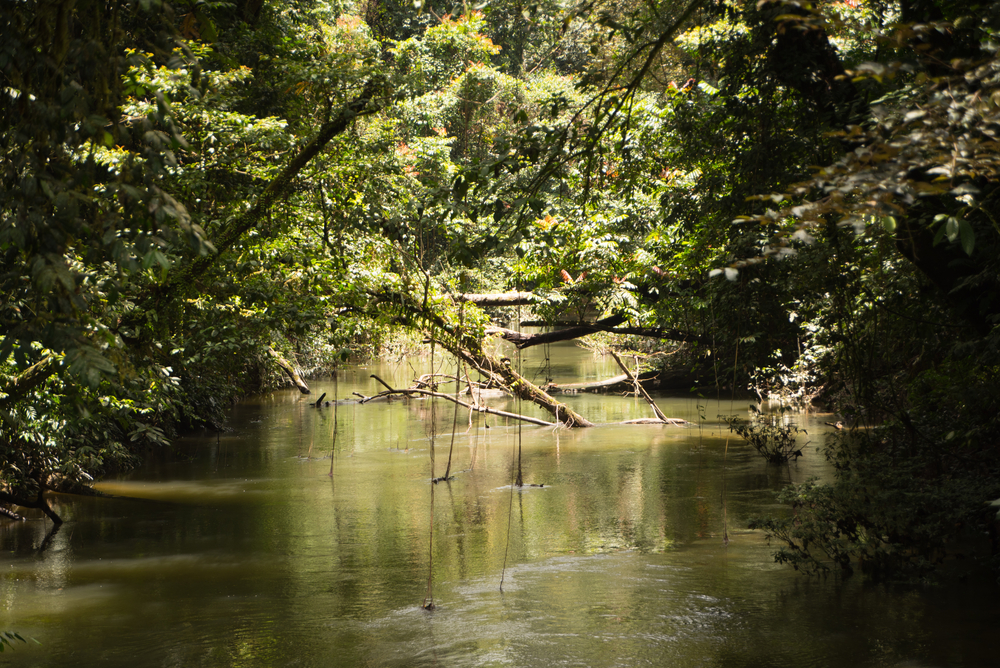
One of its most iconic features is the Pinnacles, a dramatic collection of razor-sharp limestone spires rising from the slopes of Mount Api. The region receives abundant rainfall throughout the year, supporting lush rainforest ecosystems that cloak the mountains and valleys. Rivers and streams carve through the landscape, feeding underground cave systems and creating waterfalls and scenic gorges.
Wildlife within Gunung Mulu National Park is exceptionally diverse. More than 80 mammal species have been recorded, including bearded pigs, sun bears, civets, flying squirrels, and several species of bats. Primates such as long-tailed macaques, silvered langurs, and gibbons inhabit the forests.
Birdlife is rich, with hornbills, kingfishers, broadbills, pittas, and numerous endemic species found throughout the park. Reptiles, amphibians, and countless insects thrive in the rainforest, while cave ecosystems support specialized species adapted to permanent darkness. The park’s diverse habitats contribute to its status as one of Borneo’s most important biodiversity refuges.
Gunung Mulu National Park plays a critical role in conserving both tropical rainforest ecosystems and one of the world’s most significant karst landscapes. The park protects unique geological formations, rare species, and vital watershed areas while providing opportunities for scientific research and environmental education.
Its combination of biodiversity and cave systems is often compared to renowned protected areas such as Phong Nha-Ke Bang National Park and Mammoth Cave National Park, yet Gunung Mulu stands apart because of its unparalleled integration of rainforest, mountains, and giant cave systems. Through its immense underground chambers, ancient forests, rare wildlife, and spectacular geological features, Gunung Mulu National Park remains one of the greatest natural wonders in Asia and one of the most remarkable protected areas on Earth.
Things to See
Things To Do
Engaging Gunung Mulu National Park
FAQ’s
What is Gunung Mulu National Park known for?
Gunung Mulu National Park in Malaysia is known for its extraordinary limestone karst formations, expansive cave systems, and rich biodiversity.
The park is renowned for its stunning landscapes, including jagged limestone peaks, dense rainforests, and meandering rivers.
Visitors flock to the park to explore its vast network of caves, including the world’s largest cave chamber, Sarawak Chamber, and the iconic Deer Cave, home to millions of bats.
Additionally, Gunung Mulu National Park offers opportunities for trekking, birdwatching, and experiencing the cultural heritage of the indigenous communities living in the area.
Sources
Mulu National Park, Park Site, https://www.mulunationalpark.com/, retrieved April 2024.
Mulu Park, Park Site, https://mulupark.com/, retrieved April 2024.
Sarawak Forestry, Mulu National Park, https://sarawakforestry.com/parks-and-reserves/mulu-national-park/, retrieved April 2024.
UNESCO, Gunung Mulu National Park, https://whc.unesco.org/en/list/1013/, retrieved April 2024.