

About
Mapungubwe National Park is located in the far northern reaches of South Africa’s Limpopo Province, where the borders of South Africa, Botswana, and Zimbabwe converge. The park covers approximately 110 square miles (285 sq km) and protects a landscape of river valleys, sandstone ridges, savannas, and archaeological treasures.
Established in 1995, Mapungubwe National Park preserves both an important wildlife ecosystem and one of Africa’s most significant cultural heritage sites. The park forms part of the larger Mapungubwe Cultural Landscape UNESCO World Heritage Site and lies west of Kruger National Park. Its unique combination of natural beauty and ancient history makes it one of South Africa’s most distinctive national parks.
Mapungubwe National Park is best known as the center of the ancient Kingdom of Mapungubwe, the first known sophisticated kingdom in southern Africa. Between approximately AD 1075 and 1220, the region served as a thriving center of trade, governance, and culture. Archaeological discoveries, including the famous golden rhinoceros artifact, revealed a highly advanced society that traded with merchants from distant parts of Africa and Asia.
Visitors are drawn to the opportunity to explore ancient ruins while also experiencing outstanding wildlife viewing and scenic landscapes. Interpretive centers, guided tours, hiking trails, and scenic overlooks allow visitors to connect with both the cultural and natural heritage of the region.
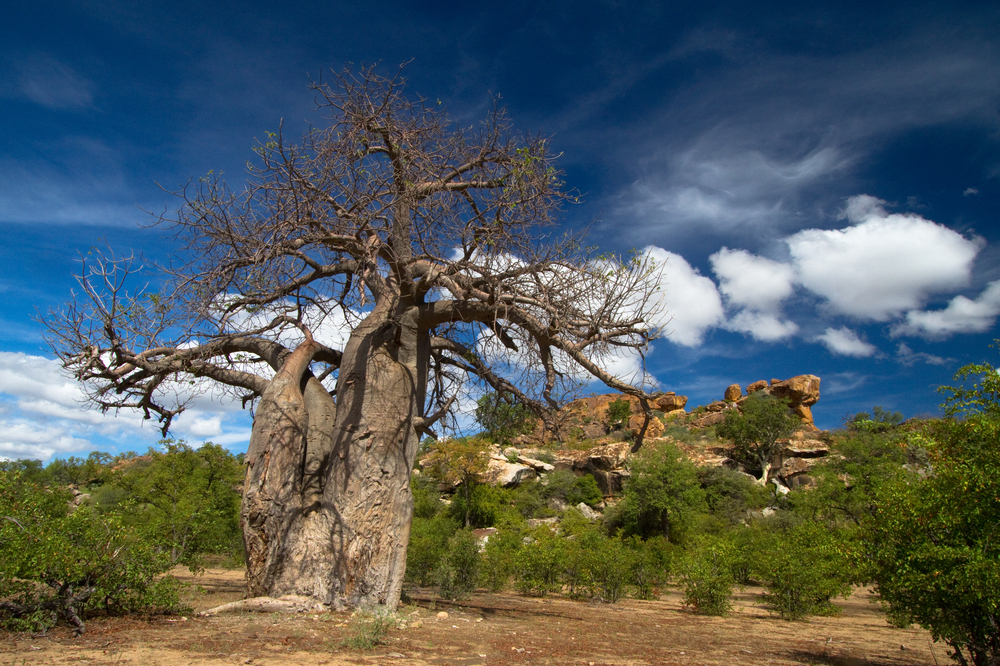
The geography of Mapungubwe National Park is shaped by the confluence of the Limpopo and Shashe Rivers. These rivers have created fertile floodplains that contrast dramatically with the surrounding sandstone hills, rocky outcrops, and dry savannas. The landscape includes baobab-studded plains, riverine forests, woodlands, and rugged escarpments that provide sweeping views across three countries.
Seasonal rainfall patterns influence vegetation growth and wildlife movements, while the river systems serve as critical water sources in an otherwise semi-arid environment. The varied terrain supports a diversity of habitats and contributes significantly to the park’s ecological richness.
Wildlife within Mapungubwe National Park is abundant and diverse. Large mammals include elephant, giraffe, zebra, kudu, eland, impala, wildebeest, and buffalo. Predators such as leopard, spotted hyena, and smaller carnivores inhabit the park, although they are often elusive. The river corridors provide habitat for hippopotamuses, crocodiles, and numerous aquatic species.
Birdlife is particularly impressive, with more than 400 recorded species. African fish eagles, kingfishers, hornbills, bee-eaters, vultures, and numerous migratory birds thrive within the park’s varied habitats. The combination of riverine ecosystems and savanna landscapes creates excellent opportunities for wildlife observation and birdwatching.
Mapungubwe National Park plays a vital role in conserving both natural and cultural heritage. The park protects important ecosystems along the Limpopo River while safeguarding archaeological sites that provide insight into one of Africa’s earliest kingdoms. Its conservation significance is unique because it integrates biodiversity protection with the preservation of a globally important cultural landscape.
The park’s importance is often compared to sites such as Great Zimbabwe and Tsodilo Hills, where cultural history and natural landscapes are closely intertwined. Today, Mapungubwe National Park stands as a remarkable testament to both Africa’s rich ecological heritage and its deep historical legacy, offering visitors an experience unlike any other national park in South Africa.
Things to See
Things To Do
Engaging Mapungubwe National Park
