About

Camdeboo National Park, the park is located in South Africa’s Eastern Cape Province surrounding the historic town of Graaff-Reinet. The park covers approximately 75 square miles (194 sq km) and protects a diverse landscape of mountains, valleys, plains, and semi-arid Karoo ecosystems.

Established in 2005, Camdeboo National Park was created to conserve the unique biodiversity and geological features of the Great Karoo while integrating important cultural and historical landscapes. The park lies northeast of Mountain Zebra National Park and occupies a central position within one of South Africa’s most distinctive natural regions. Its name is derived from a Khoisan word believed to mean “green hollow” or “place of green hills,” reflecting the varied terrain found within the park.

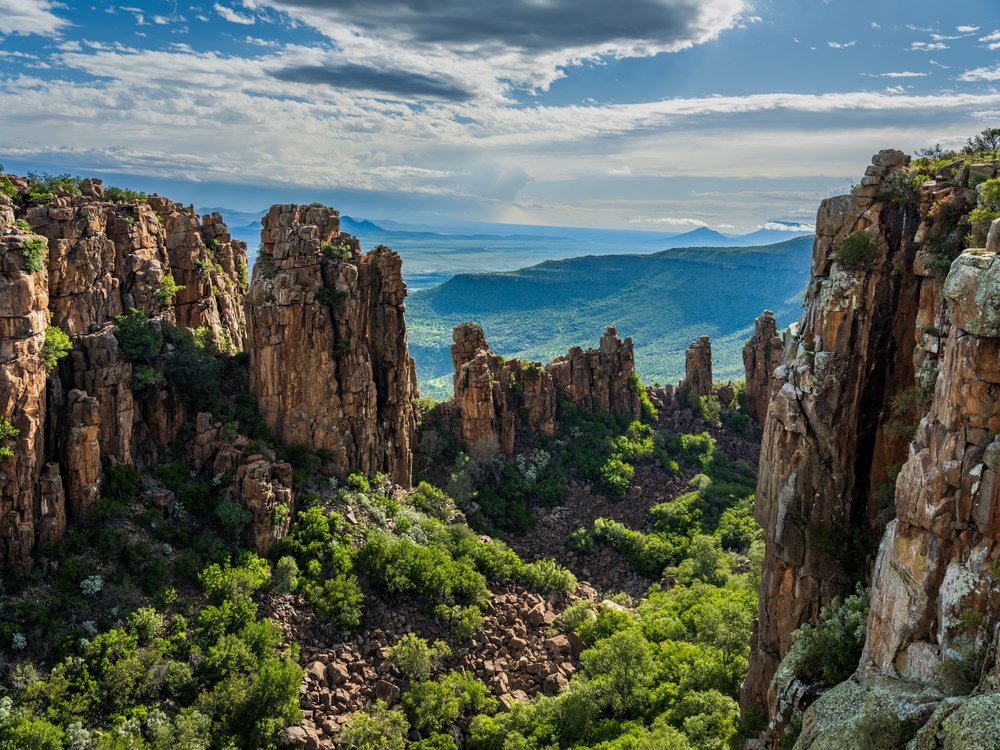
Camdeboo National Park is best known for the spectacular Valley of Desolation, one of South Africa’s most iconic geological landmarks. Towering dolerite columns rise dramatically above the surrounding plains, creating a landscape that has inspired visitors, artists, and naturalists for generations.

The park offers exceptional scenic viewpoints, hiking trails, wildlife viewing opportunities, and access to the rich cultural heritage of Graaff-Reinet, one of South Africa’s oldest towns. Visitors are attracted by the combination of dramatic scenery, fascinating geology, and opportunities to explore the unique ecosystems of the Karoo. The Valley of Desolation alone provides some of the most breathtaking panoramic views in southern Africa.

The geography of Camdeboo National Park is characterized by rugged mountains, expansive plains, river valleys, and striking geological formations. The Valley of Desolation was formed through volcanic activity and erosion over millions of years, resulting in towering dolerite cliffs that rise more than 390 feet (120 meters) above the valley floor.

The park also encompasses portions of the Nqweba Dam, rolling grasslands, shrub-covered hills, and semi-arid Karoo landscapes. Vegetation includes Karoo shrublands, grasslands, thicket vegetation, and riparian habitats associated with rivers and wetlands. The diversity of landscapes supports a wide range of plant and animal communities and contributes significantly to the park’s ecological importance.

Wildlife within Camdeboo National Park reflects the diversity of the Karoo environment. Large mammals include Cape buffalo, black wildebeest, red hartebeest, kudu, springbok, gemsbok, mountain reedbuck, and Cape mountain zebra. Several species have been reintroduced to restore ecological balance and enhance biodiversity. Predators such as caracal, black-backed jackal, and smaller carnivores inhabit the park, although they are often elusive.

Birdlife is particularly rewarding, with more than 220 recorded species. Raptors including Verreaux’s eagle, martial eagle, and jackal buzzard can often be seen soaring above the cliffs, while waterbirds inhabit areas surrounding the Nqweba Dam. The park’s varied habitats provide excellent opportunities for birdwatching and wildlife observation.

Camdeboo National Park plays an important role in conserving the unique ecosystems and geological heritage of the Great Karoo. The park protects habitats that support native wildlife while preserving one of South Africa’s most remarkable geological formations. Its conservation significance is often compared to parks such as Karoo National Park and Mountain Zebra National Park, which also safeguard important semi-arid ecosystems and wildlife populations.

However, Camdeboo’s combination of dramatic geology, biodiversity, and cultural heritage gives it a distinctive identity. Today, the park remains a treasured conservation area, preserving the natural beauty and ecological richness of the Eastern Cape’s Karoo landscape for future generations.

Things to See

Popular

Camdeboo National Park, situated around the historic town of Graaff-Reinet in South Africa, showcases a diverse array of wildlife adapted to its semi-arid environment and striking Karoo landscapes.

Springbok (Antidorcas marsupialis)
This iconic antelope thrives in the park’s arid plains. Known for its remarkable agility and “pronking” behavior, the springbok grazes on grasses and browses on shrubs, making it well-suited to the Karoo’s dry conditions.

Kudu (Tragelaphus strepsiceros)
The kudu is one of the park’s larger antelope species, easily recognized by its impressive spiral horns and striped coat. It inhabits the park’s thickets and rocky slopes, feeding on leaves, fruits, and shrubs.

Cape Mountain Zebra (Equus zebra zebra)
Endemic to South Africa, the Cape mountain zebra roams the park’s rugged terrains. Its narrower stripes and dewlap distinguish it from other zebra species. It feeds primarily on grasses and herbs.

Bat-eared Fox (Otocyon megalotis)
This small carnivore is well-adapted to the Karoo’s arid conditions. It uses its large ears to locate insects and other invertebrates, its primary food source.

Aardvark (Orycteropus afer)
Nocturnal and solitary, the aardvark digs into termite mounds and ant nests with its powerful claws. Its burrows also provide shelter for other animals in the park.

Black-backed Jackal (Canis mesomelas)
An opportunistic predator and scavenger, the black-backed jackal is a common sight in the park. It hunts small mammals, birds, and reptiles and plays a vital role in the ecosystem.

Cape Grysbok (Raphicerus melanotis)
This small, shy antelope is often found in the park’s dense vegetation. It feeds on a variety of plants, including shrubs and herbs, and is most active at dawn and dusk.

Rock Hyrax (Procavia capensis)
The rock hyrax inhabits the park’s rocky outcrops and is closely related to elephants despite its small size. It feeds on grasses, leaves, and fruits and is often seen basking in the sun.

Gemsbok (Oryx gazella)
This striking antelope, with its long, sharp horns and distinctive facial markings, is well-adapted to arid environments. It grazes on grasses and browses on shrubs, relying on its ability to extract moisture from its food.

Leopard Tortoise (Stigmochelys pardalis)
The leopard tortoise is a common reptile in Camdeboo, often seen in the park’s grasslands and scrublands. It feeds on grasses, fruits, and succulents, contributing to seed dispersal.

Birds

Camdeboo National Park is a haven for bird enthusiasts, with its Karoo landscapes and wetlands providing habitats for a wide variety of bird species, including many endemic and migratory birds.

Blue Crane (Anthropoides paradiseus)
South Africa’s national bird, the blue crane, is frequently seen in the park’s open grasslands, feeding on seeds, insects, and small vertebrates.

Pied Avocet (Recurvirostra avosetta)
This elegant wader is a regular visitor to the park’s wetlands, where it uses its upturned bill to feed on small aquatic invertebrates.

Cape Spurfowl (Pternistis capensis)
A common ground-dwelling bird, the Cape spurfowl forages in the park’s scrublands, feeding on seeds and insects.

Greater Flamingo (Phoenicopterus roseus)
A striking visitor to the park’s wetlands, the greater flamingo feeds on algae and small aquatic creatures, often creating a spectacular sight.

Malachite Sunbird (Nectarinia famosa)
This vibrantly colored bird is often found in the park’s flowering plants, feeding on nectar and playing a key role in pollination.

African Fish Eagle (Haliaeetus vocifer)
Occasionally spotted near the park’s wetlands, this iconic raptor preys on fish and other aquatic life.

Karoo Prinia (Prinia maculosa)
This small, energetic bird thrives in the park’s scrublands, feeding on insects and seeds.

Cape Weaver (Ploceus capensis)
Known for its bright yellow plumage, the Cape weaver constructs intricate nests in the park’s trees and reeds.

Namaqua Dove (Oena capensis)
This small, elegant dove is commonly found in the park’s arid regions, feeding on seeds and small insects.

Black Harrier (Circus maurus)
This striking bird of prey hunts over the park’s grasslands, preying on small mammals and birds.

Valley of Desolation

Valley of Desolation

The Valley of Desolation, located within Camdeboo National Park near Graaff-Reinet in South Africa’s Eastern Cape, is a natural geological wonder often referred to as the “Cathedral of the Mountains.” This breathtaking valley is famous for its dramatic dolerite columns, which soar up to 120 meters (394 feet) above the surrounding plains, creating a striking contrast against the semi-arid Karoo landscape. These towering formations were created over 200 million years ago through volcanic activity and subsequent erosion, leaving behind an awe-inspiring display of nature’s sculptural artistry.

Perched at an altitude of over 1,500 meters (4,921 feet), the Valley of Desolation offers visitors panoramic views of the rugged terrain, with the town of Graaff-Reinet and the vast Karoo plains stretching out in the distance. The interplay of light and shadow at sunrise and sunset further enhances the valley’s dramatic beauty, making it a favorite destination for photographers and nature enthusiasts.

The vegetation in the valley is primarily hardy Karoo flora, including succulents, aloes, and shrubs, which thrive in the harsh, rocky environment. This unique habitat supports a variety of wildlife, from rock hyraxes and black-backed jackals to Verreaux’s eagles soaring overhead.

Visitors can explore the valley through well-maintained hiking trails and viewpoints that offer safe access to the edges of the cliffs. The Valley of Desolation is not only a geological marvel but also a serene escape that highlights the timeless beauty of South Africa’s Karoo region.

Things To Do

Engaging Camdeboo National Park

placeholder

Game Drives

Camdeboo National Park offers excellent opportunities for game viewing along its network of scenic drives. Visitors can traverse the park’s diverse habitats, from open grasslands to rocky outcrops, in search of wildlife such as springbok, kudu, and Cape mountain zebras.

The drives are well-suited for self-guided exploration, with routes clearly marked and designed to showcase the park’s natural beauty. Photographers will find numerous spots to capture stunning landscapes and wildlife in action.

Guided game drives are also available, providing insights into the park’s ecology, conservation efforts, and the behavior of its resident species. This activity combines the thrill of wildlife spotting with the tranquility of Camdeboo’s vast Karoo landscape.

placeholder

Nature Walks

The Valley of Desolation is one of the most iconic attractions in Camdeboo National Park, offering breathtaking views and dramatic landscapes. This unique geological feature comprises towering dolerite pillars that rise up to 120 meters above the valley floor, creating a stunning backdrop against the Karoo plains.

Visitors can explore the area through a series of well-maintained walking trails, which provide panoramic views of Graaff-Reinet and the surrounding mountains. The best time to visit is during sunrise or sunset, when the warm light enhances the rugged beauty of the valley.

Informative signage along the trails explains the geological history of the area, as well as its significance to the region’s ecology. The Valley of Desolation is not just a visual spectacle but also a place for quiet reflection and appreciation of the natural world.

placeholder

Birdwatching

The Nqweba Dam is a prime location for birdwatching in Camdeboo National Park, attracting a wide variety of resident and migratory bird species. The dam’s wetlands and surrounding vegetation provide habitats for iconic species such as flamingos, African fish eagles, and malachite sunbirds.

Birdwatching enthusiasts can explore the area through walking trails or from designated viewing points, equipped with benches and information boards. Early mornings and late afternoons are the best times for spotting birds, as activity peaks during these cooler hours.

Visitors often pair birdwatching with relaxing picnics by the dam, creating a peaceful and engaging experience. The combination of vibrant birdlife and scenic water views makes this activity a favorite among nature lovers and photographers alike.