

About
De Hoge Veluwe National Park (Dutch: Nationaal Park De Hoge Veluwe) is located in the province of Gelderland in the central Netherlands. Established in 1935, the park covers approximately 21 square miles (55 sq km) and is the largest privately managed national park in the Netherlands.
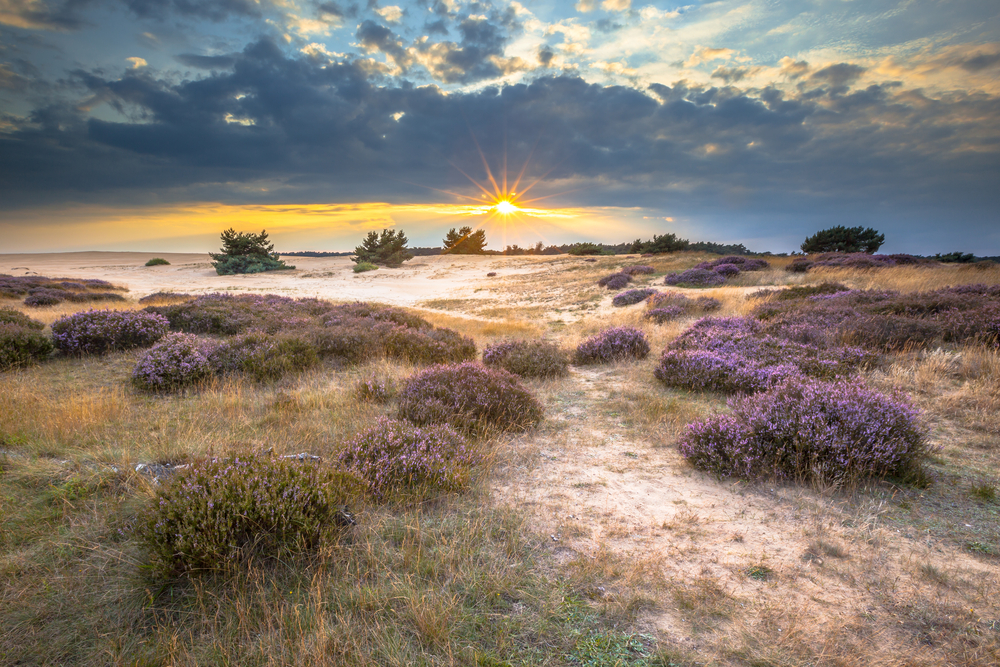
De Hoge Veluwe is renowned for its unique combination of natural landscapes, wildlife conservation, and cultural attractions. The park protects a remarkable variety of habitats, including forests, heathlands, sand dunes, and wetlands, creating one of the most diverse natural areas in the country.
The park is best known for its extensive heathlands, drifting sand dunes, and the world-famous Kröller-Müller Museum, which houses one of the largest collections of works by Vincent van Gogh outside Amsterdam. Visitors are drawn to the park’s scenic cycling routes, hiking trails, wildlife viewing opportunities, and cultural experiences.
One of the park’s most distinctive features is its fleet of free white bicycles, allowing visitors to explore the landscape without the need for a car. Cycling, walking, photography, birdwatching, and museum visits are among the most popular activities.
Geographically, De Hoge Veluwe National Park lies within the Veluwe region, a landscape shaped by glacial activity during the Ice Age. The park contains a mosaic of habitats including pine forests, deciduous woodlands, open heathlands, grasslands, marshes, and some of the largest inland drifting sand dunes in northwestern Europe.
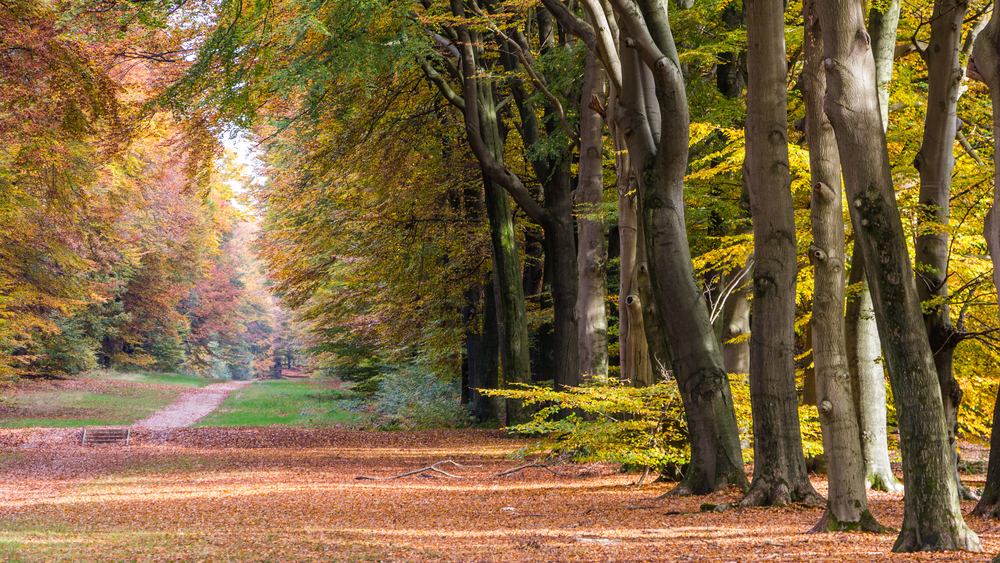
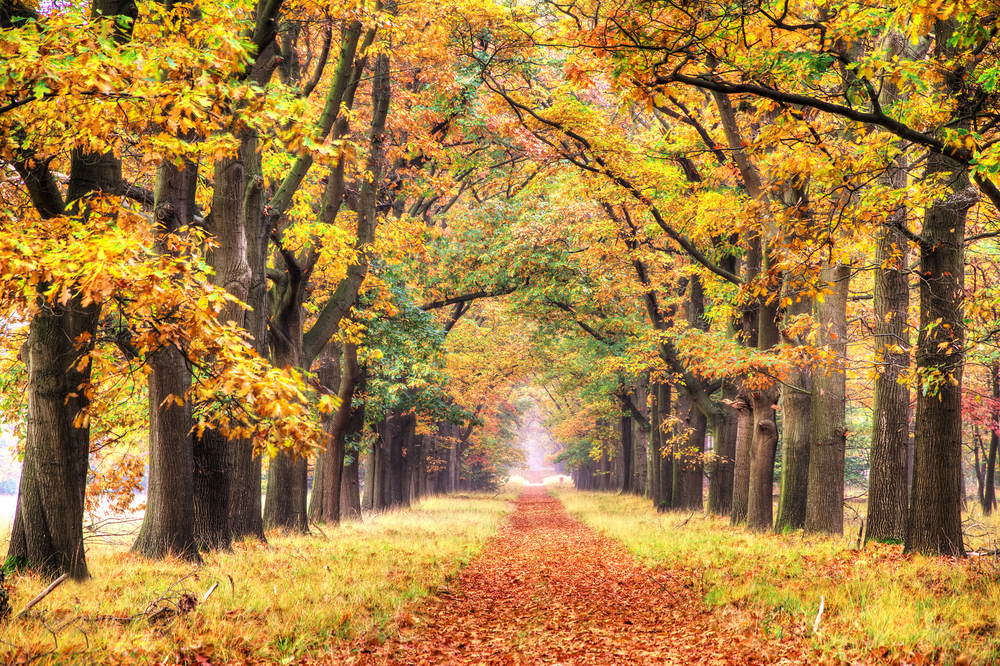
These varied environments create exceptional ecological diversity despite the park’s relatively modest size. Seasonal changes transform the landscape throughout the year, from purple heather blooms in late summer to colorful autumn forests and winter frost-covered heathlands.
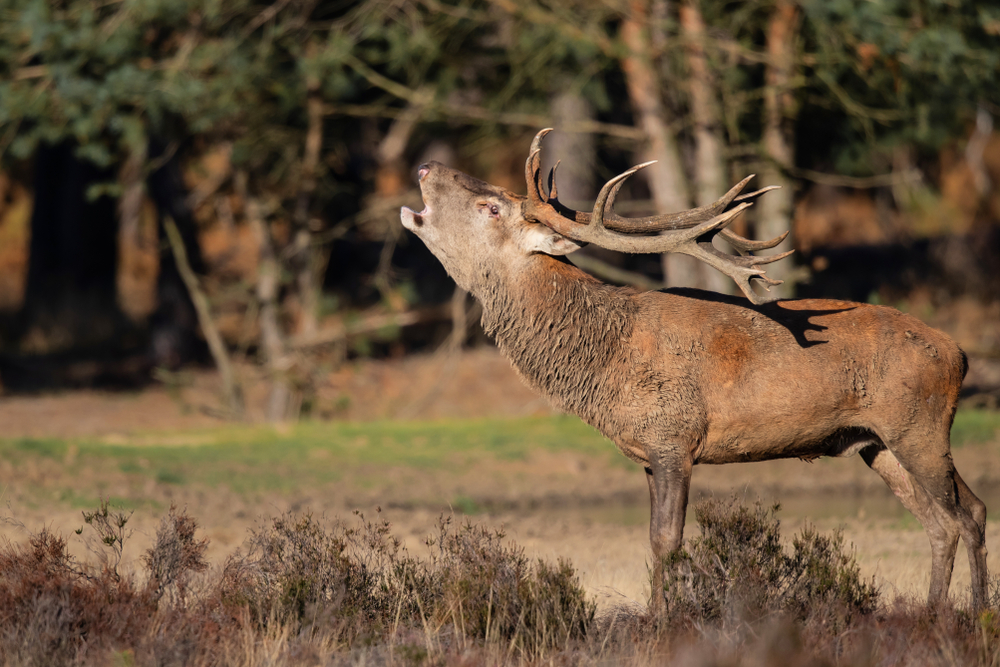
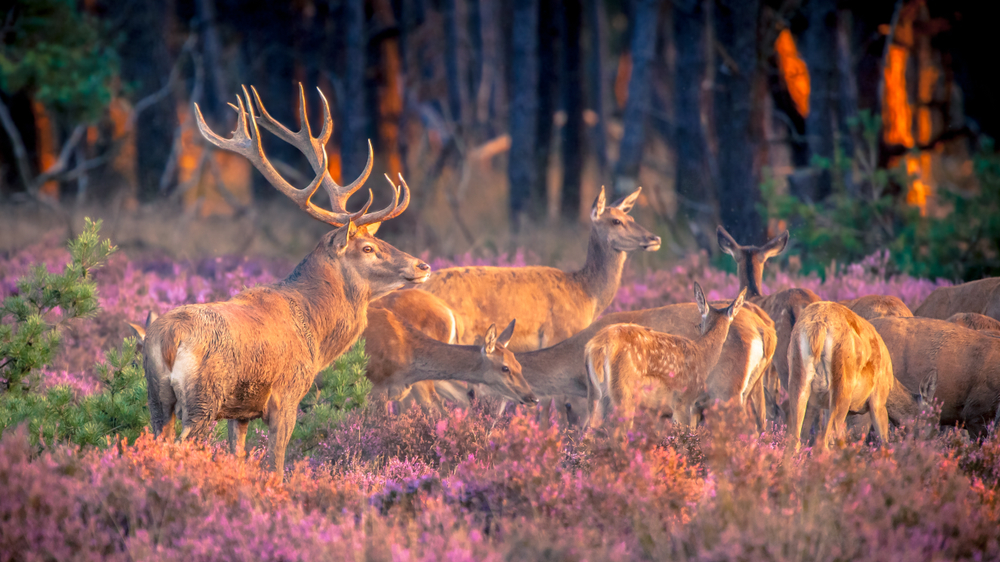
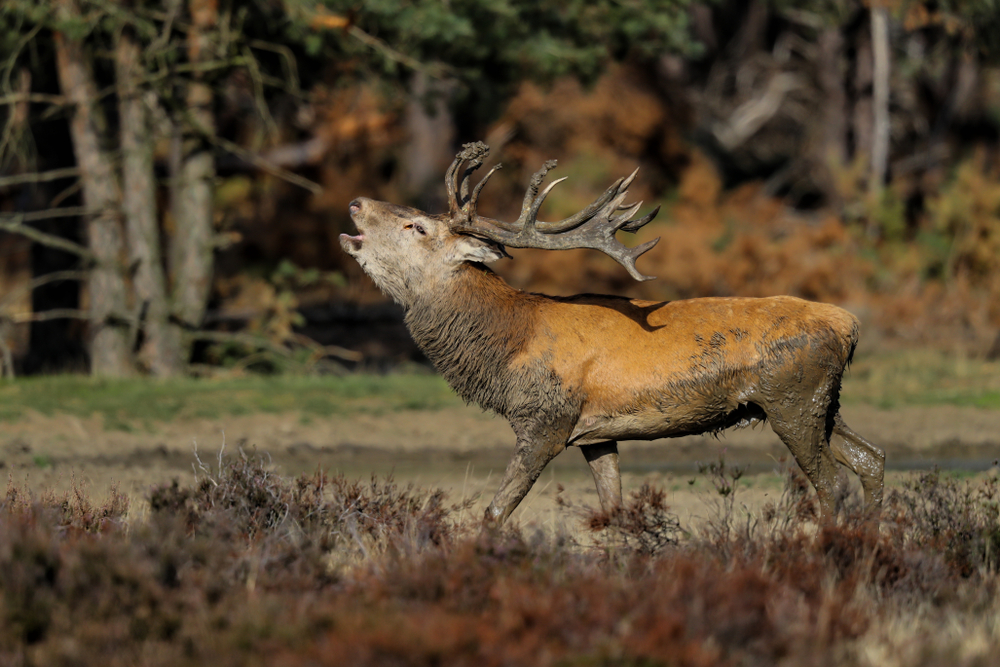
Wildlife within De Hoge Veluwe National Park is among the richest in the Netherlands. Large mammals include red deer, roe deer, wild boar, mouflon sheep, foxes, badgers, and pine martens. The park is especially famous for its populations of red deer, which are frequently observed grazing in open meadows and heathlands.
Birdlife includes European honey buzzards, great spotted woodpeckers, owls, nightjars, and numerous migratory species. Reptiles, amphibians, butterflies, and native plants further contribute to the park’s biodiversity, making it an important refuge for wildlife in one of Europe’s most densely populated countries.
De Hoge Veluwe National Park plays a crucial role in conserving the Netherlands’ natural heritage while demonstrating how conservation, recreation, and culture can successfully coexist. The park protects rare habitats, supports wildlife populations, and provides environmental education opportunities for millions of visitors.
Its conservation significance is often compared to Veluwezoom National Park and New Forest National Park because of its heathlands, wildlife, and cultural integration. Through its forests, sand dunes, heathlands, abundant wildlife, and world-class art collection, De Hoge Veluwe National Park stands as one of the Netherlands’ most celebrated protected areas and a unique blend of nature and culture.
Photos


Hoge Veluwe National Park Trails
The park provides hikers with an array of trails and footpaths that meander through the park. Most of the trails are easy with little elevation changes. The various trails range from 1.86 miles (3 km) to 4.97 miles (8 km) for the traditional hiker. For those who are more adventurous, there are trails reaching over 20 miles (32 km) in distance. There are limited elevation changes in the park making most trails easier in nature.

Park Protection
Hoge Veluwe National Park was created to protect one of the largest and most diverse natural landscapes in the Netherlands, including heathlands, sand dunes, woodlands, grasslands, and wetlands. The park provides important habitat for several species of conservation concern, including the endangered black grouse, one of the rarest breeding birds in the Netherlands.
Other wildlife protected within the park includes red deer, wild boar, roe deer, badgers, foxes, and numerous species of reptiles, amphibians, and birds. Its varied habitats support a rich diversity of plants and pollinators, making the park an important refuge for biodiversity within one of Europe’s most densely populated countries.
The park is especially significant for protecting extensive inland drifting sand landscapes and heathlands, habitats that have become increasingly rare across Western Europe. These open landscapes support specialized plant and animal communities adapted to nutrient-poor soils and dynamic environmental conditions.
The park also preserves large areas of relatively undisturbed habitat where natural ecological processes can continue with limited human impact. Together, Hoge Veluwe National Park safeguards endangered species, rare heathland and sand dune ecosystems, important wildlife populations, and one of the Netherlands’ most distinctive natural landscapes.
FAQ’s
What is the main reason people visit Hoge Veluwe National Park?
Hoge Veluwe National Park is primarily visited for its unique combination of natural landscapes, abundant wildlife, cycling opportunities, and world-class art collection. Located in the central Netherlands, the park protects approximately 21 square miles (55 square kilometers) of forests, heathlands, drifting sand dunes, grasslands, and wetlands.
Visitors come to experience one of the largest continuous nature reserves in the Netherlands while enjoying wildlife viewing, hiking, cycling, and visits to the renowned Kröller-Müller Museum.
What animals can visitors hope to see in Hoge Veluwe National Park?
Hoge Veluwe National Park supports a diverse range of mammals, reptiles, amphibians, and invertebrates typical of northern European heathland and forest ecosystems.
Some of the most notable animals found in Hoge Veluwe National Park include:
- Red Deer
- Roe Deer
- Wild Boar
- European Mouflon
- Red Fox
- European Badger
- Pine Marten
- Stone Marten
- Stoat
- Weasel
- European Polecat
- European Hedgehog
- Brown Hare
- European Rabbit
- Red Squirrel
- Wood Mouse
- Yellow-necked Mouse
- Bank Vole
- Field Vole
- Water Vole
- Common Shrew
- Pygmy Shrew
- Mole
- Noctule Bat
- Common Pipistrelle
- Nathusius’ Pipistrelle
- Brown Long-eared Bat
- Daubenton’s Bat
- Serotine Bat
- Common Lizard
- Viviparous Lizard
- Slow Worm
- Grass Snake
- Smooth Snake
- Common Frog
- Common Toad
- Moor Frog
- Smooth Newt
- Great Crested Newt
- Emperor Dragonfly
- Stag Beetle
- Heath Tiger Beetle
- Silver-studded Blue Butterfly
- Small Heath Butterfly
- Brimstone Butterfly
- Peacock Butterfly
- Red Admiral Butterfly
- European Honey Bee
- Numerous Pollinator Species
- Various Native Invertebrates
What birds can visitors hope to see in Hoge Veluwe National Park?
Hoge Veluwe National Park is home to more than 100 breeding bird species and is one of the Netherlands’ most important birdwatching destinations.
Some of the most popular birds seen in Hoge Veluwe National Park include:
- White-tailed Eagle
- Common Buzzard
- Eurasian Sparrowhawk
- Northern Goshawk
- Common Kestrel
- Peregrine Falcon
- Eurasian Hobby
- Tawny Owl
- Long-eared Owl
- Barn Owl
- Eurasian Eagle-Owl
- Great Spotted Woodpecker
- Black Woodpecker
- Green Woodpecker
- Lesser Spotted Woodpecker
- Eurasian Jay
- Carrion Crow
- Hooded Crow
- Raven
- Jackdaw
- Rook
- Eurasian Nuthatch
- Eurasian Treecreeper
- Coal Tit
- Great Tit
- Blue Tit
- Marsh Tit
- Crested Tit
- Eurasian Wren
- European Robin
- Common Blackbird
- Song Thrush
- Mistle Thrush
- Common Chaffinch
- European Greenfinch
- European Goldfinch
- Bullfinch
- Hawfinch
- Eurasian Siskin
- Yellowhammer
- Common Redstart
- Northern Wheatear
- Woodlark
- Skylark
- Tree Pipit
- Common Cuckoo
- Common Nightjar
- Grey Heron
- Great Egret
- Common Crane
Is Hoge Veluwe National Park worth visiting?
Yes, Hoge Veluwe National Park is absolutely worth visiting and is considered one of the Netherlands’ premier nature destinations.
The park offers a rare combination of wildlife, forests, heathlands, sand dunes, cycling trails, cultural attractions, and fine art. Visitors can experience nature, history, and art in a single destination, making it unique among European national parks.
The primary hesitation is that visitors expecting dramatic mountains or large wilderness areas may find the landscapes relatively gentle. However, the park’s beauty, accessibility, and diversity make it one of the most rewarding destinations in the Netherlands.
What is the best time to visit Hoge Veluwe National Park?
Weather and Climate
The best time to visit Hoge Veluwe National Park is from April through October.
Typical conditions include:
- April–May: 40–65°F (4–18°C)
- June–August: 55–80°F (13–27°C)
- September–October: 45–70°F (7–21°C)
- November–March: 30–50°F (-1–10°C)
During spring and summer:
- Heathlands and forests are at their most vibrant.
- Wildlife is highly active.
- Cycling conditions are excellent.
- Birdwatching opportunities increase.
- Longer daylight hours allow for extended exploration.
Autumn is particularly popular for observing red deer during the rutting season.
How many days do you need to visit Hoge Veluwe National Park?
Most visitors should plan for 1 to 3 days in Hoge Veluwe National Park.
- Half day: Cycling and visits to major viewpoints.
- 1 day: Wildlife viewing, cycling, and the Kröller-Müller Museum.
- 2 days: Comprehensive exploration of multiple habitats and attractions.
- 3+ days: Photography, wildlife observation, hiking, and cultural experiences.
For most visitors, two days provides the ideal experience. This allows time to cycle through the park’s extensive trail network, observe wildlife, visit the Kröller-Müller Museum, and explore the diverse landscapes that range from forests and heathlands to open sand drifts.
Nature enthusiasts and photographers may enjoy spending three or more days exploring the park’s quieter areas and wildlife observation points.
How do you get to Hoge Veluwe National Park?
International Access
Hoge Veluwe National Park is located in the eastern-central Netherlands.
The primary international airport is:
- Amsterdam Airport Schiphol
Most international visitors arrive through Amsterdam.
Driving Access
The park is easily accessible from major Dutch cities.
Travel times include:
- Amsterdam: approximately 1 hour.
- Utrecht: approximately 1 hour.
- Arnhem: approximately 20–30 minutes.
Main Entrances
The park has several visitor entrances, including:
- Otterlo Entrance
- Hoenderloo Entrance
- Schaarsbergen Entrance
Free White Bicycles
One of the park’s most famous features is its fleet of:
- Free white bicycles available throughout the park.
These bicycles allow visitors to easily explore the park’s extensive network of trails.
Major Attractions
Popular attractions include:
- Kröller-Müller Museum
- Jachthuis Sint Hubertus
- Marchantplein
Travel Times
Typical travel times include:
- Amsterdam to Hoge Veluwe: approximately 1 hour.
- Arnhem to park entrances: 20–30 minutes.
- Otterlo to Kröller-Müller Museum: approximately 10 minutes by bicycle.
- Cycling across the park: 30–90 minutes depending on route.
Who is involved in protecting and supporting Hoge Veluwe National Park?
Several organizations help protect and support Hoge Veluwe National Park:
- National Park De Hoge Veluwe – manages the park.
- Kröller-Müller Museum – supports cultural and educational programs.
- Dutch Forestry and Conservation Organizations – support habitat management and research.
- Local conservation groups, researchers, and volunteers throughout the region.
What is unique about Hoge Veluwe National Park?
Hoge Veluwe National Park is unique because it combines one of the Netherlands’ most important natural landscapes with one of Europe’s finest art collections.
Visitors can cycle through forests, heathlands, and sand dunes while also exploring the internationally renowned Kröller-Müller Museum, which houses one of the world’s largest collections of works by Vincent van Gogh. Few national parks blend nature, wildlife, culture, and art so seamlessly.
Why is Hoge Veluwe National Park famous for bicycles?
The park provides hundreds of free white bicycles that visitors can use to explore its extensive network of cycling paths, making cycling one of the most popular ways to experience the park.
What is the Kröller-Müller Museum?
The Kröller-Müller Museum is one of Europe’s most important art museums and contains an extensive collection of works by Vincent van Gogh along with a renowned outdoor sculpture garden.
Can you see wildlife in Hoge Veluwe National Park?
Yes. Visitors frequently observe red deer, wild boar, mouflon, foxes, and numerous bird species, especially during early morning and evening hours when wildlife activity is highest.
Sources
- Hoge Veluwe, De Hoge Veluwe National Park, https://www.hogeveluwe.nl/en, retrieved October 2019.
- Planet Ware, Exploring Hoge Veluwe National Park: Visitor’s Guide, https://www.planetware.com/gelderland/hoge-veluwe-national-park-nl-gld-hvnp.htm, retrieved October 2019.