

About
Etosha National Park is located in northern Namibia and covers approximately 8,600 square miles (22,270 sq km), making it one of the largest national parks in Africa. The park is centered around the immense Etosha Pan, a vast salt flat so large it can often be seen from space.
Although it does not directly border another national park, Etosha forms part of a broader network of protected lands and wildlife corridors across southern Africa. Its remote landscapes, open horizons, and concentration of wildlife around water sources have made it one of the continent’s most celebrated safari destinations.
Etosha is best known for the enormous white salt pan that dominates much of the park’s interior. During the dry season, the pan appears as a seemingly endless expanse of shimmering white earth stretching toward the horizon, creating a stark and dramatic landscape unlike almost anywhere else in Africa.
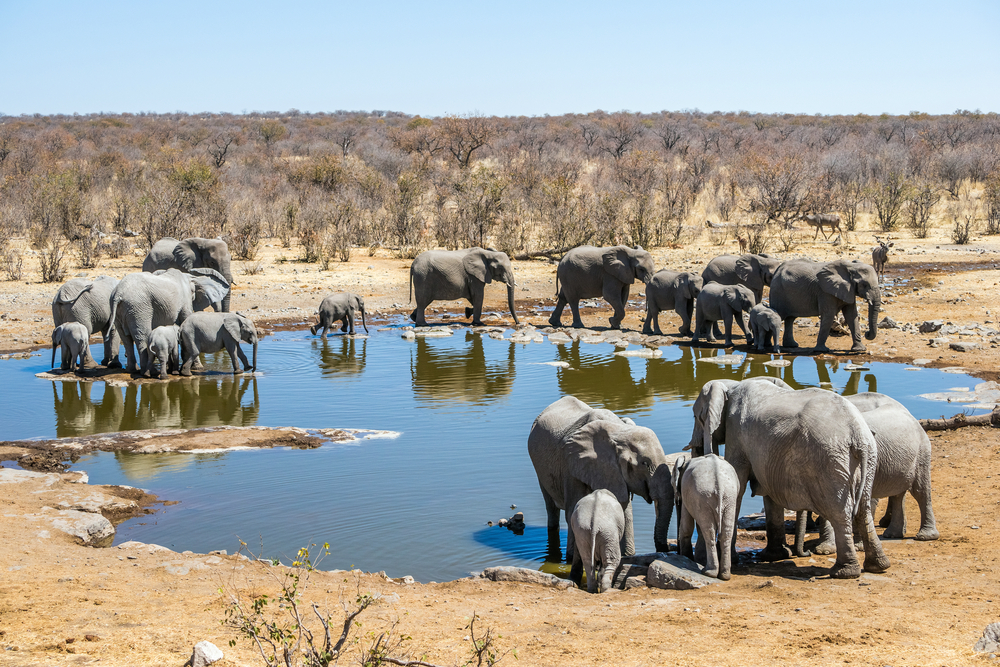
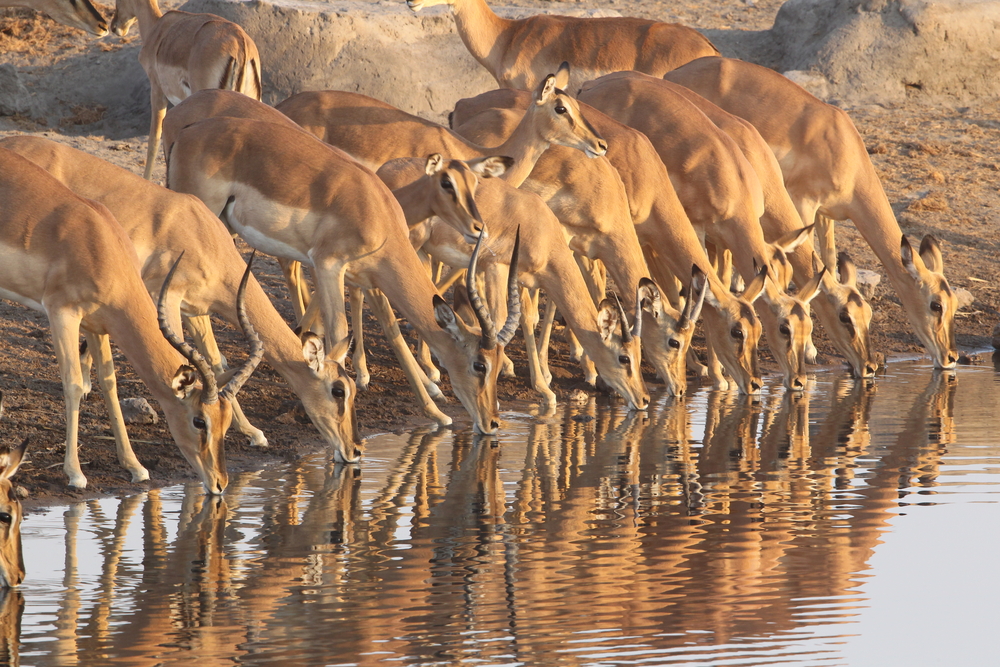
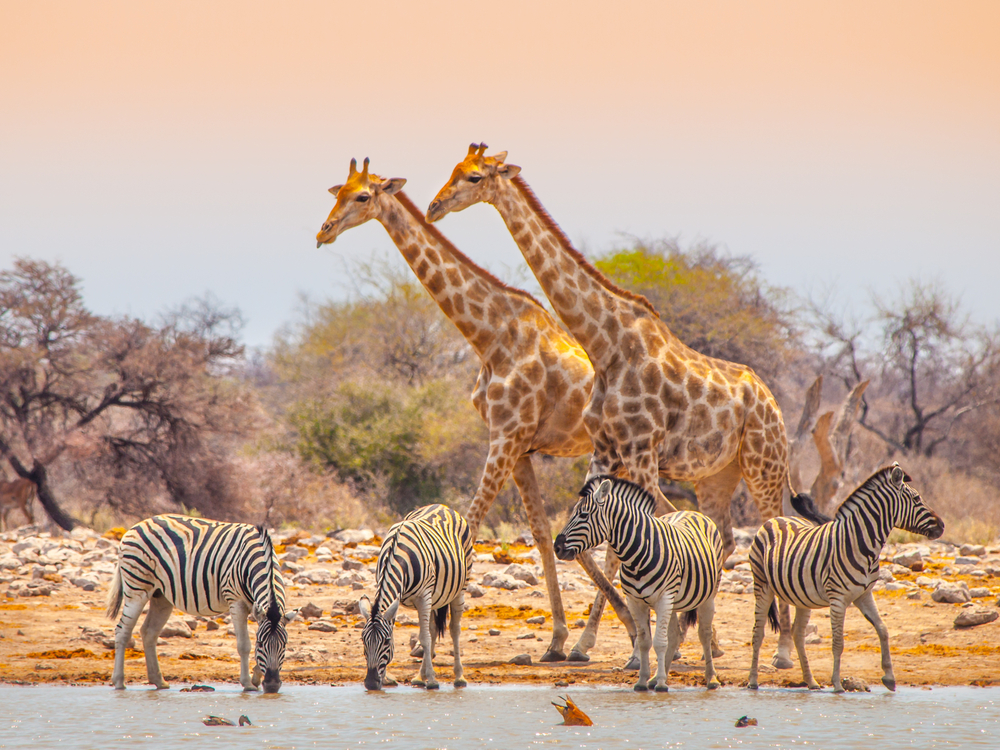
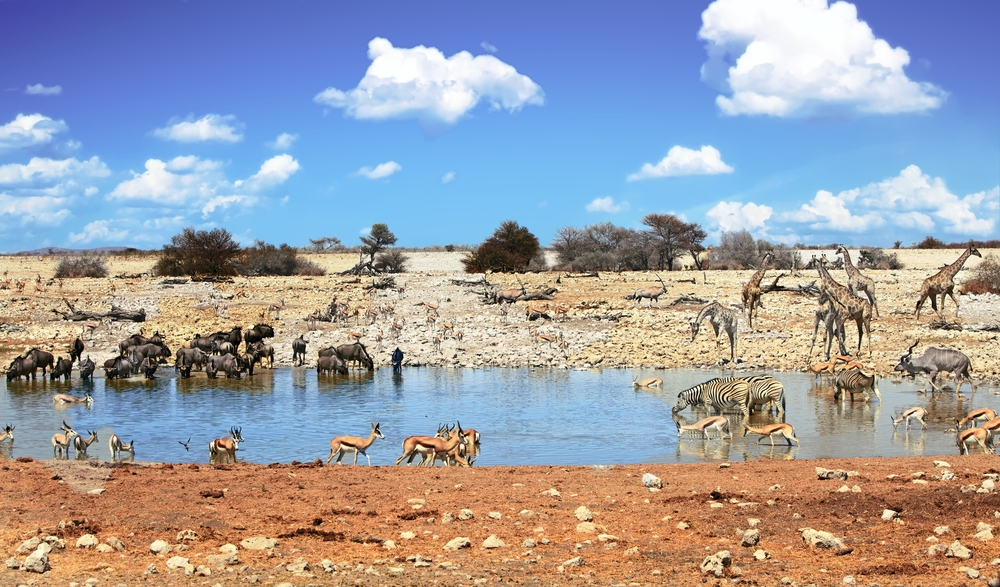
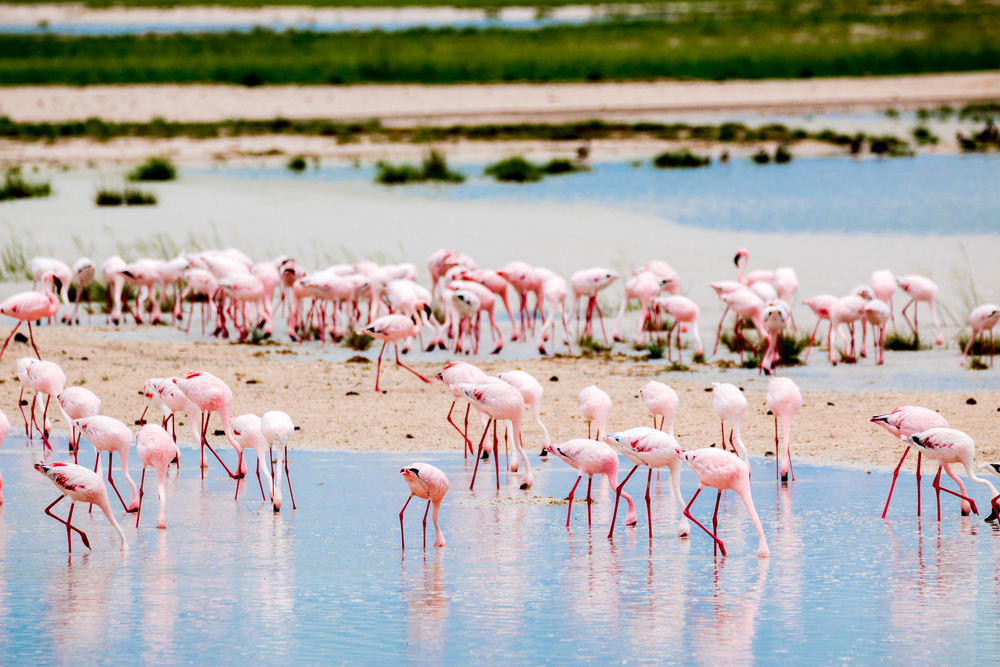
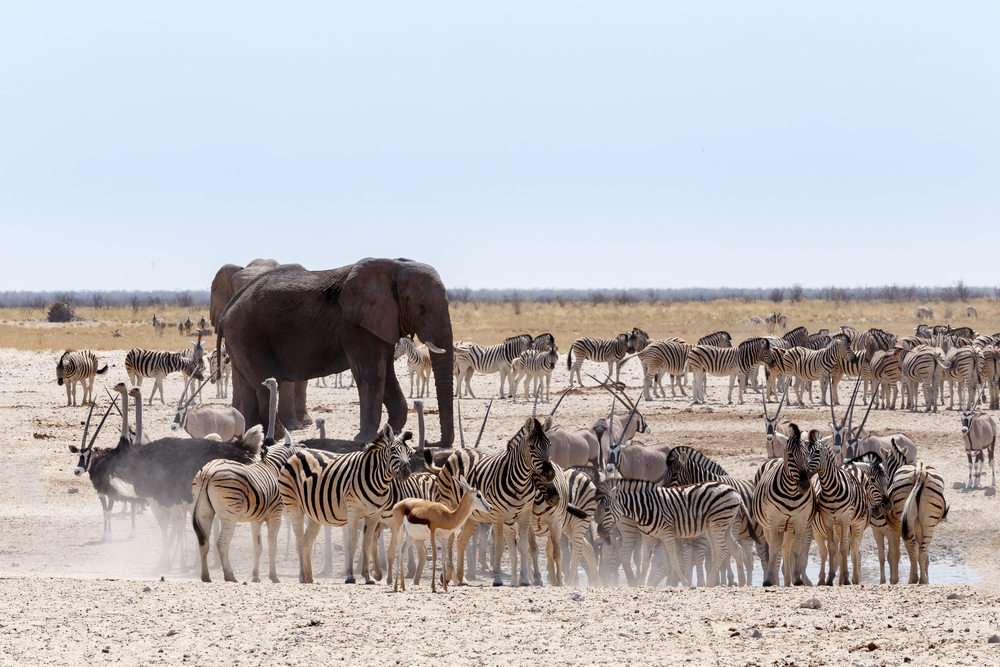
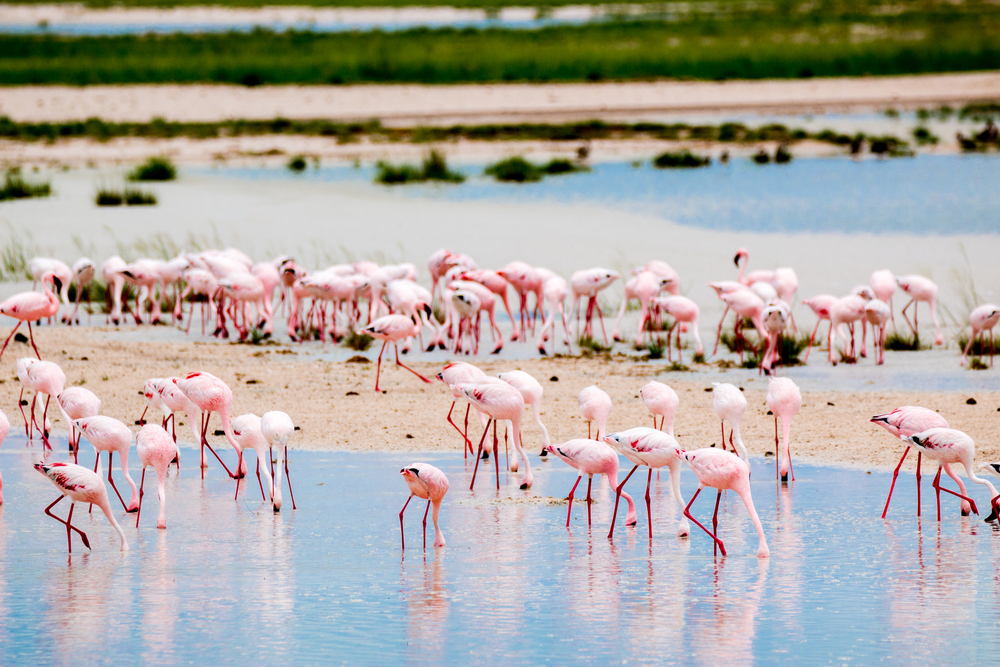
Seasonal rains occasionally flood portions of the pan, attracting flamingos and other waterbirds in remarkable numbers. The park is equally famous for its exceptional waterhole wildlife viewing, where animals gather from across the surrounding plains and woodlands, offering visitors extraordinary opportunities to observe interactions between species in a relatively open environment.
The geography of Etosha National Park is defined by contrasts between the barren salt pan and the more vegetated outer regions. Surrounding the pan are savannas, grasslands, mopane woodlands, and sparse thorn scrub that support a wide variety of wildlife. T
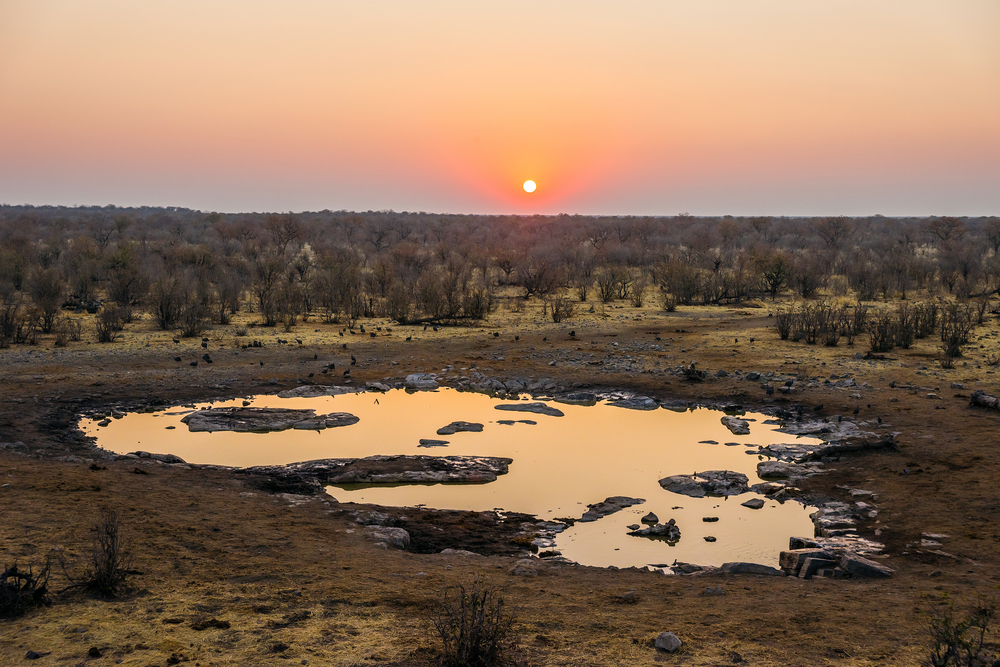
he dry climate and limited water sources shape the movement and behavior of animals throughout the year, particularly during the long dry season when permanent waterholes become focal points for life. Dusty plains and open terrain allow for sweeping visibility, while occasional clusters of trees and shrubs provide shade and shelter in an otherwise harsh environment.
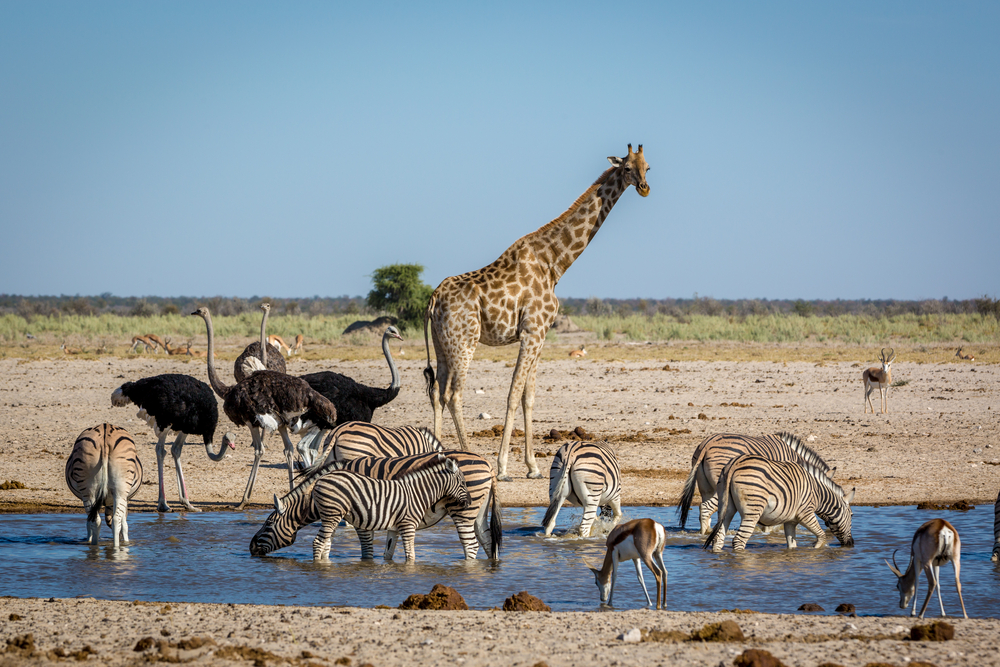
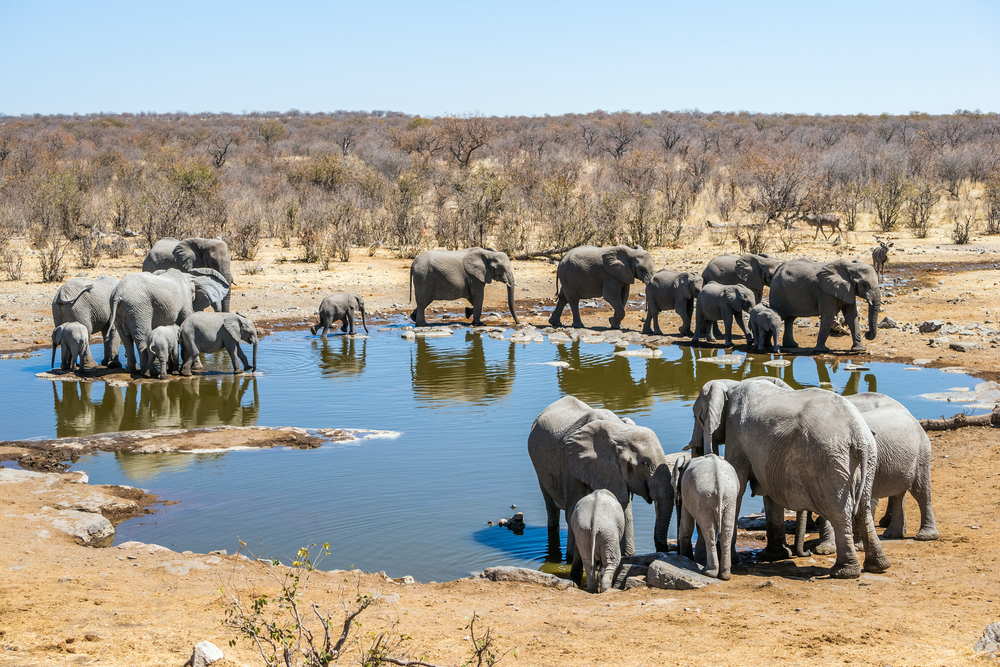
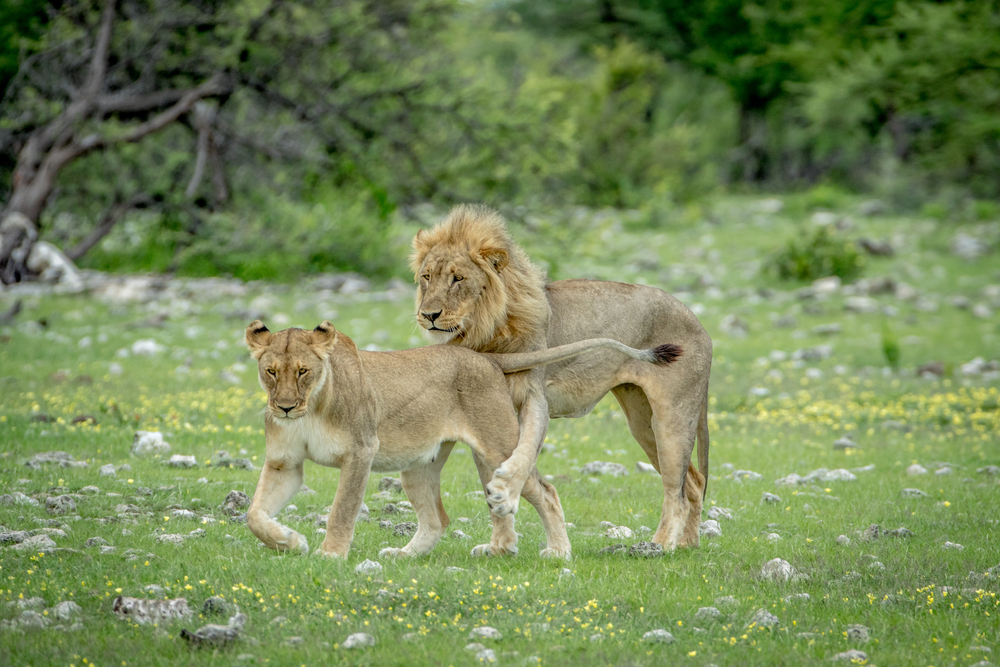
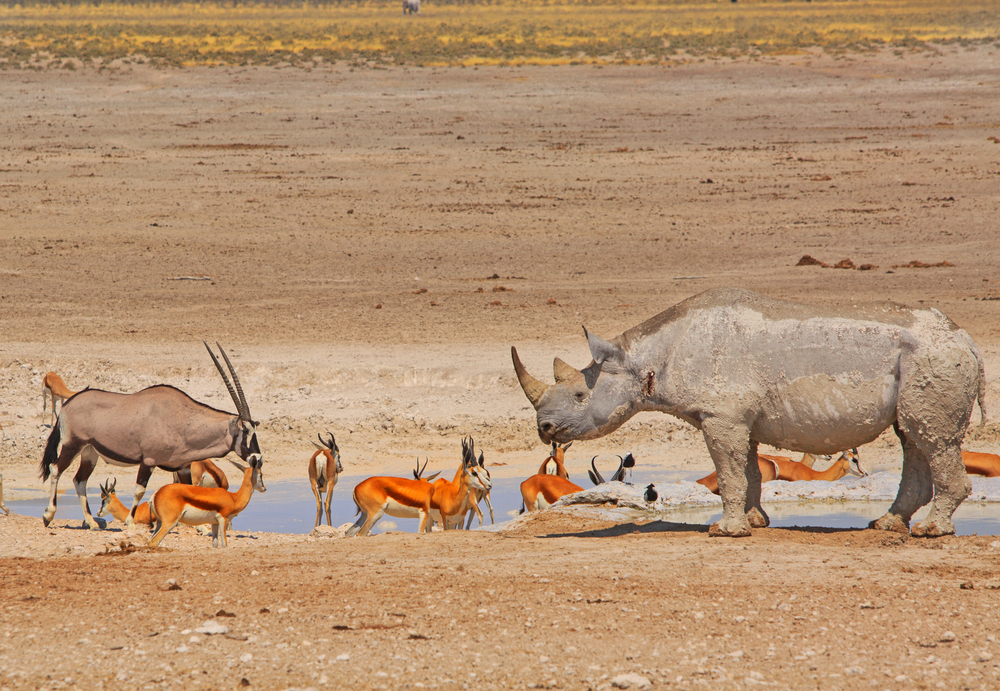
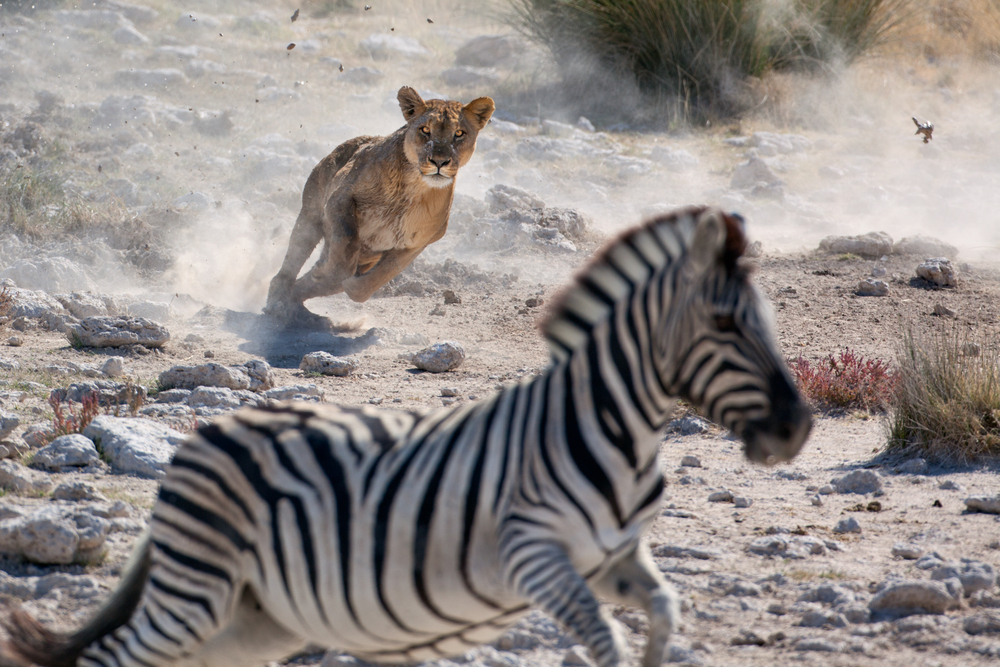
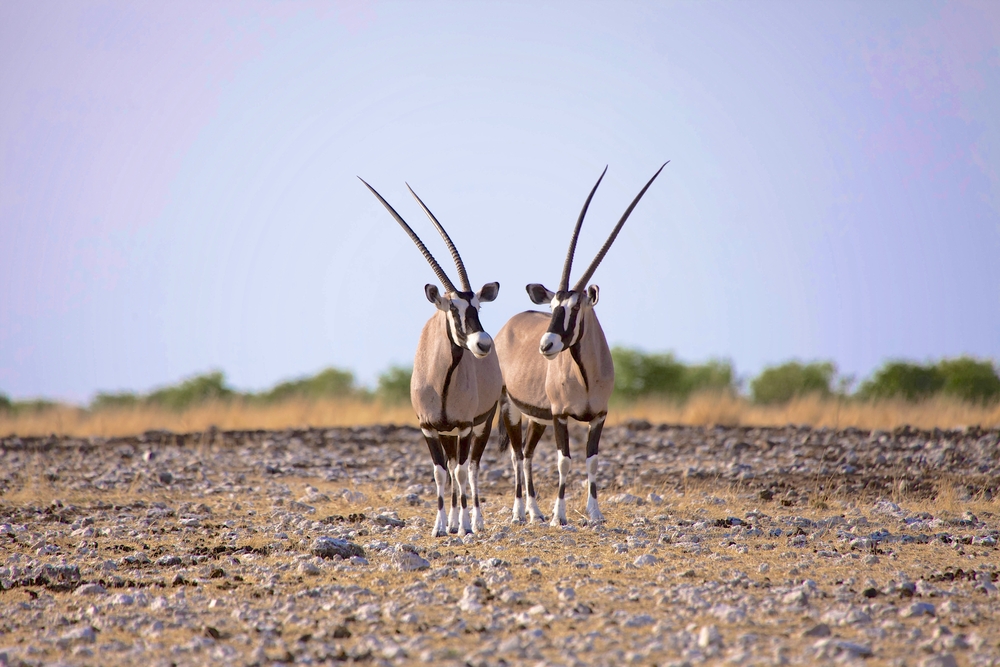
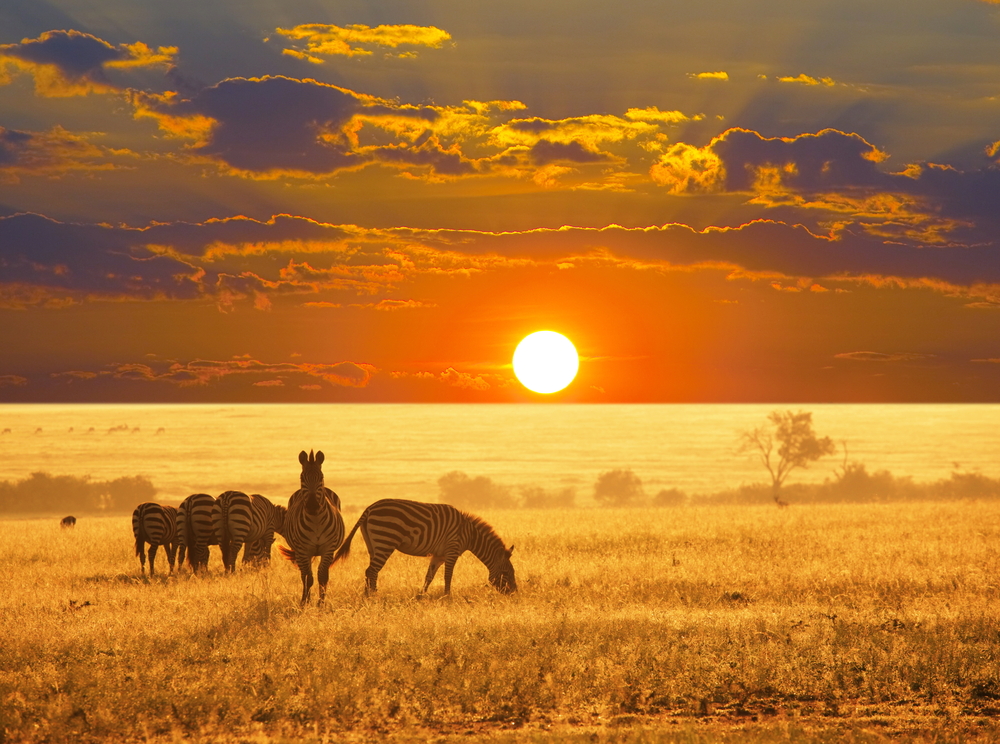
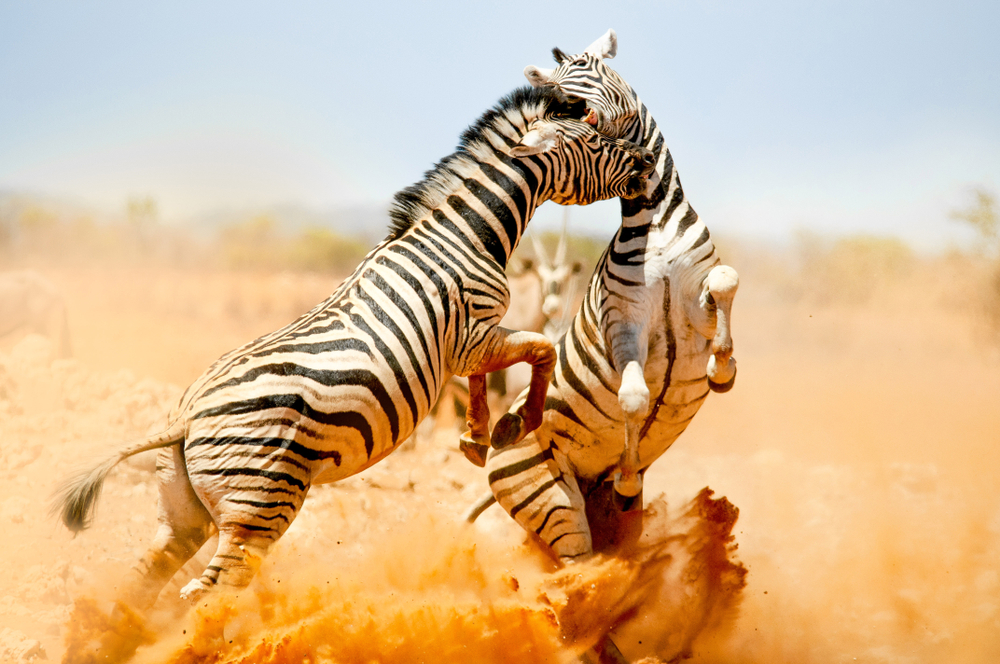
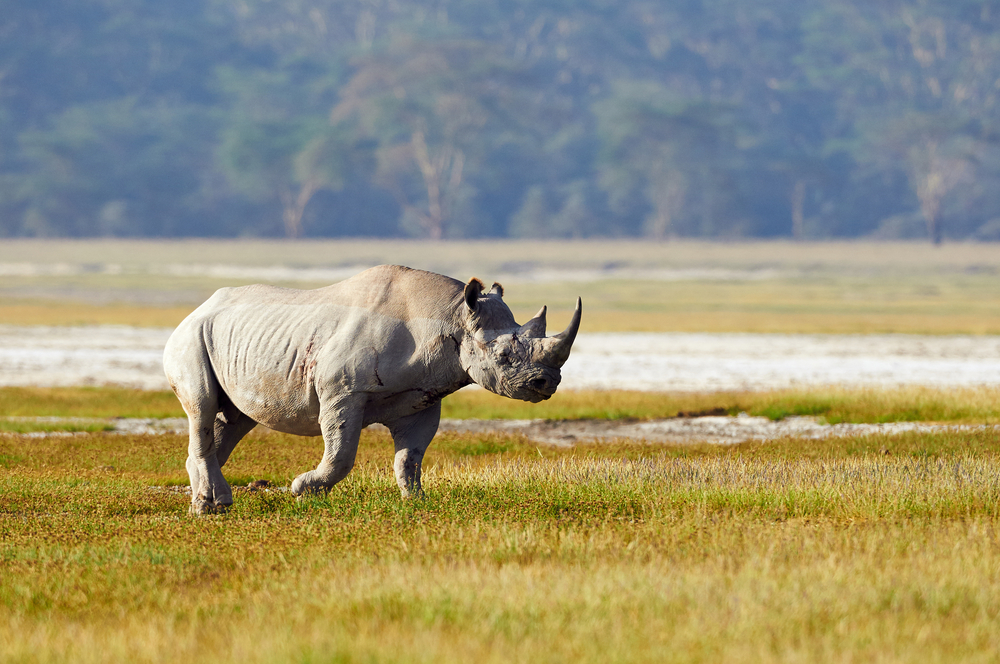
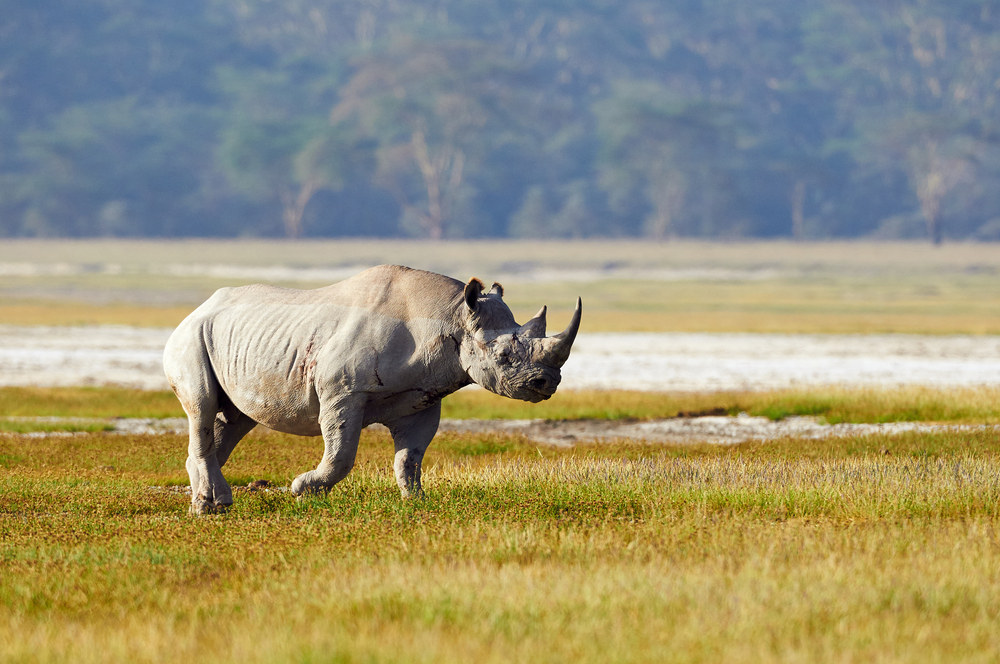
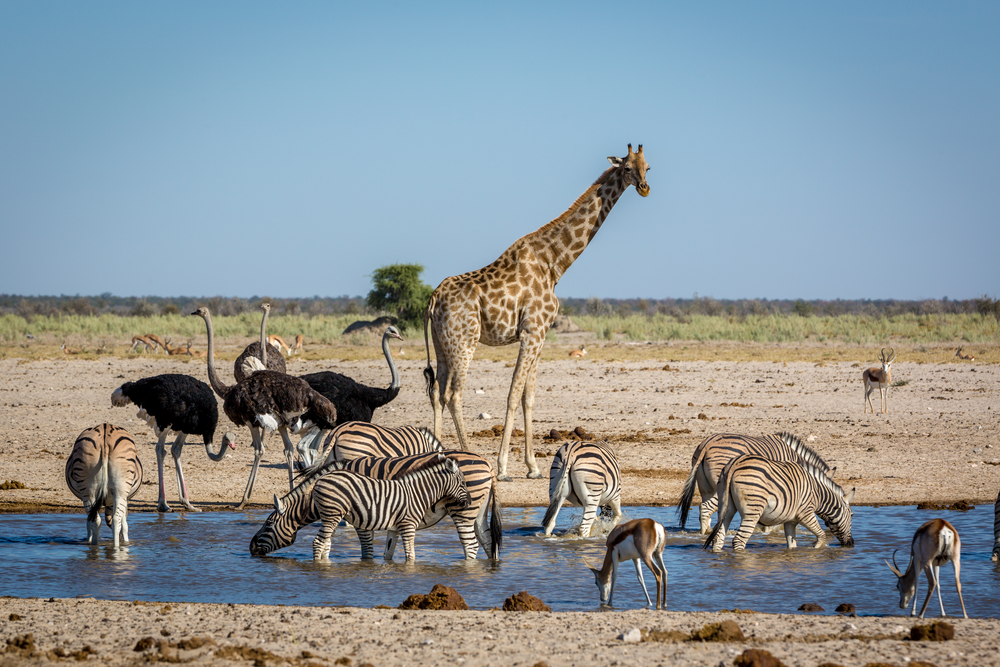
Wildlife in Etosha is abundant and highly visible due to the park’s open landscapes. Large mammals such as elephants, lions, giraffes, zebras, and wildebeest are commonly seen, often congregating at waterholes alongside springbok and oryx. Etosha is also one of the most important strongholds for the endangered black rhinoceros, which is carefully protected within the park.
Predators including leopards, hyenas, and cheetahs roam the area, while smaller mammals and reptiles thrive in the arid conditions. Birdlife varies seasonally, with flamingos arriving when water is present in the pan and numerous raptors and desert-adapted birds inhabiting the surrounding habitats year-round.
Etosha National Park plays a crucial role in conserving one of southern Africa’s most important arid ecosystems. Its protection ensures the survival of numerous species adapted to life in extreme conditions and safeguards ecological processes that have shaped the region for thousands of years. The park’s waterholes provide critical lifelines during drought periods, supporting wildlife populations across a vast area.
On a global scale, Etosha demonstrates the ecological importance of desert and semi-desert environments, which are often overlooked despite their rich biodiversity and fragile balance. Its striking landscapes, iconic wildlife, and enduring sense of wilderness make it one of Africa’s great conservation treasures and a powerful reminder of nature’s resilience in even the harshest environments.
Photos
Things to See
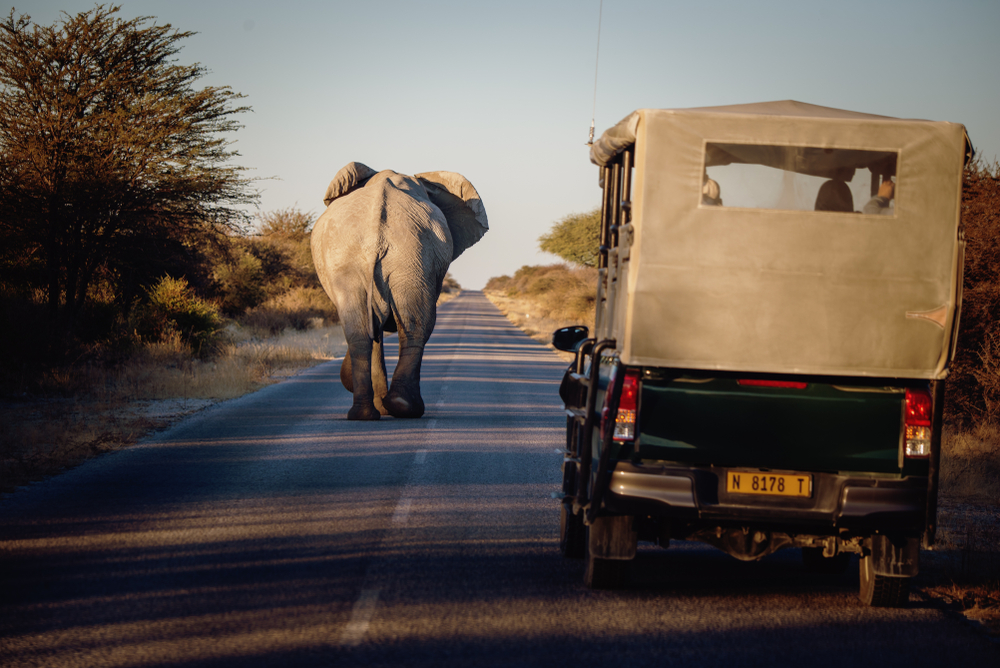
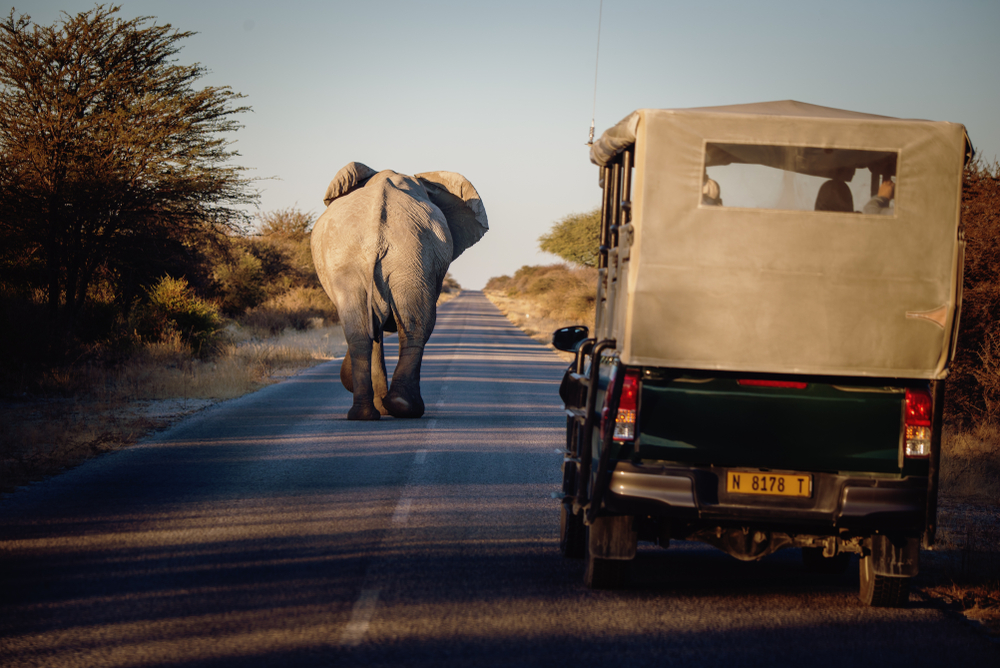
 Etosha National Park is home to the tallest elephants in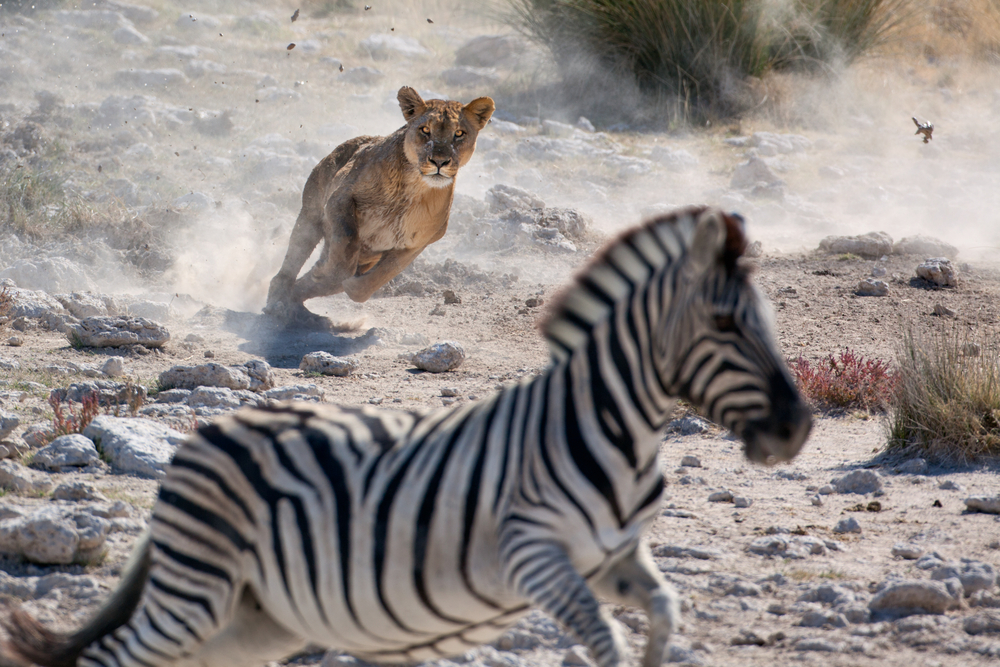
Things To Do
Visitors headed to Namibia almost always add Etosha to list of destinations to experience because of the abundant wildlife.


Etosha National Park Trails
There are no trails in the park. However, walking or hiking in the park is permissible as a guided walking safari. After receiving a safety briefing, a guide will escort you through a hike in what may be the very tracks the animals take themselves. You should be safe, but remember this is wilderness and the animals are wild. Make sure you always listen to instructions and follow them accordingly. A walking safari often leaves people with a more personal and unforgettable experience with nature.
Park Protection
Etosha National Park was created to protect the vast salt pans, savannas, mopane woodlands, grasslands, and seasonal wetlands of northern Namibia. The park provides critical habitat for several threatened and endangered species, including the critically endangered black rhinoceros, the endangered African wild dog, and the vulnerable cheetah.
It also supports one of southern Africa’s largest populations of African elephants, along with lions, leopards, giraffes, springboks, gemsboks, blue wildebeest, plains zebras, and more than 340 bird species. During the rainy season, the park’s wetlands attract thousands of greater and lesser flamingos, pelicans, and other migratory waterbirds, making Etosha one of Africa’s most important seasonal bird habitats.
The park is especially significant for protecting the immense Etosha Pan, one of the largest salt pans in the world, so vast that it can be seen from space. Although dry for most of the year, seasonal rains transform portions of the pan into shallow wetlands that support remarkable wildlife and bird migrations.
During the dry season, a network of natural and artificial waterholes concentrates animals from across the park, creating one of Africa’s finest wildlife-viewing experiences. Together, Etosha National Park safeguards endangered wildlife, globally significant salt pan ecosystems, vital dry-season water resources, and one of southern Africa’s most iconic conservation landscapes.
FAQ’s
What is the main reason people visit Etosha National Park?
Etosha National Park is primarily visited for its exceptional wildlife viewing, vast salt pan, abundant waterhole safaris, and opportunities to see some of Africa’s most iconic animals. Located in northern Namibia, the park protects approximately 8,598 square miles (22,270 square kilometers), making it one of Africa’s largest national parks.
Visitors come to observe elephants, lions, rhinos, giraffes, zebras, and numerous antelope species congregating around waterholes while experiencing one of the continent’s premier safari destinations.
What animals can visitors hope to see in Etosha National Park?
Etosha National Park supports more than 110 mammal species and is widely regarded as one of Africa’s finest wildlife-viewing destinations.
Some of the most notable animals found in Etosha National Park include:
- African Bush Elephant
- African Lion
- Leopard
- Cheetah
- Black Rhinoceros
- White Rhinoceros
- African Buffalo (occasionally in northeastern areas)
- Spotted Hyena
- Brown Hyena
- Black-backed Jackal
- African Wildcat
- Caracal
- Serval
- Honey Badger
- Bat-eared Fox
- Aardwolf
- African Civet
- Large-spotted Genet
- Banded Mongoose
- Dwarf Mongoose
- Common Warthog
- Plains Zebra
- Mountain Zebra
- Blue Wildebeest
- Springbok
- Gemsbok (Oryx)
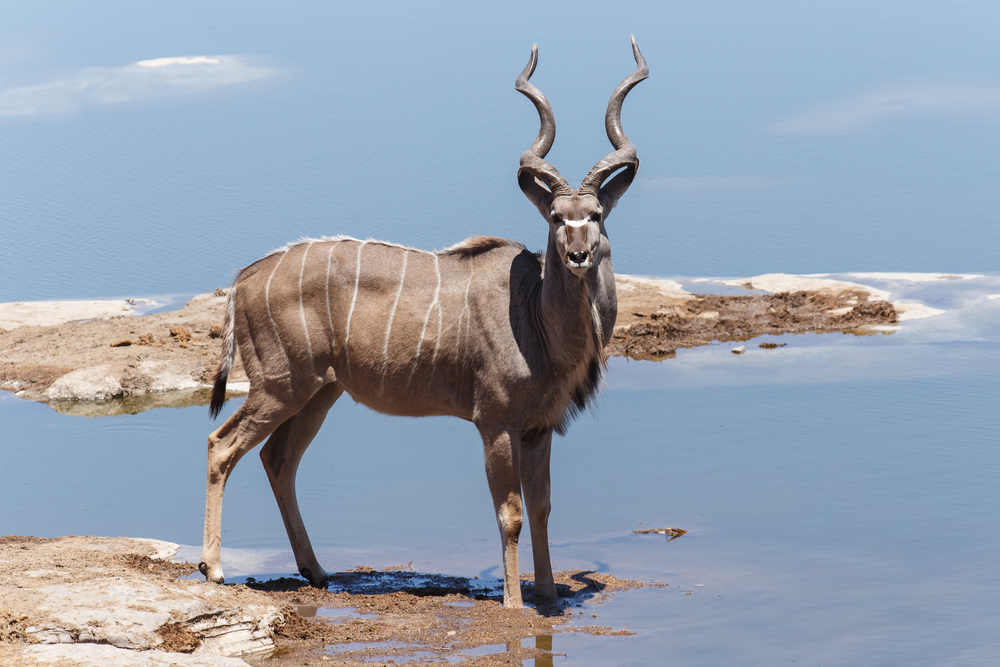
- Greater Kudu
- Eland
- Red Hartebeest
- Damara Dik-dik
- Steenbok
- Duiker
- Impala
- Black-faced Impala
- Roan Antelope
- Sable Antelope
- Waterbuck
- Giraffe
- African Bush Elephant
- Hippopotamus (limited areas)
- Cape Porcupine
- African Hare
- Ground Squirrel Species
- Rock Hyrax
- Spring Hare
- Aardvark
- Pangolin (rare)
- African Wild Dog (occasional visitor)
- Slender Mongoose
- Yellow Mongoose
What birds can visitors hope to see in Etosha National Park?
Etosha National Park is home to more than 340 bird species. During wet years, seasonal wetlands attract large numbers of migratory birds, including flamingos and pelicans.
Some of the most popular birds seen in Etosha National Park include:
- Greater Flamingo
- Lesser Flamingo
- Great White Pelican
- Pink-backed Pelican
- Secretary Bird
- Kori Bustard
- Ludwig’s Bustard
- Ostrich
- Southern Ground Hornbill
- Yellow-billed Hornbill
- Red-billed Hornbill
- African Fish Eagle
- Martial Eagle
- Tawny Eagle
- Bateleur
- Verreaux’s Eagle
- Steppe Eagle
- Lappet-faced Vulture
- White-backed Vulture
- Hooded Vulture
- Marabou Stork
- Saddle-billed Stork
- Woolly-necked Stork
- Yellow-billed Stork
- Grey Crowned Crane
- Blue Crane
- Black Korhaan
- Northern Black Korhaan
- Double-banded Courser
- Burchell’s Courser
- Namaqua Sandgrouse
- Double-banded Sandgrouse
- African Jacana
- Spur-winged Goose
- Egyptian Goose
- African Spoonbill
- Sacred Ibis
- Hadada Ibis
- Hamerkop
- Goliath Heron
- Grey Heron
- Black-headed Heron
- Great Egret
- Little Egret
- Pied Kingfisher
- Giant Kingfisher
- Lilac-breasted Roller
- Carmine Bee-eater
- Crimson-breasted Shrike
- Violet-eared Waxbill
Is Etosha National Park worth visiting?
Yes, Etosha National Park is absolutely worth visiting and is often considered one of Africa’s greatest safari destinations.
The park offers exceptional wildlife concentrations, outstanding self-drive safari opportunities, abundant waterhole viewing, and some of the best opportunities in Africa to observe black rhinoceros. Visitors can often see multiple species gathering around waterholes in a single location.
The primary hesitation is that the landscape can appear dry and sparse compared to parks such as the Serengeti. However, this openness often makes wildlife easier to spot.
What is the best time to visit Etosha National Park?
Weather and Climate
The best time to visit Etosha National Park is from June through October.
Typical conditions include:
- May–August: 40–80°F (4–27°C)
- September–October: 60–100°F (16–38°C)
- November–April: Rainy season, 65–95°F (18–35°C)
During the dry season:
- Animals concentrate around waterholes.
- Wildlife viewing is exceptional.
- Vegetation is sparse.
- Predator sightings increase.
- Roads remain highly accessible.
The rainy season offers greener scenery and excellent birdwatching.
How many days do you need to visit Etosha National Park?
Recommended Length of Stay
Most visitors should plan for 3 to 5 days.
- 1 day: Introduction to Etosha.
- 2 days: Major wildlife-viewing areas.
- 3–4 days: Comprehensive safari experience.
- 5+ days: Photography, birding, and exploration of multiple regions.
Three days is generally considered the minimum for a quality Etosha experience.
How do you get to Etosha National Park?
International Access
Etosha National Park is located in northern Namibia.
The primary international gateway is:
- Hosea Kutako International Airport
Most visitors:
- Fly into Windhoek.
- Rent a vehicle or join a safari tour.
- Drive north to the park.
- Enter through one of the park gates.
Anderson Gate
The most commonly used entrance is:
- Anderson Gate
Located near:
- Okaukuejo
Von Lindequist Gate
The eastern entrance is:
- Von Lindequist Gate
Located near:
- Namutoni
Etosha Pan
The park’s defining feature is:
- Etosha Pan
Highlights include:
- Massive salt pan visible from space.
- Seasonal wetlands.
- Flamingo breeding habitat in wet years.
- Distinctive desert-like scenery.
Okaukuejo Waterhole
One of Africa’s most famous wildlife-viewing locations is:
- Okaukuejo Waterhole
Known for:
- Nighttime wildlife viewing.
- Black rhinoceros sightings.
- Elephant gatherings.
- Predator activity.
Major Rest Camps
Popular park camps include:
- Okaukuejo Camp
- Halali Camp
- Namutoni Camp
Travel Times
Typical travel times include:
- Windhoek to Anderson Gate: approximately 4–5 hours.
- Windhoek to Namutoni: approximately 6–7 hours.
- Okaukuejo to Halali: approximately 1.5 hours.
- Halali to Namutoni: approximately 1.5 hours.
Who is involved in protecting and supporting Etosha National Park?
Conservation and Park Management
Several organizations help protect and support Etosha National Park:
- Ministry of Environment, Forestry and Tourism – manages Etosha National Park.
- Namibia Nature Foundation – supports conservation and community programs.
- World Wide Fund for Nature – supports regional conservation initiatives.
- Integrated Rural Development and Nature Conservation – supports wildlife conservation and community engagement.
- Local communities and conservancies that help support conservation efforts across northern Namibia.
Can you see the Big Five in Etosha National Park?
Etosha is home to lion, leopard, elephant, and rhinoceros. Buffalo are not commonly found throughout most of the park, meaning Etosha is often considered a “Big Four-plus” destination rather than a traditional Big Five destination.
What makes Etosha National Park unique?
Etosha National Park is unique because of its immense salt pan, extraordinary waterhole wildlife viewing, and accessibility for self-drive safaris. Unlike many African parks where visitors search extensively for wildlife, animals in Etosha often congregate around predictable water sources, creating some of the most reliable and rewarding wildlife-viewing opportunities on the continent. Combined with the stark beauty of the Etosha Pan and the chance to observe endangered black rhinos, Etosha offers one of Africa’s most distinctive safari experiences.
Sources
Here are sources you can explore for more information:
- AllTrails. Etosha National Park. https://www.alltrails.com/namibia/oshikoto/etosha-national-park, retrieved July 2026.
- Encyclopaedia Britannica. Etosha National Park. https://www.britannica.com/place/Etosha-National-Park, retrieved July 2026.
- Ministry of Environment, Forestry and Tourism (Namibia). Etosha National Park. https://www.meft.gov.na/, retrieved July 2026.
- Namibia Tourism Board. Etosha National Park. https://namibiatourism.com.na/, retrieved July 2026.
- Pilot Guides. Etosha National Park. https://www.pilotguides.com/, retrieved July 2026.
- Protected Planet (UNEP-WCMC & IUCN). Etosha National Park. https://www.protectedplanet.net/, retrieved July 2026.
- SafariBookings. Etosha National Park. https://www.safaribookings.com/etosha, retrieved July 2026.
- Wikipedia. Etosha National Park. https://en.wikipedia.org/wiki/Etosha_National_Park, retrieved July 2026.