

About
Gorongosa National Park, locally known as “Parque Nacional da Gorongosa,” is located in central Mozambique at the southern end of the Great Rift Valley. The park covers approximately 1,567 square miles (4,060 sq km) and protects one of Africa’s most ecologically diverse landscapes.
Established as a national park in 1960, Gorongosa encompasses a vast mosaic of floodplains, savannas, woodlands, rivers, wetlands, and mountain ecosystems. The park lies west of the Indian Ocean coastal plain and includes the biologically important Mount Gorongosa watershed, which supplies water to much of the surrounding ecosystem. Once considered one of Africa’s premier wildlife destinations, the park suffered devastating losses during Mozambique’s civil war but has since become one of the world’s most celebrated conservation and restoration success stories.
Gorongosa National Park is best known for its remarkable ecological recovery and extraordinary biodiversity. Following years of conflict that severely reduced wildlife populations, extensive restoration efforts have helped rebuild one of Africa’s most important protected areas. Today, visitors are drawn to exceptional wildlife viewing, birdwatching, hiking, photography, and opportunities to witness conservation in action.
The park’s diverse habitats support an impressive variety of species, while its dramatic landscapes provide some of the most scenic safari experiences in southern Africa. Gorongosa has become an international model for ecosystem restoration, demonstrating how science, conservation, and community engagement can work together to restore a damaged wilderness.
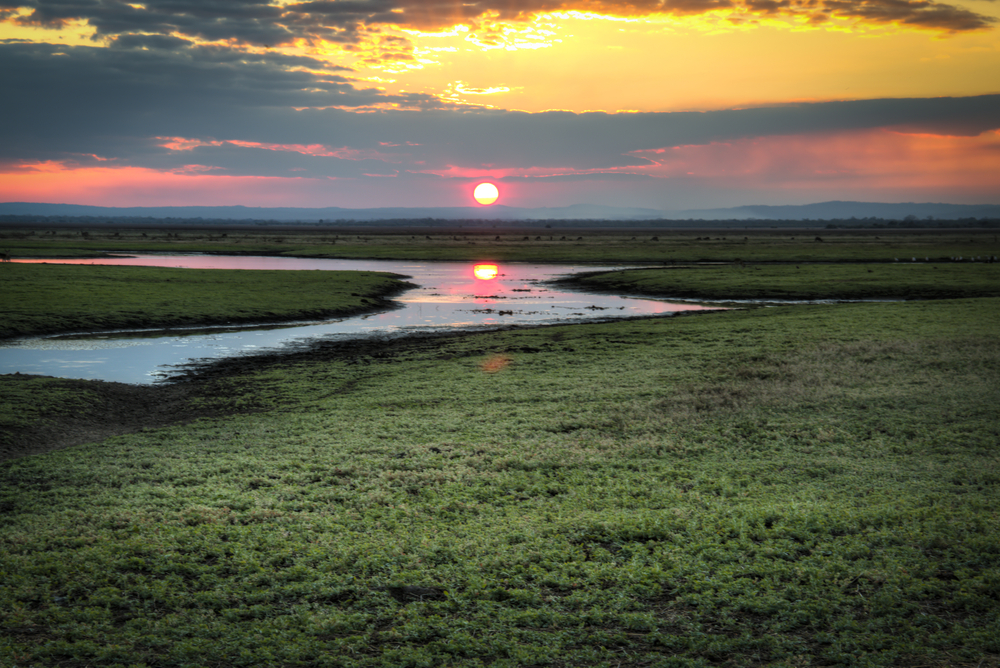
The geography of Gorongosa National Park is among the most diverse of any protected area in Africa. At its heart lies the vast Urema Floodplain, a seasonal wetland that expands and contracts with rainfall patterns and serves as the ecological engine of the park. Rivers flowing from surrounding highlands feed the floodplain and create fertile habitats that support abundant wildlife.
The landscape also includes open grasslands, acacia savannas, miombo woodlands, riverine forests, and the forested slopes of Mount Gorongosa. Elevations range from low-lying wetlands to mountain peaks exceeding 6,000 feet (1,800 meters). This extraordinary variety of ecosystems contributes to the park’s exceptional biological richness.
Wildlife within Gorongosa National Park has rebounded dramatically over the past two decades. Large mammals include elephant, African buffalo, lion, leopard, hippopotamus, zebra, waterbuck, wildebeest, sable antelope, reedbuck, and numerous other herbivores. Waterbuck are particularly abundant and have become one of the park’s most recognizable species. Predator populations continue to recover, with lions playing an increasingly important ecological role.
Birdlife is exceptional, with more than 500 recorded species making Gorongosa one of Africa’s premier birdwatching destinations. African fish eagles, kingfishers, storks, bee-eaters, hornbills, and numerous migratory species thrive throughout the park’s varied habitats. The combination of wetlands, forests, savannas, and mountains supports an extraordinary diversity of life.
Gorongosa National Park plays a critical role in conserving one of Africa’s most important ecosystems while serving as a global example of large-scale ecological restoration. The park protects vital watersheds, wildlife corridors, and biodiversity hotspots while supporting scientific research, education, and sustainable community development.
Its conservation significance is often compared to iconic protected areas such as Serengeti National Park and Kruger National Park because of its ecological importance and wildlife diversity. However, Gorongosa’s remarkable recovery from conflict has given it a unique place in conservation history. Today, the park stands as a symbol of resilience and hope, preserving one of Africa’s greatest natural treasures for future generations.
Things to See
Things To Do
Engaging Gorongosa National Park
