About

Desierto de los Leones National Park (in Spanish: Parque Nacional Desierto de los Leones) is located just 20 miles(32 kilometers) southwest of Mexico City. Established in 1917, it was the first national park in Mexico, covering an area of approximately 18.4 square miles (around 47.5 square kilometers). Despite its name, “Desierto” does not refer to a desert but rather to a secluded, peaceful retreat. The word “Leones” comes from the Carmelite friars who established a monastery there in the 17th century, not actual lions.

The park is situated in the Sierra de las Cruces mountain range at an altitude of over 9,800 feet (3,000 meters), offering cool, refreshing air and a natural escape from the bustling city. The landscape is characterized by its dense forests of pine, fir, and oak trees, alongside meadows, streams, and waterfalls. The lush forest creates a tranquil environment, making it a popular spot for hiking, picnicking, and nature photography.

The park’s diverse vegetation supports a wide variety of wildlife. White-tailed deer, raccoons, and squirrels are frequently spotted in the park. Though harder to see, bobcats, weasels, and several species of bats also inhabit the area. The park is a haven for birdwatchers, with species such as hawks, owls, and woodpeckers found throughout its forests.

A key feature of Desierto de los Leones National Park is the well-preserved Carmelite monastery, which serves as a historical and cultural attraction. Visitors can explore the old convent, enjoy peaceful walking trails, and learn about the park’s rich religious and historical significance.

This combination of natural beauty and historical relevance makes Desierto de los Leones National Park a unique destination for both nature enthusiasts and history buffs seeking a tranquil retreat near Mexico’s capital.

Things to See

Popular Species

Popular Species

Desierto de los Leones National Park is home to a wide range of species that thrive in its forested and mountainous landscapes.

White-tailed deer are commonly seen grazing in the park’s meadows and forest edges, their distinctive white tails and graceful movements making them a popular sight.

Eastern cottontail rabbit is frequently found in the park’s open fields, known for its fast reflexes and small, cotton-like tail, making it a charming resident of the park.

Mexican vole thrives in the park’s cooler, high-altitude environments, burrowing underground and foraging for seeds, contributing to the health of the park’s ecosystem.

Gray squirrel is an active species in the park’s coniferous forests, often spotted leaping between tree branches while collecting nuts and seeds.

Striped skunk is a common sight at dusk, roaming the park’s woodlands and meadows in search of insects and small animals, using its powerful scent glands as a defense.

Nine-banded armadillo is known for its tough, armored shell and burrowing habits, often found foraging on the park’s forest floor for insects and small invertebrates.

White-nosed coati is an agile and curious mammal, often seen foraging in the park’s forests and meadows, using its long snout to dig for food.

Bats are nocturnal species that thrive in the park, using echolocation to hunt for insects and contributing to the park’s overall biodiversity.

Mexican mole lizards are fascinating reptiles that inhabit the park’s underground burrows, using their long, legless bodies to tunnel through the soil in search of prey.

Woodrats build large nests of twigs and leaves in the park’s forests, scavenging for food and playing a vital role in the local ecosystem.

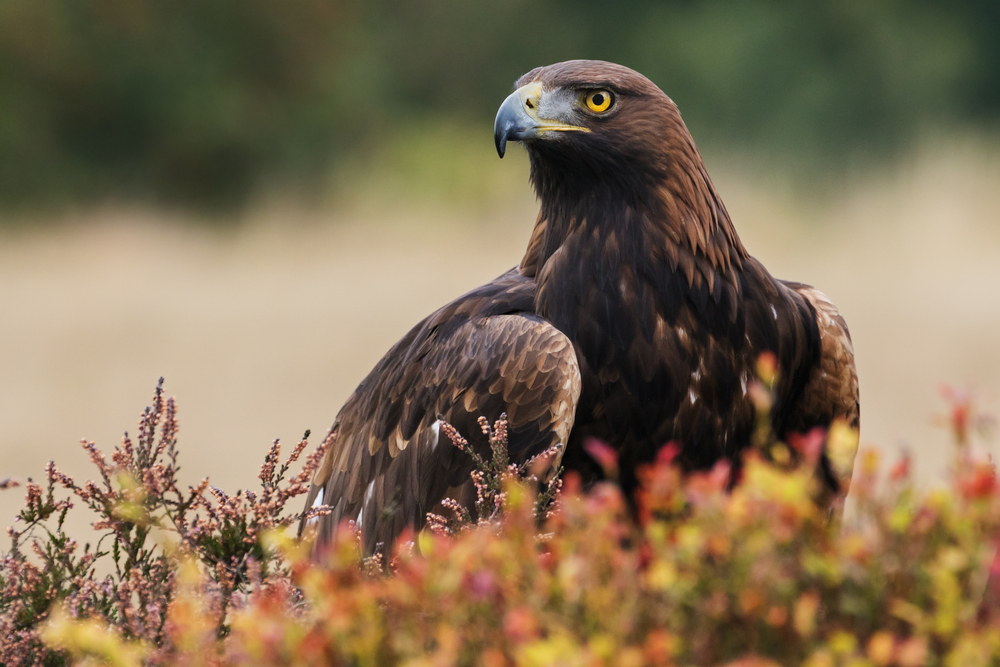
Golden eagle

Bird Species

Desierto de los Leones National Park boasts diverse birdlife, making it a prime spot for birdwatchers.

Great horned owls are nocturnal birds of prey found in the park’s forests, known for their distinctive tufts and their ability to hunt small mammals and birds at night.

Red-tailed hawks are commonly seen soaring above the park’s landscapes, using their sharp vision to spot prey such as small mammals and reptiles.

Golden eagles are majestic birds of prey often seen soaring high over the park, hunting for small mammals in the open meadows and forested areas.

Mexican jays are social birds with vibrant blue plumage, often found in the park’s forests, foraging for seeds, nuts, and small insects.

Mountain chickadees are small, lively birds that flit through the park’s forests, foraging for seeds and insects, making them a favorite for birdwatchers.

Acorn woodpeckers are often seen in the park’s pine forests, recognized by their habit of storing acorns in tree bark and their distinctive, colorful plumage.

Pygmy owls are small but fierce predators that inhabit the park’s woodlands, preying on insects and small birds, despite their tiny size.

Steller’s jays are striking blue-and-black birds commonly found in the park’s coniferous forests, known for their bold behavior and loud calls.

Northern flickers are large woodpeckers frequently spotted in the park’s forests, easily recognized by their bright markings and unique behavior of foraging on the ground.

Western bluebirds add a splash of color to the park’s open meadows and forest edges, known for their striking blue plumage and their role in insect control.

Things To Do

Engaging Desierto de los Leones

placeholder

Hiking

Exploring the Monastery

Exploring the Monastery

placeholder

Cycling

Sources

All Trails, Best Trails in Desierto de los Leones, https://www.alltrails.com/ar/parks/mexico/state-of-mexico-4/parque-nacional-desierto-de-los-leones, retrieved August 2024.

Britannica, Leones – Desierto de los, https://www.britannica.com/topic/Leones-Desierto-de-los, retrieved August 2024.

Mexico City, Desierto de los Leones, https://mexicocity.cdmx.gob.mx/venues/desierto-de-los-leones-national-park/, retrieved August 2024.

Planeta, Desierto de los Leones, https://www.planeta.com/desierto-de-los-leones/, retrieved August 2024.

Wikipedia, Desierto de los Leones, https://en.wikipedia.org/wiki/Desierto_de_los_Leones_National_Park, retrieved August 2024.