About

Tsingy de Namoroka National Park, locally known as “Parc National des Tsingy de Namoroka,” is a unique protected area in the Sofia region of northwestern Madagascar.

Covering approximately 22,227 hectares (85 square miles), the park was established in 1966 to safeguard its extraordinary karst limestone formations, locally referred to as “Tsingy.” These jagged stone landscapes, along with the park’s dry forests and savannas, create a stunning yet fragile ecosystem that supports a wide range of endemic flora and fauna.

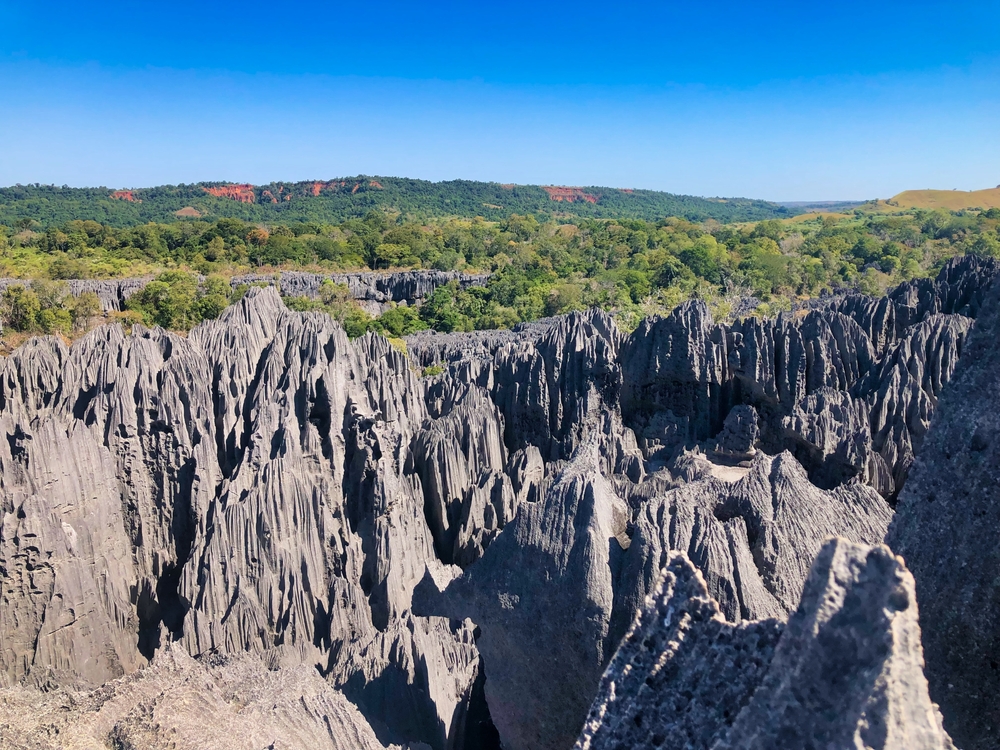
The park’s terrain is dominated by Tsingy, razor-sharp limestone pinnacles formed by millennia of erosion. These geological wonders are interspersed with deep canyons, caves, sinkholes, and underground rivers, creating a labyrinthine landscape that is both dramatic and challenging to navigate. Surrounding the Tsingy are patches of dry deciduous forests and open grasslands, which thrive in the park’s arid climate. Seasonal water systems further enhance the area’s ecological diversity, with small pools and streams forming vital habitats during the rainy season.

Tsingy de Namoroka National Park is home to an impressive array of wildlife, much of it endemic to Madagascar. The park shelters six species of lemurs, including Coquerel’s sifaka, the gray mouse lemur, and the western fat-tailed dwarf lemur. Bird enthusiasts can spot over 80 species, including the Madagascar fish eagle, crested coua, and white-breasted mesite.

Reptiles such as leaf-tailed geckos, chameleons, and brightly colored frogs thrive in the crevices and caves of the Tsingy, while the park’s flora includes drought-resistant baobabs, orchids, and other unique plants adapted to its challenging environment.

Visitors to Tsingy de Namoroka National Park can engage in various activities that highlight its natural beauty. Guided treks through the Tsingy formations provide opportunities to explore caves, canyons, and scenic viewpoints. Wildlife observation tours allow visitors to spot lemurs, birds, and reptiles in their natural habitats. The park’s serene pools and waterfalls offer spots for relaxation and photography, while cultural interactions with local Sakalava communities provide insights into the area’s traditions and conservation efforts.

Despite its ecological significance, the park faces several challenges. Habitat destruction due to deforestation, agricultural encroachment, and poaching threatens its delicate ecosystems. Conservation efforts led by Madagascar National Parks, in collaboration with international and local partners, focus on habitat restoration, sustainable tourism, and community engagement. Environmental education programs play a crucial role in fostering awareness and encouraging sustainable practices among local residents and visitors.

Tsingy de Namoroka National Park is a testament to Madagascar’s unique natural heritage and geological wonders. Its dramatic landscapes, rare wildlife, and cultural significance make it a must-visit destination for eco-tourists and adventurers. Protecting this extraordinary park ensures the preservation of one of Madagascar’s most fascinating ecosystems for generations to come.

Things to See

Popular

Tsingy du Namoroka National Park, located in Madagascar, is renowned for its unique landscapes and diverse wildlife. Among its fascinating inhabitants are several predator species that play a vital role in the park’s ecosystem.

Fossa (Cryptoprocta ferox)
The fossa is Madagascar’s largest carnivorous mammal and a top predator in the park. Resembling a mix between a cat and a mongoose, it has a sleek, muscular body and sharp claws, making it a skilled climber and hunter. The fossa preys on lemurs, rodents, and reptiles.

Ring-tailed Mongoose (Galidia elegans)
This small predator is distinguished by its rust-colored fur and strikingly banded tail. Agile and swift, it primarily hunts small mammals, reptiles, and insects.

Madagascar Harrier-Hawk (Polyboroides radiatus)
This versatile raptor has a keen ability to extract prey such as reptiles and small mammals from tree crevices. Its distinctive barred underparts make it a striking sight.

Giant Leaf-tailed Gecko (Uroplatus fimbriatus)
While not a typical predator, this gecko is a master of camouflage and hunts insects and small invertebrates during the night.

Sakalava Weasel (Bdeogale omnivora)
This rare predator has a slender body, perfect for navigating dense vegetation. It primarily feeds on small mammals and insects.

Madagascar Ground Boa (Acrantophis madagascariensis)
A non-venomous constrictor, this snake preys on small mammals, reptiles, and amphibians. It is a critical part of the ecosystem as a predator.

Madagascar Jumping Rat (Hypogeomys antimena)
Though not a traditional predator, this large rodent exhibits unique scavenging behaviors, feeding on eggs and other small animal remains.

Panther Chameleon (Furcifer pardalis)
This vibrantly colored reptile is a skilled hunter of insects, utilizing its long, sticky tongue to catch prey with precision.

Madagascar Tree Boa (Sanzinia madagascariensis)
A tree-dwelling constrictor, this snake preys on birds, reptiles, and small mammals. Its arboreal nature allows it to ambush prey from above.

Madagascar Girdled Lizard (Zonosaurus madagascariensis)
A terrestrial predator, this lizard feeds on insects, small reptiles, and occasionally small mammals, playing a key role in regulating insect populations in the park.

Birds

The park is a paradise for bird enthusiasts, featuring a rich array of avian species, many of which are endemic to Madagascar. Its diverse habitats, from limestone forests to wetlands, provide perfect nesting and foraging grounds.

Madagascar Fish Eagle (Haliaeetus vociferoides)
A critically endangered bird, the Madagascar fish eagle is a striking raptor that preys on fish and occasionally small mammals.

Sickle-billed Vanga (Falculea palliata)
Known for its unique curved beak, this bird feeds on insects and small reptiles, often found in mixed-species flocks.

Madagascar Kingfisher (Corythornis vintsioides)
This vibrant bird with a bright blue back and orange underparts is an adept hunter of fish, insects, and amphibians.

White-throated Rail (Dryolimnas cuvieri)
This ground-dwelling bird frequents wetlands and feeds on insects, mollusks, and small aquatic creatures.

Madagascar Hoopoe (Upupa marginata)
A bird with striking plumage and a crest, the hoopoe forages for insects and larvae in the forest floor.

Velvet Asity (Philepitta castanea)
The male’s vibrant green wattle makes it easily recognizable. It feeds on fruits and nectar, playing a role in pollination.

Grey-headed Lovebird (Agapornis canus)
This small parrot is known for its social behavior and feeds on seeds and berries in open and forested areas.

Madagascar Blue Pigeon (Alectroenas madagascariensis)
With its vivid blue plumage, this fruit-eating bird can be spotted in the park’s canopy.

Madagascar Paradise Flycatcher (Terpsiphone mutata)
A visually stunning bird with a long tail, it feeds on flying insects and can often be seen darting through the forest.

Red-fronted Coua (Coua reynaudii)
This ground-dwelling bird has a distinctive red patch on its head and feeds on insects, small reptiles, and fruits.

Things To Do

Engaging Tsingy de Namoroka National Park

placeholder

Limestone Hikes

placeholder

Wildlife Viewing