About

Kaziranga National Park is located in the far eastern finger of India situated in the state of Assam.  It sits southeast of Bhutan and northeast of Bangladesh.  The national park encompasses an area of 170 square miles (430 sq km).

The park extends 25 miles (40 km) across east to west with the tallest point reaching across north and south a distance of 8 miles (13 km).  The elevation fluctuates from 131 feet (40 m) to 262 feet (80 m).  It is one of the largest protected areas in all of the sub-Himalayan belt and is highly recognized for its biodiversity.

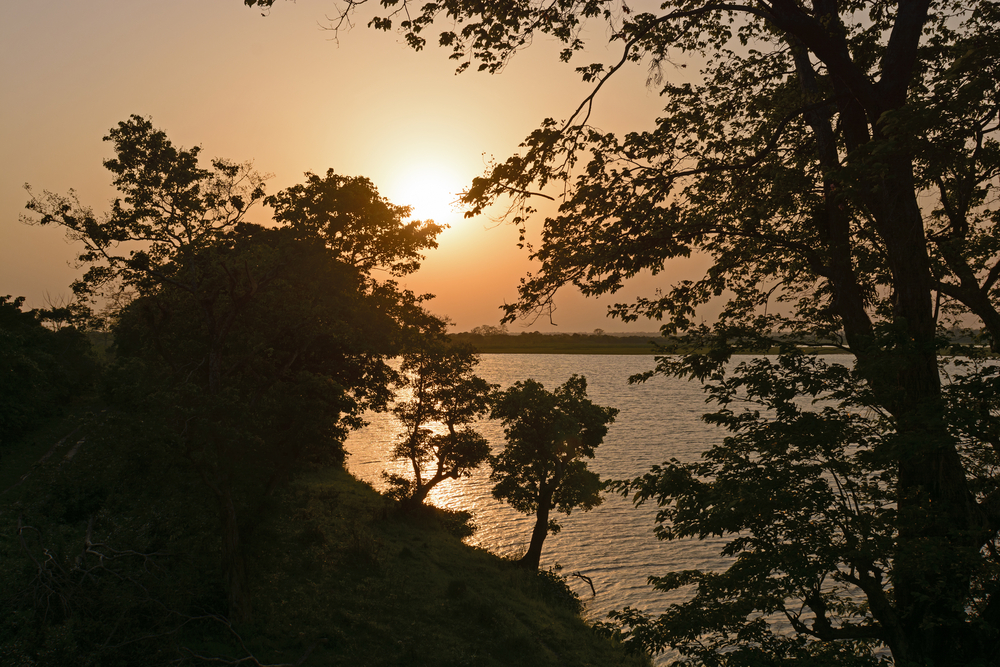
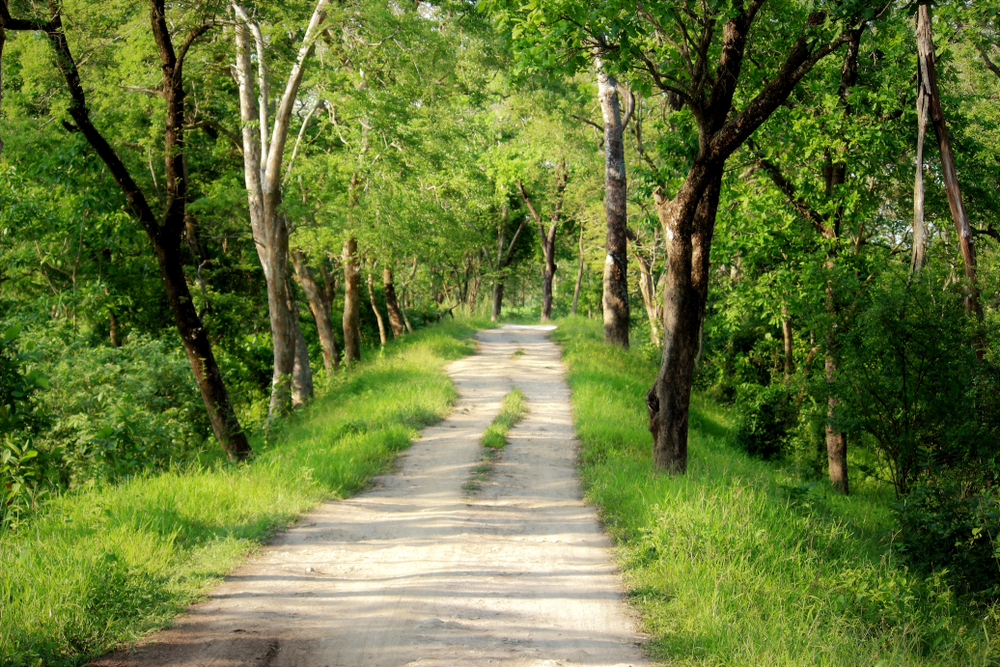
The landscape of the national park is comprised of four rivers that flow throughout the park’s tall elephant grass, marshland, and tropical broadleaf forests.  The Brahmaputra River is the most significant body of water which also serves as the northern border of the park.

Alluvial inundated grasslands, alluvial savanna woodlands, tropical most mixed deciduous forests, and tropical semi-evergreen forests are the four primary types of vegetation.  The tall grasses account for over 40% of the vegetation with open jungle accounting for 29%.  Short grasses, swamps, sand, and bodies of water account for the remaining part of the landscape.

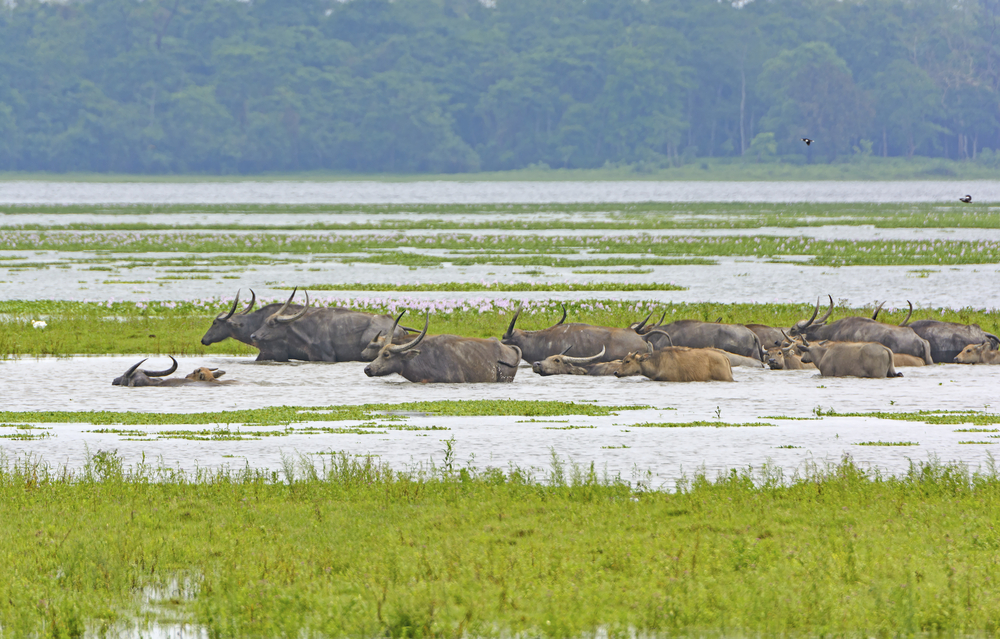
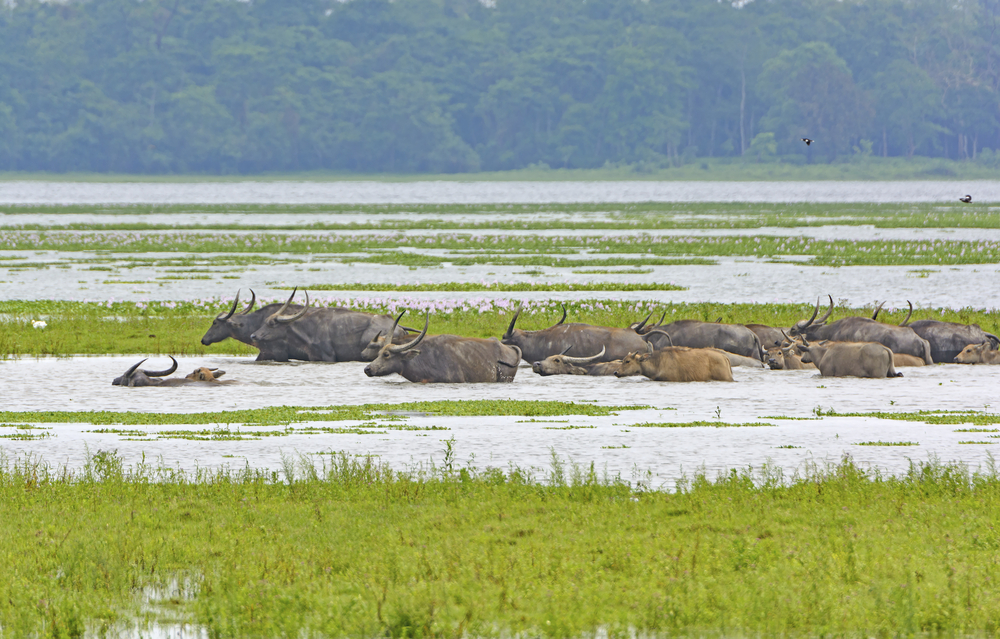
This eclectic biodiversity of vegetation and habitat zones creates a perfect place for an equally diverse population of wildlife.  The tiger is king of this park which is home to the largest population of tigers in any protected area around the world.  The park accounts for 1 in 5 of all the tigers in the world.  It is also home to the largest population of water buffalo and accounts for about 55% of all of the water buffalos in the world.

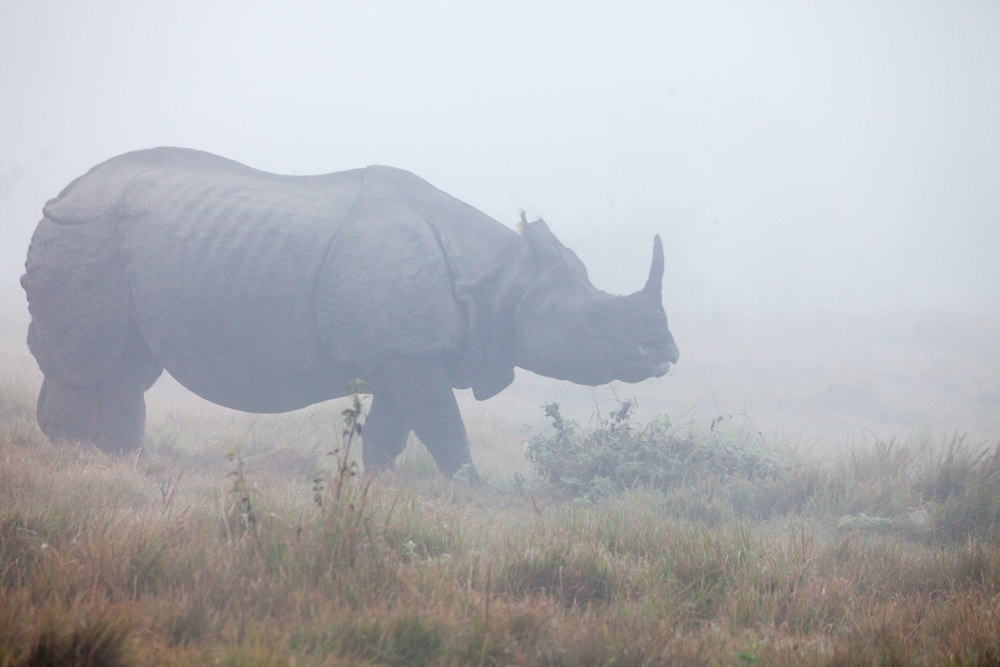
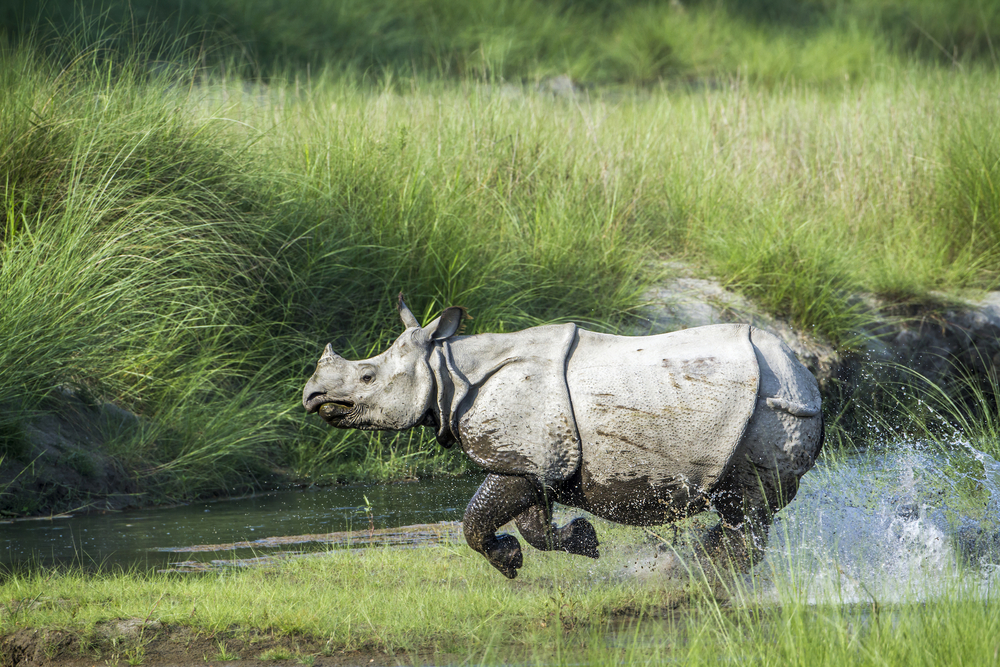
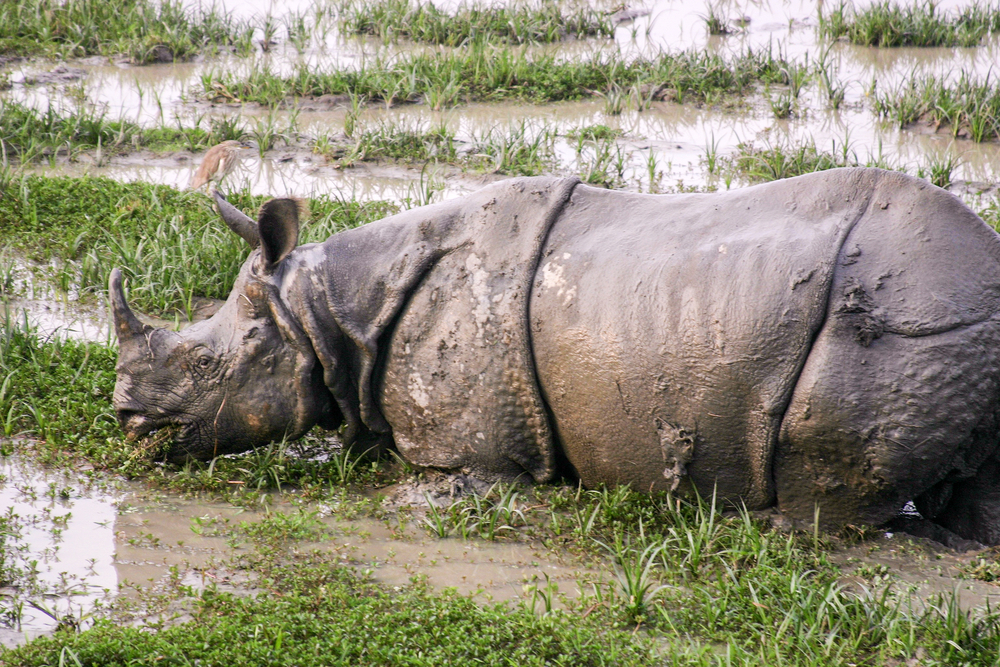
Additionally, there are over 1,800 individual rhinos found within the park boundaries which is the world’s largest population.  The tiger and rhino combine with the elephant, water buffalo, and swamp deer to create what is known as the Kaziranga “Big 5.”  Fifteen of the 35 mammalian species within the park are identified as threatened species on the IUCN Red List.

Wildlife is the appeal and draw of the park.  Other popular predators include fishing cat, leopard cat, jungle cat, hog badger, golden jackal, Indian mongooses, and Bengal fox.  Other popular wildlife includes wild boar, hog deer, golden langur, hoolock gibbon, Assamese macaque, sloth bear, Chinese pangolin.  We don’t want to forget the rive which is home to the endangered Ganges dolphin. 

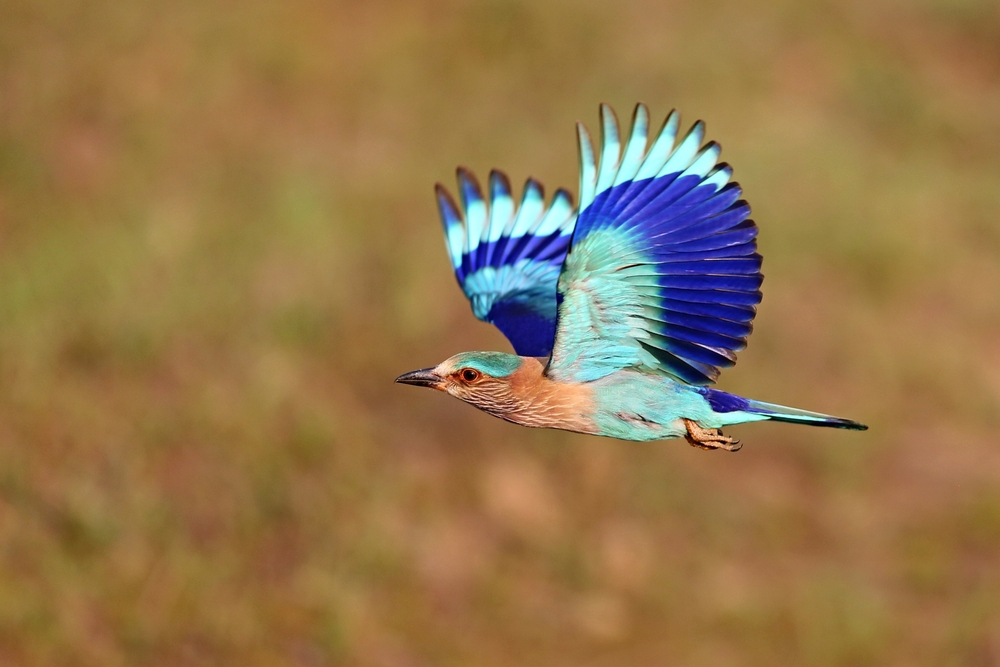
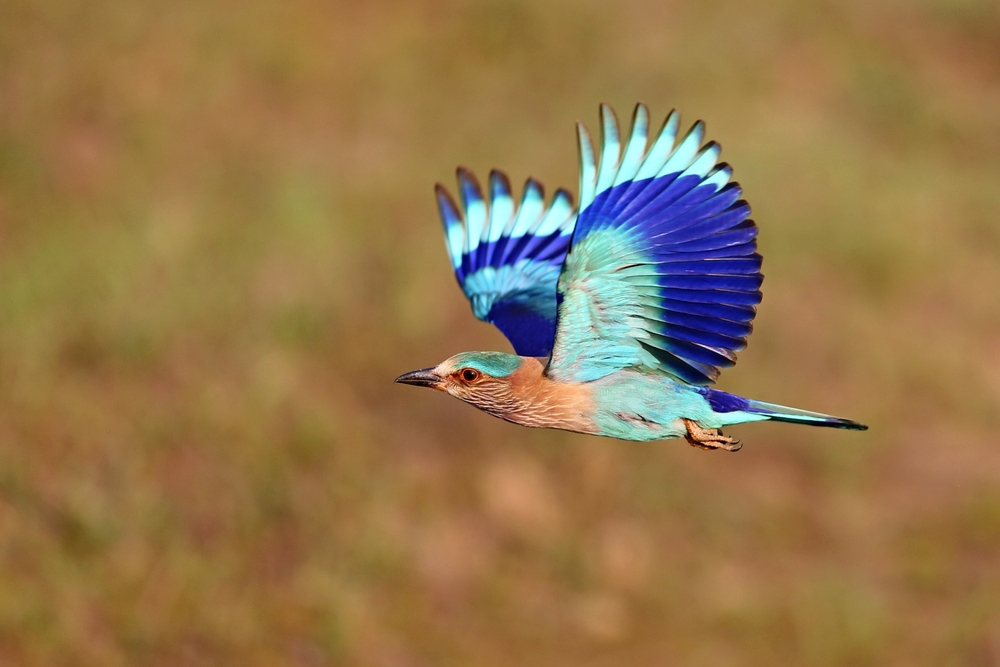
Bird watchers are also in their haven with an abundance of species from migratory birds, predator birds, waterfowl, scavenger birds, and game birds.  The varied ecosystems provide plenty of opportunities for experiencing numerous types of bird species.  It is recognized as an “Important Bird Area” by the organization Birdlife International. 

Kaziranga is home to the reticulated python and the rock python which are two of the world’s largest snakes.  It is also home to the king cobra which is the world’s longest venomous snake.  Turtles, monitor lizards, and other vipers and cobras are also found within the park.

Things to See

UNESCO says that Kaziranga is recognized as one of the finest wildlife refuges in the world with praises provided by the conservation organization directed at the park’s single-handed efforts to grow the one-horned rhino population from near extinction to the world’s largest.

Tigers are the highlight of Kaziranga national park with visitors traveling from around the world to have one of the best chances of seeing these magnificent cats.  However, many other people find the great one-horned rhinoceroses to be their pinnacle wildlife sighting.

However, the greatest highlight might come from a sighting of the tiger, rhino, elephant, water buffalo, and the swamp deer which are affectionately known as the “Big 5” of Kaziranga.

The good news is that if you love nature and wildlife, a safari through Kaziranga will leave you with a lasting memory of the highlight for certain. 

Predators

Predators

In the heart of Assam, India, Kaziranga National Park harbors a diverse array of predators, essential for maintaining the delicate balance of its ecosystem.

Bengal Tiger

The majestic Bengal tiger, apex predator of the Indian subcontinent, roams Kaziranga’s grasslands and forests, hunting deer and wild boar with stealth and power.

Indian Leopard

The elusive Indian leopard, with its spotted coat, stalks the dense jungles and tall grasses of Kaziranga, preying on small mammals and occasionally livestock.

Indian Wild Dog (Dhole)

The Indian wild dog, or dhole, travels in cohesive packs through Kaziranga’s habitats, hunting cooperatively and displaying remarkable intelligence and social cohesion.

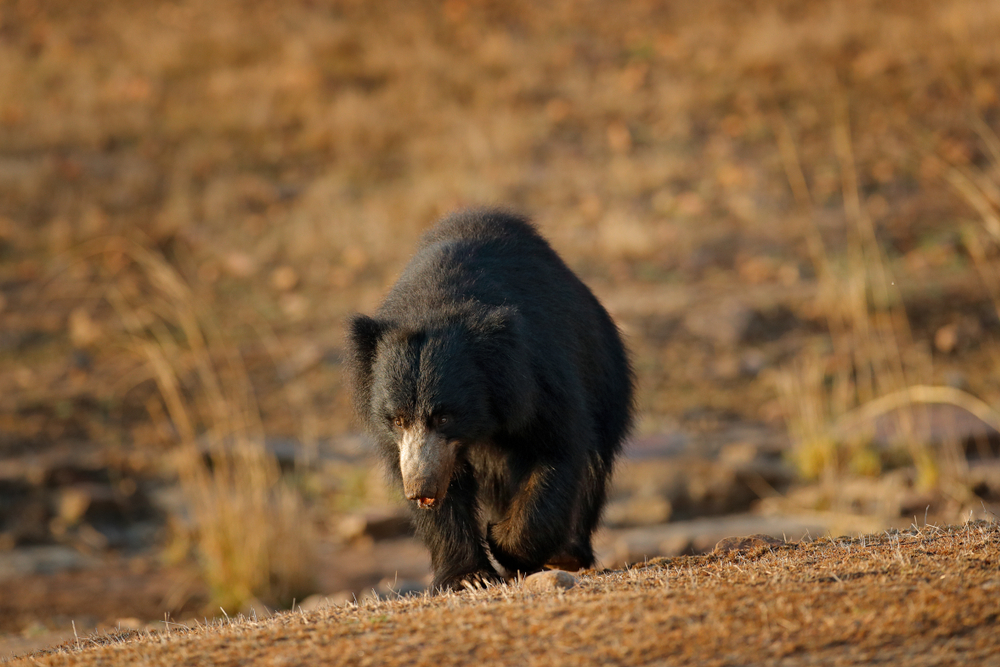
Sloth Bear

The shaggy sloth bear, a master digger, forages for insects and fruits in the forests and grasslands of Kaziranga, using its long claws to unearth food.

Clouded Leopard

The elusive clouded leopard, with its distinctive coat pattern, prowls the dense forests of Kaziranga, preying on birds, monkeys, and small mammals with agility and stealth.

Indian Python

The Indian python, a formidable constrictor, lurks in the swamps and marshes of Kaziranga, ambushing prey such as rodents, birds, and occasionally deer.

Golden Jackal

The adaptable golden jackal scavenges for food in Kaziranga’s grasslands and scrub forests, feeding on carrion and occasionally hunting small mammals and birds.

Bengal Fox

The Bengal fox, with its pointed ears and bushy tail, roams the open grasslands and scrub forests of Kaziranga, hunting rodents and insects.

Marbled Cat

The secretive marbled cat, with its striking coat pattern, navigates the dense vegetation of Kaziranga, preying on birds, rodents, and small reptiles with stealth and precision.

Popular

Popular

Kaziranga National Park, renowned for its rich biodiversity, is home to a plethora of non-predator species, each contributing to the park’s vibrant ecosystem.

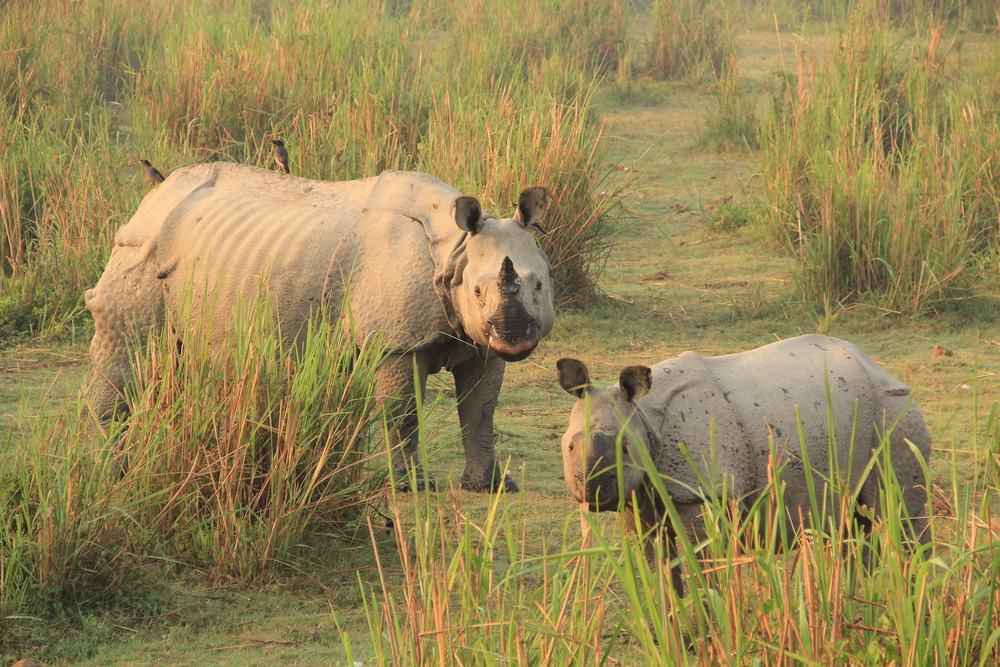
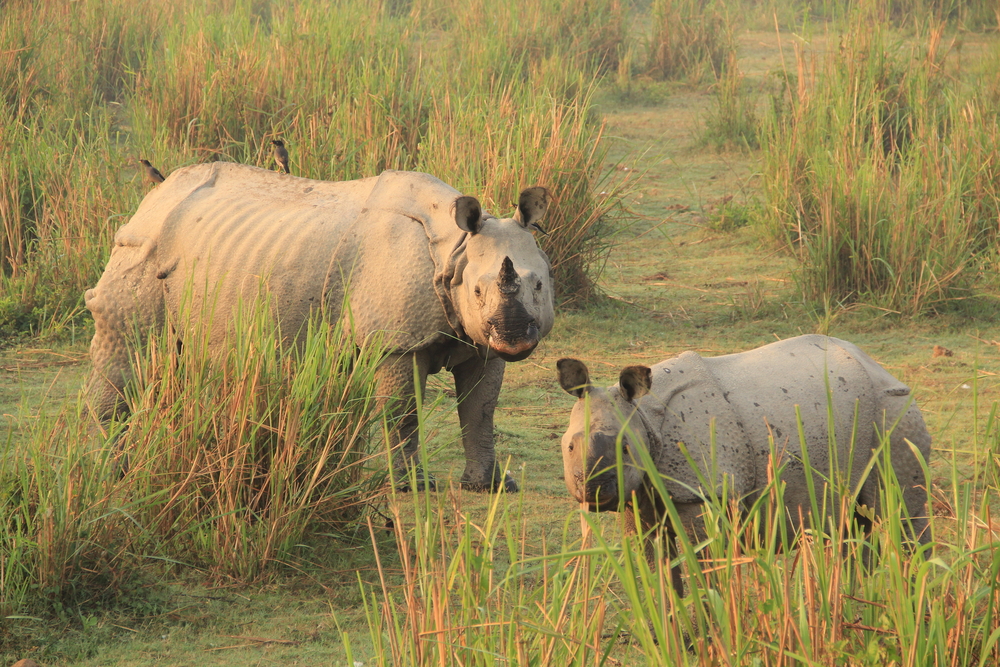
Indian Rhinoceros

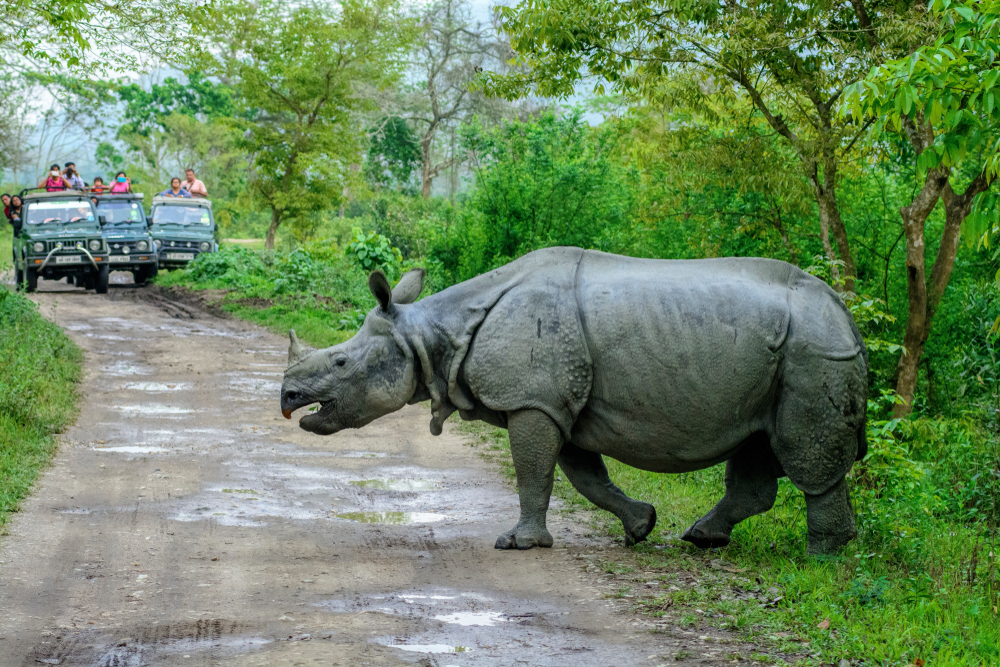
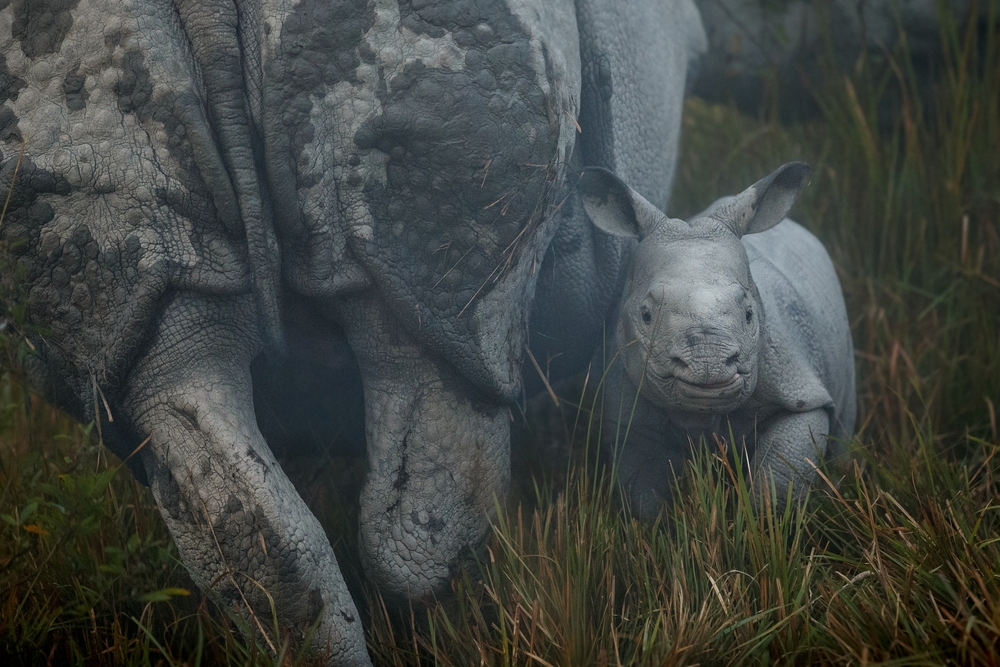
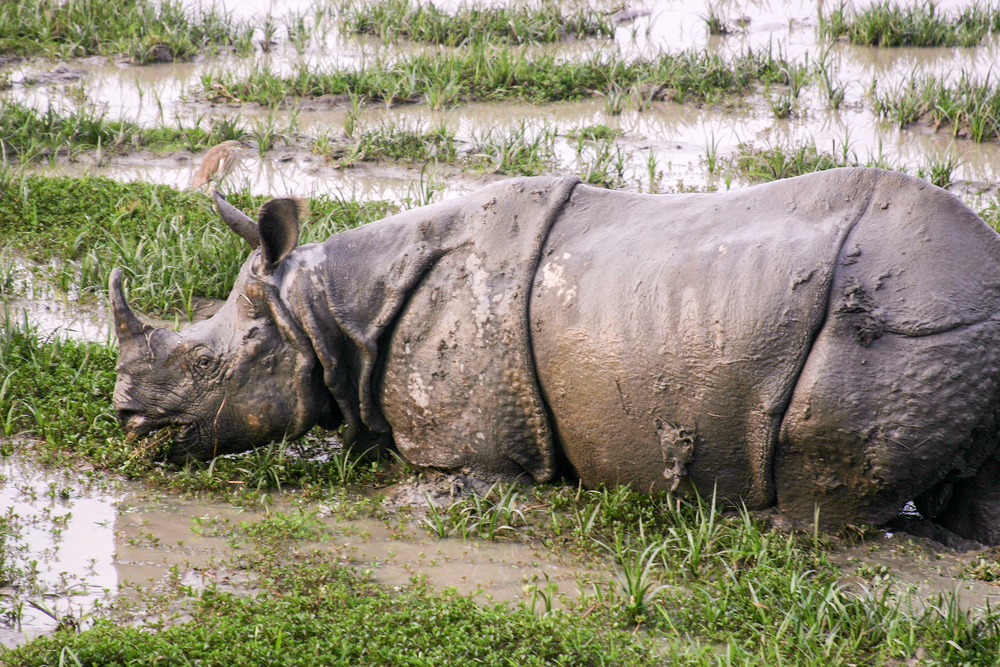
The iconic Indian rhinoceros, with its armored hide and single horn, grazes peacefully in the grasslands and marshes of Kaziranga, symbolizing conservation success.

Asian Water Buffalo

The formidable Asian water buffalo, with its massive horns and imposing stature, wallows in the wetlands of Kaziranga, grazing on aquatic plants and grasses.

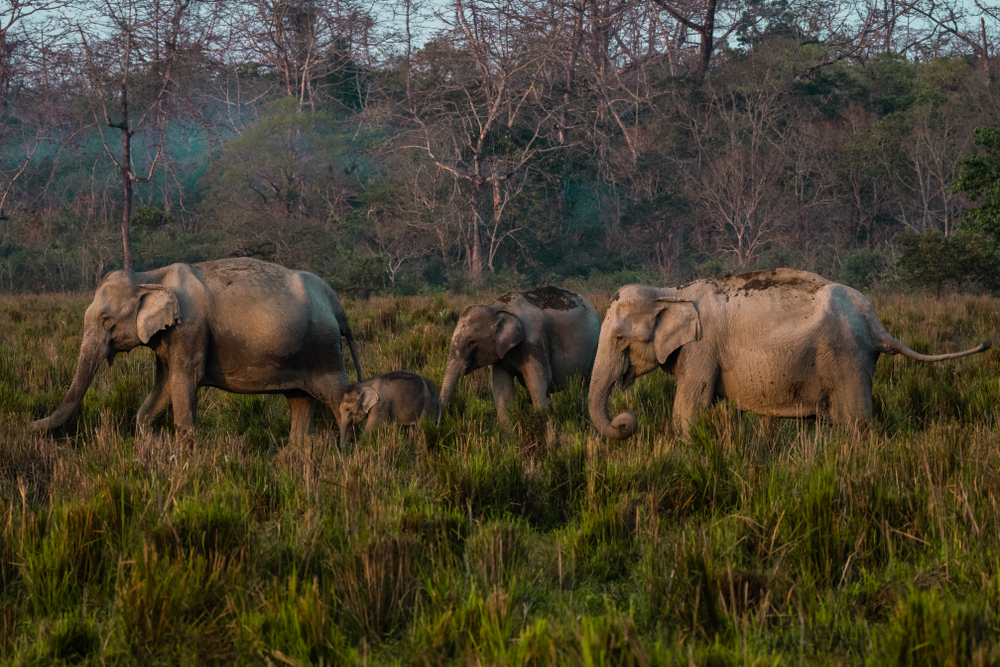
Indian Elephant

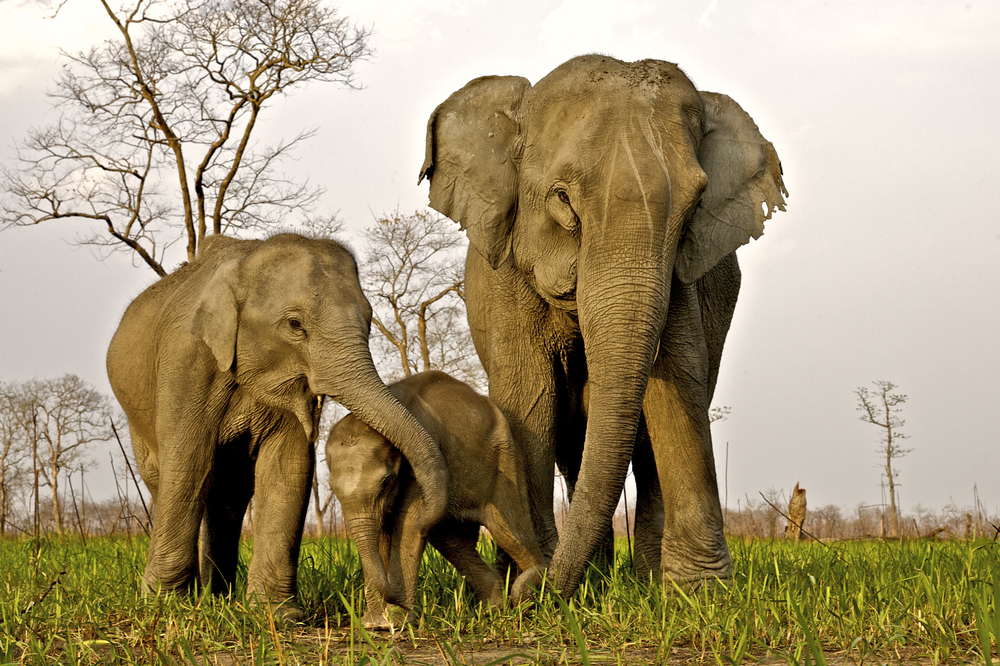
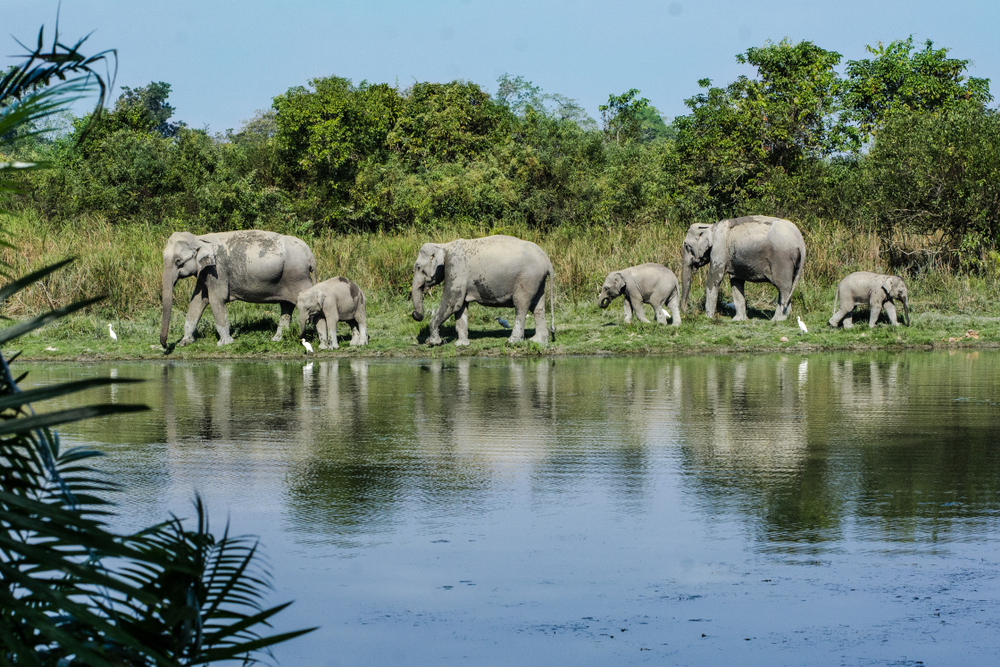
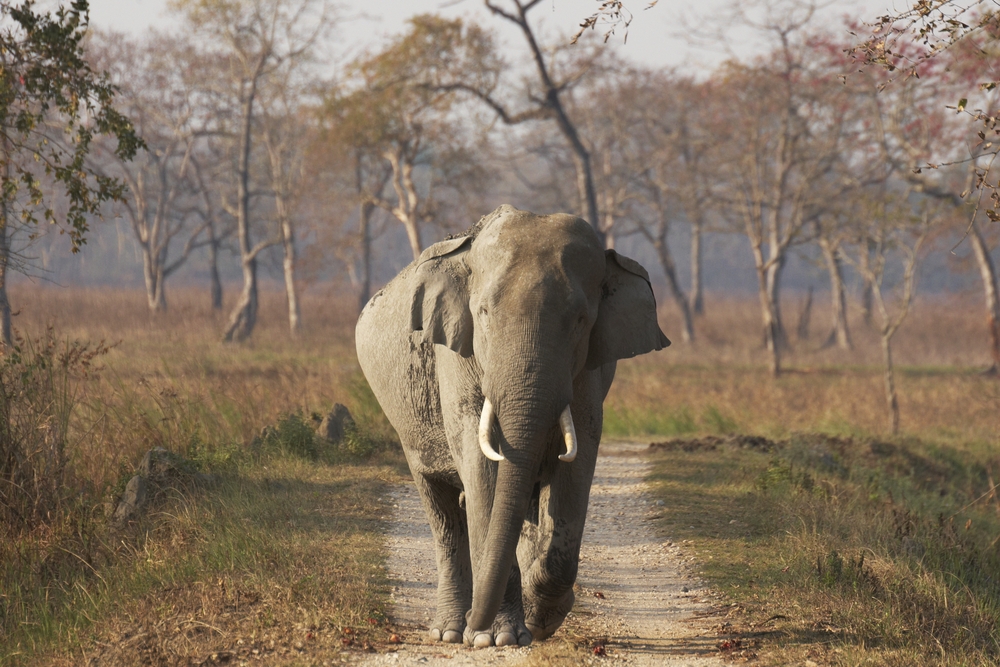
The majestic Indian elephant, a keystone species, traverses Kaziranga’s landscapes, shaping habitats and contributing to the park’s ecological integrity as it forages and migrates.

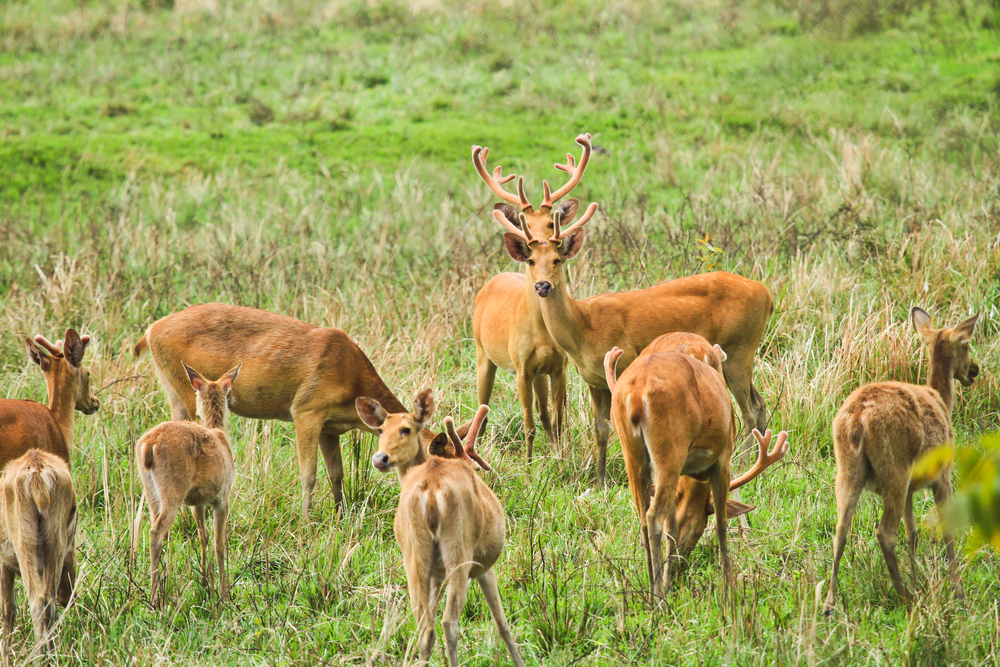
Swamp Deer (Barasingha)

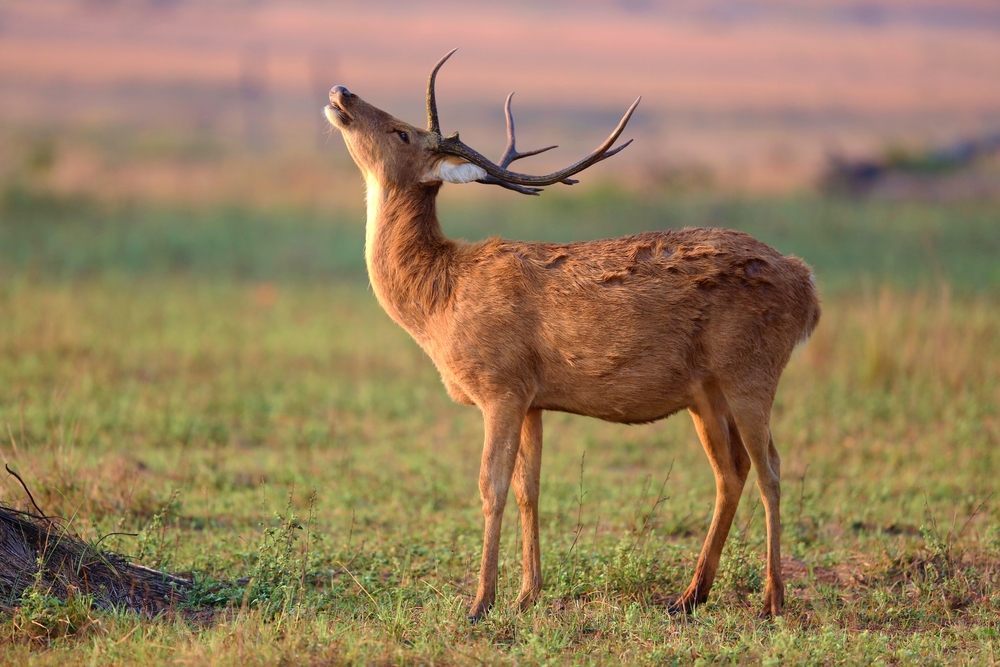
The elegant swamp deer, or barasingha, congregates in the marshes and grasslands of Kaziranga, distinguished by its twelve-pointed antlers and sociable behavior.

Hog Deer

The agile hog deer, with its distinctive coat pattern, bounds through the grasslands and woodlands of Kaziranga, grazing on grasses and evading predators.

Indian Bison (Gaur)

The massive Indian bison, or gaur, roams the forests and grasslands of Kaziranga, browsing on leaves and grasses, and occasionally forming small herds.

Wild Boar

The ubiquitous wild boar, with its bristly coat and tusks, forages in the forests and grasslands of Kaziranga, feeding on roots, tubers, and small animals.

Indian Pangolin

The elusive Indian pangolin, covered in scales, wanders the forests and grasslands of Kaziranga, feeding on ants and termites with its specialized tongue.

Capped Langur

The charismatic capped langur, with its tufted head and long tail, leaps through the canopy of Kaziranga’s forests, feeding on leaves, fruits, and flowers.

Assamese Macaque

The Assamese macaque, a social primate, inhabits the forests and riverine habitats of Kaziranga, foraging for fruits, seeds, and small invertebrates.

Things To Do

Kaziranga features a wonderful collection of animal species that roam throughout the striking landscape.  Seeing tiger, elephant, and rhino sit atop most wildlife viewing wishlists.  Here are ways you can experience the wildlife.
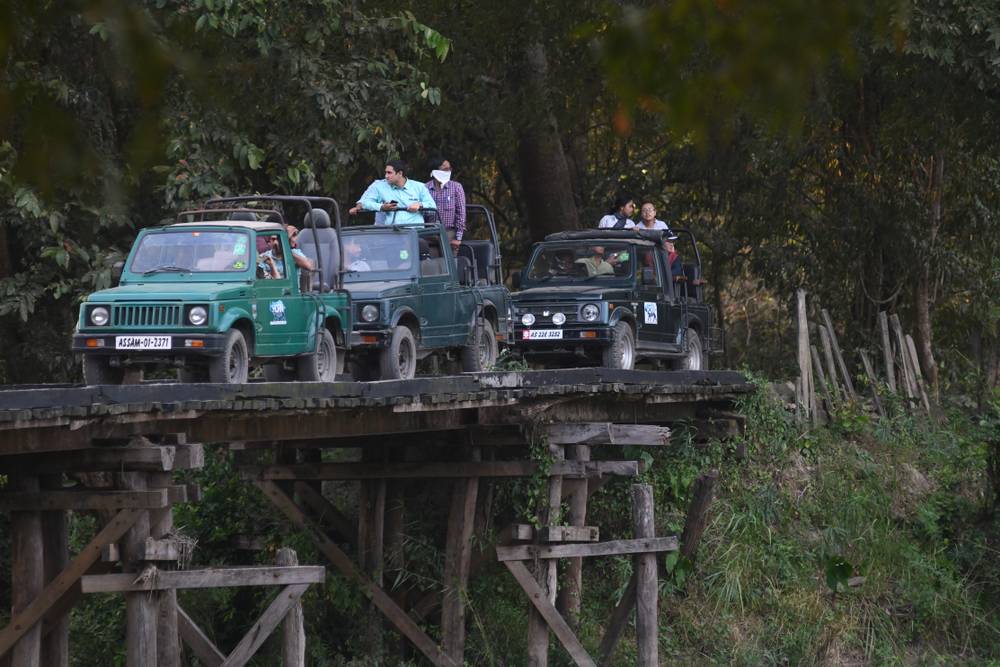
Game Drive

Board your 4×4 safari vehicle and embark on a wildlife and wilderness journey that will leave you amazed.

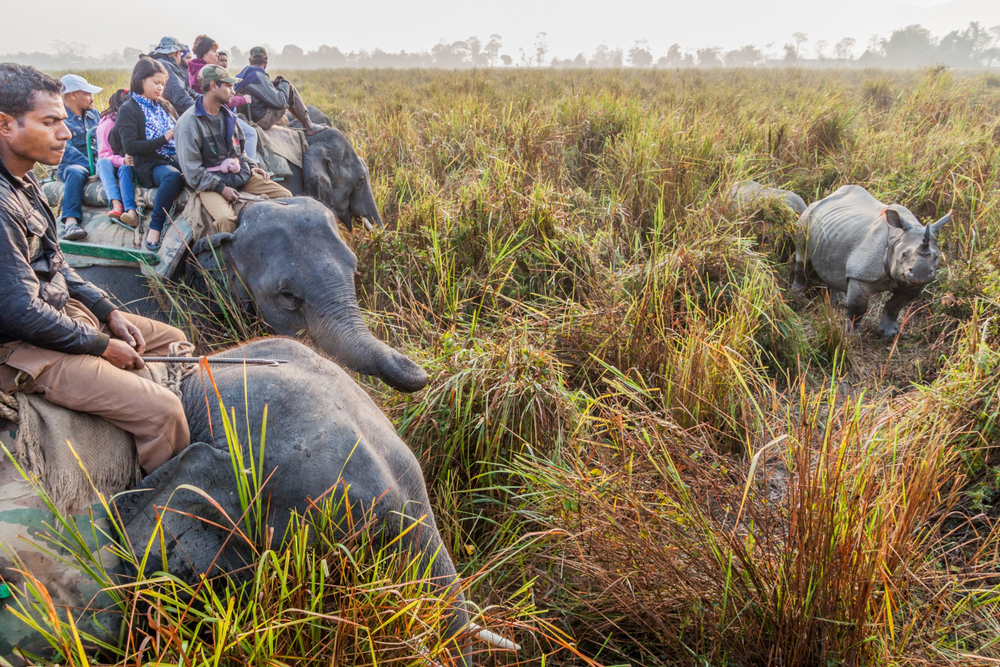
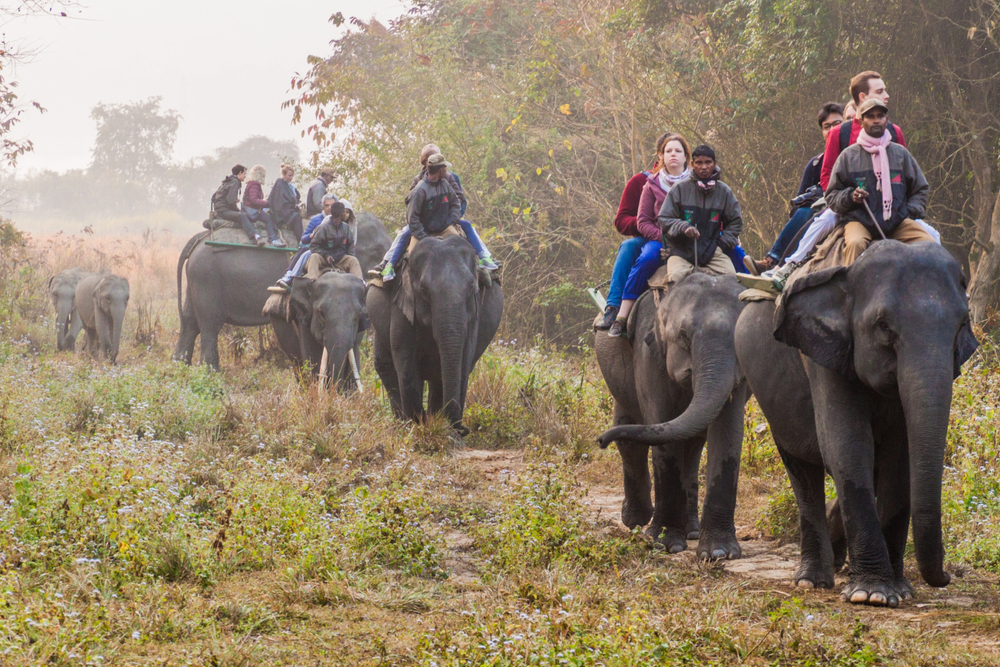
Elephant Safari

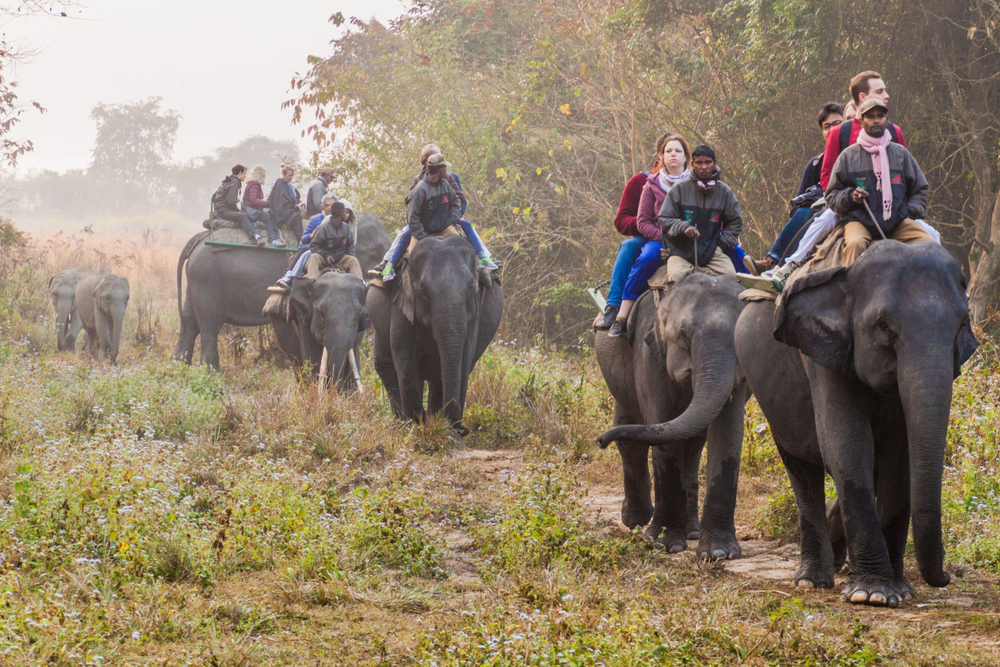
Get on the back of an elephant and take off for an adventure.  Many people find the elepant ride intriguing by itself, which is only enhanced when other wildlife is spotted while riding on the back of your elephant.

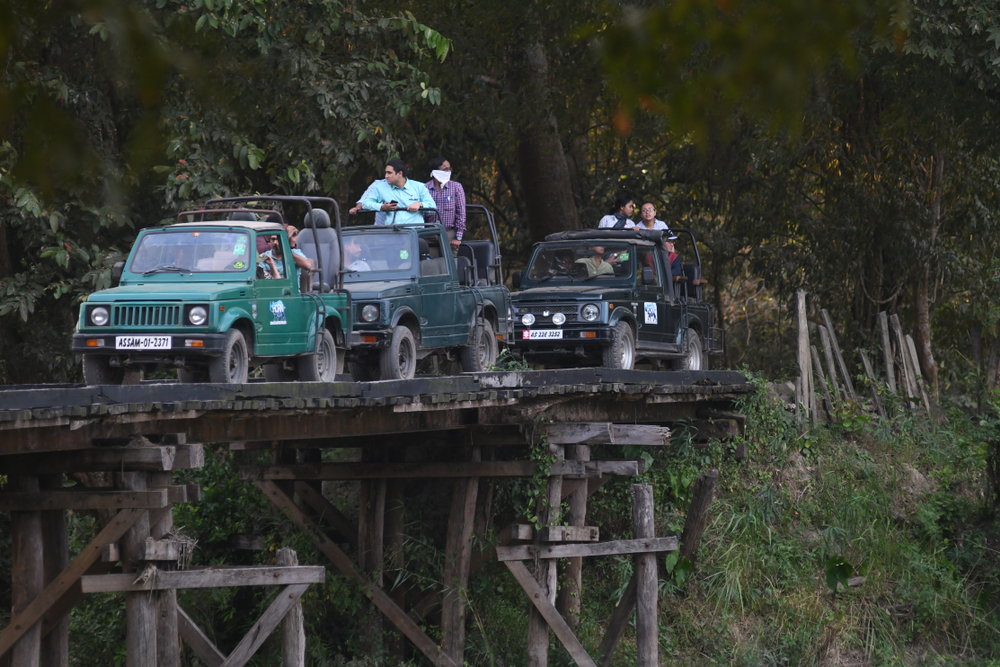
Jeep Safari

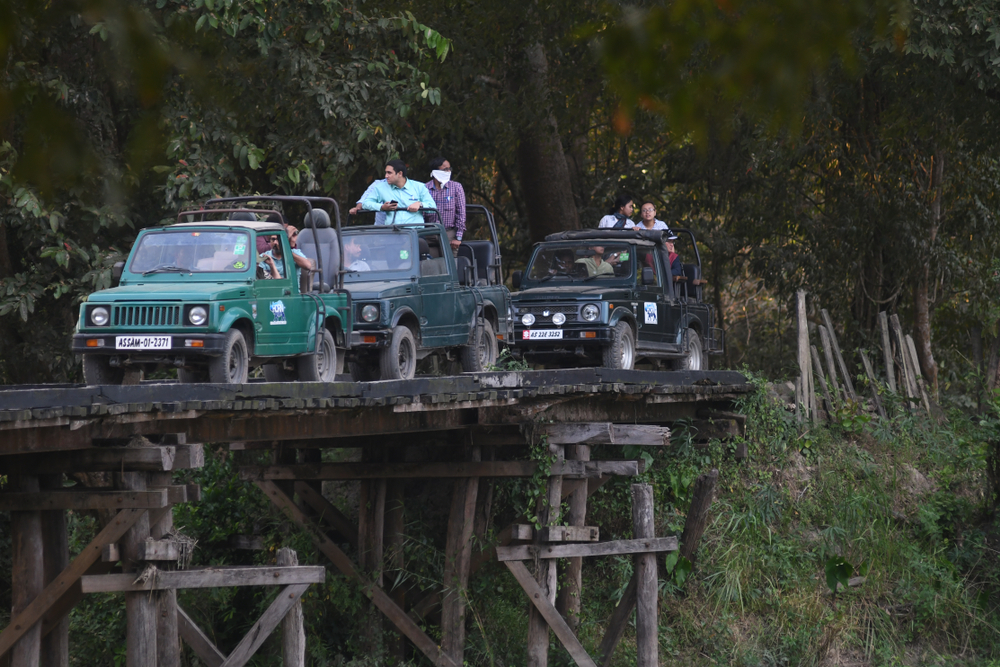
Jeep safaris in Kaziranga allow visitors to explore the vast grasslands and dense forests where they can spot rhinos, tigers, elephants, and a variety of birds. These safaris are conducted in four main zones of the park and are the best way to observe the park’s diverse ecosystems and wildlife.

Most vehicles have open tops allowing visitors to stand and have clearer views of the wildlife and surrounding landscapes.

Elephant Safari

An elephant safari offers an unmatched opportunity to get close to the wild animals, especially the rhinos, in their natural habitat. Moving quietly through the tall grasses at dawn, this gentle ride provides a unique perspective of the park’s landscape and its inhabitants.

Along with seeing the terrain and wildlife, experiencing the park on the back of an elephant is an adventure on its own.

Bird Watching Tour

Kaziranga is also a haven for birdwatchers, with over 480 bird species. While not a trail in the traditional sense, bird watching tours in and around the park offer a chance to see a variety of migratory and resident birds. These tours are particularly rewarding in the winter months when many migratory birds visit the park.

River Cruises

River cruises on the Brahmaputra at the edge of Kaziranga offer a serene way to experience the park’s aquatic life and bird population. The cruises provide panoramic views of the park and opportunities to see wildlife coming to the riverbanks, especially during the dry season.

Walking in Buffer Zones

In the buffer zones around Kaziranga, visitors can sometimes participate in guided walking tours. These walks offer a closer look at the park’s flora and smaller fauna, conducted with the utmost respect for wildlife and with safety precautions in place.

Jeep Safari

Jeep safaris in Kaziranga allow visitors to explore the vast grasslands and dense forests where they can spot rhinos, tigers, elephants, and a variety of birds. These safaris are conducted in four main zones of the park and are the best way to observe the park’s diverse ecosystems and wildlife.

Most vehicles have open tops allowing visitors to stand and have clearer views of the wildlife and surrounding landscapes.

Elephant Safari

An elephant safari offers an unmatched opportunity to get close to the wild animals, especially the rhinos, in their natural habitat. Moving quietly through the tall grasses at dawn, this gentle ride provides a unique perspective of the park’s landscape and its inhabitants.

Along with seeing the terrain and wildlife, experiencing the park on the back of an elephant is an adventure on its own.

Bird Watching Tour

Kaziranga is also a haven for birdwatchers, with over 480 bird species. While not a trail in the traditional sense, bird watching tours in and around the park offer a chance to see a variety of migratory and resident birds. These tours are particularly rewarding in the winter months when many migratory birds visit the park.

River Cruises

River cruises on the Brahmaputra at the edge of Kaziranga offer a serene way to experience the park’s aquatic life and bird population. The cruises provide panoramic views of the park and opportunities to see wildlife coming to the riverbanks, especially during the dry season.

Walking in Buffer Zones

In the buffer zones around Kaziranga, visitors can sometimes participate in guided walking tours. These walks offer a closer look at the park’s flora and smaller fauna, conducted with the utmost respect for wildlife and with safety precautions in place.

Kaziranga National Park Trails

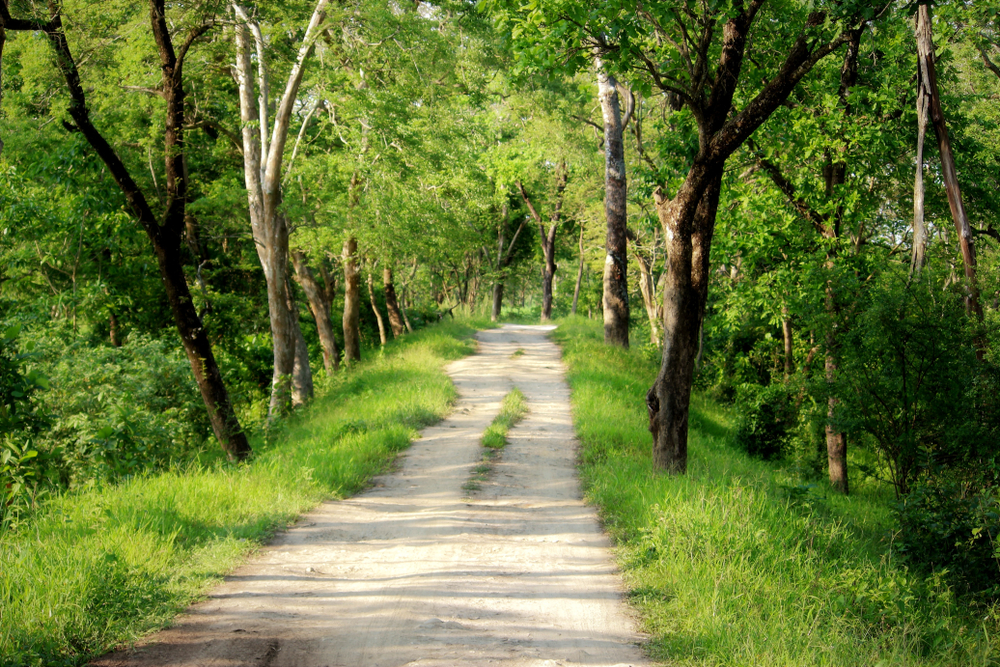
There are no trails in Kaziranga National Park.  The tigers and other predators make hiking a forbidden activity within the national park boundaries.

placeholder

No Traditional Trails

Kaziranga National Park, a UNESCO World Heritage site known for its significant population of the great one-horned rhinoceros, does not offer conventional hiking trails due to its focus on wildlife conservation and the safety of visitors and animals.

The primary means of exploration are jeep and elephant safaris.

placeholder

No Traditional Trails

Kaziranga National Park, a UNESCO World Heritage site known for its significant population of the great one-horned rhinoceros, does not offer conventional hiking trails due to its focus on wildlife conservation and the safety of visitors and animals.

The primary means of exploration are jeep and elephant safaris.

Sources