About

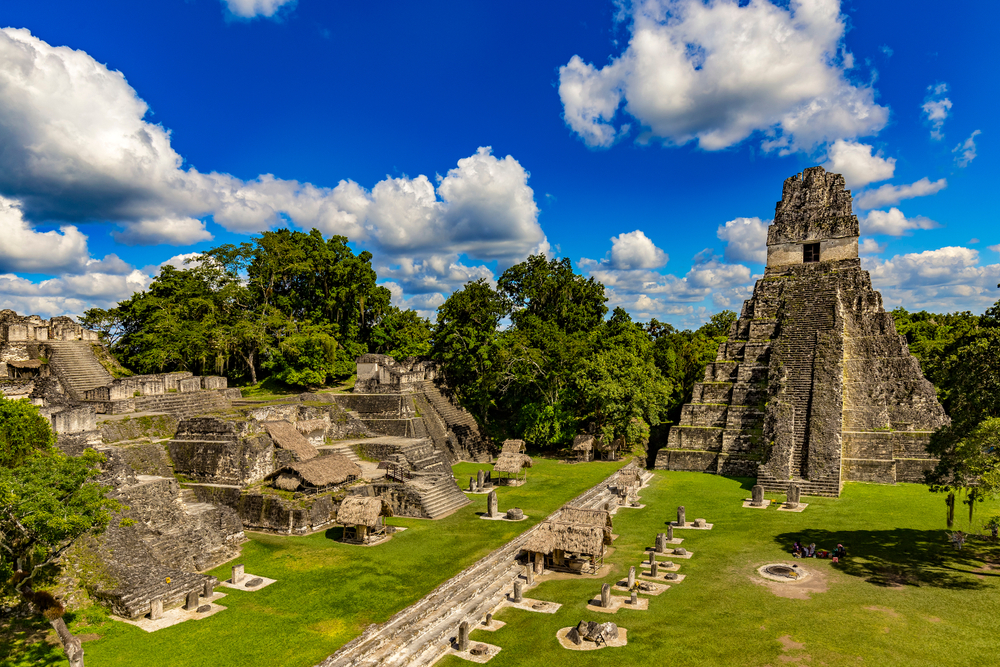
Tikal National Park is located in the Petén region of northern Guatemala and covers approximately 222 square miles (575 sq km). Established in 1955, the park protects one of the most important archaeological and ecological treasures in the Americas.

Situated northeast of Flores, the park encompasses a vast expanse of tropical rainforest that surrounds the ancient Maya city of Tikal. In 1979, Tikal National Park was designated a UNESCO World Heritage Site for both its cultural and natural significance, making it one of the few locations in the world recognized under both criteria. The park preserves an extraordinary combination of ancient history, biodiversity, and tropical wilderness, attracting visitors from around the globe.

Tikal National Park is best known for the spectacular ruins of Tikal, one of the greatest cities of the ancient Maya civilization. Flourishing between approximately 200 and 900 AD, Tikal served as a major political, economic, and cultural center of the Maya world. Visitors are drawn to towering temple pyramids that rise above the rainforest canopy, including the iconic Temple I, Temple II, and Temple IV.

Exploring plazas, palaces, ceremonial complexes, and causeways provides insight into one of the most sophisticated civilizations in pre-Columbian America. In addition to archaeological exploration, visitors enjoy hiking, birdwatching, wildlife observation, photography, and guided nature tours through the surrounding forest.

The geography of Tikal National Park is dominated by lowland tropical rainforest within the larger Maya Forest, one of the largest remaining tropical forest systems in the Americas. The landscape consists of dense jungle, seasonal wetlands, limestone ridges, sinkholes, and small lakes.

Unlike many tropical regions, surface water is relatively limited due to the porous limestone geology, making reservoirs and water management systems crucial to the success of the ancient Maya city. The park’s forests contain towering mahogany, cedar, ceiba, and sapodilla trees, along with countless vines, palms, orchids, and other tropical plant species. These ecosystems support exceptional biodiversity and help maintain ecological connectivity across the broader region.

Wildlife within Tikal National Park is among the richest in Central America. Mammals include jaguars, pumas, ocelots, jaguarundis, spider monkeys, howler monkeys, white-tailed deer, coatis, and tapirs. The park provides important habitat for many species that require large, intact forest ecosystems.

Birdlife is particularly impressive, with more than 300 recorded species including scarlet macaws, keel-billed toucans, parrots, trogons, hawks, and hummingbirds. Reptiles, amphibians, insects, and countless other organisms thrive within the rainforest. The sounds of howler monkeys and tropical birds are often a memorable part of the visitor experience.

Tikal National Park plays a vital role in protecting both Guatemala’s natural heritage and one of the world’s greatest archaeological sites. Conservation efforts focus on preserving rainforest ecosystems, protecting wildlife habitats, safeguarding ancient Maya structures, and promoting sustainable tourism. The park also forms part of the larger Maya Biosphere Reserve, a critical conservation landscape in Central America.

Tikal is often compared to Machu Picchu Historic Sanctuary and Alejandro de Humboldt National Park because of its combination of cultural significance and natural beauty. However, its integration of a world-class archaeological city within a thriving tropical rainforest gives it a distinctive identity. Today, Tikal National Park stands as one of the world’s most extraordinary protected areas, preserving a remarkable environment where ancient civilization and natural wilderness continue to coexist.
Things to See

Popular

Popular

Tikal National Park, located in the heart of the Guatemalan jungle, is one of the most significant archaeological and ecological sites in Central America. Known for its towering Mayan pyramids and dense rainforest, the park is home to an array of fascinating wildlife, from elusive jaguars to playful monkeys. Below are some of the most popular mammal and reptile species found in Tikal National Park.

Jaguar (Panthera onca)
The jaguar is the largest cat in the Americas and a top predator in Tikal’s ecosystem. These elusive and powerful hunters roam the dense jungle, preying on deer, monkeys, and other animals. While rare to spot, their presence is a testament to the park’s rich biodiversity.

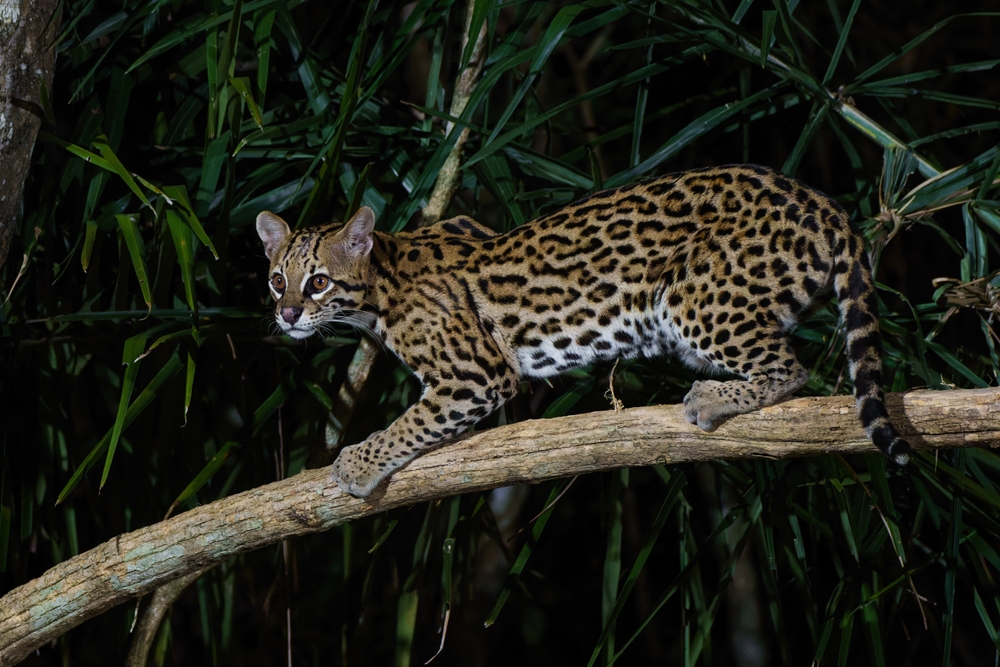
Ocelot (Leopardus pardalis)
Smaller than jaguars but equally stunning, ocelots are nocturnal wild cats that thrive in Tikal’s forests. With their striking spotted coats, they are agile hunters, feeding on rodents, birds, and reptiles.

Spider Monkey (Ateles geoffroyi)
These acrobatic primates swing through Tikal’s towering trees using their long limbs and prehensile tails. They are highly social and can often be heard calling to each other as they forage for fruit and leaves.

Howler Monkey (Alouatta pigra)
Known for their deep, guttural roars, howler monkeys are one of the loudest land animals. Their calls echo through the jungle at dawn and dusk, creating an eerie but iconic soundscape of Tikal.

Central American Tapir (Tapirus bairdii)
The largest land mammal in Central America, the tapir is a nocturnal herbivore that thrives in Tikal’s rivers and wetlands. With its short, trunk-like snout, it forages for leaves and fruits in the dense jungle.

Coati (Nasua narica)
These raccoon-like mammals are commonly seen in Tikal, scurrying along the forest floor or climbing trees in search of food. Coatis are highly social and often travel in groups, making them one of the more visible mammals in the park.

Morelet’s Crocodile (Crocodylus moreletii)
A medium-sized crocodile found in Tikal’s lakes and rivers, Morelet’s crocodile is an efficient predator, feeding on fish, birds, and small mammals. While often seen basking on riverbanks, they remain shy around humans.

Green Iguana (Iguana iguana)
This large arboreal lizard is a common sight in the park, often found basking in the sun or munching on leaves. Despite their intimidating size, green iguanas are herbivores and generally harmless.

Boa Constrictor (Boa imperator)
A powerful non-venomous snake, the boa constrictor is a skilled ambush predator that preys on small mammals and birds. These snakes use constriction to subdue their prey and can grow several feet long.

Nine-banded Armadillo (Dasypus novemcinctus)
This unique, armor-covered mammal is mostly nocturnal, foraging for insects and small invertebrates. Its ability to dig burrows makes it an important part of Tikal’s ecosystem.

Birds

Birds

Tikal National Park is a paradise for birdwatchers, with over 300 species recorded in its lush rainforest. From majestic birds of prey to colorful songbirds, the park’s avian life is as rich as its history. Here are some of the most notable bird species found in Tikal.

Keel-billed Toucan (Ramphastos sulfuratus)
One of the most iconic birds of Tikal, the keel-billed toucan is known for its oversized, multicolored bill. This social and vocal bird can often be spotted hopping through the trees, feeding on fruits.

Scarlet Macaw (Ara macao)
A dazzling red, blue, and yellow parrot, the scarlet macaw is a symbol of the tropical rainforest. These highly intelligent birds mate for life and can be seen flying in pairs or small groups.

Crested Guan (Penelope purpurascens)
Resembling a wild turkey, the crested guan is a large, arboreal bird that forages for fruit in the canopy. Its loud calls and distinctive red throat patch make it easy to recognize.

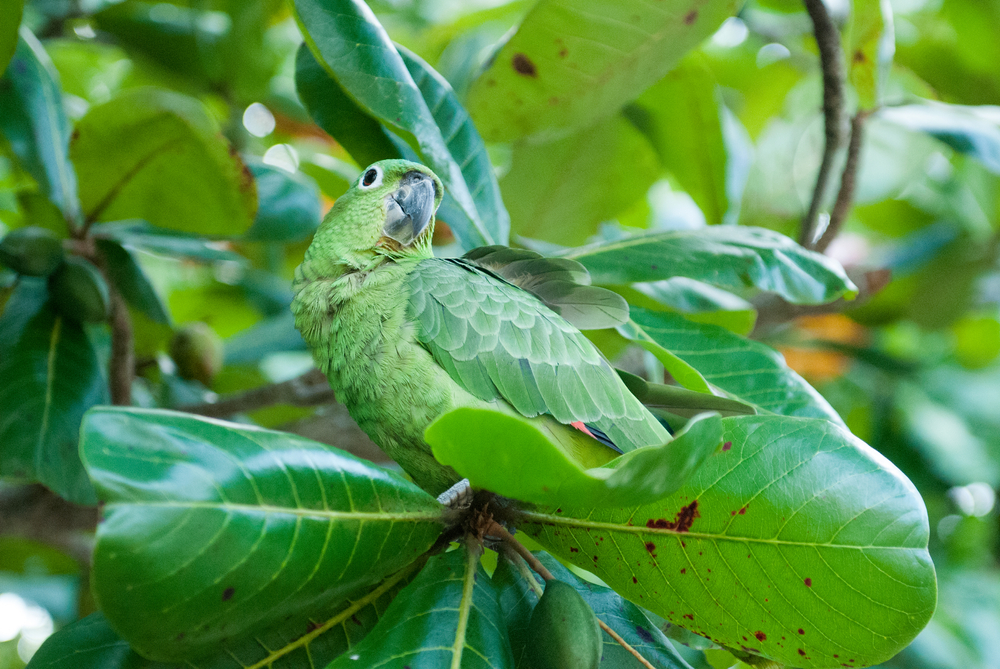
Mealy Parrot (Amazona farinosa)
One of the largest parrots in Tikal, the mealy parrot is known for its green plumage and noisy calls. These birds are often seen in flocks, feeding on fruits and nuts in the treetops.

Ocellated Turkey (Meleagris ocellata)
This brilliantly colored turkey is unique to the Yucatán Peninsula and surrounding regions. With its iridescent plumage and striking blue head, it is a favorite sight among visitors.

Black-headed Trogon (Trogon melanocephalus)
A close relative of the resplendent quetzal, this trogon has a striking yellow belly and a black head. It is often seen perching quietly in the mid-canopy, waiting to snatch up insects and fruit.

Bat Falcon (Falco rufigularis)
This small but powerful falcon is a skilled hunter, preying on birds and bats in mid-flight. It is commonly seen perched on Mayan ruins, scanning the skies for its next meal.

Great Curassow (Crax rubra)
A large, turkey-like bird with glossy black plumage, the great curassow is often seen foraging on the forest floor. Its deep calls and bold presence make it a standout species.

Collared Aracari (Pteroglossus torquatus)
A relative of the toucan, the collared aracari is a striking bird with a long, curved bill and vibrant yellow and red plumage. It moves in small groups, feeding on fruit and insects.

Slaty-tailed Trogon (Trogon massena)
Another beautiful trogon species in Tikal, this bird has a deep green body, a red belly, and a slate-colored tail. It is often seen in pairs, quietly perched in the dense jungle foliage.

Tikal National Park offers a unique blend of ancient history and rich biodiversity, making it a must-visit destination for wildlife enthusiasts. Whether you’re searching for jaguars in the undergrowth or watching toucans in the treetops, Tikal is a true natural wonder.