

About
Kahuzi-Biega National Park, located in the eastern region of the Democratic Republic of Congo (DRC), is a breathtaking expanse of lush forests and towering mountains. Covering an area of approximately 2,316 square miles (6,000 square kilometers), this UNESCO World Heritage Site is renowned for its biodiversity and its crucial role in the conservation of the Eastern Lowland Gorilla, also known as the Grauer’s gorilla. The park is named after its two dominant mountains, Mount Kahuzi and Mount Biega, both extinct volcanoes that add to the dramatic landscape of the region.
The park’s terrain is diverse, ranging from lowland rainforests to montane forests at higher altitudes. This variety of habitats supports a rich array of flora and fauna, making Kahuzi-Biega one of the most ecologically significant parks in Africa. The lowland areas are characterized by dense, humid forests, while the higher elevations are home to bamboo forests and subalpine vegetation. This ecological diversity provides a haven for numerous species, many of which are endemic to the region.
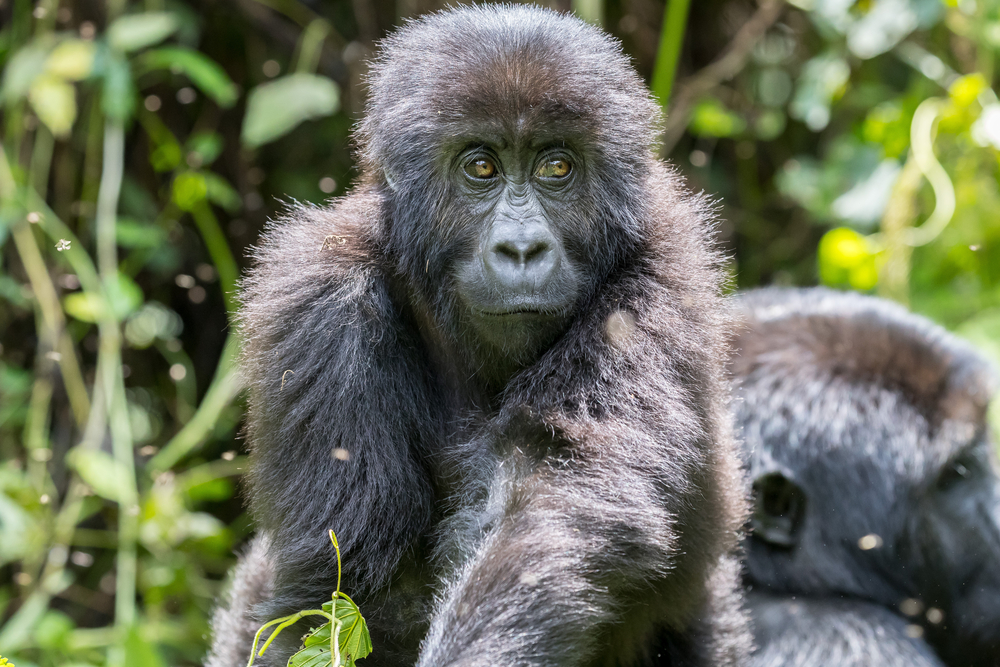
Kahuzi-Biega National Park is perhaps most famous for its population of Eastern Lowland Gorillas, the largest gorilla subspecies. These magnificent creatures are the park’s flagship species and are critically endangered, with Kahuzi-Biega being one of their last strongholds. Visitors to the park can participate in guided gorilla trekking tours, where they have the unique opportunity to observe these gentle giants in their natural habitat. The experience of encountering a gorilla family, led by a dominant silverback, is both awe-inspiring and humbling.
In addition to gorillas, the park is home to a variety of other wildlife, including forest elephants, chimpanzees, and several species of antelope. Birdwatchers will be delighted by the presence of over 350 bird species, such as the Congo peafowl, African green broadbill, and Rockefeller’s sunbird. The park’s rivers and wetlands also support a range of aquatic life, contributing to its rich biodiversity.
Exploring Kahuzi-Biega National Park offers a blend of adventure and tranquility. The park’s network of trails and paths allows visitors to traverse its diverse landscapes, from the thick forests of the lowlands to the cooler, misty heights of Mount Kahuzi and Mount Biega. Hiking to the summits of these mountains rewards adventurers with stunning panoramic views of the surrounding forest and valleys. The journey through the park is an immersive experience in one of the world’s most pristine natural environments.
Conservation efforts in Kahuzi-Biega are paramount, given the numerous threats the park faces, including poaching, deforestation, and political instability. The park’s management, along with various international conservation organizations, works tirelessly to protect its unique wildlife and habitats. Anti-poaching patrols, community engagement, and education initiatives are essential components of these conservation strategies. Despite the challenges, these efforts have made significant strides in preserving the park’s biodiversity and promoting sustainable tourism.
The local communities around Kahuzi-Biega National Park play a crucial role in its conservation. These communities, including the indigenous Batwa people, have a deep connection to the land and its wildlife. Their traditional knowledge and practices are invaluable for sustainable management of the park. Efforts to involve local populations in conservation and eco-tourism initiatives help ensure that the benefits of the park’s preservation are shared and that the communities are active partners in protecting their natural heritage.
In summary, Kahuzi-Biega National Park is a jewel of the Democratic Republic of Congo, offering unparalleled natural beauty and biodiversity. Its diverse landscapes, from dense rainforests to towering volcanic peaks, provide a sanctuary for some of the world’s most endangered species, including the Eastern Lowland Gorilla. The park’s commitment to conservation and its engagement with local communities make it a model of sustainable management. Whether trekking to see gorillas, hiking to volcanic summits, or simply enjoying the tranquility of the forest, visitors to Kahuzi-Biega will find an unforgettable wilderness experience.
Things to See
Things To Do
Engaging Kahuzi-Biega National Park

Park Protection
Kahuzi-Biega National Park was created to protect the vast lowland and montane rainforests, mountain ecosystems, rivers, and wetlands of eastern Democratic Republic of the Congo. The park provides critical habitat for several endangered species, including the endangered eastern lowland gorilla (Grauer’s gorilla), for which it is the world’s most important protected stronghold.
It also protects endangered eastern chimpanzees, African forest elephants, giant forest hogs, bongo antelope, leopards, and more than 340 bird species, including many endemic to the Albertine Rift. The park’s forests preserve exceptional botanical diversity, supporting thousands of plant species and one of the richest rainforest ecosystems in Central Africa.
The park is especially significant for protecting the world’s largest remaining population of eastern lowland gorillas, the largest of all gorilla subspecies and one found nowhere outside the eastern Congo Basin. Its landscape spans elevations from lowland rainforest to the summits of Mount Kahuzi and Mount Biega, creating an extraordinary range of habitats within a single protected area.
As part of the Albertine Rift biodiversity hotspot, the park safeguards numerous endemic plants and animals found nowhere else on Earth. Together, Kahuzi-Biega National Park protects endangered great apes, ancient rainforest ecosystems, exceptional biodiversity, and one of Africa’s most important conservation landscapes.
FAQ’s
What is the main reason people visit Kahuzi-Biega National Park?
Kahuzi-Biega National Park is primarily visited for its eastern lowland gorillas, one of the rarest and largest gorilla subspecies in the world. Located in eastern Democratic Republic of the Congo near the city of Bukavu, the park protects an extraordinary range of habitats from montane forests surrounding the extinct volcanoes Mount Kahuzi and Mount Biega to vast lowland rainforests in the Congo Basin.
Visitors come to trek lowland gorillas, experience pristine rainforest ecosystems, observe unique wildlife, and explore one of Africa’s most important UNESCO World Heritage Sites.
What animals can visitors hope to see in Kahuzi-Biega National Park?
Kahuzi-Biega National Park supports more than 130 mammal species and over 50 reptile species. The park is internationally recognized as one of the most important strongholds for the endangered eastern lowland gorilla.
Some of the most notable mammals found in Kahuzi-Biega National Park include:
- Eastern Lowland Gorilla
- Eastern Chimpanzee
- African Forest Elephant
- Forest Buffalo
- Bongo
- Giant Forest Hog
- Bush Pig
- Yellow-backed Duiker
- Blue Duiker
- Bay Duiker
- Peters’s Duiker
- Red Duiker
- Bushbuck
- Water Chevrotain
- Sitatunga
- Leopard
- African Golden Cat
- Serval
- African Civet
- African Palm Civet
- Spotted Hyena
- Side-striped Jackal
- Long-tailed Pangolin
- Giant Pangolin
- Tree Pangolin
- L’Hoest’s Monkey
- Owl-faced Monkey
- Blue Monkey
- Red-tailed Monkey
- Vervet Monkey
- Dent’s Mona Monkey
- Black-and-White Colobus
- Angolan Colobus
- Grey-cheeked Mangabey
- Olive Baboon
- Potto
- Allen’s Bushbaby
- Tree Hyrax
- African Clawless Otter
- Congo Clawless Otter
- Brush-tailed Porcupine
- Gambian Giant Pouched Rat
- Sun Squirrel Species
- Rope Squirrel Species
- Forest Shrew Species
- Fruit Bat Species
- Horseshoe Bat Species
- Pipistrelle Bat Species
- Mouse-eared Bat Species
- Various Small Forest Rodents
What birds can visitors hope to see in Kahuzi-Biega National Park?
Kahuzi-Biega National Park is one of Central Africa’s most important birding destinations, with more than 340 recorded bird species. The park contains numerous Albertine Rift endemics as well as rainforest species found nowhere else in the region.
Some of the most popular birds seen in Kahuzi-Biega National Park include:
- Congo Peacock
- Grauer’s Broadbill
- Rockefeller’s Sunbird
- Ruwenzori Turaco
- Handsome Francolin
- Shelley’s Crimsonwing
- Regal Sunbird
- Purple-breasted Sunbird
- Strange Weaver
- Grauer’s Warbler
- Ruwenzori Batis
- Archer’s Robin-Chat
- Red-throated Alethe
- White-starred Robin
- African Green Broadbill
- Bar-tailed Trogon
- Narina Trogon
- Great Blue Turaco
- Black-and-White-Casqued Hornbill
- Yellow-casqued Hornbill
- White-thighed Hornbill
- African Green Pigeon
- Crowned Eagle
- African Harrier-Hawk
- Long-crested Eagle
- Mountain Buzzard
- Augur Buzzard
- White-headed Wood Hoopoe
- Yellow-billed Barbet
- Red-rumped Tinkerbird
- African Emerald Cuckoo
- Yellow-whiskered Greenbul
- Mountain Greenbul
- Mountain Masked Apalis
- Collared Apalis
- Chestnut-throated Apalis
- Doherty’s Bushshrike
- Chinspot Batis
- Grey Cuckooshrike
- White-tailed Crested Flycatcher
- African Paradise Flycatcher
- Fraser’s Forest Flycatcher
- Blue-headed Sunbird
- Dusky Crimsonwing
- Olive Thrush
- African Thrush
- Black Saw-wing
- Scarce Swift
- Malachite Kingfisher
- Giant Kingfisher
Is Kahuzi-Biega National Park worth visiting?
Yes, Kahuzi-Biega National Park is absolutely worth visiting for travelers interested in gorilla trekking, rainforest ecosystems, wildlife conservation, and biodiversity. It offers one of the world’s best opportunities to observe eastern lowland gorillas in their natural habitat.
The primary consideration is that travel logistics and regional security conditions can occasionally affect accessibility. Visitors should carefully review current travel advisories and park operating conditions before planning a trip. For wildlife enthusiasts, however, the opportunity to see eastern lowland gorillas is a truly exceptional experience.
What is the best time to visit Kahuzi-Biega National Park?
The best time to visit Kahuzi-Biega National Park is during the relatively dry seasons:
- June to September
- December to February
During these months:
- Gorilla trekking trails are generally easier to navigate.
- Wildlife viewing conditions improve.
- Hiking and photography are more enjoyable.
- Forest paths are less muddy.
Rainfall can occur throughout the year because of the park’s tropical rainforest environment.
How many days do you need to visit Kahuzi-Biega National Park?
Most visitors should plan for 2 to 4 days.
- 1 day: Gorilla trekking experience.
- 2 days: Gorilla trekking and birdwatching.
- 3–4 days: Additional hiking, wildlife observation, and exploration of the montane forest sector.
Birdwatchers and wildlife photographers may choose to stay longer.
Many travelers will do a gorilla trek on one day and call that a successful experience of the park. It is a special encounter with nature and that one day experience is worth the effort.
How do you get to Kahuzi-Biega National Park?
Kahuzi-Biega National Park is located near Bukavu in eastern DRC.
Most international visitors:
- Fly into Kigali.
- Travel by road to the Rwanda–DRC border.
- Continue to Bukavu and the park headquarters.
The park’s highland sector, where gorilla trekking occurs, is relatively accessible compared to many remote protected areas in Central Africa.
Is Kahuzi-Biega National Park safe for tourists?
Safety conditions can vary in eastern Democratic Republic of the Congo, and visitors should carefully review current travel advisories before traveling.
When tourism operations are functioning:
- Gorilla treks are conducted with trained guides and rangers.
- Visitors are escorted in designated tourism zones.
- Park authorities maintain security procedures for tourists.
Because conditions can change, checking current information from park authorities and official government advisories is essential.
Who is involved in protecting and supporting Kahuzi-Biega National Park?
Several organizations contribute to the protection of Kahuzi-Biega National Park:
- Institut Congolais pour la Conservation de la Nature (ICCN) – the government agency responsible for managing the park.
- Kahuzi-Biega National Park Authority – oversees conservation, tourism, and wildlife management.
- Pole Pole Foundation – supports conservation education and community engagement around the park.
- Strong Roots Congo – supports conservation and sustainable livelihoods in communities surrounding the park.
- Local communities and conservation partners working to protect gorillas and forest ecosystems.
What is the difference between eastern lowland gorillas and mountain gorillas?
Eastern lowland gorillas are generally larger than mountain gorillas and inhabit lowland and mid-elevation rainforests. Mountain gorillas are found primarily in the Virunga Mountains and the Bwindi region. Kahuzi-Biega is famous for eastern lowland gorillas, while Virunga National Park is known for mountain gorillas.
Why is Kahuzi-Biega National Park a UNESCO World Heritage Site?
Kahuzi-Biega National Park was designated a UNESCO World Heritage Site because of its exceptional biodiversity, unique ecosystems, and globally important populations of eastern lowland gorillas. The park protects habitats ranging from volcanic mountains to vast lowland rainforests and serves as one of Central Africa’s most important conservation areas.
Sources
Here are sources you can explore for more information:
- AllTrails. Kahuzi-Biega National Park. https://www.alltrails.com/democratic-republic-of-the-congo/sud-kivu/kahuzi-biega-national-park, retrieved July 2026.
- Encyclopaedia Britannica. Kahuzi-Biega National Park. https://www.britannica.com/place/Kahuzi-Biega-National-Park, retrieved July 2026.
- Kahuzi-Biega National Park. Official Website. https://kahuzi-biega.org/, retrieved July 2026.
- Pilot Guides. Kahuzi-Biega National Park. https://www.pilotguides.com/, retrieved July 2026.
- Protected Planet (UNEP-WCMC & IUCN). Kahuzi-Biega National Park. https://www.protectedplanet.net/, retrieved July 2026.
- UNESCO World Heritage Centre. Kahuzi-Biega National Park. https://whc.unesco.org/en/list/137/, retrieved July 2026.
- Wikipedia. Kahuzi-Biega National Park. https://en.wikipedia.org/wiki/Kahuzi-Biega_National_Park, retrieved July 2026.
- World Wildlife Fund (WWF). Albertine Rift Montane Forests. https://www.worldwildlife.org/ecoregions/at0101, retrieved July 2026.