

About
Nawabganj National Park (Bengali: নবাবগঞ্জ জাতীয় উদ্যান) is located in Dhaka District of central Bangladesh near the town of Nawabganj, approximately 25 miles (40 km) southwest of Dhaka.
Established in 2010, the park covers approximately 4.4 square miles (11.5 sq km) and protects a combination of wetlands, woodlands, grasslands, and riverine habitats within the densely populated central region of Bangladesh. Although relatively small, the park serves as an important refuge for wildlife and provides valuable green space close to the nation’s capital.
The park is best known for its scenic wetlands, birdlife, and accessibility to visitors from Dhaka. Nature enthusiasts visit the park to enjoy peaceful walking trails, wildlife observation, photography, and environmental education opportunities. The combination of freshwater habitats, forest patches, and open grasslands supports a surprising diversity of species within a compact area.
Because of its proximity to the capital, Nawabganj National Park has become an important destination for recreation and conservation awareness, offering visitors an opportunity to experience natural ecosystems without traveling long distances.
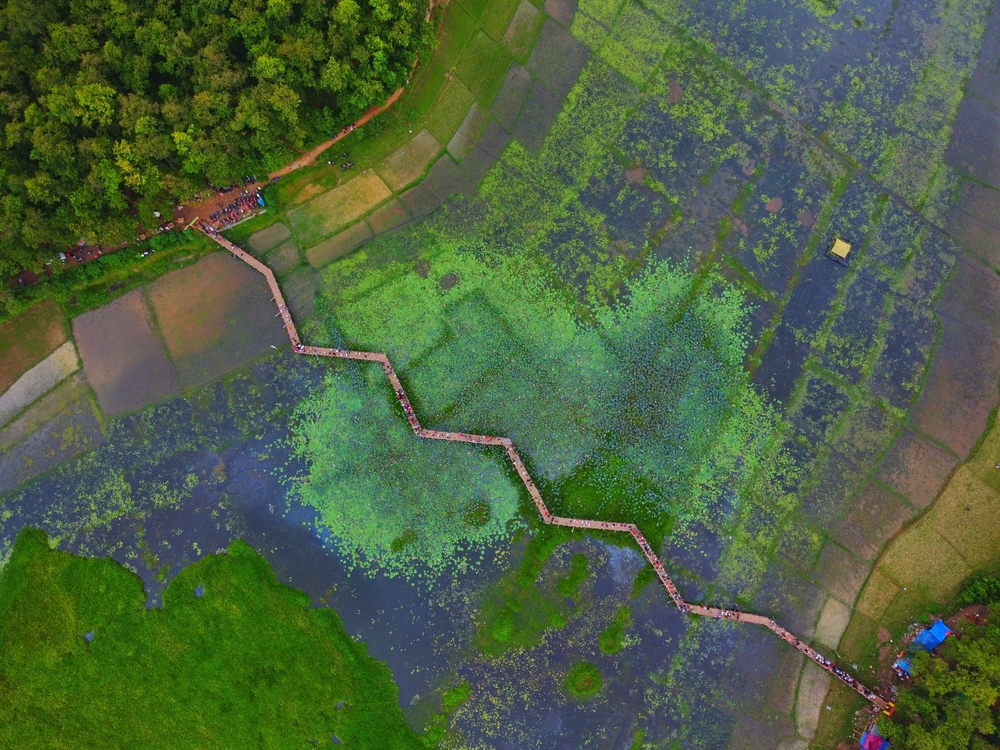
Geographically, Nawabganj National Park consists of a mosaic of wetlands, floodplain forests, grasslands, ponds, canals, and seasonal water bodies. The landscape is strongly influenced by the river systems that shape central Bangladesh. During the monsoon season, water levels rise significantly, creating extensive wetland habitats that attract migratory birds and support aquatic biodiversity.
Native trees, reeds, grasses, and wetland vegetation dominate much of the park, while small forested areas provide shelter for wildlife. The park’s varied habitats contribute to its ecological richness despite its relatively modest size.
Wildlife within Nawabganj National Park is closely associated with its wetland and woodland environments. Mammals include jackals, fishing cats, mongooses, civets, squirrels, and several species of bats. Birdlife is particularly important, with numerous resident and migratory species recorded throughout the year.
Herons, egrets, kingfishers, cormorants, ducks, geese, storks, and various shorebirds frequent the park’s wetlands. Reptiles such as monitor lizards, turtles, and water snakes inhabit aquatic habitats, while amphibians thrive during the rainy season. Fish and aquatic invertebrates form an essential component of the park’s food web and support many of its bird populations.
Nawabganj National Park plays a significant role in protecting wetland biodiversity within one of Bangladesh’s most densely populated regions. The park helps conserve important habitats for migratory birds, supports freshwater ecosystems, and provides opportunities for environmental education and recreation.
Its conservation importance is often compared to Bhawal National Park and Madhupur National Park because of its role in preserving natural habitats near major population centers. Through its wetlands, birdlife, green landscapes, and ecological value, Nawabganj National Park stands as an important protected area and a valuable natural sanctuary within central Bangladesh.
Things to See


Things To Do
Engaging Nawabganj National Park
