

About
Corcovado National Park (Spanish: Parque Nacional Corcovado) is located in the Los Lagos Region of southern Chile along the rugged Pacific coast of northern Patagonia. Established in 2005, the park covers approximately 1,140 square miles (2,950 sq km) and protects one of the largest continuous wilderness areas in Chilean Patagonia.
The creation of the park was made possible through a landmark conservation effort involving the Chilean government, private land donations, and environmental organizations, resulting in the protection of an extraordinary landscape of mountains, temperate rainforests, rivers, fjords, and coastal ecosystems.
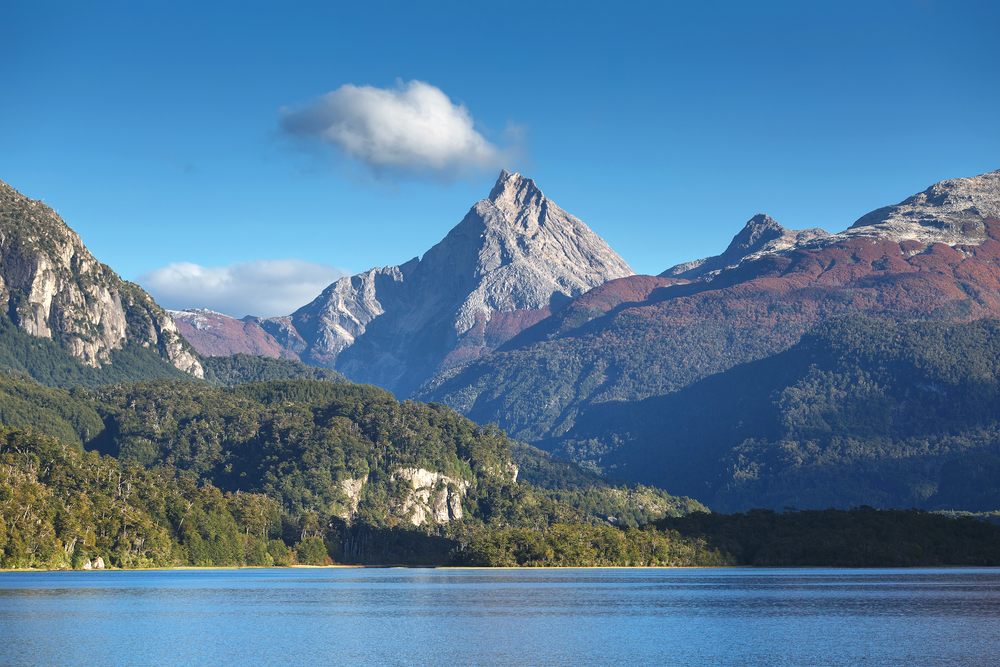
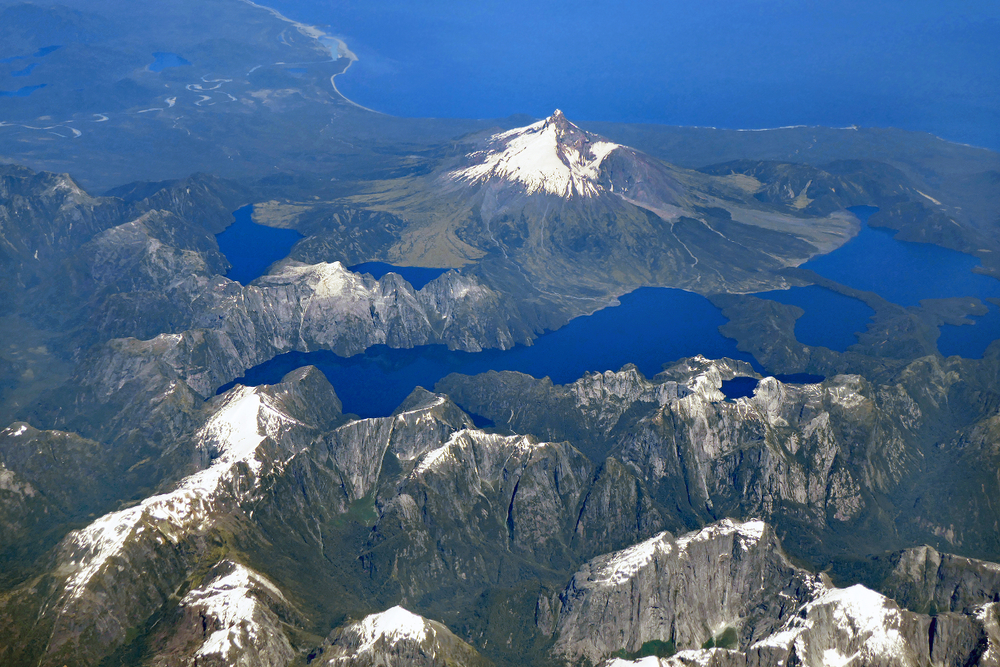
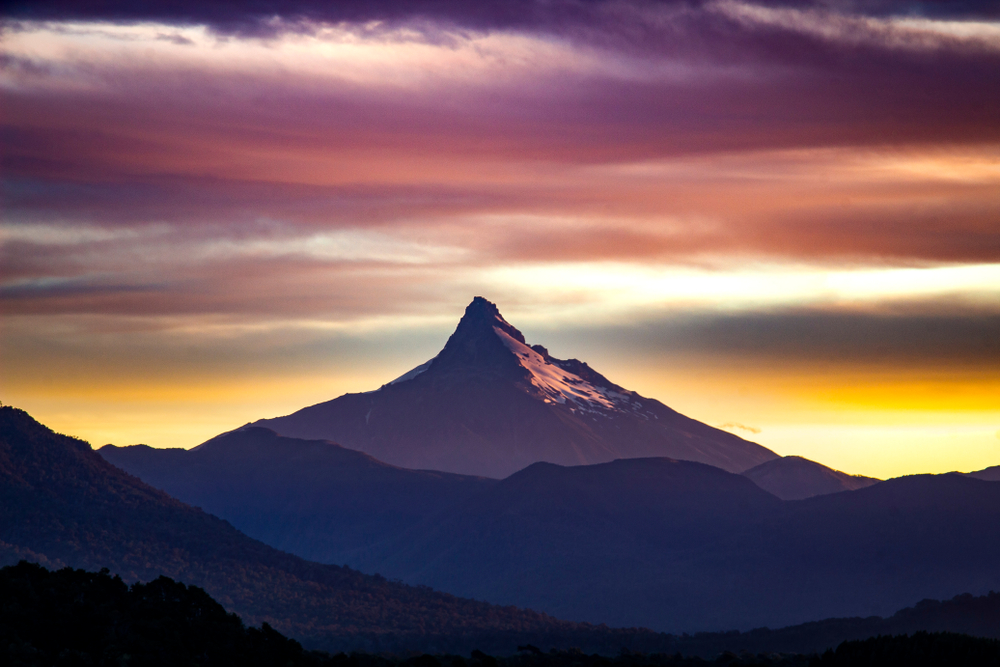
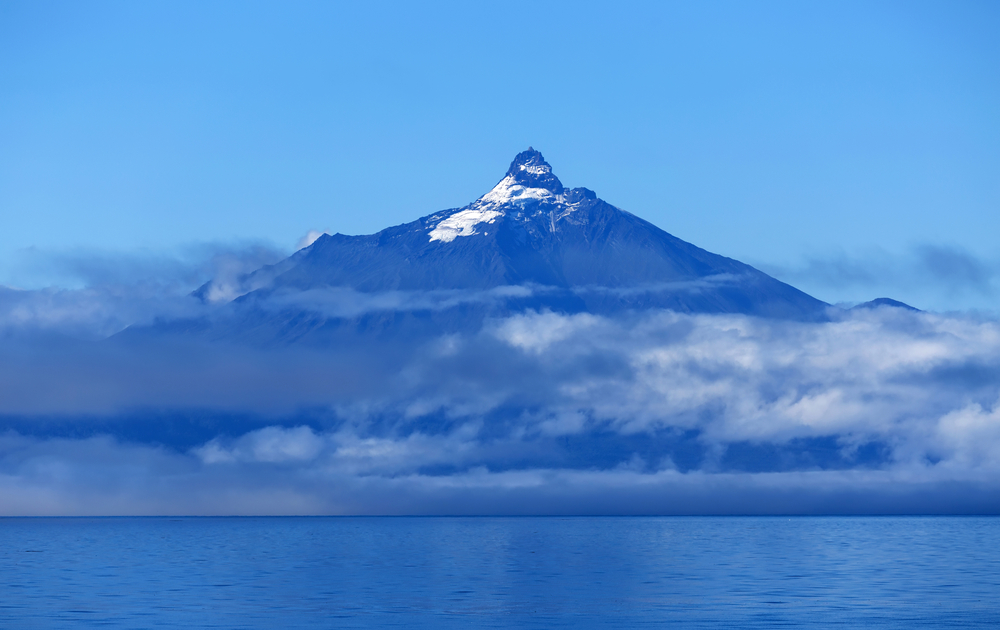
The park is best known for the imposing Corcovado Volcano, a symmetrical stratovolcano that rises dramatically to 7,572 feet (2,308 m) above the surrounding forests and fjords. Visitors are drawn to the park’s pristine wilderness, untouched forests, spectacular mountain scenery, and opportunities for remote adventure.
Unlike many national parks, Corcovado remains largely undeveloped, offering a true wilderness experience for those seeking solitude and unspoiled nature. Hiking, wildlife observation, photography, kayaking, and backcountry exploration are among the most popular activities, though access remains challenging due to the park’s remote location.
Geographically, Corcovado National Park encompasses a diverse landscape shaped by volcanic activity, glaciation, and coastal processes. The park contains temperate rainforests, snow-capped mountains, glaciers, rivers, lakes, wetlands, fjords, and rugged Pacific coastline.
Dense forests of southern beech, coihue, lenga, and evergreen species dominate much of the landscape. High annual rainfall supports lush vegetation, while the park’s mountainous terrain creates dramatic scenery characteristic of Chilean Patagonia. Numerous rivers and streams flow from the mountains to the sea, supporting both terrestrial and marine ecosystems.
Wildlife within Corcovado National Park is representative of Patagonia’s rich biodiversity. Mammals include pumas, pudú deer, South American gray foxes, river otters, and various small native species. Birdlife is especially impressive, with Andean condors, black-chested buzzard-eagles, Magellanic woodpeckers, austral parakeets, kingfishers, and numerous forest birds inhabiting the region.
The park’s coastal waters and fjords support marine mammals such as dolphins, sea lions, and occasionally whales migrating through nearby waters. The forests also provide habitat for amphibians and endemic species found only in southern Chile.
Corcovado National Park plays a critical role in preserving one of the largest intact temperate rainforest ecosystems in South America. The park protects critical wildlife habitat, safeguards watersheds, and conserves vast tracts of wilderness that remain largely untouched by development.
Its conservation significance is often compared to Pumalín Douglas Tompkins National Park and Torres del Paine National Park because of its wilderness character, biodiversity, and spectacular Patagonian scenery. Through its volcanic peaks, ancient forests, pristine fjords, diverse wildlife, and remote landscapes, Corcovado National Park stands as one of Chile’s most remarkable protected areas and a showcase of Patagonia’s wild natural heritage.
Photos



Things To Do
Hiking is one of the most common activities, but the park provides opportunities for much more. There is sailing, canoeing, and rowing on some of the riverways. Fishing is a popular activity, particularly on the Corcovado River.
Park Protection
Corcovado National Park was created to protect the temperate rainforests, fjords, mountains, glaciers, rivers, and coastal ecosystems of northern Patagonia in southern Chile. The park provides important habitat for several threatened and endangered species, including the endangered huemul deer, one of Chile’s national symbols and among South America’s most threatened large mammals.
Other wildlife protected within the park includes pumas, kodkods, southern river otters, Andean condors, and a variety of native forest birds. Its forests are dominated by southern beech species and support rich biodiversity characteristic of the Valdivian temperate rainforest, one of the world’s rarest forest ecosystems.
The park is especially significant for protecting the largely undeveloped wilderness surrounding Corcovado Volcano, one of the most prominent volcanic peaks in Patagonia. It also preserves an exceptional transition between coastal fjords, ancient temperate rainforests, glaciers, and alpine environments within a single protected landscape.
The park forms part of one of the largest remaining intact wilderness areas in southern Chile, where ecological processes continue with minimal human disturbance. Together, Corcovado National Park safeguards endangered huemul deer, pristine temperate rainforests, dramatic volcanic and glacial landscapes, and one of Patagonia’s most important conservation areas.
FAQ’s
What is the main reason people visit Corcovado National Park?
Corcovado National Park is primarily visited for its spectacular wilderness, ancient temperate rainforests, dramatic fjords, volcanoes, and some of the most pristine landscapes in Patagonia. Located in southern Chile within the Los Lagos Region, the park protects approximately 1,145 square miles (2,964 square kilometers) of rugged mountains, glaciers, forests, rivers, lakes, and coastline.
Visitors come to experience one of Chile’s most remote national parks, where vast wilderness areas remain largely untouched and wildlife thrives in a pristine Patagonian environment.
What animals can visitors hope to see in Corcovado National Park?
Corcovado National Park in Chile supports a rich diversity of mammals, many of which are characteristic of the temperate rainforests and mountains of Patagonia.
Some of the most notable animals found in Corcovado National Park include:
- Puma
- Southern Pudu
- Huemul Deer
- South American Gray Fox
- Culpeo Fox
- Southern River Otter
- Marine Otter
- Kodkod
- Geoffroy’s Cat
- Southern Elephant Seal
- South American Sea Lion
- Leopard Seal (occasional visitor)
- Peale’s Dolphin
- Chilean Dolphin
- Dusky Dolphin
- Orca
- Humpback Whale
- Blue Whale
- Sei Whale
- Southern Right Whale Dolphin
- Southern Fur Seal
- Monito del Monte
- Long-tailed Pygmy Rice Rat
- Patagonian Opossum Species
- Native Bat Species
- Myotis Bat Species
- Darwin’s Frog
- Chilean Frog Species
- Southern Toad Species
- Valdivian Forest Frog Species
- Chilean Tree Frog
- Patagonian Lizard Species
- Liolaemus Lizard Species
- Native Gecko Species
- Freshwater Fish Species
- Native Trout Species
- Patagonian Freshwater Invertebrates
- Forest Beetle Species
- Native Bumblebee Species
- Dragonfly Species
- Native Butterfly Species
- Forest Spider Species
- Freshwater Crustaceans
- Native Mollusks
- Forest Moth Species
- Endemic Arthropods
- Alpine Invertebrates
- Riverine Invertebrates
- Coastal Marine Species
- Numerous Endemic Forest Species
What birds can visitors hope to see in Corcovado National Park?
Corcovado National Park is home to more than 150 bird species and is one of Chile’s premier destinations for observing Patagonian and temperate rainforest birds.
Some of the most popular birds seen in Corcovado National Park include:
- Andean Condor
- Black-chested Buzzard-Eagle
- Variable Hawk
- Rufous-tailed Hawk
- Peregrine Falcon
- Chimango Caracara
- Crested Caracara
- Magellanic Woodpecker
- Chilean Flicker
- Austral Pygmy Owl
- Rufous-legged Owl
- Barn Owl
- Burrowing Parakeet
- Austral Parakeet
- Thorn-tailed Rayadito
- Des Murs’s Wiretail
- White-throated Treerunner
- Patagonian Tyrant
- Fire-eyed Diucon
- Tufted Tit-Tyrant
- Green-backed Firecrown
- Chilean Pigeon
- Ashy-headed Goose
- Upland Goose
- Kelp Goose
- Flightless Steamer Duck
- Flying Steamer Duck
- Chiloe Wigeon
- Spectacled Duck
- Torrent Duck
- Great Grebe
- Silvery Grebe
- Black-necked Swan
- Cocoi Heron
- Striated Heron
- Kelp Gull
- Dolphin Gull
- South American Tern
- Inca Tern
- Imperial Cormorant
- Rock Cormorant
- Neotropic Cormorant
- Black-faced Ibis
- Southern Lapwing
- Magellanic Oystercatcher
- American Oystercatcher
- Rufous-collared Sparrow
- Austral Thrush
- Patagonian Sierra Finch
- White-crested Elaenia
Is Corcovado National Park worth visiting?
Yes, Corcovado National Park is absolutely worth visiting and is considered one of Chile’s most pristine wilderness destinations.
The park offers extraordinary scenery, remote hiking opportunities, rugged coastlines, old-growth forests, volcanoes, glaciers, and exceptional wildlife viewing. Unlike many heavily visited parks, Corcovado provides a true wilderness experience where visitors may explore vast landscapes with very few other people.
The primary hesitation is accessibility. The park is remote, infrastructure is limited, and weather conditions can be challenging. However, adventurous travelers often consider these qualities part of its appeal.
What is the best time to visit Corcovado National Park?
Weather and Climate
The best time to visit Corcovado National Park is from December through March.
Typical conditions include:
- December–February: 45–70°F (7–21°C)
- March–April: 40–65°F (4–18°C)
- May–September: 30–55°F (-1–13°C)
- October–November: 35–60°F (2–16°C)
During the summer months:
- Hiking conditions are generally best.
- Daylight hours are longest.
- Boat access is more reliable.
- Wildlife viewing opportunities increase.
- Mountain trails are more accessible.
Rain is possible throughout the year due to the park’s maritime climate.
How many days do you need to visit Corcovado National Park?
Most visitors should plan for 2 to 4 days in Corcovado National Park.
- 1 day: Scenic exploration and short excursions.
- 2 days: Hiking and wildlife viewing.
- 3 days: Comprehensive exploration of the park’s landscapes.
- 4+ days: Photography, backcountry trekking, and wilderness experiences.
For most visitors, three days provides the ideal experience. This allows time to experience the temperate rainforest, coastal scenery, mountain viewpoints, and wildlife-rich areas without rushing.
Outdoor enthusiasts and photographers often spend four or more days exploring the park’s remote regions, taking advantage of changing weather conditions and opportunities to observe Patagonia’s unique ecosystems.
How do you get to Corcovado National Park?
International Access
Corcovado National Park is located in southern Chile’s Los Lagos Region.
The primary international gateway is:
- El Tepual Airport
Most international visitors connect through:
- Arturo Merino Benítez International Airport
Regional Access
The closest gateway communities include:
- Chaitén
- Palena
Most visitors access the region via the famous Carretera Austral.
Driving Access
From Puerto Montt, visitors typically:
- Take a ferry through the fjords of northern Patagonia.
- Travel along portions of the Carretera Austral.
- Continue to access points near the park.
Travel times vary significantly depending on ferry schedules and road conditions.
Main Attractions
Popular features include:
- Corcovado Volcano
- Yelcho Lake
- Gulf of Corcovado
- Temperate rainforest ecosystems.
- Patagonian fjords and coastal habitats.
Travel Times
Typical travel times include:
- Santiago to Puerto Montt: approximately 2 hours by air.
- Puerto Montt to Chaitén: 4–6 hours including ferry travel.
- Chaitén to park access areas: approximately 1–3 hours.
- Boat excursions within the region: often 2–8 hours depending on destination.
Because of the park’s remote nature, visitors should allow additional travel time and remain flexible with itineraries.
Who is involved in protecting and supporting Corcovado National Park?
Several organizations help protect and support Corcovado National Park:
- CONAF – manages Corcovado National Park.
- Tompkins Conservation – has supported conservation initiatives throughout Patagonia.
- World Wildlife Fund – supports regional conservation efforts.
- Local communities, scientists, and conservation organizations throughout Patagonia.
What is unique about Corcovado National Park?
Corcovado National Park is unique because it protects one of the largest remaining tracts of temperate rainforest and wilderness in southern Chile. The park combines towering mountains, glaciers, fjords, ancient forests, and volcanic landscapes within a largely untouched ecosystem.
Its remote location and limited development allow visitors to experience Patagonia much as it existed centuries ago, making it one of South America’s most pristine national parks.
Can you see whales near Corcovado National Park?
Yes. The nearby Gulf of Corcovado is one of the most important marine mammal habitats in southern Chile and supports humpback whales, blue whales, dolphins, and other marine species.
Sources
- All Trails, Best Trails in Corcovado National Park, https://www.alltrails.com/parks/chile/los-lagos/parque-nacional-corcovado, retrieved January 2022.
- LAC Geo, Corcovado National Park, https://lacgeo.com/corcovado-national-park-chile, retrieved January 2022.
- Wikipedia, Corcovado National Park, https://en.wikipedia.org/wiki/Corcovado_National_Park_(Chile), retrieved January 2022.