

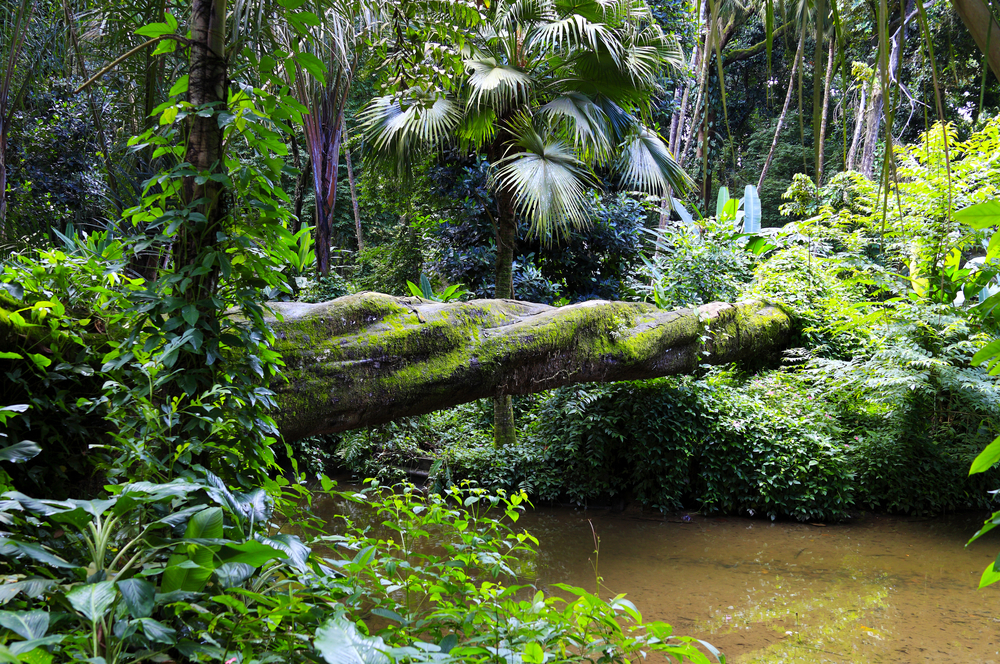
About
Congaree National Park is located in central South Carolina approximately 20 miles (32 km) southeast of Columbia. Established as a national monument in 1976 and redesignated as a national park in 2003, the park protects approximately 42 square miles (108 sq km) of one of the largest intact old-growth bottomland hardwood forests remaining in the United States.
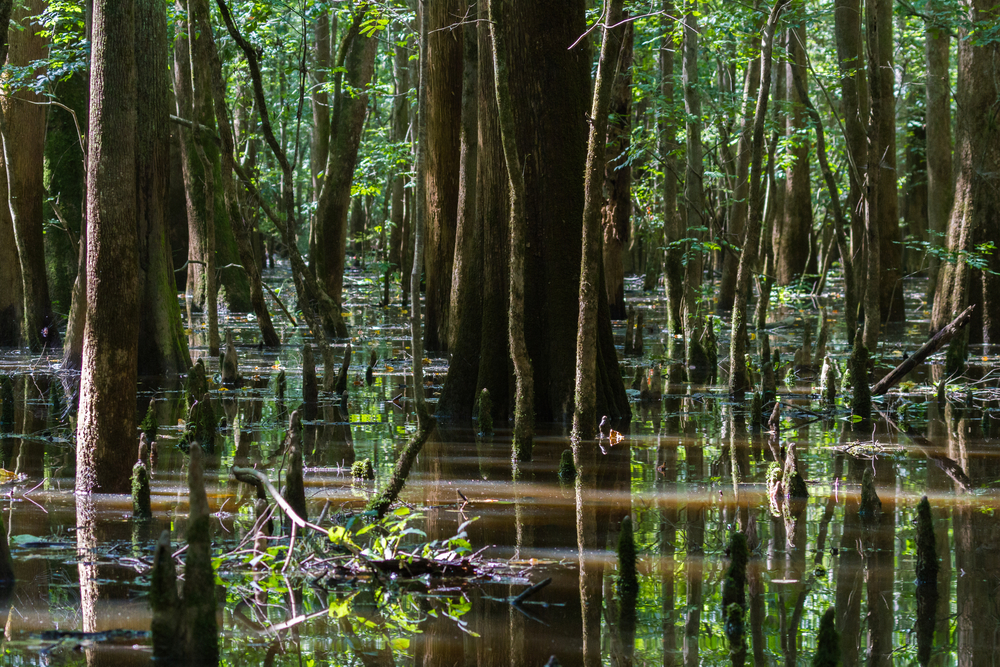
Situated along the Congaree and Wateree river floodplains, the park preserves a unique ecosystem shaped by seasonal flooding and nutrient-rich sediments. Though smaller than many western national parks, Congaree contains some of the tallest trees in eastern North America and represents one of the most biologically diverse protected areas in the southeastern United States.
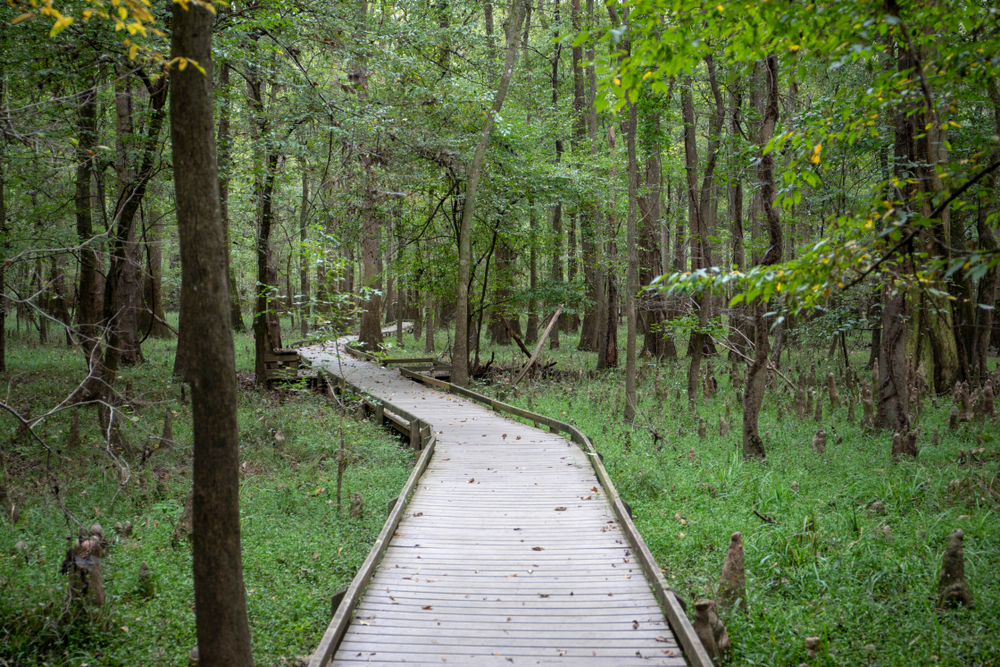
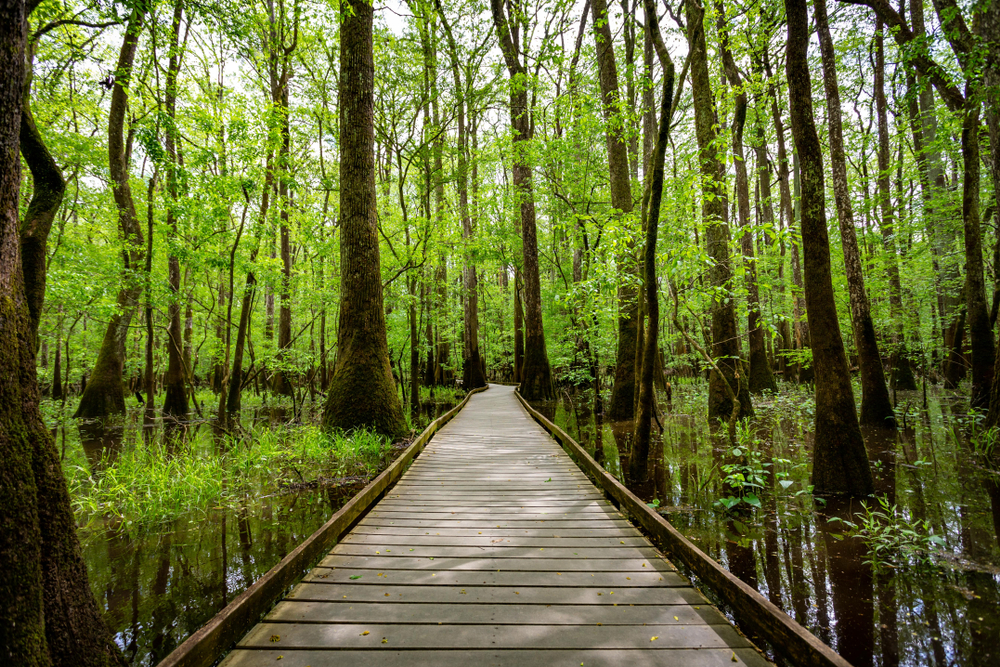
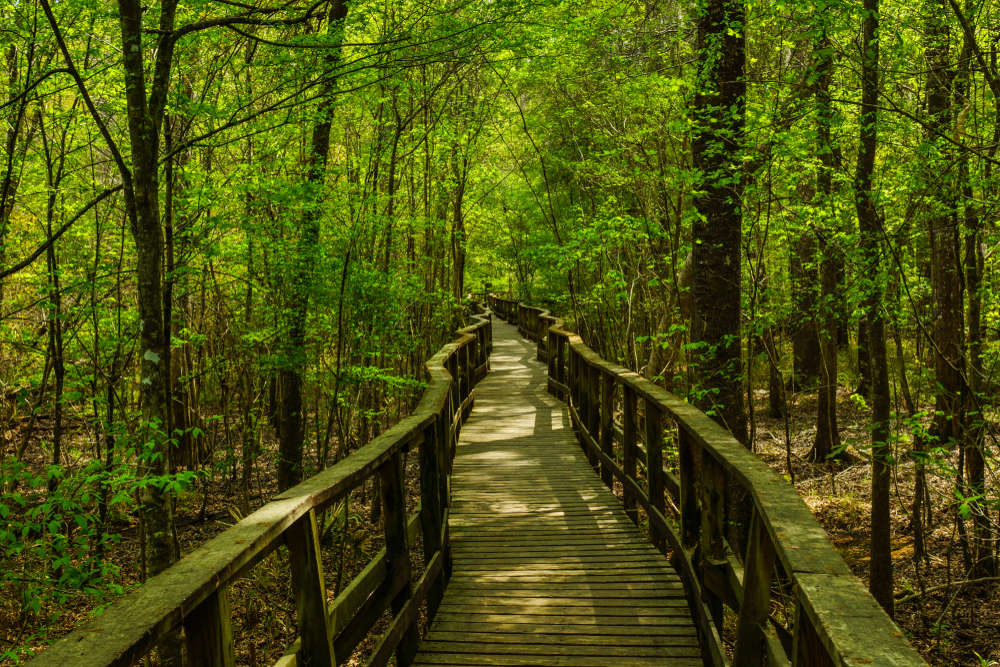
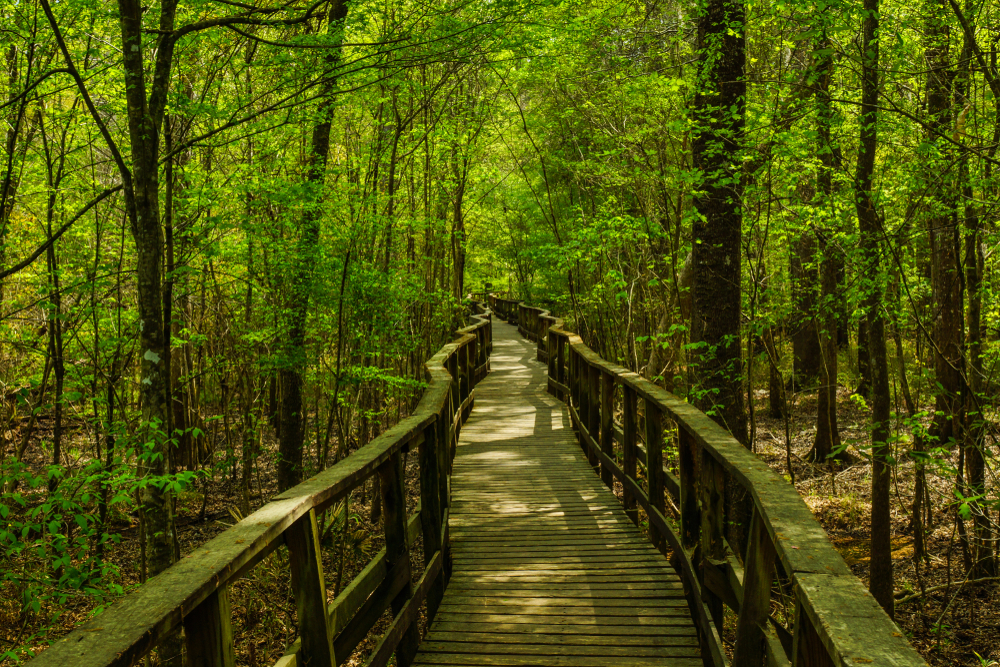
The park is best known for its towering old-growth forests, giant hardwood trees, and rich floodplain ecosystems. Visitors are drawn to the park’s peaceful wilderness, elevated boardwalks, canoe trails, and opportunities to experience one of America’s last remaining primeval floodplain forests. The popular Boardwalk Loop Trail allows visitors to explore the heart of the old-growth forest without disturbing sensitive habitats.
Canoeing and kayaking along Cedar Creek provide unique perspectives of the forest, especially during seasonal flooding when portions of the landscape become submerged. The park is also famous for its synchronized firefly displays, which attract visitors from around the world each spring.
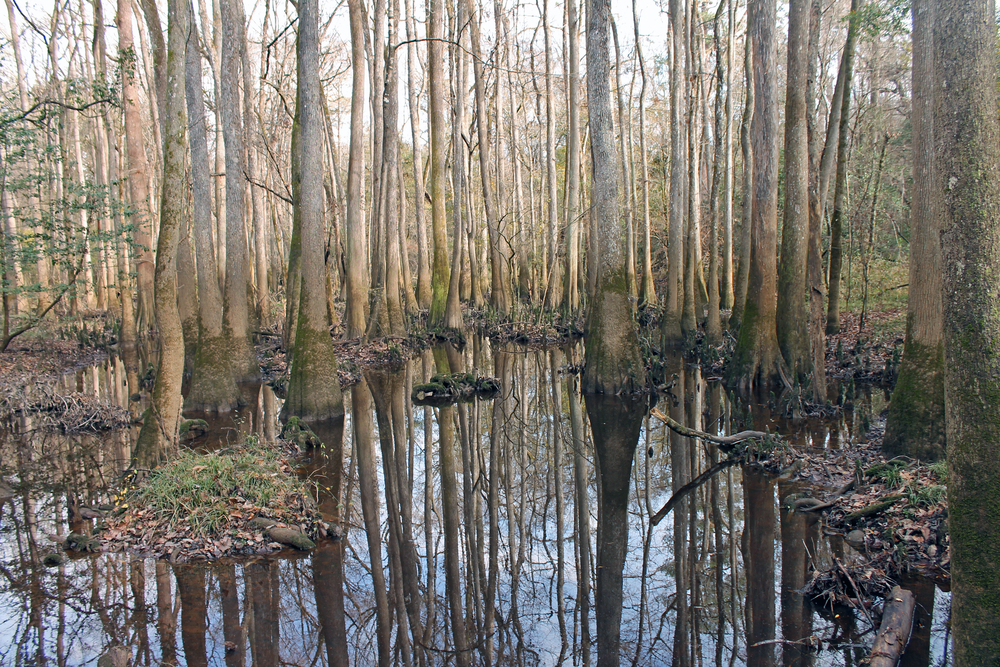
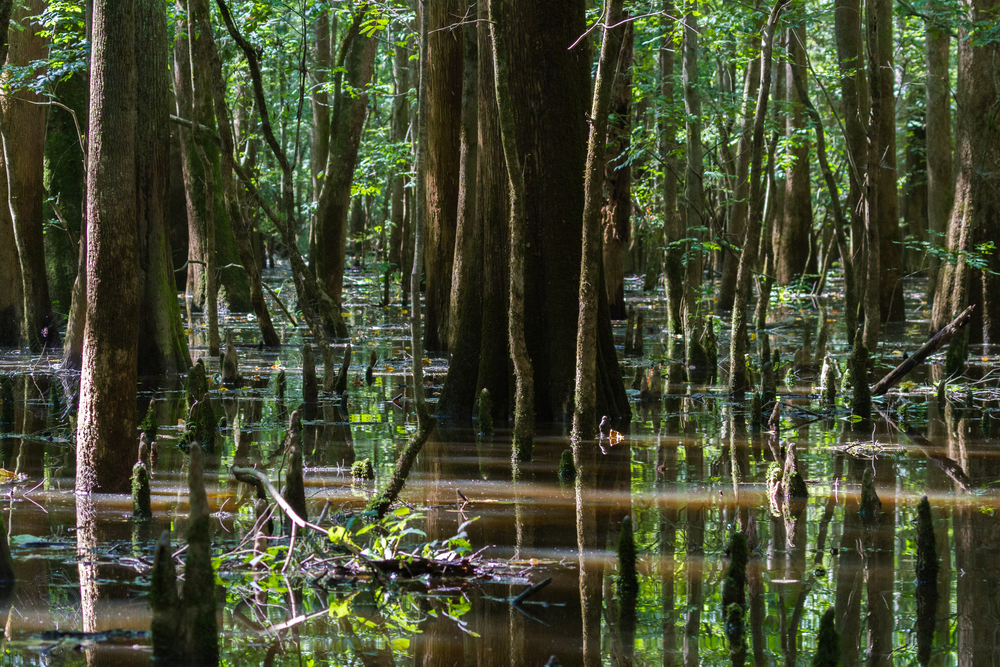
Geographically, Congaree National Park lies within the Atlantic Coastal Plain and is characterized by floodplain forests, wetlands, oxbow lakes, sloughs, and river channels. Seasonal flooding from the Congaree and Wateree Rivers replenishes the soil with nutrients, supporting extraordinary forest growth.
The landscape is relatively flat, but the constant influence of water creates a dynamic mosaic of habitats. Massive loblolly pines, sweetgum trees, bald cypress, tupelo, oaks, and maples dominate the forest canopy. Several trees within the park rank among the tallest of their species in North America, contributing to one of the highest temperate forest canopies in the world.
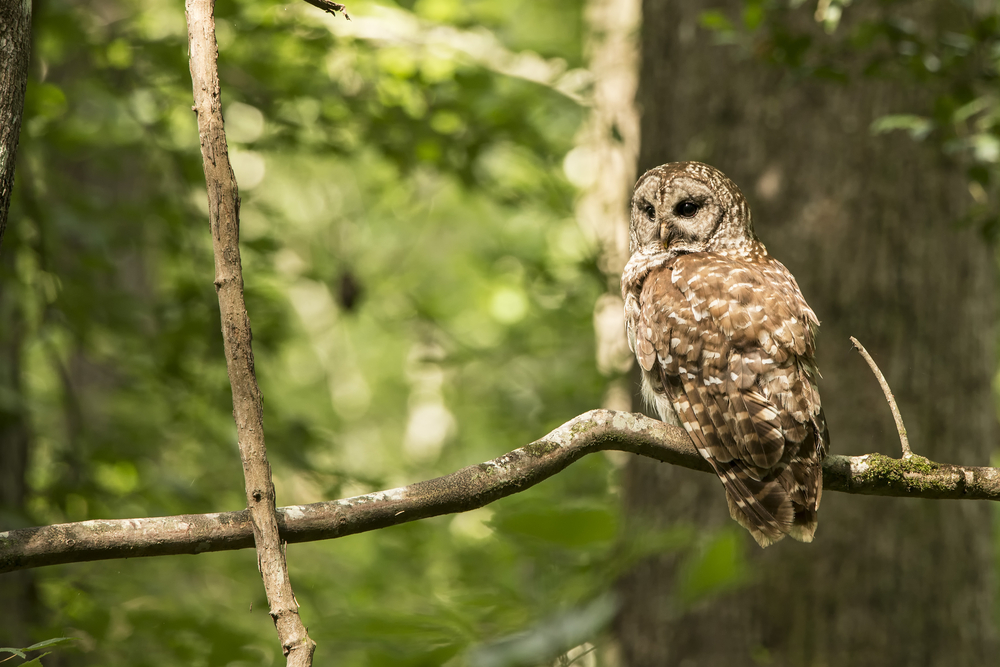
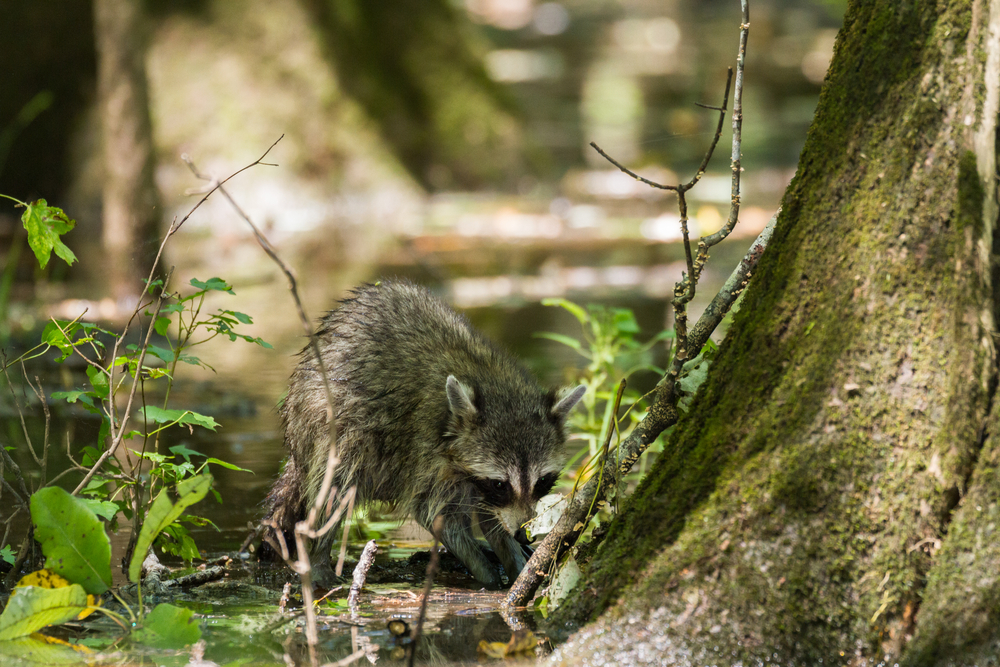
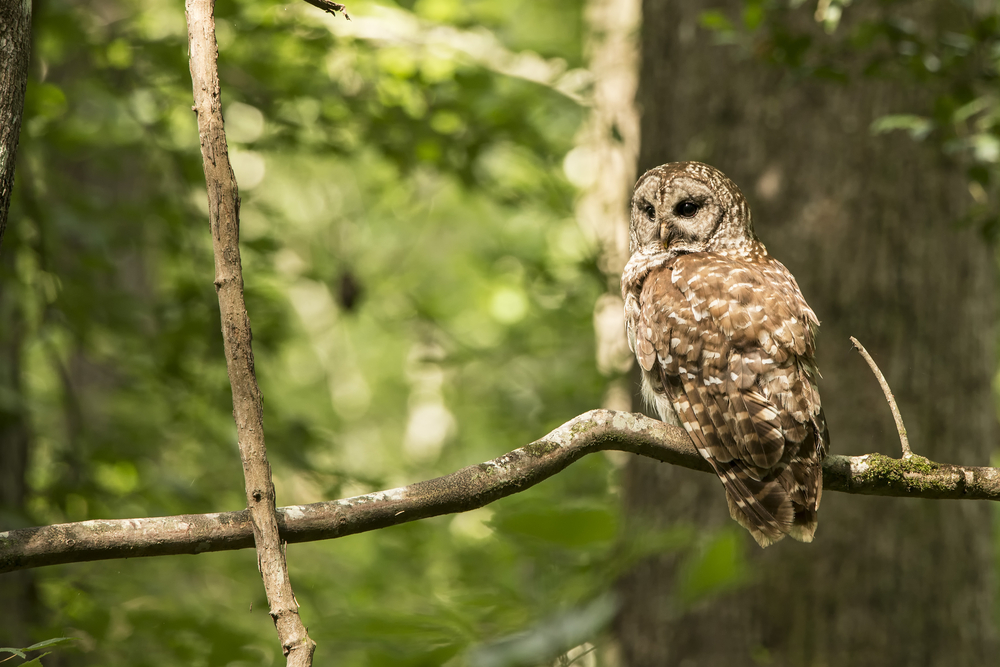
Wildlife within Congaree National Park is remarkably diverse. Mammals include white-tailed deer, bobcats, coyotes, raccoons, river otters, armadillos, and numerous bat species. Birdlife is especially abundant, with more than 200 recorded species including barred owls, prothonotary warblers, pileated woodpeckers, wood ducks, herons, and migratory songbirds.
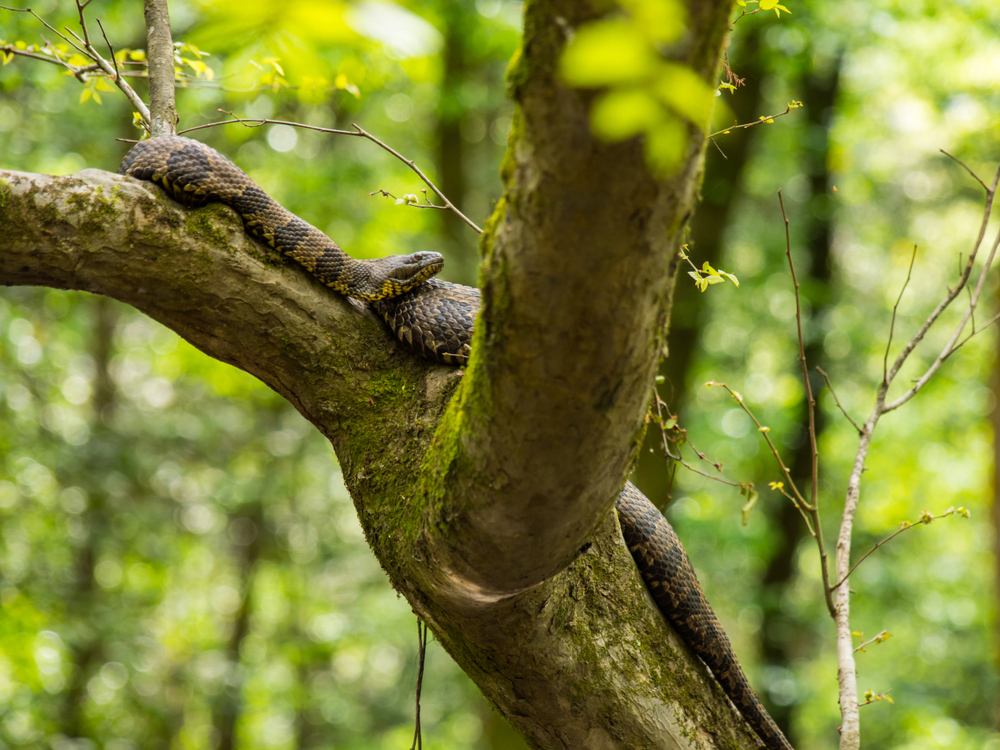
The park’s wetlands support amphibians such as salamanders, frogs, and toads, while reptiles include alligators, turtles, and a variety of snakes. Aquatic habitats teem with fish, freshwater mussels, and invertebrates, creating one of the most ecologically productive ecosystems in the southeastern United States.
Congaree National Park plays a vital role in preserving one of North America’s last large old-growth floodplain forests. The park protects critical habitat for wildlife, safeguards water quality, and preserves natural floodplain processes that have shaped the region for thousands of years.
Its conservation significance is often compared to Great Smoky Mountains National Park and Big Thicket National Preserve because of its biodiversity, old-growth forests, and ecological importance. Through its towering trees, pristine wetlands, rich wildlife, and unique floodplain ecosystems, Congaree National Park stands as one of America’s most remarkable natural treasures and a living reminder of the forests that once covered much of the southeastern United States.
Photos

Things to See
Things To Do
Engaging Congaree National park
Congaree National Park Trails
Congaree offers some of the most tranquil trees that meander through the bottomland and river valley area.

FAQ’s
What is Congaree National Park known for?
Congaree National Park is renowned for its vast and pristine old-growth bottomland hardwood forest, making it one of the largest and most significant stands of temperate deciduous forest in North America.
The park is celebrated for its towering hardwood trees, including champion specimens of several species, such as bald cypress and loblolly pine.
Visitors come to explore the park’s extensive network of boardwalks and trails, offering opportunities for hiking, birdwatching, canoeing, and wildlife viewing. The Congaree River, which runs through the park, provides unique recreational opportunities for paddlers and anglers.
Additionally, the park’s biodiversity, including rare plant and animal species, attracts scientists and researchers from around the world.
Congaree National Park offers visitors a chance to immerse themselves in a pristine natural environment and discover the beauty and significance of this unique ecosystem.
What are "champion trees" in Congaree National park?
The park is renowned for its “champion trees” featuring the tallest representations for 15 different species. The leading champion trees include:
- 167-foot (51 m) 361-point loblolly pine
- 157-foot (48 m) 384-point sweetgum
- 154-foot (47 m) 465 cherry bark oak
- 135-foot (41 m) 354-point American elm
- 133-foot (41 m) 356-point swamp chestnut oak
- 131-foot (40 m) 371-point over cup oak
- 127-foot (39 m) 219-point common persimmon
What is the main reason people visit Congaree National Park?
Congaree National Park is primarily visited for its old-growth bottomland hardwood forest, towering trees, rich biodiversity, and unique paddling opportunities. Located in central South Carolina, the park protects the largest intact expanse of old-growth bottomland forest remaining in the southeastern United States.
Visitors come to hike elevated boardwalks, paddle through forested waterways, observe wildlife, experience one of the tallest temperate forests in North America, and enjoy a peaceful wilderness environment unlike any other U.S. national park.
What animals can visitors hope to see in Congaree National Park?
Congaree National Park supports approximately 60 mammal species and more than 25 reptile species. Its floodplain forests, wetlands, creeks, and swamps provide habitat for a remarkable diversity of wildlife.
Some of the most notable mammals found in Congaree National Park include:
- White-tailed Deer
- Bobcat
- Coyote
- Gray Fox
- Red Fox
- River Otter
- Raccoon
- American Beaver
- Muskrat
- Mink
- Striped Skunk
- Long-tailed Weasel
- Eastern Cottontail
- Swamp Rabbit
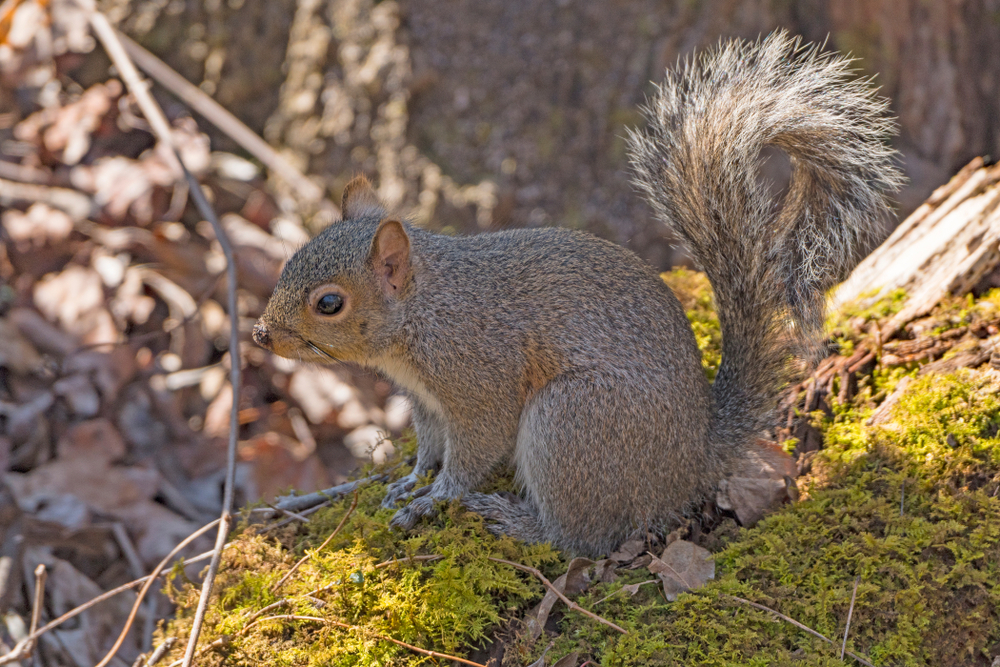
- Gray Squirrel
- Fox Squirrel
- Southern Flying Squirrel
- Eastern Chipmunk
- Cotton Mouse
- Deer Mouse
- Rice Rat
- Cotton Rat
- Woodland Vole
- Meadow Vole
- Marsh Rice Rat
- Opossum
- Nine-banded Armadillo
- Wild Boar (feral hog)
- Black Bear (occasionally)
- Big Brown Bat
- Evening Bat
- Eastern Red Bat
- Hoary Bat
- Seminole Bat
- Silver-haired Bat
- Northern Yellow Bat
- Rafinesque’s Big-eared Bat
- Southeastern Myotis
- Little Brown Bat
- Tricolored Bat
- Southern Short-tailed Shrew
- Least Shrew
- Mole Species
- Harvest Mouse
- Jumping Mouse Species
- Pocket Gopher Species
- Woodrat Species
- Various Rodent Species
- Various Bat Species
- Various Small Mammals
What birds can visitors hope to see in Congaree National Park?
Congaree National Park is home to more than 200 bird species. The park’s forests, wetlands, and waterways attract a wide variety of resident and migratory birds.
Some of the most popular birds seen in Congaree National Park include:
- Prothonotary Warbler
- Swallow-tailed Kite
- Bald Eagle
- Red-shouldered Hawk
- Red-tailed Hawk
- Cooper’s Hawk
- Barred Owl
- Great Horned Owl
- Eastern Screech-Owl
- Pileated Woodpecker
- Red-bellied Woodpecker
- Downy Woodpecker
- Hairy Woodpecker
- Northern Flicker
- Yellow-billed Cuckoo
- Belted Kingfisher
- Great Blue Heron
- Great Egret
- Snowy Egret
- Green Heron
- Black-crowned Night Heron
- Wood Duck
- Mallard
- Hooded Merganser
- Canada Goose
- Wild Turkey
- Common Gallinule
- Virginia Rail
- Common Yellowthroat
- Northern Parula
- Yellow-throated Warbler
- Pine Warbler
- Black-and-white Warbler
- American Redstart
- Louisiana Waterthrush
- Acadian Flycatcher
- Great Crested Flycatcher
- Eastern Phoebe
- Eastern Kingbird
- Carolina Chickadee
- Tufted Titmouse
- White-breasted Nuthatch
- Carolina Wren
- Blue-gray Gnatcatcher
- Wood Thrush
- American Robin
- Northern Cardinal
- Indigo Bunting
- Summer Tanager
- Red-winged Blackbird
Is Congaree National Park worth visiting?
Yes, Congaree National Park is absolutely worth visiting, especially for travelers interested in forests, wildlife, paddling, birdwatching, and unique ecosystems.
Unlike many national parks known for mountains or dramatic geology, Congaree offers a rare opportunity to experience one of the largest remaining old-growth floodplain forests in North America. Its giant trees, quiet waterways, biodiversity, and peaceful atmosphere make it a hidden gem within the National Park System.
What is the best time to visit Congaree National Park?
The best time to visit Congaree National Park is:
- March through May
- October through November
During these months:
- Temperatures are comfortable.
- Mosquito activity is lower.
- Wildflowers and spring foliage are attractive.
- Hiking and paddling conditions are excellent.
Summer can be hot, humid, and buggy, while winter offers fewer crowds and mild temperatures.
How many days do you need to visit Congaree National Park?
Most visitors should plan for 1 to 2 days.
- Half day: Boardwalk trail and visitor center.
- 1 day: Hiking and wildlife viewing.
- 2 days: Canoeing, kayaking, and exploring deeper sections of the park.
- 3+ days: Backcountry camping and extensive paddling opportunities.
Many visitors combine Congaree with other South Carolina attractions.
How do you get to Congaree National Park?
Congaree National Park is located southeast of Columbia.
Most visitors:
- Fly into Columbia, Charlotte, or Charleston.
- Drive to the park entrance.
- Access the park through the Harry Hampton Visitor Center.
The park is approximately 30 minutes from downtown Columbia.
Who is involved in protecting and supporting Congaree National Park?
Several organizations help protect Congaree National Park:
- National Park Service – manages Congaree National Park.
- Friends of Congaree Swamp – supports education, conservation, and stewardship programs.
- National Park Foundation – supports projects throughout the National Park System.
- South Carolina Department of Natural Resources – collaborates on wildlife and habitat conservation.
- Researchers, volunteers, and local communities that support conservation and public education efforts.
Sources
- All Trails, Best Trails in Congaree National Park, https://www.alltrails.com/parks/us/south-carolina/congaree-national-park, retrieved June 2020.
- Audubon, Congaree National Park, https://www.audubon.org/climate/national-parks/congaree-national-park, retrieved June 2020.
- Britannica, Congaree National Park, https://www.britannica.com/place/Congaree-National-Park, retrieved June 2020.
- Discover South Carolina, Congaree National Park, https://discoversouthcarolina.com/products/1482, retrieved June 2020.
- National Geographic, See the Largest Expanse of Old-Growth Hardwoods in the US, https://www.nationalgeographic.com/travel/national-parks/congaree-national-park/, retrieved June 2020.
- National Park Service, Congaree, https://www.nps.gov/cong/index.htm, retrieved June 2020.