About

Masada National Park is located just south of the midway central part of Israel along the eastern border.  The national park encompasses an area of just over 1 square mile (2.59 sq km). 

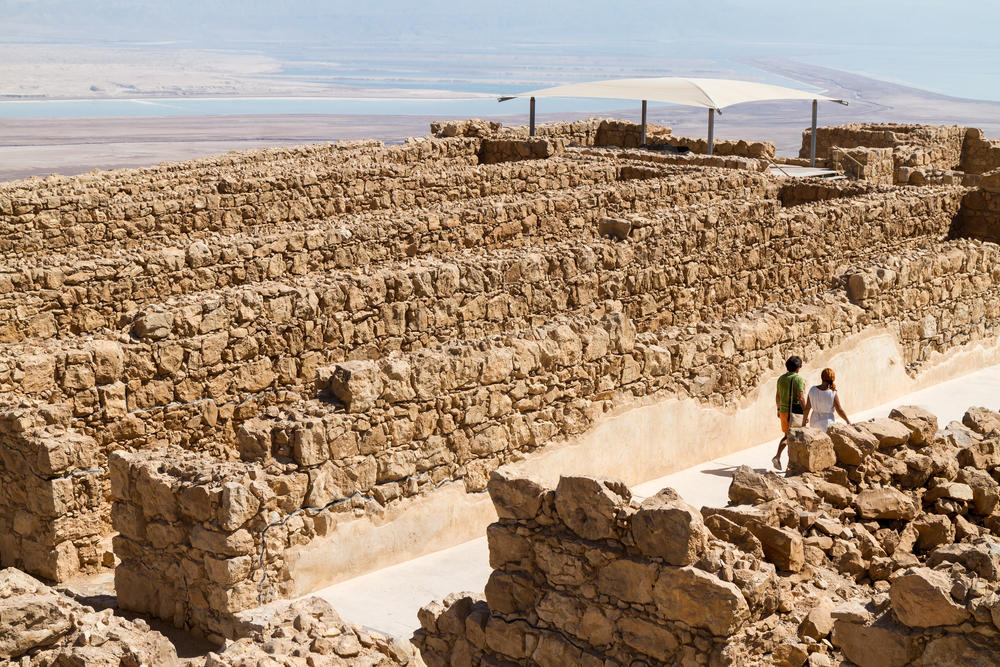
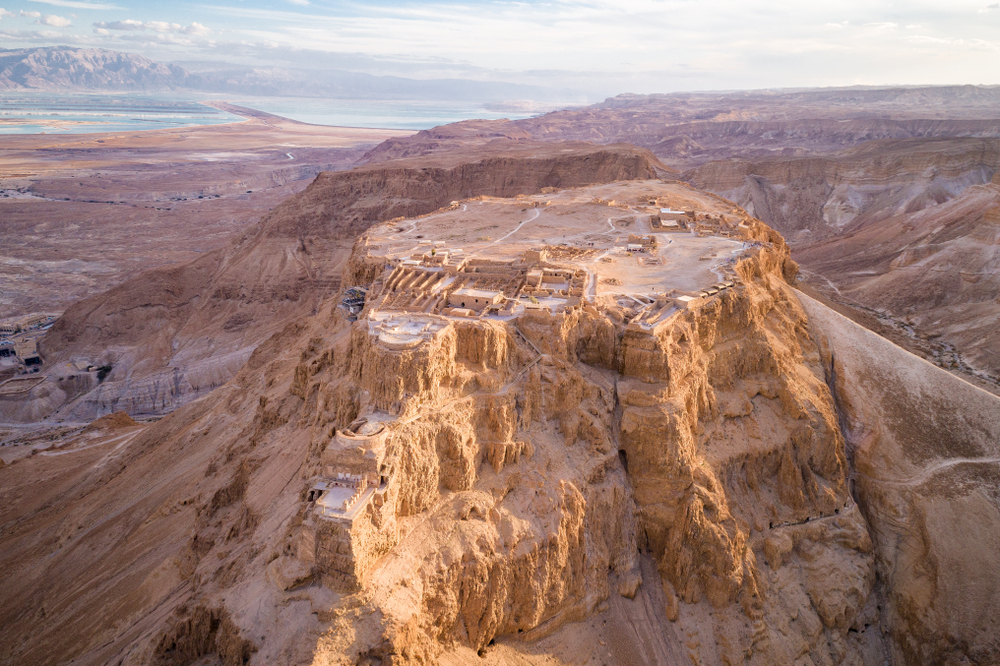
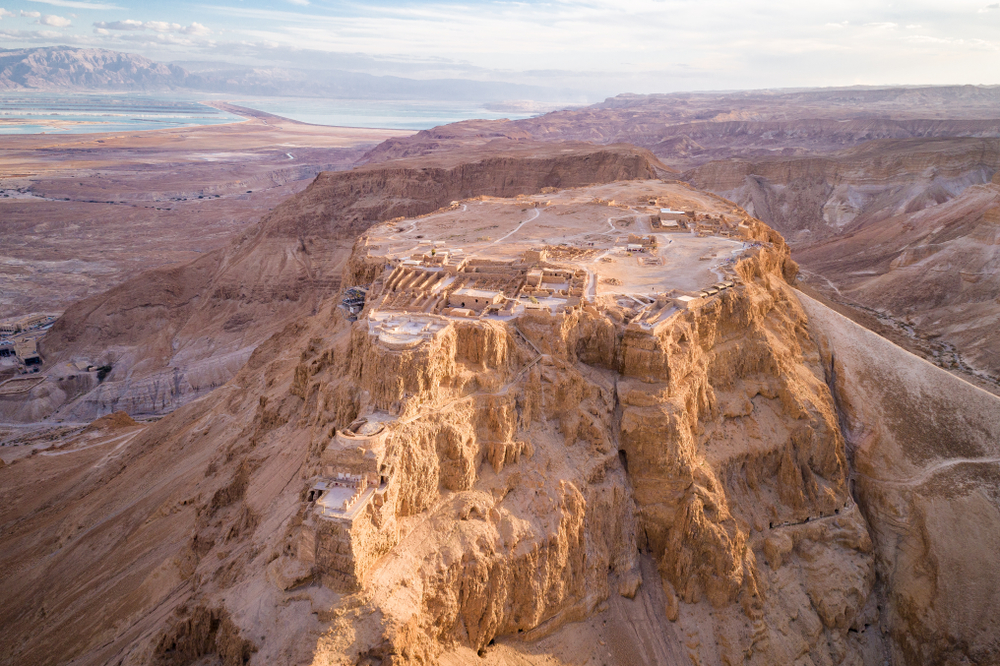
The national park sits atop a plateau along the eastern border of the Judaean Desert.  It overlooks the Dead Sea and is one of Israel’s most popular attractions.  Masada represents a tremendous blend of culture, history, and nature.

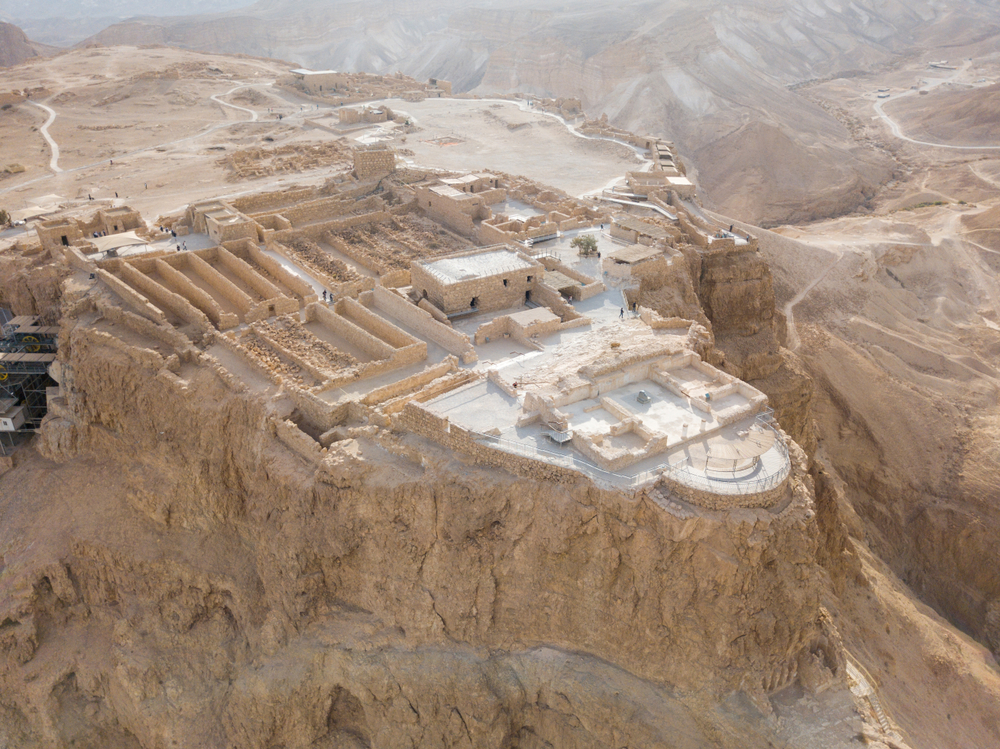
Masada was a historical fortification where Herod the Great constructed two palaces for himself.  It was the siege of this fortification during the initial Jewish-Roman War that came close to ending that war.

This was the first place that Herod the Great established as a fortified area after he began ruling over his kingdom.

The fortification was constructed on a horst which is where the plateau ends and is accompanied by sharp cliffs.  The cliffs reach a height of 1,300 feet (400 m).  The horst area stretches 1,800 feet (550 m) by 890 feet (270 m). 

In addition to the steep cliff sides, Herod added a 13-foot (4 m) wall along the plateau.  The wall stretched 4,300 feet (1,300 m) around the fortification.  He even built his own stepped swimming pool.

Things to See

The Masada fortification is the highlight and namesake of the park.  The experience leaves you standing in awe with the imagination of what it might have been like back in the days of its glory.

A cable car, known as the Masada Cableway, takes visitors to the top of the mesa.  Many visitors opt for this to avoid hiking in the heat which can reach around 109oF (43oC).

Things To Do

Engaging Masada

placeholder

Cable Car

The cable car offers an alternative way to reach the summit of Masada, making the site accessible to everyone, including those unable to hike the paths. It provides spectacular aerial views of the surrounding desert and the Dead Sea, offering a unique perspective on this historic site.

The cable car can be taken up to the summit of Masada and then visitors can elect to hike down to experience Masada and the surrounding terrain in two different ways.  This allows you to maximize your experience.

Masada National Park Trails

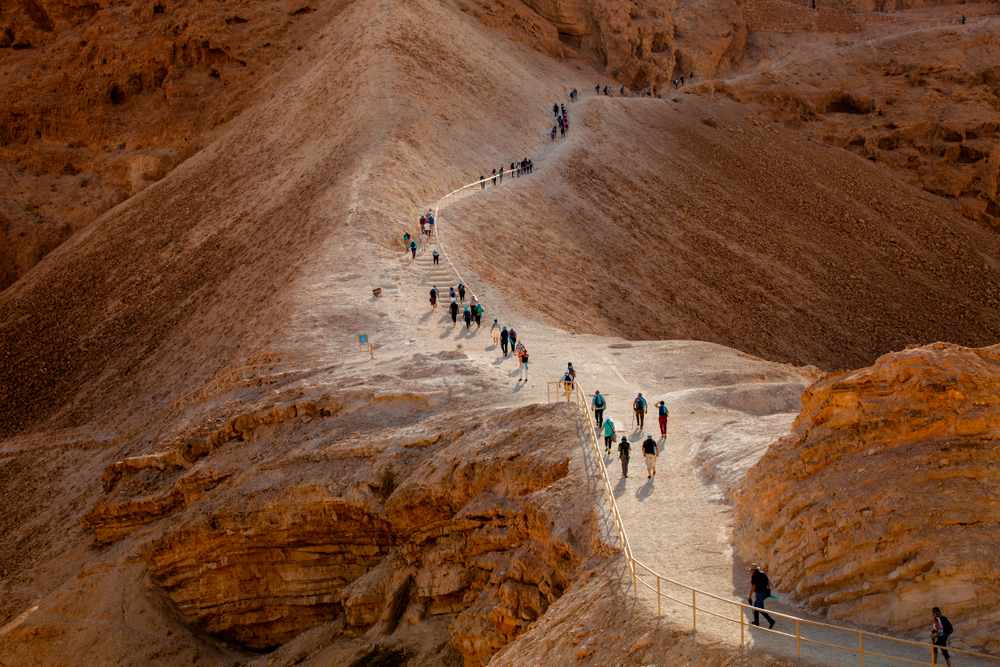
There are two trails that give access to the fortification and both are steep and demanding.  Entrance fees are required as well.  Either trail is usually started during the early hours of the morning to avoid the higher heats of midday.  Hikers are encouraged to take lots of water with them.

placeholder

Snake Trail

This trail starts at the Masada Museum reached from the Dead Sea Highway.  The trail heads east out of the museum and ascends 980 feet (300 m).

placeholder

Roman Ramp

This trail starts on the west side of the mountain.  Although there is less elevation change, it is still steep and demanding.

placeholder

The Snake Path

Rating: Moderate to Strenuous

Distance and Elevation Gain: About 2.4 miles (3.8 km) round trip with an elevation gain of approximately 1,300 feet (396 meters).

Description: The Snake Path is a winding trail that ascends the eastern side of Masada, offering hikers stunning sunrise views over the Dead Sea and the Moab Mountains.

This challenging climb rewards hikers with a sense of accomplishment and panoramic views of the desert landscape.

It’s a physically demanding route that connects to the fortress’s history and resilience.

placeholder

The Roman Ramp Trail

Rating: Easy to Moderate

Distance and Elevation Gain: Less than 0.5 miles (0.8 km) one way, with an elevation gain of about 300 feet (91 meters).

Description: This shorter, less strenuous path approaches Masada from the west, utilizing the ancient Roman siege ramp built during the Roman assault on the fortress.

It provides a quicker, more accessible route to the top, suitable for those who prefer a less challenging ascent.

Along the way, visitors can marvel at the engineering prowess of the Roman legion and the expansive views of the desert below.

placeholder

The Western Palace Trail

Rating: Easy

Distance and Elevation Gain: Less than 1 mile (1.6 km) loop on the plateau, minimal elevation gain.

Description: Once atop Masada, this easy loop leads through the ruins of Herod’s Western Palace, showcasing intricate mosaics, storerooms, and bathhouses.

It offers insights into the luxurious lifestyle of the Herodian period and the site’s architectural grandeur.

placeholder

The Northern Palace Trail

Rating: Easy

Distance and Elevation Gain: Less than 0.5 miles (0.8 km) round trip, minimal elevation gain.

Description: This path explores the impressive three-tiered Northern Palace, built into the cliff face. Hikers can observe the palace’s remains and enjoy stunning views of the Dead Sea and the Judaean Desert. It’s a testament to Herod’s architectural ambition and provides a glimpse into Masada’s opulent past.

Sources