

About
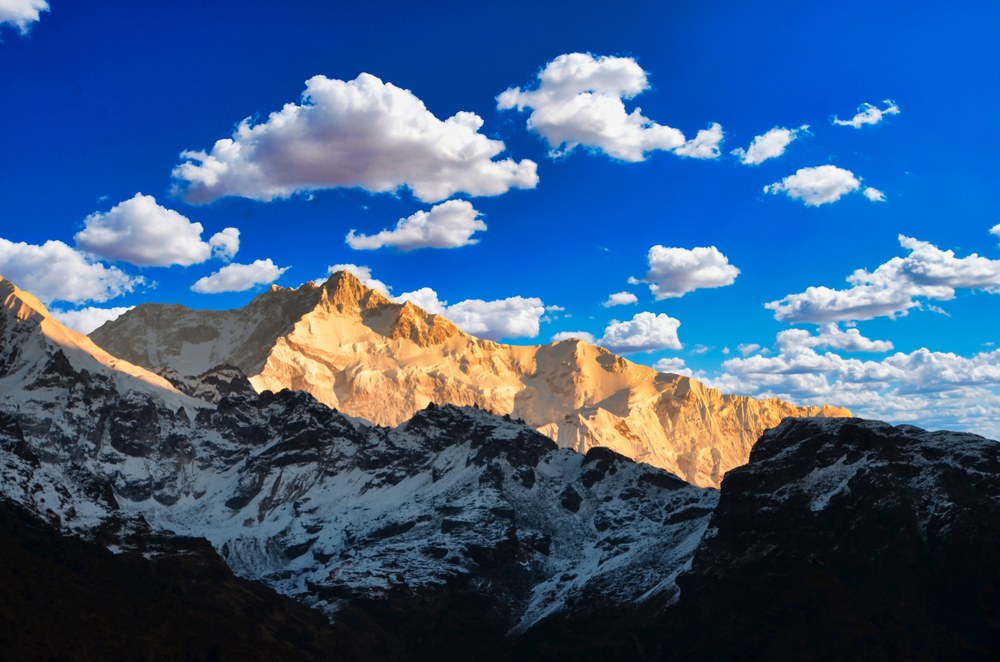
Khangchendzonga National Park is located in the eastern finger of India in the state of Sikkim. It sits adjacent to the Nepal-India border. The park covers an area of 328 square miles (849.5 sq km).
Kangchenjunga has the neighboring Neora Valley National Park and is part of 14 different protected areas spread across the larger region of Bhutan, China, India, and Nepal.
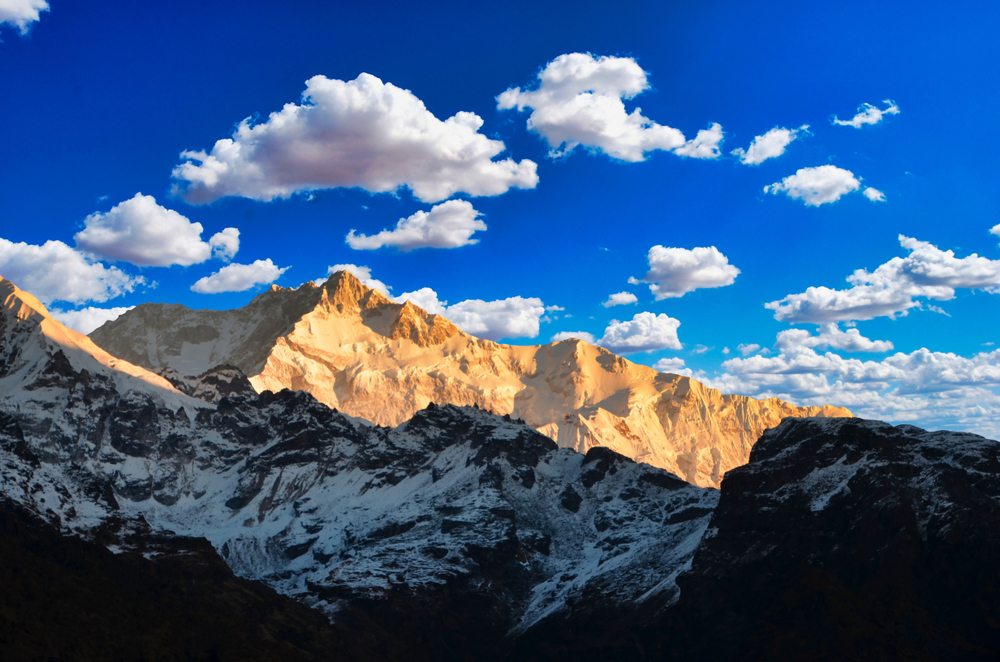
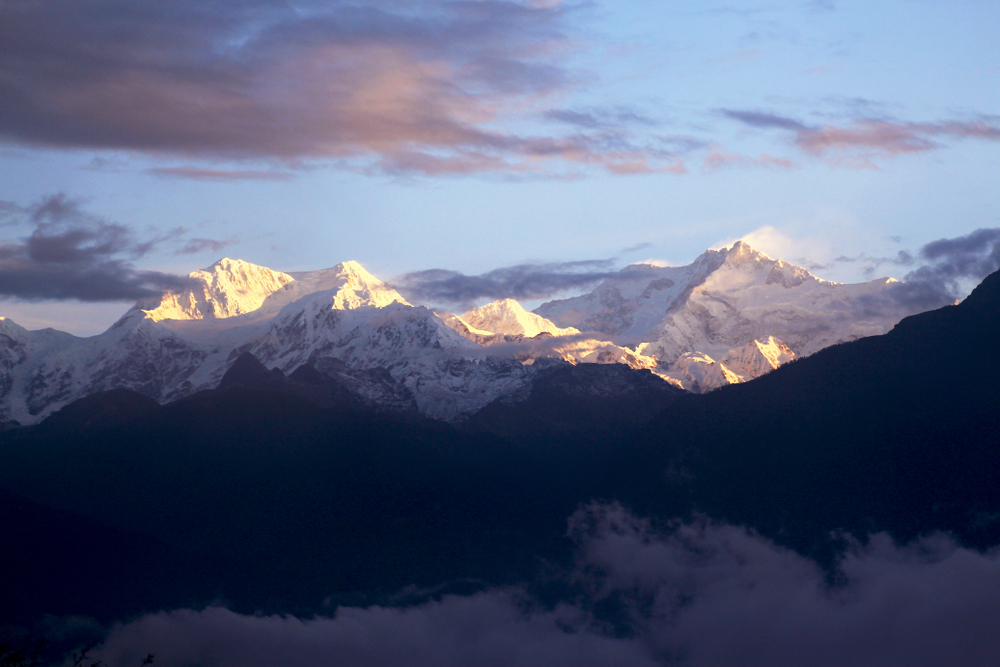
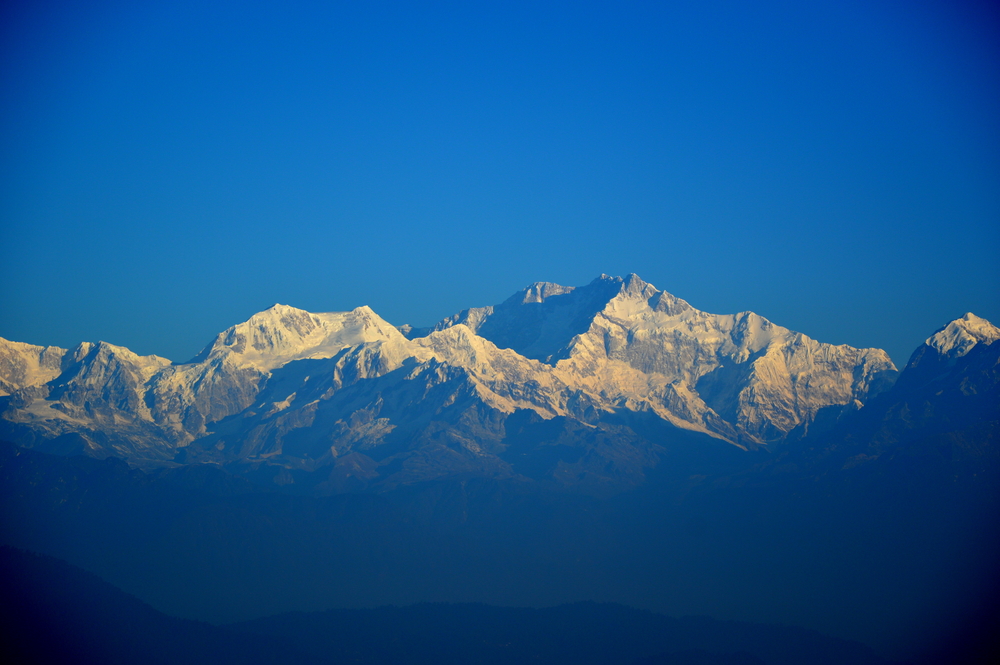
The mountainous national park elevations range from 6,001 feet (1,820 m) up to 28,050 feet (8,550 m), which is accounted for by Mount Kanchenjunga. It is the third tallest mountain in the world, with Mount Everest in Sagarmatha National Park.
The comprises striking mountain landscapes, river and streams, steep-sided valleys, lakes, and glaciers. The habitats vary from subtropical to alpine, creating a diverse biological region. The varied habitats give way to a variety of wildlife species. There are almost 425 different medicinal species of vegetation.
Some of the predator species that trekkers hope to see include clouded leopard, snow leopard, leopard, leopard cat, jungle cat, jackal, golden cat, and the Tibetan wolf. Some of the other popular species visitors hope to experience include musk deer, red panda, goral, blue sheep, tahr, and two different primates.
Almost half of all bird species found throughout India may be witnessed in the national park borders. Of the over three birds species, three of them are endemic to this region of the Himalayas. A variety of falcons and hawks are often hopeful bird sightings by the bird lovers who embark on journeys into the park.
Photos
Things to See
Khangchendzonga National Park Trails
The national park is a renowned trekking destination; however, there is not really an abundance of trails. There is really only one or two routes and what is experienced depends on how many days you venture into the park for all practical purposes.

Park Protection
Khangchendzonga National Park was created to protect the biosphere in Sikkim, India. It is also a UNESCO World Heritage Site as a Mixed Heritage location.
The national park also protects part of the Himalayan mountain range and the world’s third-highest summit. With over 300 species and 3 endemic species of birds, the national park is recognized as an Important Bird Area.
The diverse ecosystem must also be protected from human encroachment so that the abundant wildlife species can continue to survive.
Sources
- Outlook India, Khangchendzonga National Park: A Peek Into Sikkim’s Magnificence, https://www.outlookindia.com/outlooktraveller/explore/story/70052/khangchendzonga-national-park-a-peek-into-sikkims-magnificence, retrieved November 2020.
- Tutorials Point, What is the Significance of Khangchendzonga National Park, https://www.tutorialspoint.com/what-is-the-significance-of-khangchendzonga-national-park, retrieved November 2020.
- Travel Triangle, Khangchendzonga National Park: An Ultimate Escape Into The Lap of Mother Nature, https://traveltriangle.com/blog/khangchendzonga-national-park/, retrieved November 2020.
- UNESCO, Khangchendzonga National Park, https://whc.unesco.org/en/list/1513/, retrieved November 2020.
- Wild Trails, Khangchendzonga (Kanchenjunga) National Park, https://wildtrails.in/khangchendzonga-kanchenjunga-national-park/, retrieved November 2020.
- World Heritage Outlook, Khangchendzonga National Park, https://worldheritageoutlook.iucn.org/explore-sites/wdpaid/555622043, retrieved November 2020.