About

Mokala National Park, the park is located in South Africa’s Northern Cape Province approximately 50 miles (80 km) southwest of Kimberley. The park covers approximately 106 square miles (275 sq km) and is one of South Africa’s newest national parks.

Established in 2007, Mokala National Park was created to protect endangered species and conserve the transition zone between the Kalahari, Nama Karoo, and grassland biomes. The name “Mokala” comes from the Setswana word for the camel thorn tree, a characteristic species of the region. Situated south of Mokala National Park’s larger neighboring conservation landscapes and west of the country’s central interior, the park has rapidly become an important center for wildlife conservation and ecological restoration.

Mokala National Park is best known for its conservation of rare and endangered species, particularly large antelope and rhinoceroses. Unlike many of South Africa’s more famous safari destinations, Mokala was developed with a strong emphasis on biodiversity conservation rather than tourism alone.

Visitors are drawn by opportunities to observe species that are becoming increasingly rare elsewhere, including roan antelope, sable antelope, tsessebe, and both black and white rhinoceroses. The park offers game drives, wildlife photography, birdwatching, and nature-based recreation within a tranquil setting that receives far fewer visitors than larger national parks. Its peaceful atmosphere and conservation focus provide a distinctive safari experience.

The geography of Mokala National Park consists of rolling hills, open plains, rocky ridges, and seasonal river valleys. The landscape represents a transition zone where several major ecological regions meet, creating a rich diversity of habitats. Grasslands, acacia woodlands, shrublands, and riverine vegetation support a variety of wildlife adapted to semi-arid conditions.

Scattered rocky outcrops provide shelter for smaller animals and create scenic viewpoints across the countryside. Seasonal rainfall influences vegetation growth and water availability, while several dams and water sources help sustain wildlife throughout the year. This blend of habitats contributes significantly to the park’s ecological value.

Wildlife is the primary attraction of Mokala National Park. The park supports healthy populations of white rhinoceros, black rhinoceros, buffalo, giraffe, zebra, eland, kudu, gemsbok, roan antelope, sable antelope, and tsessebe. Several of these species have been successfully reintroduced as part of ongoing conservation programs. Predators are less numerous than in some larger parks, allowing herbivore populations to flourish.

Birdlife is also impressive, with more than 300 recorded species inhabiting the park. Raptors, secretary birds, cranes, hornbills, kingfishers, and numerous grassland birds can be observed throughout the year. The combination of rare mammals and diverse birdlife makes Mokala an increasingly important destination for wildlife enthusiasts.

Mokala National Park plays a critical role in conserving South Africa’s threatened wildlife and protecting habitats where multiple ecological regions converge. The park serves as an important breeding and recovery area for endangered species while preserving ecosystems that have been heavily affected by agriculture and development elsewhere.

Its conservation significance is often compared to parks such as Mountain Zebra National Park and Marakele National Park, where focused management has helped restore vulnerable wildlife populations. Although relatively young, Mokala has quickly established itself as a model for modern conservation in South Africa. Today, the park remains a sanctuary for rare species and a testament to the success of proactive wildlife management and habitat protection.

Things to See

Popular

Mokala National Park, located in South Africa’s Northern Cape Province, is a conservation gem that provides sanctuary to a wide range of wildlife. Its arid savannahs and acacia woodlands are home to iconic species that thrive in this unique environment.

Roan Antelope (Hippotragus equinus)
The roan antelope is one of the rarest species in Mokala. Its striking facial markings and long, backward-curving horns make it a highlight for wildlife enthusiasts. It grazes in the park’s open savannahs, contributing to the ecosystem by maintaining grassland balance.

Sable Antelope (Hippotragus niger)
Known for its majestic black coat and impressive curved horns, the sable antelope is another rare and protected species in Mokala. It prefers wooded areas and feeds on grasses and foliage.

Black Rhino (Diceros bicornis)
Mokala is a vital conservation area for the endangered black rhino. These solitary browsers feed on shrubs and trees, using their prehensile lips to grasp vegetation.

White Rhino (Ceratotherium simum)
The park also protects populations of white rhinos, which graze on grasses in open plains. Their conservation here underscores Mokala’s commitment to protecting rhino species.

Eland (Taurotragus oryx)
The eland, the largest antelope species, roams the park’s grasslands and woodlands. It feeds on a mix of grasses and leaves and is known for its adaptability to arid environments.

Giraffe (Giraffa camelopardalis)
Giraffes are a common sight in Mokala, browsing on acacia trees. Their height and unique coat patterns make them a favorite among visitors.

Tsessebe (Damaliscus lunatus)
This fast and agile antelope prefers open grasslands and is one of Mokala’s unique species. It grazes on grasses and is often seen in small herds.

Buffalo (Syncerus caffer)
Cape buffalo are frequently seen in Mokala’s wooded and grassy areas. They graze on grasses and form herds for protection against predators.

Warthog (Phacochoerus africanus)
These hardy omnivores forage for roots, tubers, and grasses. Warthogs are often found near waterholes and use their burrows as shelter.

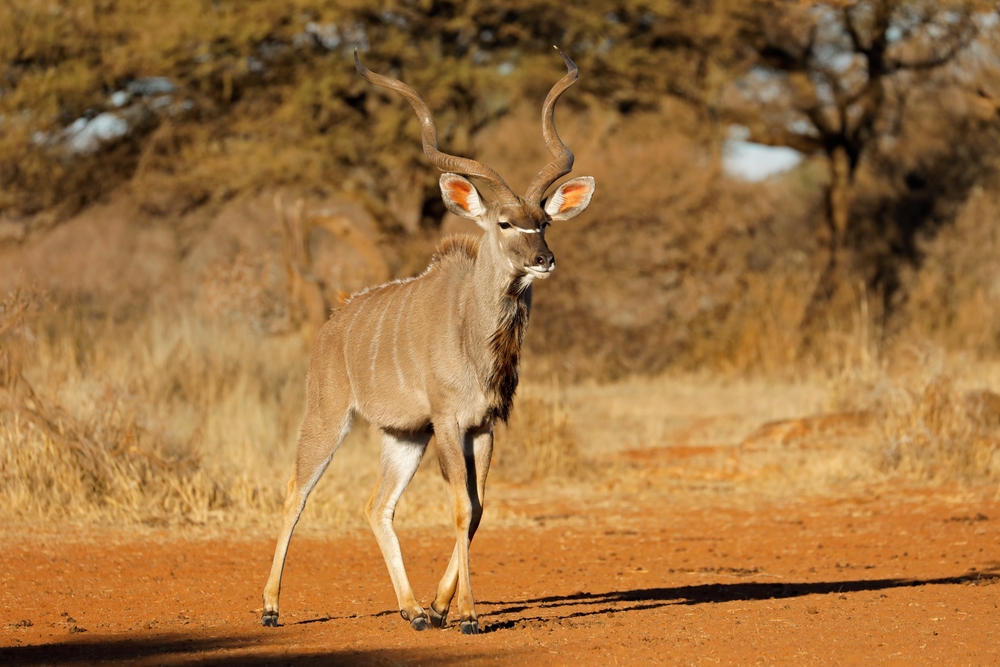
Kudu (Tragelaphus strepsiceros)
Kudu are commonly seen in Mokala’s woodlands, feeding on leaves, fruits, and flowers. Their impressive spiral horns and graceful movements make them a standout species.

Birds

Mokala National Park’s diverse habitats support a rich variety of bird species, making it a paradise for birdwatchers. Its combination of savannah, woodlands, and waterholes attracts both resident and migratory birds.

Kori Bustard (Ardeotis kori)
The Kori bustard, Africa’s heaviest flying bird, is often seen walking through Mokala’s open grasslands, feeding on seeds, insects, and small vertebrates.

Secretarybird (Sagittarius serpentarius)
This unique bird of prey is known for its long legs and striking appearance. It hunts snakes and other small animals on the ground.

Southern Yellow-billed Hornbill (Tockus leucomelas)
Commonly found in Mokala’s savannahs, this hornbill feeds on insects, fruits, and seeds, often foraging on the ground.

African Grey Hornbill (Lophoceros nasutus)
This slender hornbill frequents Mokala’s woodlands, feeding on a variety of fruits, insects, and small animals.

Double-banded Sandgrouse (Pterocles bicinctus)
A specialist of arid environments, this sandgrouse is often seen near waterholes, feeding on seeds and drinking water at dawn and dusk.

Namaqua Dove (Oena capensis)
This small, elegant dove is a common sight in Mokala’s arid regions, feeding on seeds and small insects.

Greater Kestrel (Falco rupicoloides)
Often seen perched on trees or utility poles, the greater kestrel hunts small rodents, reptiles, and insects.

Pale Chanting Goshawk (Melierax canorus)
This medium-sized raptor is frequently spotted in the park’s open areas, hunting rodents and reptiles.

Cape Glossy Starling (Lamprotornis nitens)
This iridescent starling is a vibrant addition to Mokala’s birdlife, feeding on fruits, seeds, and insects.

Blacksmith Lapwing (Vanellus armatus)
Common near Mokala’s waterholes, this striking wader is known for its sharp call and territorial behavior.

Things To Do

Engage Mokala National Park

placeholder

Game Drives

Guided game drives are one of the most popular ways to experience Mokala National Park, offering visitors a chance to explore its diverse landscapes and encounter its rich wildlife. The park’s open grasslands, acacia woodlands, and rocky outcrops provide habitats for species such as sable and roan antelope, giraffes, and white and black rhinos.

Early morning and late afternoon drives are particularly rewarding, as wildlife is most active during these cooler hours. Experienced guides lead the excursions, sharing their knowledge of the park’s ecology, wildlife behaviors, and conservation efforts.

Drives often include stops at scenic viewpoints, where visitors can enjoy breathtaking views of the park’s tranquil landscapes. With opportunities to see rare and endangered species up close, guided game drives are an unforgettable way to connect with the natural beauty of Mokala.

placeholder

Nature Walks

For those seeking a more intimate experience with nature, hiking and guided bush walks in Mokala National Park are excellent options. Trails meander through the park’s varied terrain, allowing visitors to observe flora, fauna, and smaller creatures that might go unnoticed during a vehicle-based safari.

Rangers lead the walks, teaching participants about animal tracks, plant uses, and the intricate ecosystems that thrive in the semi-arid environment.

Hikers may encounter species such as warthogs, kudu, and birdlife like the pale chanting goshawk. These walks provide a deeper understanding of the park’s natural balance and are perfect for visitors looking for an immersive and educational outdoor experience.

placeholder

Birdwatching

For those seeking a more intimate experience with nature, hiking and guided bush walks in Mokala National Park are excellent options. Trails meander through the park’s varied terrain, allowing visitors to observe flora, fauna, and smaller creatures that might go unnoticed during a vehicle-based safari.

Rangers lead the walks, teaching participants about animal tracks, plant uses, and the intricate ecosystems that thrive in the semi-arid environment.

Hikers may encounter species such as warthogs, kudu, and birdlife like the pale chanting goshawk. These walks provide a deeper understanding of the park’s natural balance and are perfect for visitors looking for an immersive and educational outdoor experience.