

About
Mkomazi National Park is located in northeastern Tanzania along the border with Kenya. The park covers approximately 1,255 square miles (3,250 sq km) and forms a transboundary conservation landscape with Kenya’s Tsavo West National Park.
Situated southeast of Mount Kilimanjaro and northeast of the Pare Mountains, Mkomazi occupies a strategic position within one of East Africa’s most important wildlife corridors. Established as a national park in 2006 after decades as a game reserve, Mkomazi protects a remarkable blend of savanna, woodland, and semi-arid ecosystems that support a rich diversity of wildlife.
Mkomazi National Park is best known for its successful conservation programs, particularly the recovery of critically endangered black rhinoceros and African wild dogs. The park offers a quieter safari experience than many of Tanzania’s more famous destinations. Visitors are often drawn by the opportunity to explore expansive landscapes without large crowds.
On clear days, the snow-capped summit of Mount Kilimanjaro can be seen rising dramatically above the horizon, creating one of the most memorable views in East Africa. The park’s remote character and spectacular scenery provide a sense of wilderness that is increasingly rare across the continent.
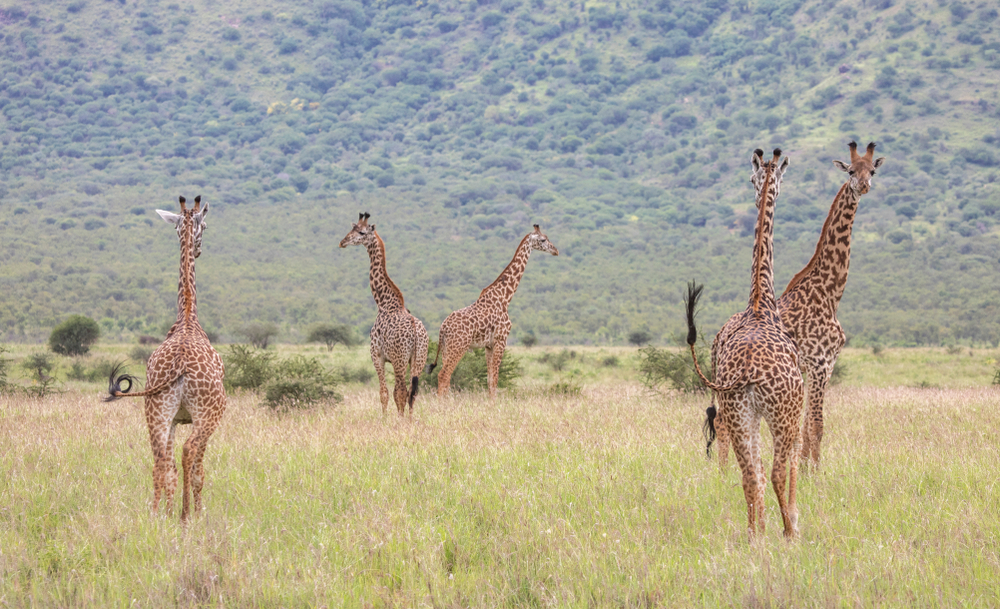
The geography of Mkomazi is shaped by gently rolling plains, rocky hills, seasonal rivers, and isolated mountain ranges. The park lies within a semi-arid region that receives less rainfall than many other Tanzanian parks. Vegetation is dominated by acacia woodlands, open grasslands, thorn scrub, and scattered baobab trees.
Seasonal watercourses become important gathering places for wildlife during the dry months. The varied terrain supports a wide range of habitats and creates a landscape that changes dramatically with the seasons. During the rainy season, grasses flourish and wildflowers blanket portions of the park, while the dry season reveals sweeping vistas across the savanna.
Wildlife viewing is one of Mkomazi’s greatest attractions. Large mammals include elephant, giraffe, zebra, eland, hartebeest, buffalo, and lesser kudu. Predators such as lion, leopard, cheetah, and spotted hyena also inhabit the park. Mkomazi is internationally recognized for its black rhino sanctuary, which plays a vital role in the conservation of one of Africa’s most threatened mammals.
The park is equally important for African wild dogs, which have been successfully reintroduced and protected within its boundaries. Birdlife is abundant, with more than 450 recorded species, including ostriches, secretary birds, hornbills, eagles, and numerous migratory birds that pass through the region each year.
The conservation significance of Mkomazi National Park extends far beyond Tanzania. The park protects critical habitat for endangered species while maintaining ecological connectivity with Kenya’s Tsavo ecosystem. Its black rhino and African wild dog programs are among the most important wildlife recovery efforts in East Africa. Mkomazi also safeguards a representative example of the dry savanna ecosystems that once stretched across much of the region.
In some respects, the park can be compared to renowned conservation landscapes such as Etosha National Park and Tsavo West National Park, where wildlife thrives in challenging semi-arid environments. Today, Mkomazi National Park stands as a powerful example of how long-term conservation investment can restore wildlife populations and preserve some of Africa’s most remarkable natural heritage.
Things to See
Things To Do
Engaging Mkomazi National Park
