

About
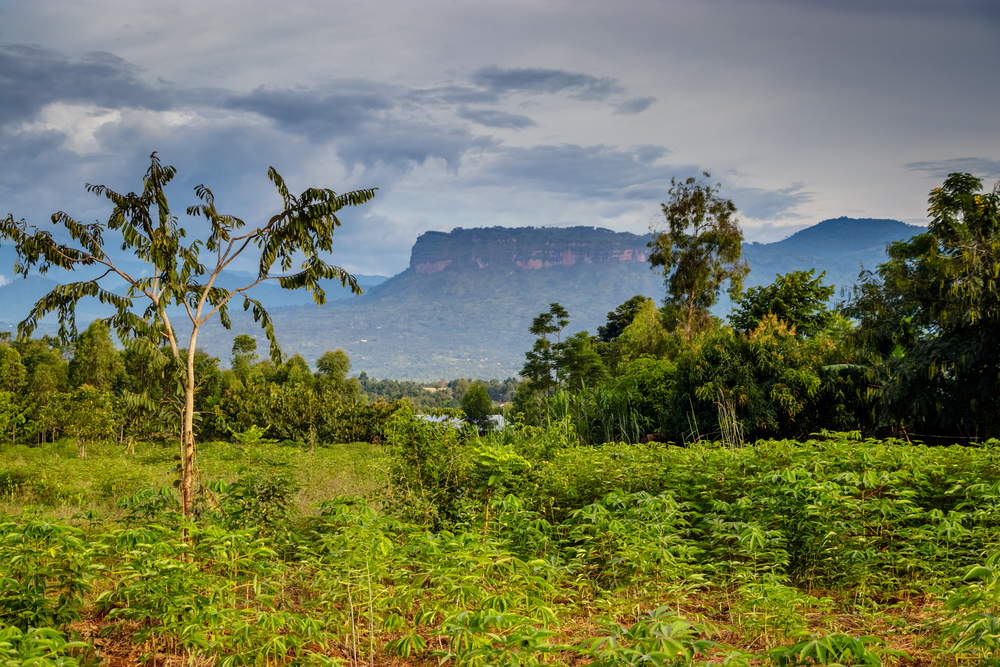
Mount Elgon National Park, the park is located in eastern Uganda along the border with Kenya. The park covers approximately 433 square miles (1,121 sq km) and protects the Ugandan portion of the Mount Elgon ecosystem, while the mountain’s Kenyan side is protected within Mount Elgon National Park.
Established in 1992, the park surrounds the slopes of the extinct volcano Mount Elgon, one of East Africa’s most significant geological features. The park lies northeast of Pian Upe Wildlife Reserve and serves as one of Uganda’s most important mountain conservation areas. Its combination of volcanic landscapes, diverse habitats, and spectacular scenery makes it one of the country’s most remarkable protected areas.
Mount Elgon National Park is best known for its towering volcanic peaks, extensive cave systems, waterfalls, and exceptional hiking opportunities. At the heart of the park is Mount Elgon itself, an extinct volcano whose vast caldera is among the largest in the world. Visitors are drawn to the park’s scenic trekking routes, which pass through forests, bamboo zones, moorlands, and alpine landscapes.
Popular attractions include Sipi Falls, a series of dramatic waterfalls located on the mountain’s foothills, and the ancient caves where elephants have historically entered to extract mineral-rich salt deposits. The park offers a quieter alternative to East Africa’s more famous mountain destinations while providing equally impressive natural beauty.
The geography of Mount Elgon National Park is dominated by the massive volcanic mountain that rises to approximately 14,177 feet (4,321 meters) at Wagagai Peak, the highest point on the Ugandan side. The mountain was formed millions of years ago and once stood among the tallest peaks in Africa before erosion gradually shaped its present form.
The park contains a remarkable range of ecosystems that change with elevation. Lower slopes support montane forests and agricultural landscapes, while higher elevations feature bamboo forests, heathlands, giant lobelias, giant groundsels, and alpine moorlands. Rivers originating within the park provide critical water resources for communities throughout eastern Uganda and western Kenya.
Wildlife within Mount Elgon National Park reflects its varied habitats. Large mammals include elephant, buffalo, bushbuck, duiker, giant forest hog, and several species of primates. Black-and-white colobus monkeys and blue monkeys are commonly observed in forested areas. Although large predators are relatively uncommon, the park supports a healthy diversity of smaller mammals and forest wildlife.
Birdlife is particularly impressive, with more than 300 recorded species. Notable birds include the Jackson’s francolin, Tacazze sunbird, African goshawk, and numerous montane forest specialists. The varied elevation zones provide habitat for species that are rarely found together elsewhere, making the park an important destination for birdwatchers and wildlife enthusiasts.
Mount Elgon National Park plays a critical role in conserving one of East Africa’s most important mountain ecosystems. The park protects vital watersheds, rare alpine habitats, and numerous endemic and threatened species. Its ecological significance is often compared to mountain parks such as Rwenzori Mountains National Park and Mount Kenya National Park, though Mount Elgon’s enormous caldera and ancient volcanic origins make it uniquely distinctive.
By safeguarding forests, grasslands, and high-altitude ecosystems, the park supports biodiversity, climate resilience, and water security for millions of people. Today, Mount Elgon National Park remains one of Uganda’s most treasured natural landscapes and a premier destination for adventure, conservation, and ecological discovery.
Things to See
Things To Do
Engaging Elgon National Park
